

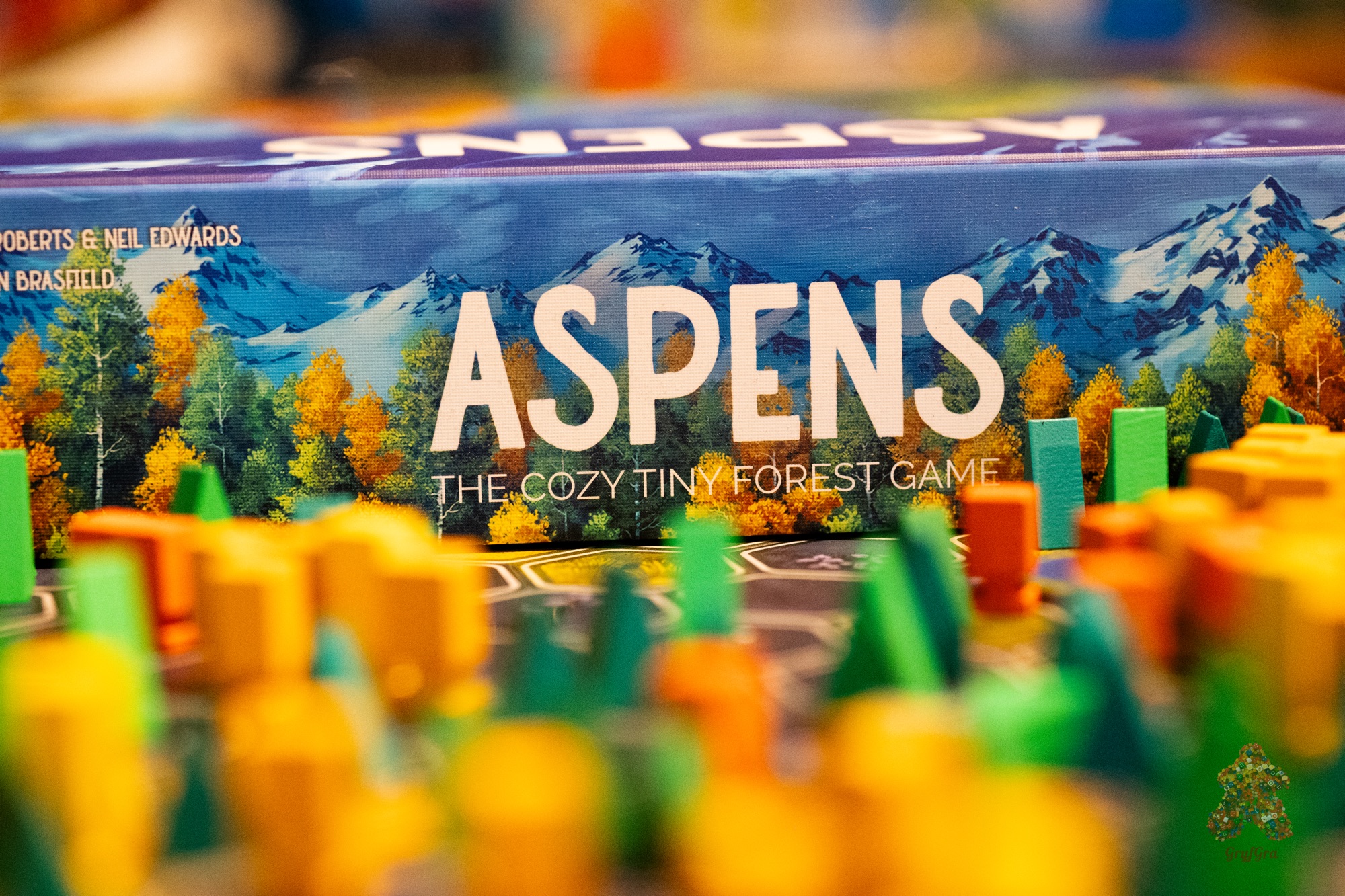
A forest growing on the table, competition for territory, and a game designed for two players — these were the things that drew us to “Aspens”. Designed by Luke Roberts and Neil Edwards and published by Ludivore Games, it lets us guide the growth of aspens or pines. Using sun and wind, we add to our existing clusters of trees and claim new spaces. There needs to be room for two forests, though, and our opponent will gladly cut off our access to the most promising areas.
Gameplay
We assemble the board from seven tiles and place water tiles on selected spaces. Each player receives their own set of tree pieces. In the standard setup, we take turns planting on three spaces, one beside each water tile. We then add four more trees each, distributing them among our starting clusters.
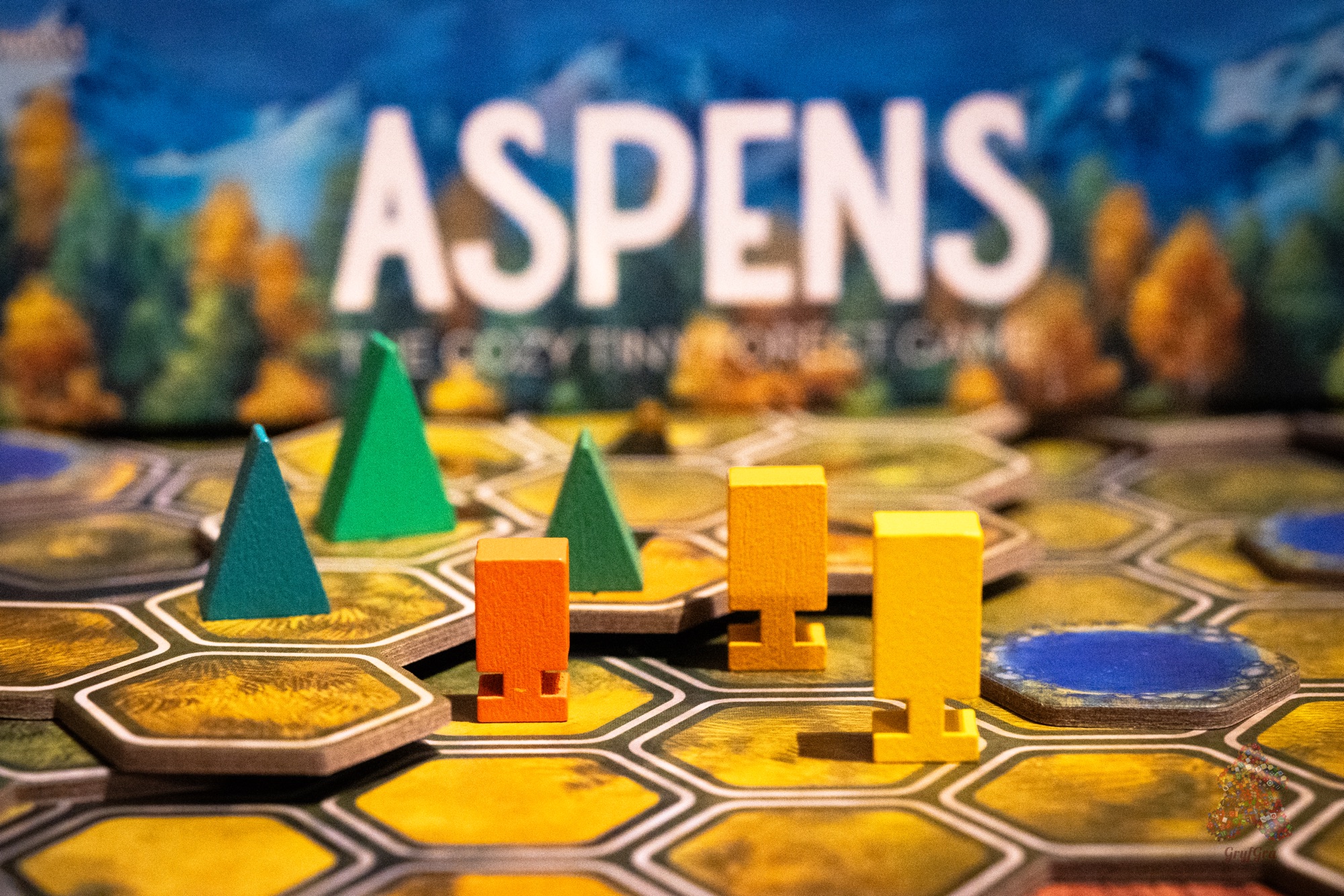
Our goal is to claim as many spaces as possible. Adding more trees to a single space does not increase its scoring value, but it affects production, which allows us to keep growing our forest.
A turn starts with a roll of the Sun and Wind dice. The Sun result applies to both players: each of our spaces containing at least as many trees as the number rolled produces one new tree. The active player also receives one bonus tree for their turn. Their opponent keeps the trees they gain until their own turn.
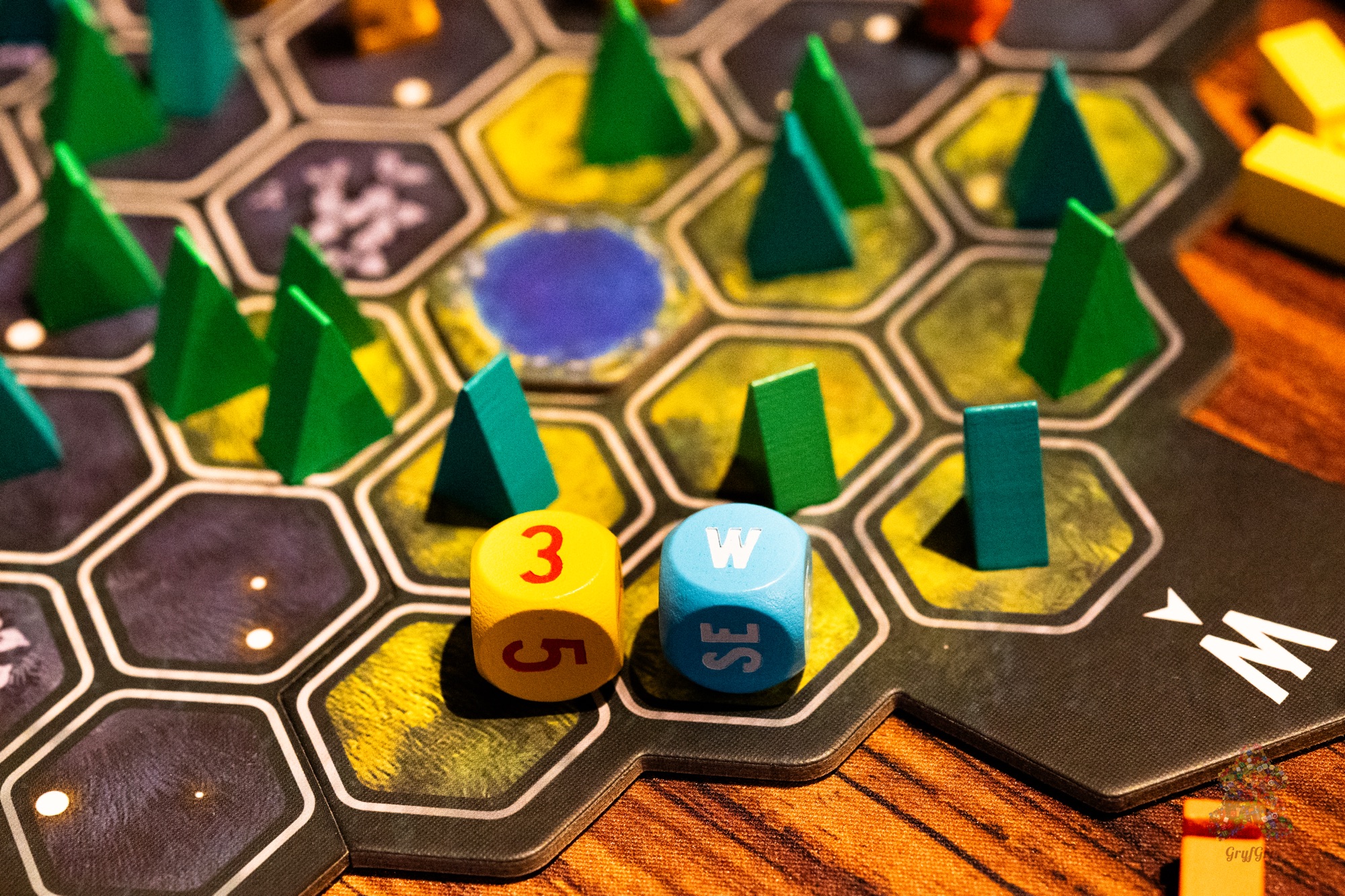
We can add the new trees to spaces we already control, increasing their chances of producing trees in the future. The other option is to expand onto empty spaces adjacent to our forest. Here, we must follow the direction shown by the Wind die or either of the two neighbouring directions. Since we can also spread from spaces we have just claimed, a single turn can create a whole chain of new plantings. We can also keep up to five trees for later.
Cutting off areas is an important rule. If we enclose an area so that our opponent can no longer reach it, we immediately claim every empty space inside. We fill them with trees from our supply at no additional cost. Water tiles can help form these boundaries.
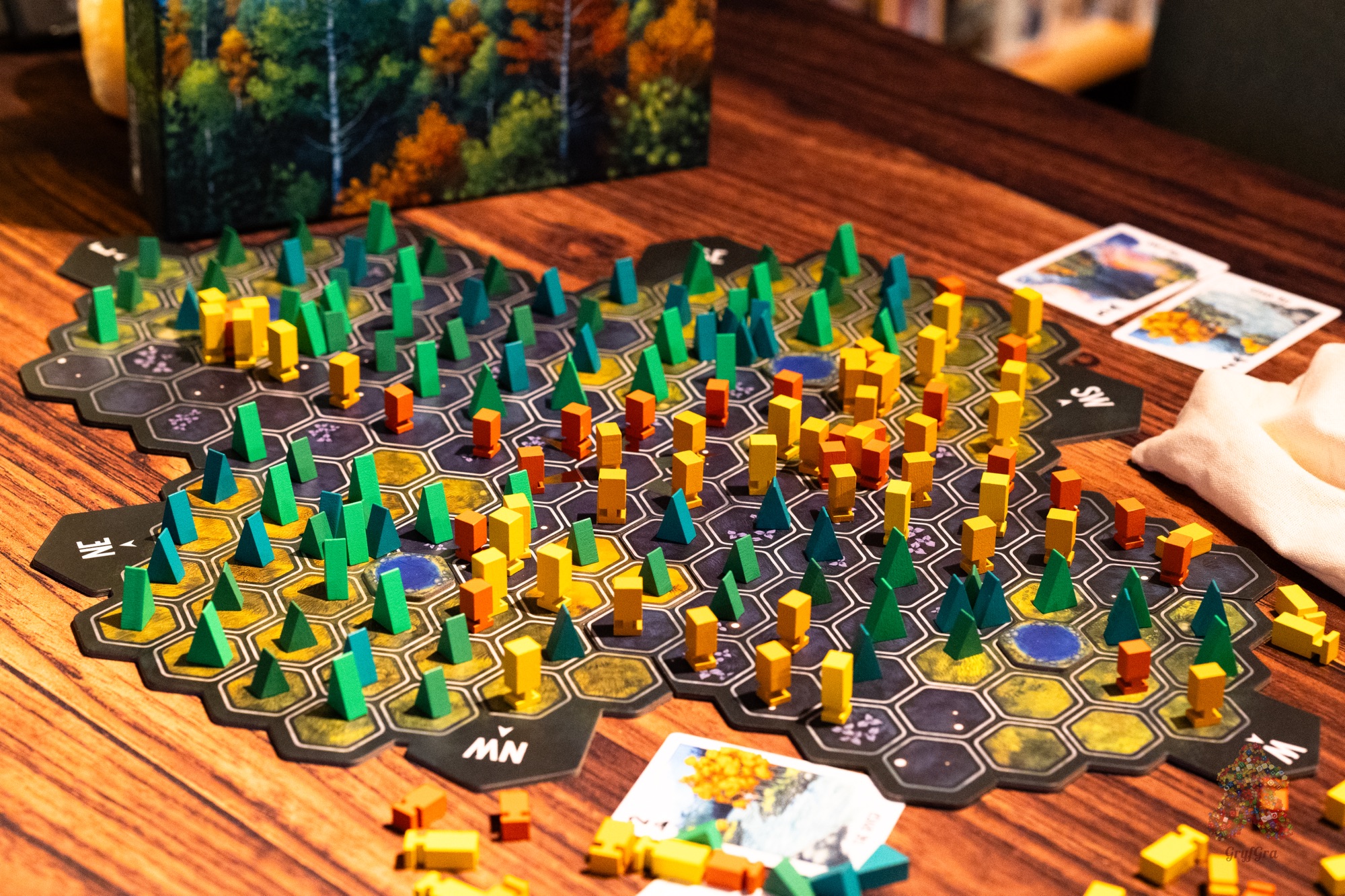
Once we claim a space, it remains ours for the rest of the game. The game ends when all playable spaces are occupied, and whoever controls more of them wins.
Review
Production and expansion
“Aspens” combines competition for space with building the production needed for further expansion. Its central choice stays with us throughout the game: should we use a tree to claim a new space or add it to an existing cluster? The first option takes us closer to victory straight away. The second improves our chances of gaining more trees, but gives our opponent time to grab territory.
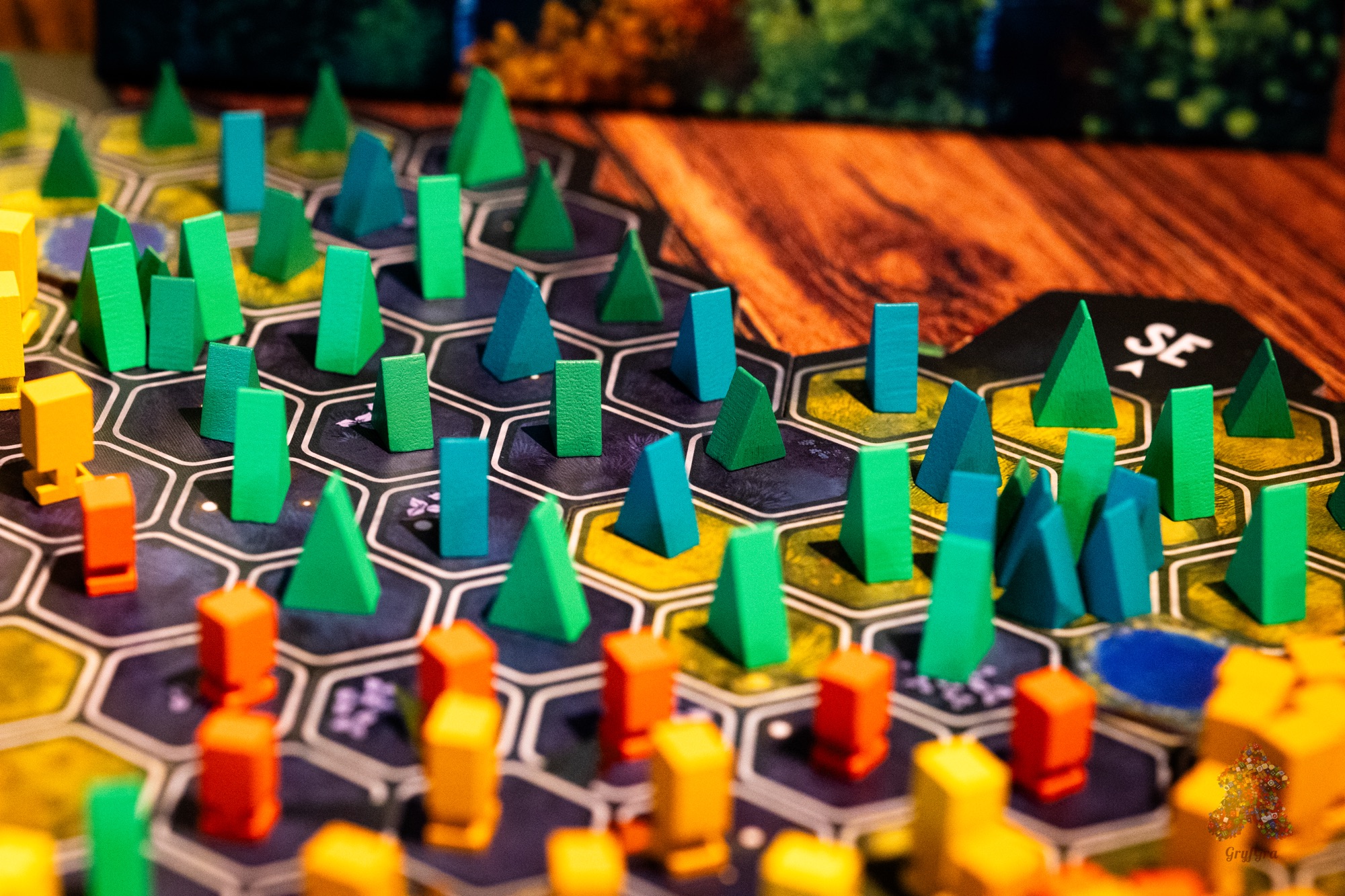
In our games, it was worth establishing a base of several denser spaces that provided more reliable production. That did not mean we could focus entirely on expansion once we had made those early investments. Even later in the game, there were situations where strengthening a particular cluster paid off. We also had to watch our opponent. Even strong production will not help much if we run out of places to use the trees we gain.
After several plays, we had not found a single best approach. We pursued our own plans, but they had to account for what the other player was doing. The initial placement of our forests also mattered a great deal. With three water tiles, it is easy to position ourselves in a way that makes it harder to reach the centre or the part of the board without a water tile. It is therefore worth considering potential expansion routes during setup, rather than looking only at our immediate surroundings.
Cutting off areas and competing for territory

Cutting off areas is the most confrontational part of “Aspens”. We used it often, as it can give us a substantial advantage at little cost. We do not have to pay separately for each space within the enclosed area — we just need to create the right boundary. Keeping a few trees for later also proved useful. Sometimes we saved them so we could close off an area in a single turn, before our opponent had a chance to interfere.
The other player’s moves created the most tension, particularly when they had plenty of trees to place. Once access is cut off, it cannot be reopened, and we cannot take spaces back from our opponent. The consequences of an oversight stay with us until the end. The atmosphere at the table was calm, but we regularly got in each other’s way. Every area we secure for ourselves reduces our opponent’s options.
The influence of sun and wind
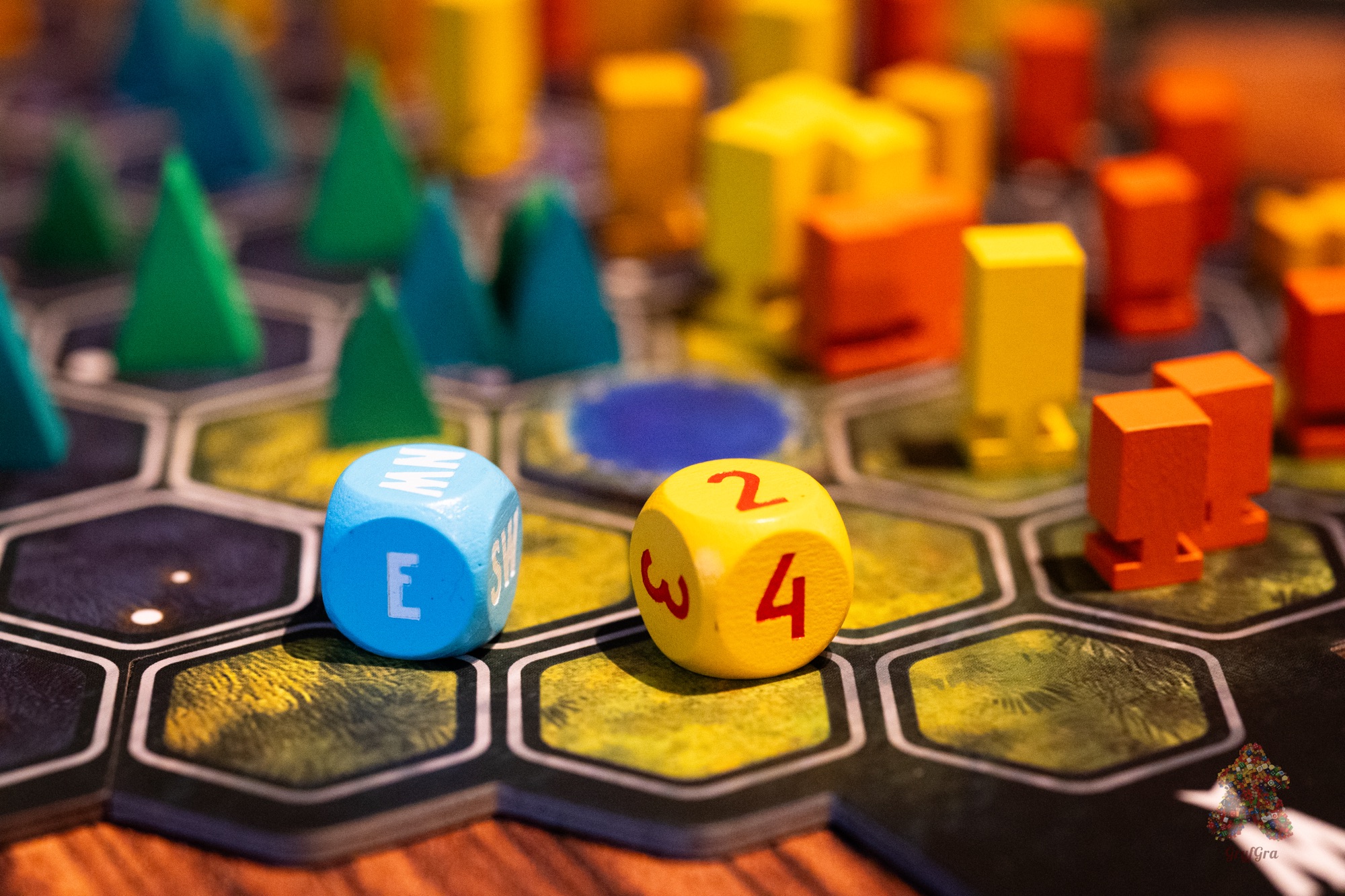
We felt differently about the two dice. The Sun die seemed quite fair. Its result is shared, and by adding trees to our spaces, we influence our own chances of producing new ones. We can invest in more reliable production or accept greater risk. Lower rolls speed up the growth of the forests and, with it, the filling of the board.
Wind was more often an obstacle. Three available directions offer some flexibility, but there were times when none of them allowed us to make the move we needed. This was particularly noticeable when we already had a specific expansion route in mind. We did not, however, recall a single roll that decided an entire game on its own. The dice required us to adapt, while making good use of the available space remained the most important consideration.
Pace and the endgame
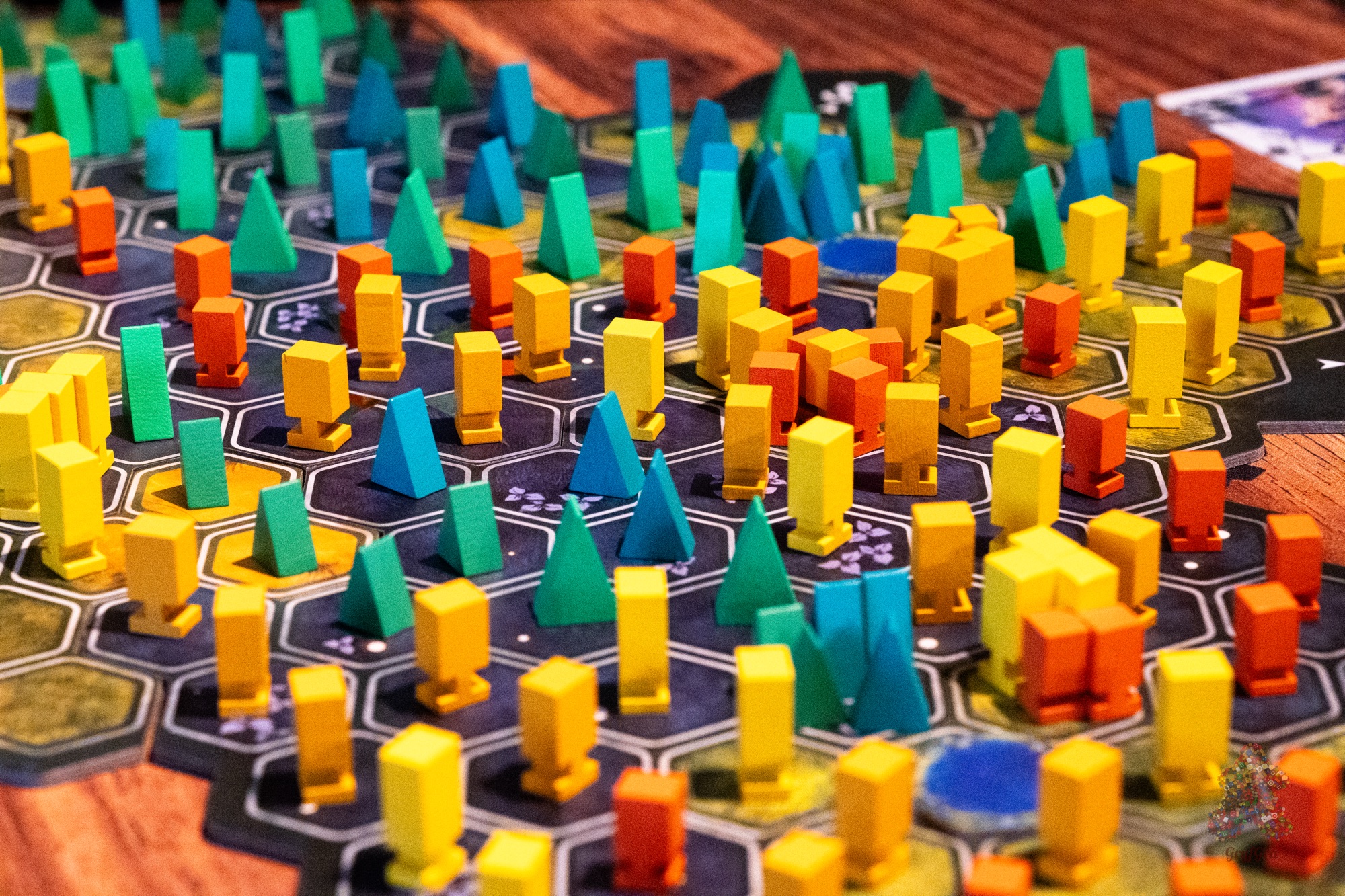
The pace is a major strength. Our first game took about twenty minutes, and explaining the rules took between five and ten. Setup and packing away were quick too. Turns flowed smoothly; physically filling larger enclosed areas took the most time. During our opponent’s moves, we watched what they were doing and checked whether our plans needed adjusting.
Endgames varied. If there was still territory we could meaningfully contest, the struggle continued until the final moves. Sometimes, though, it was clear several turns before the end that we would not catch up. In the base game, it is not always easy to judge the lead immediately, but occasionally the last few plantings simply confirm an outcome that is already apparent.
Variety and Majestic Marvels
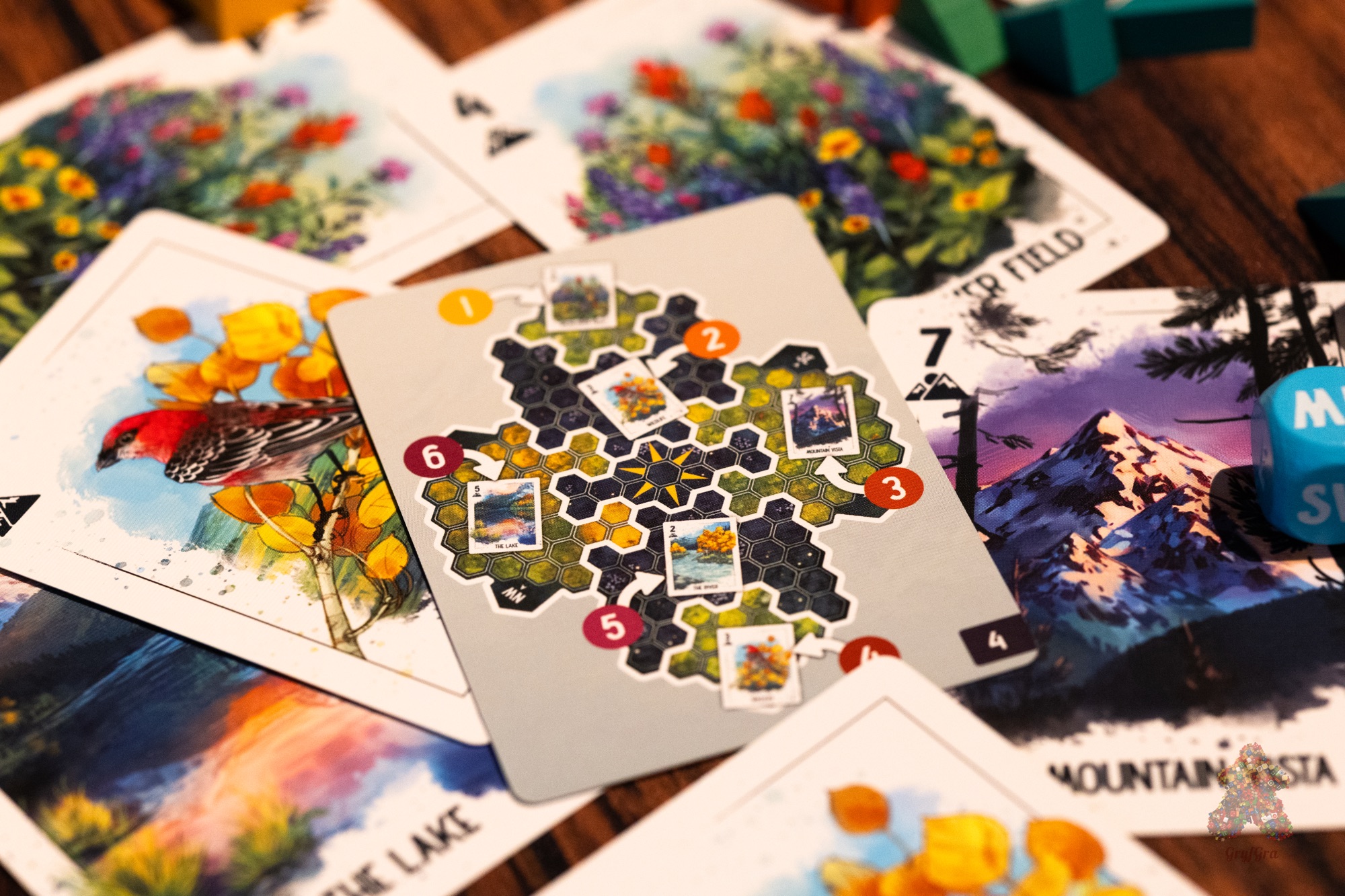
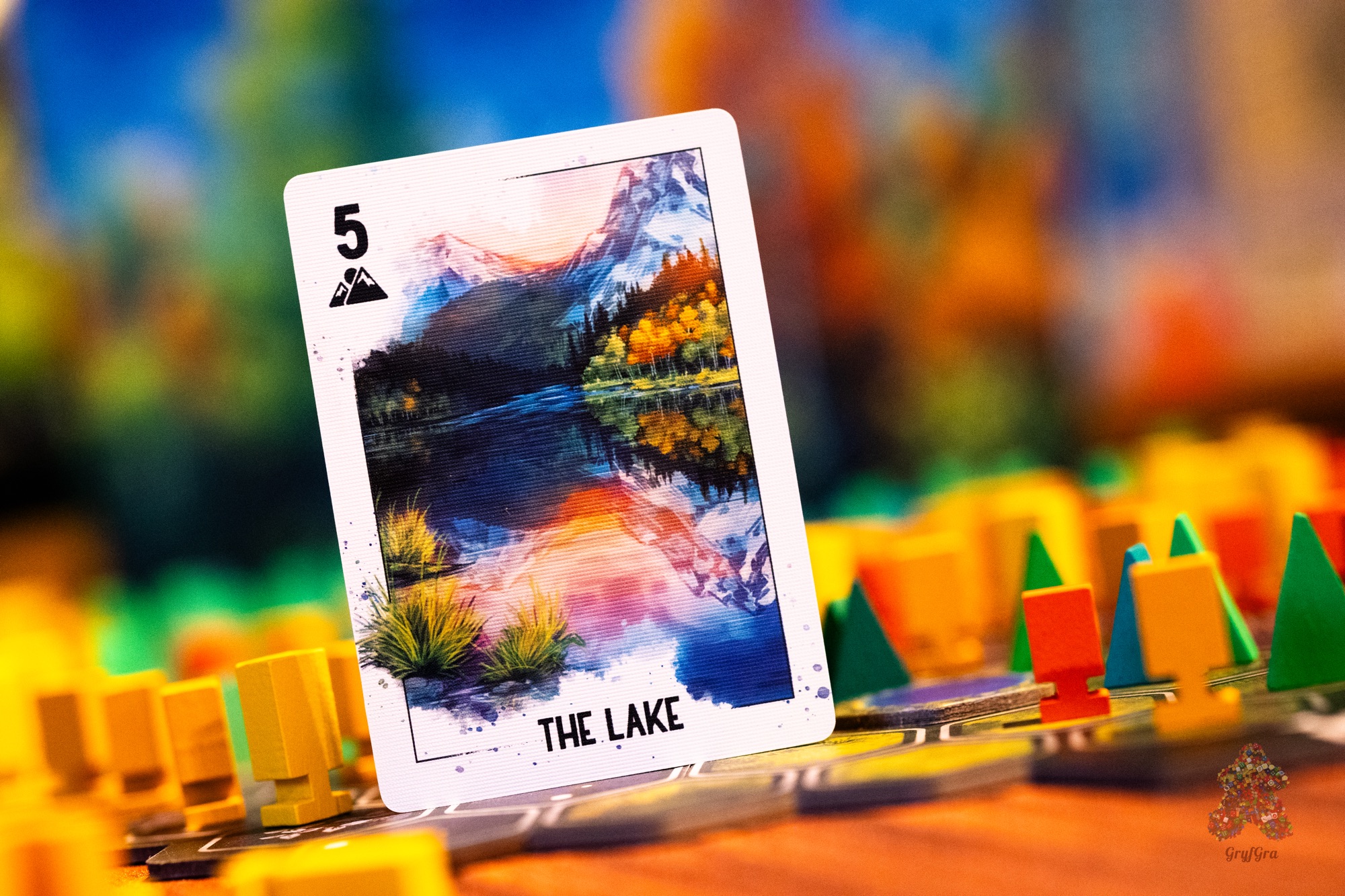
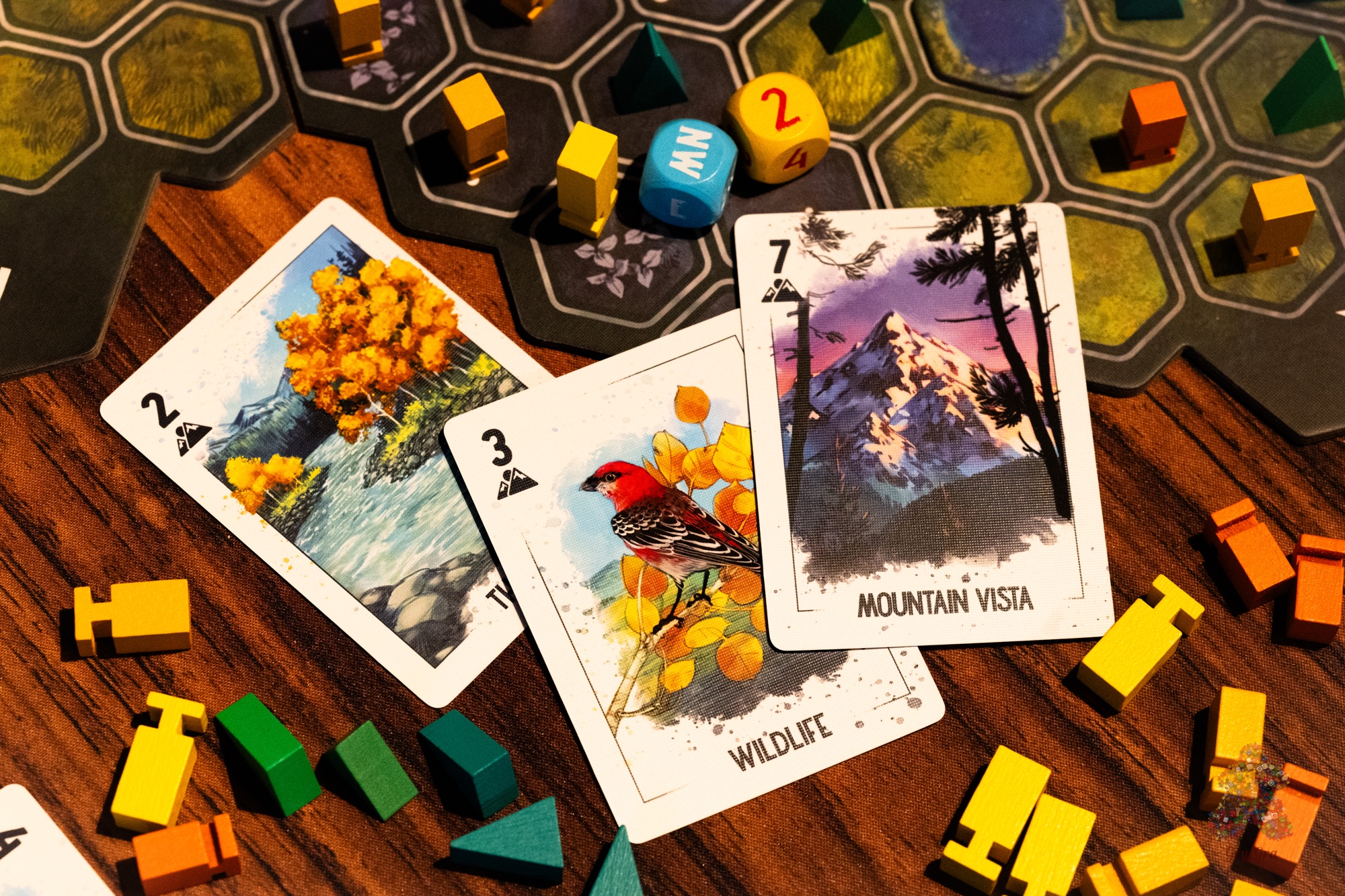
We tried different water tile layouts, and they required us to change how we approached claiming the board. Each game played out a little differently, although the biggest change came from the “Majestic Marvels” expansion. It shifts the focus from the total number of spaces controlled to gaining a majority in the six outer sections of the board. Each section has a card with a particular point value. Once we control a majority of its spaces, we take the card, and the game ends when players have claimed all six cards.
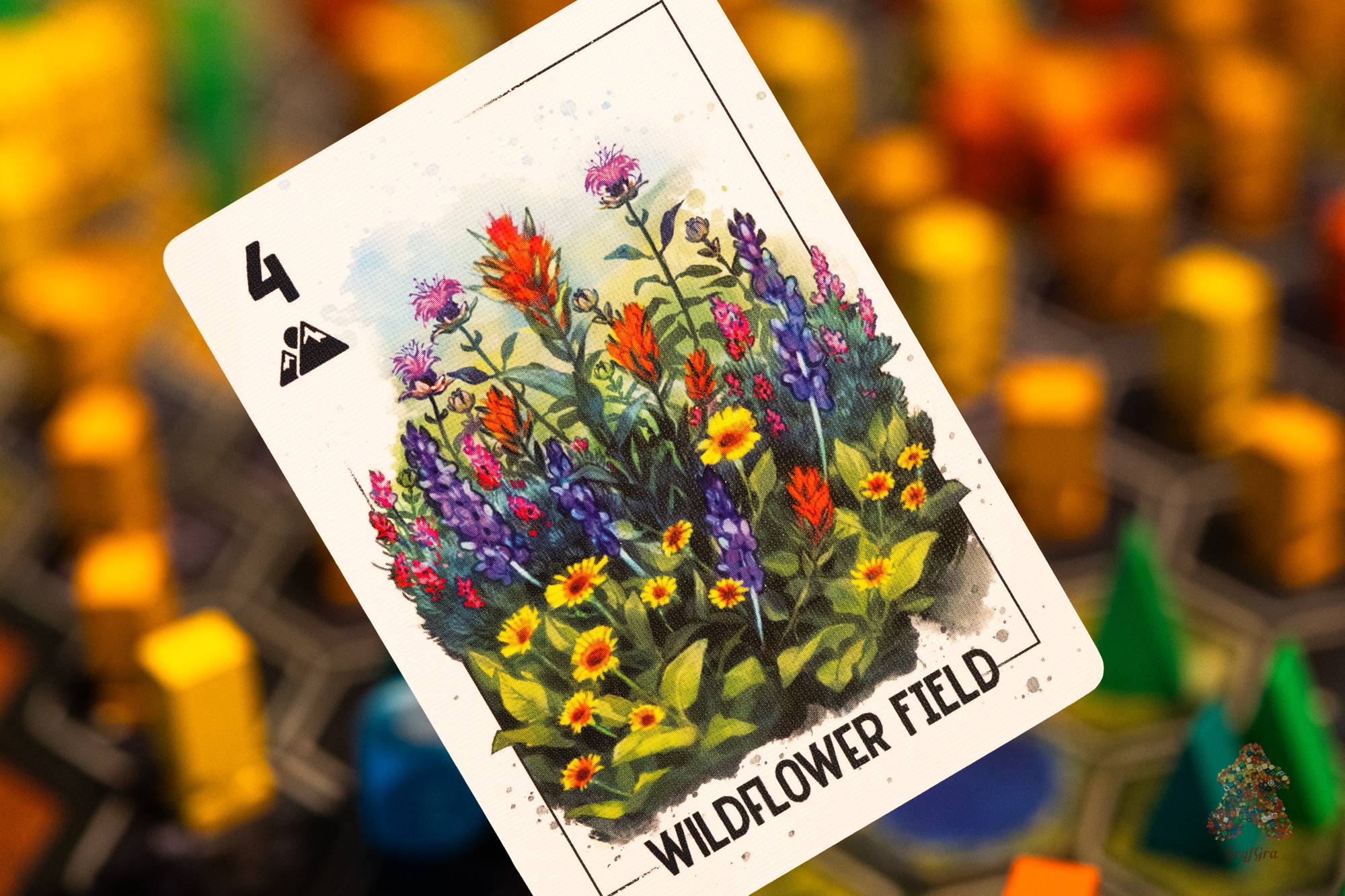
We still plant and produce trees according to the familiar rules, but we choose our expansion targets differently. The board’s sections have different values, so the size of our forest alone is no longer enough to assess our position. In our plays, the expansion clearly changed the objective and offered a different experience. It is an interesting way to add variety to a game we want to revisit.
Components and ease of play
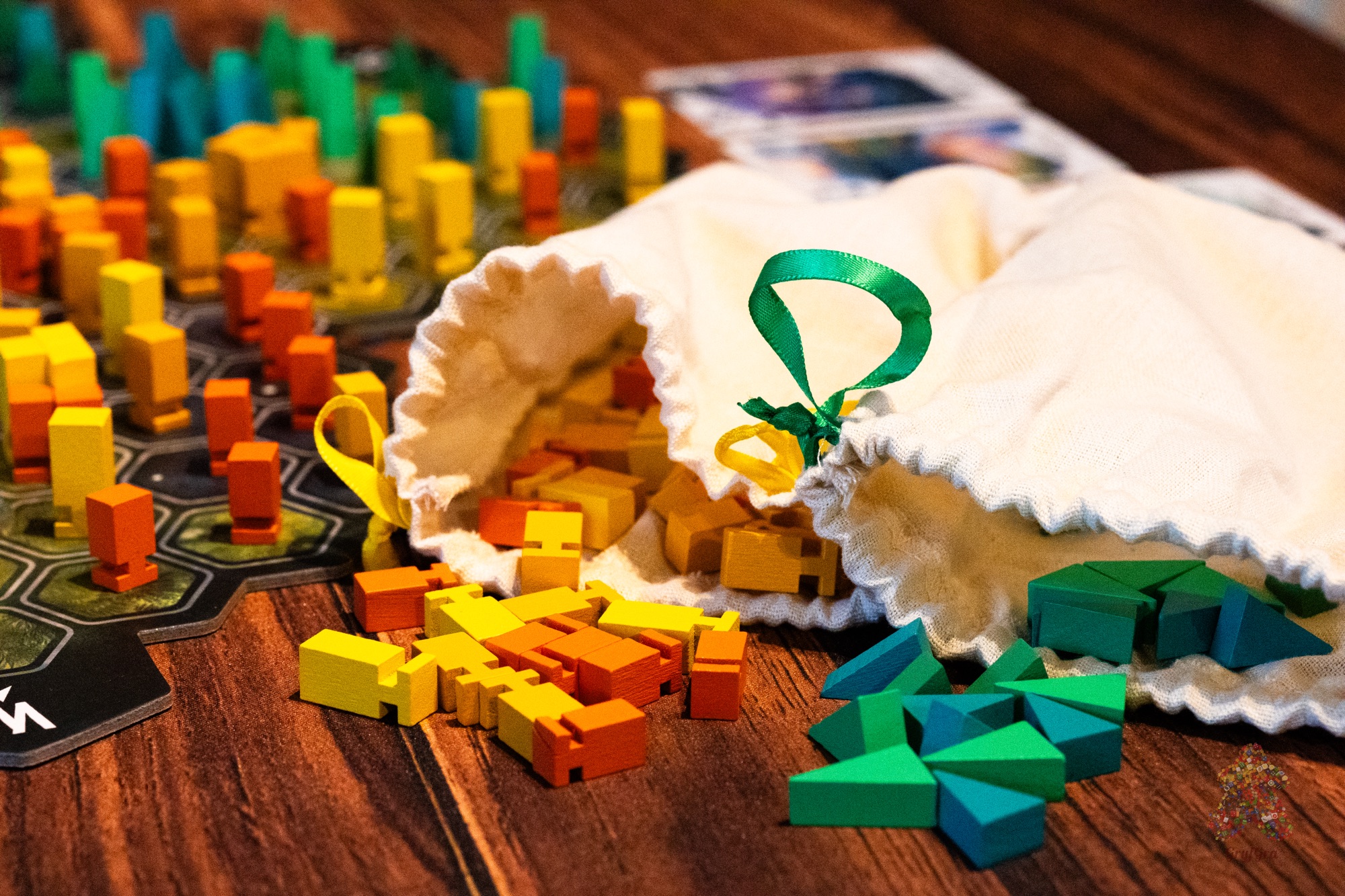
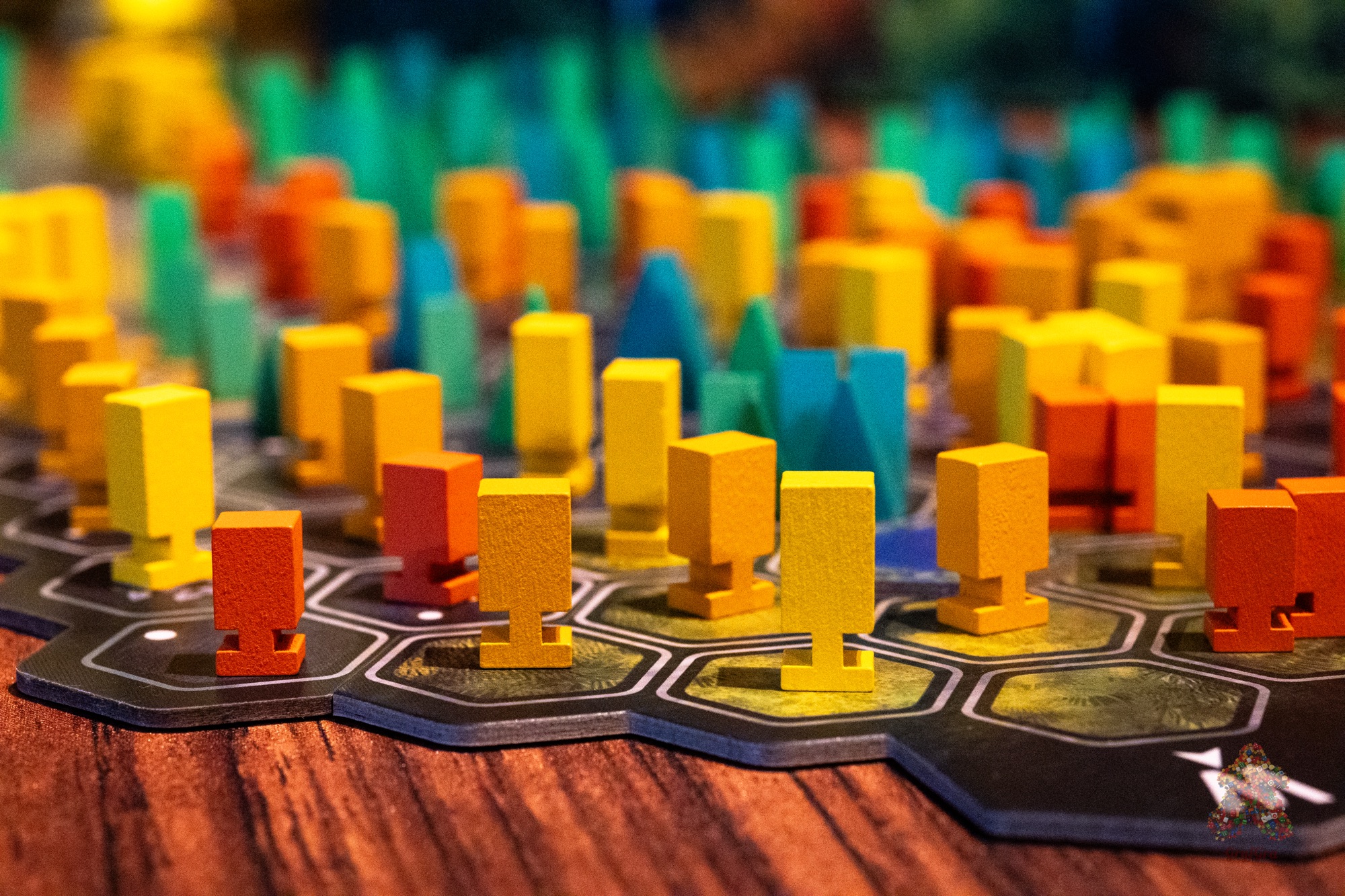
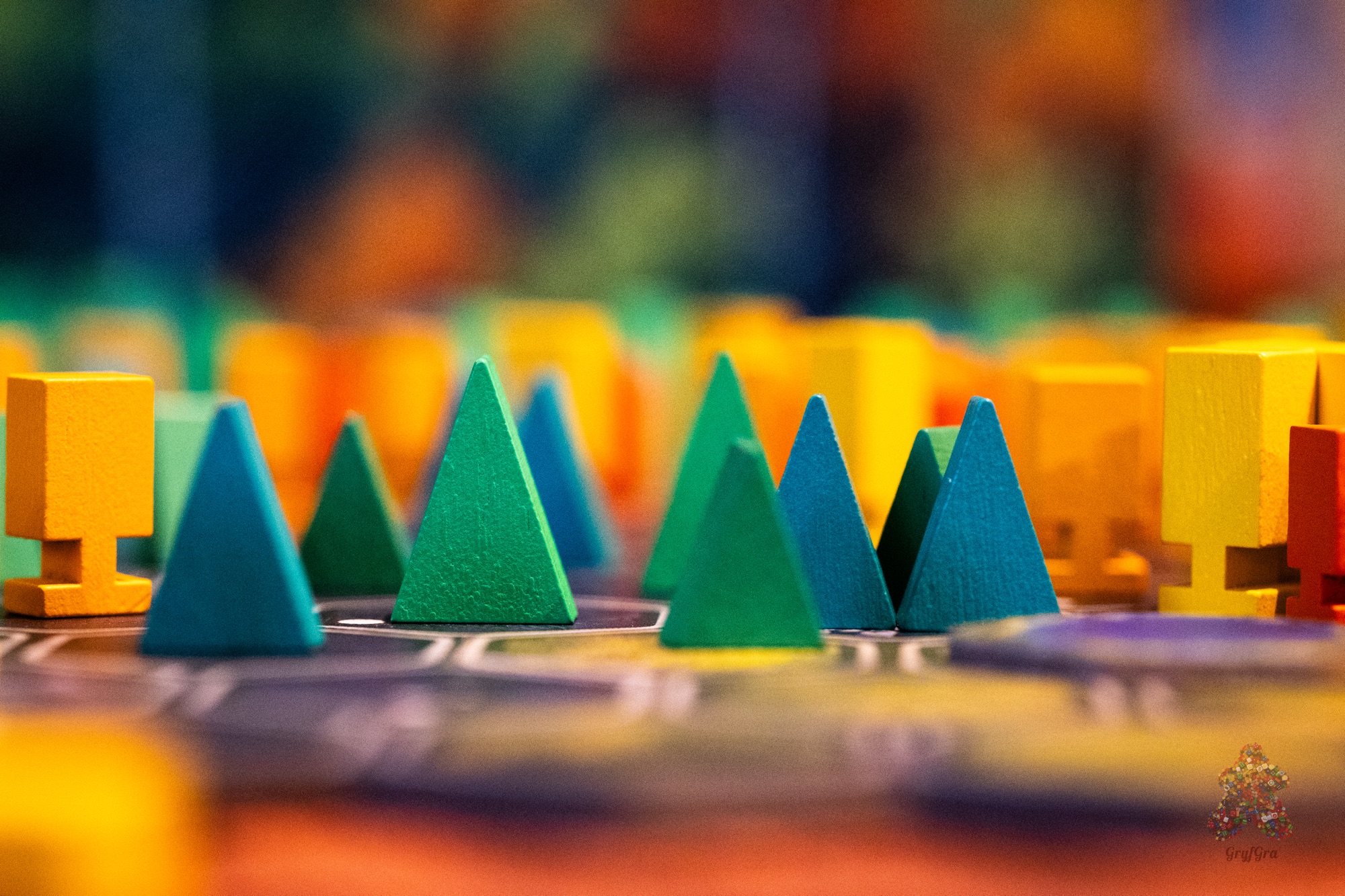
We liked the production quality of the standard edition. The trees vary in size and colour, which makes the growing forest look more natural. The board and other components gave us no reason to complain either. Players who care particularly about appearance might also want to look at the Deluxe edition, with its more elaborate tree shapes.
Even as the board gradually filled up, we had no trouble reading it. Building the forest throughout the game helped us remember where our larger clusters were. When adding lots of trees to one space, pieces sometimes drifted onto neighbouring hexes, but this was a minor inconvenience. Final scoring was straightforward too — we could simply count one player’s spaces and subtract that number from the total number of playable spaces.
The forest theme
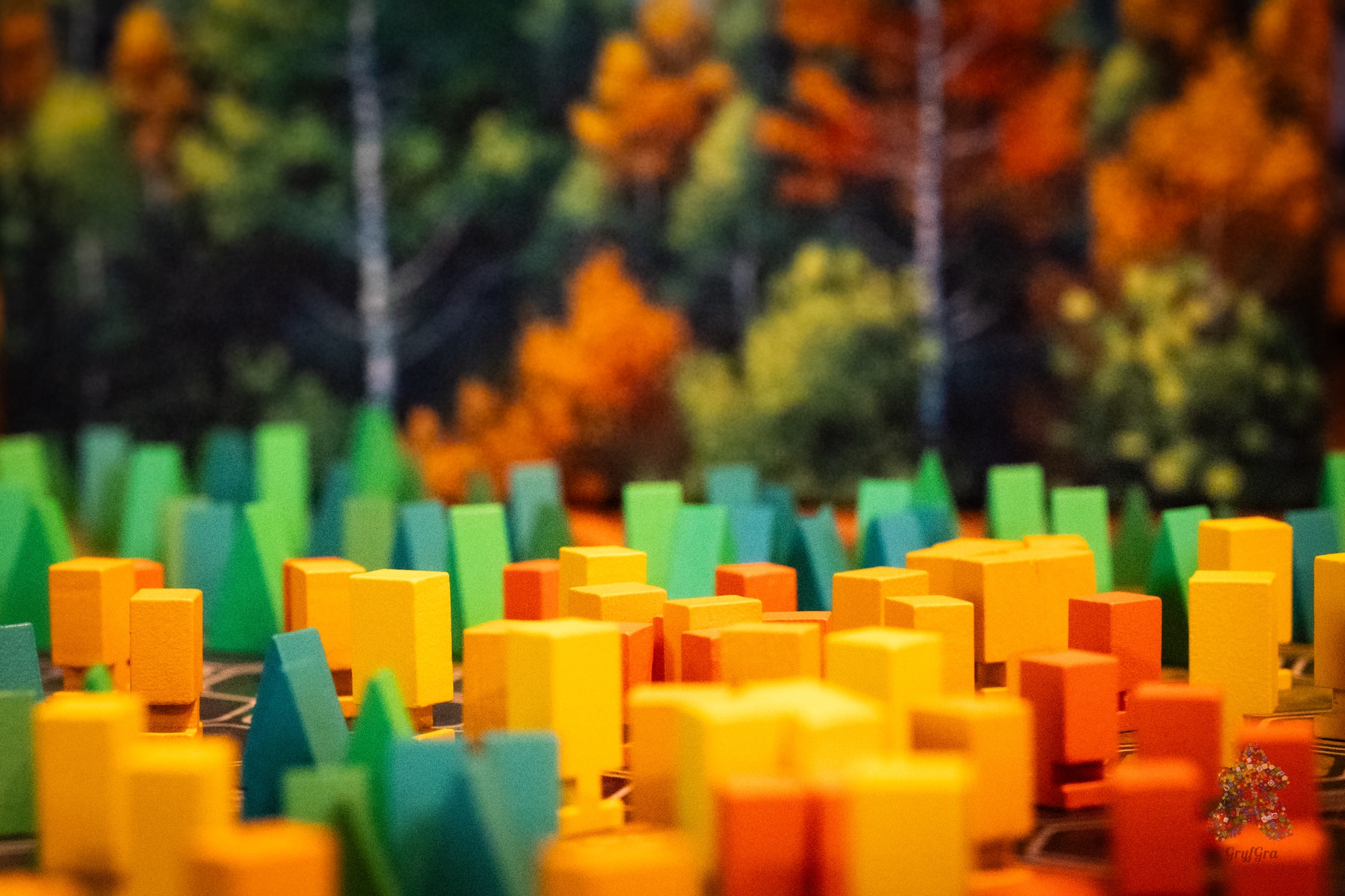
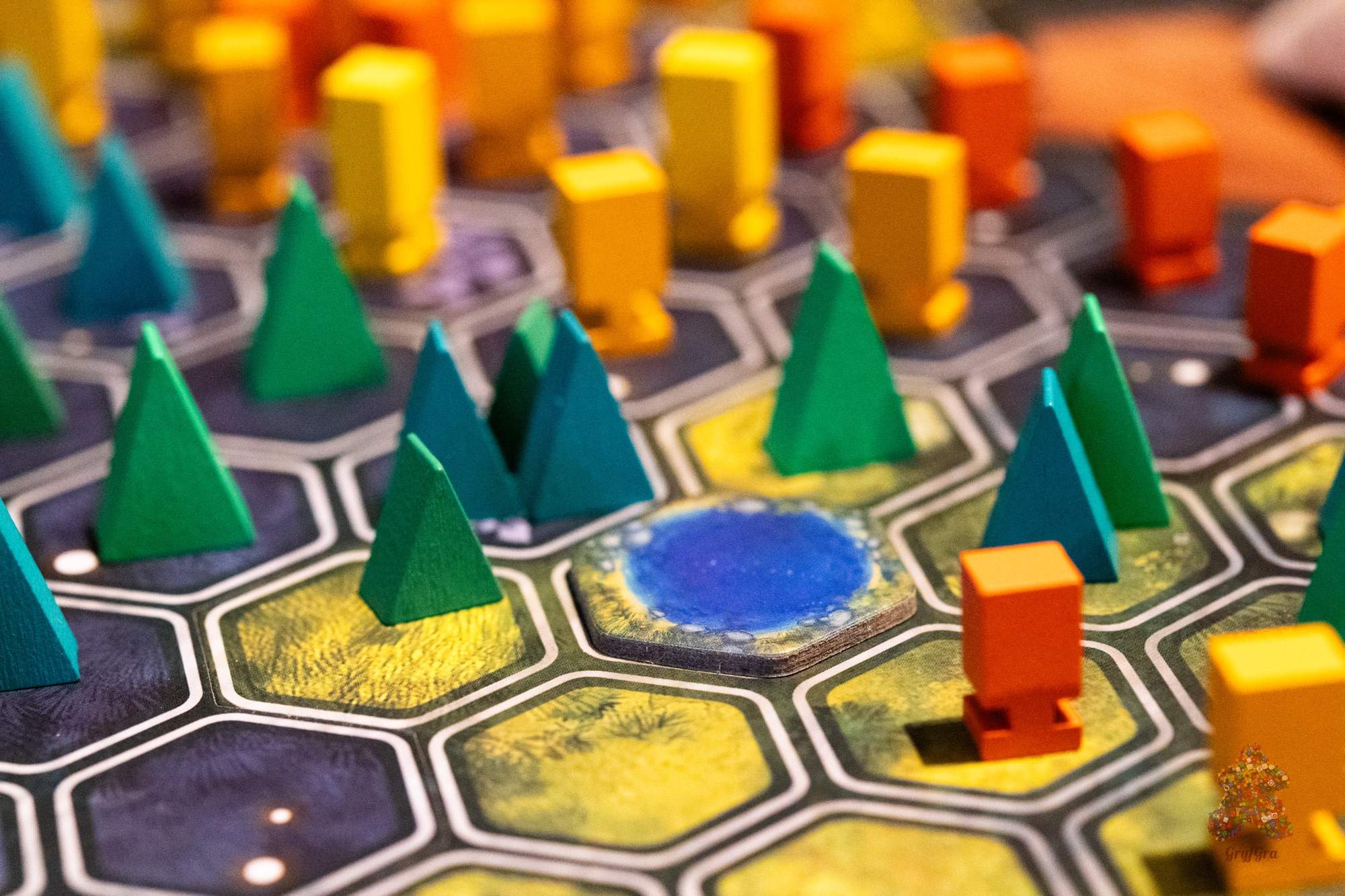
Creating the forest itself was very engaging. The sun, wind, and expanding clusters make the theme tangible during play. Our only slight reservation concerned how production is used: a tree gained from a cluster on one side of the board can be planted beside our forest on the other. A shared pool offers flexibility, although spreading linked to a specific location would feel more natural. On a board this size, however, that could make the game considerably more complicated and longer.
Visually, “Aspens” reminded us of “Photosynthesis” and “Bosk”, while spreading brought “Mycelia” to mind. These associations mostly stem from the theme and the tree pieces, though. What best defines this game is a quick contest for territory in which we constantly watch our routes for growth.
Summary
“Aspens” won us over with its simple rules, smooth play, and the choice between increasing production and gaining space. Both creating the forest and cutting off areas are satisfying, and the latter lets us make efficient use of our trees. Variable water tile layouts add variety, while “Majestic Marvels” offers a different way to compete for victory.
We do need to accept the influence of wind and the permanence of claimed spaces. A missed threat can close off an expansion route for the rest of the game, and sometimes the outcome becomes clear before the game officially ends. These are important considerations for players who dislike being blocked or would like a chance to reclaim a lost position.

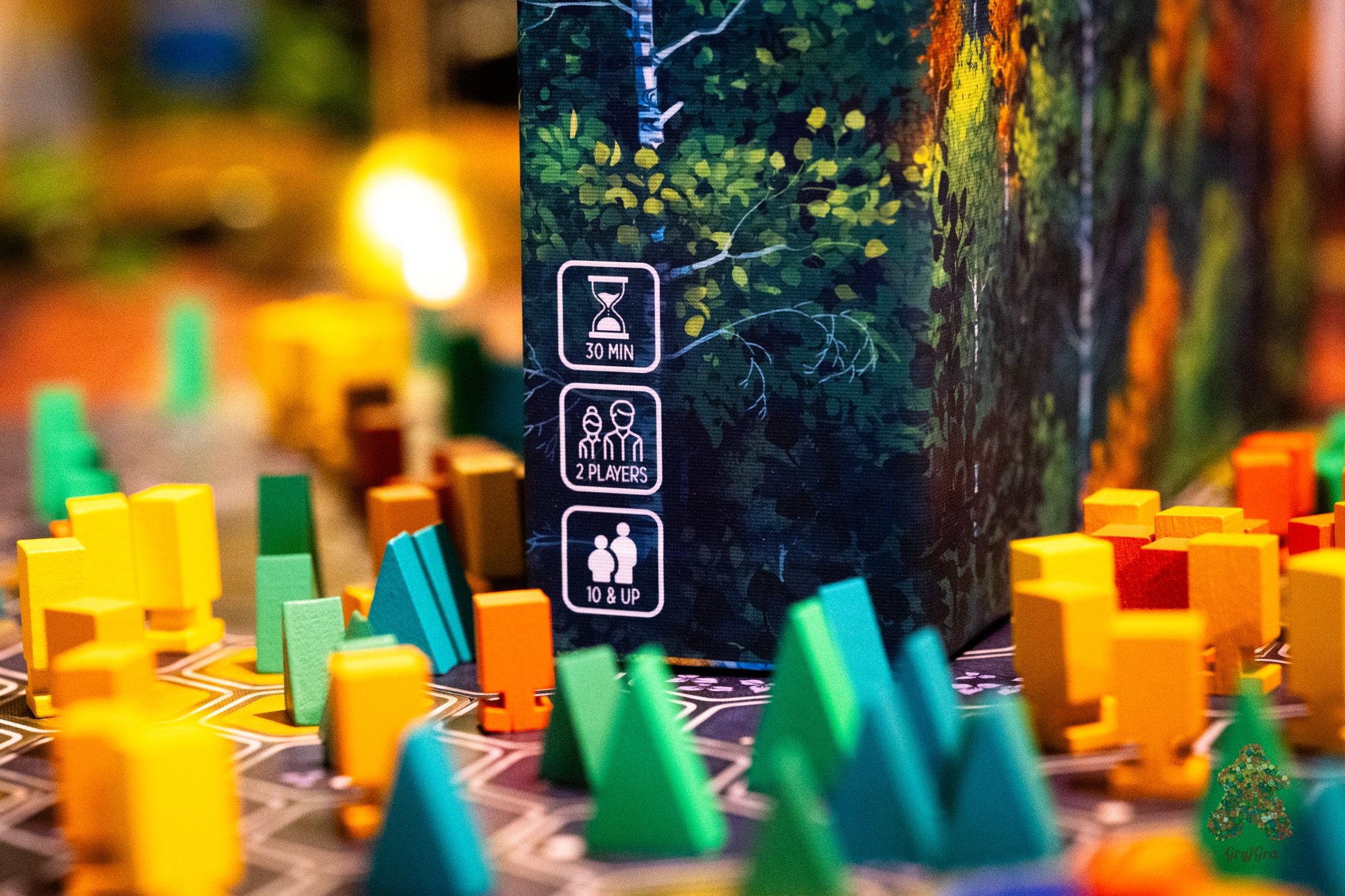
We recommend “Aspens” to players looking for a short, confrontational game for two. The simple rules should also make it approachable for ten-year-olds, although we did not play it with children ourselves. We will be returning to it — setup takes little time, and watching a forest grow from a few starting clusters remains a real pleasure.