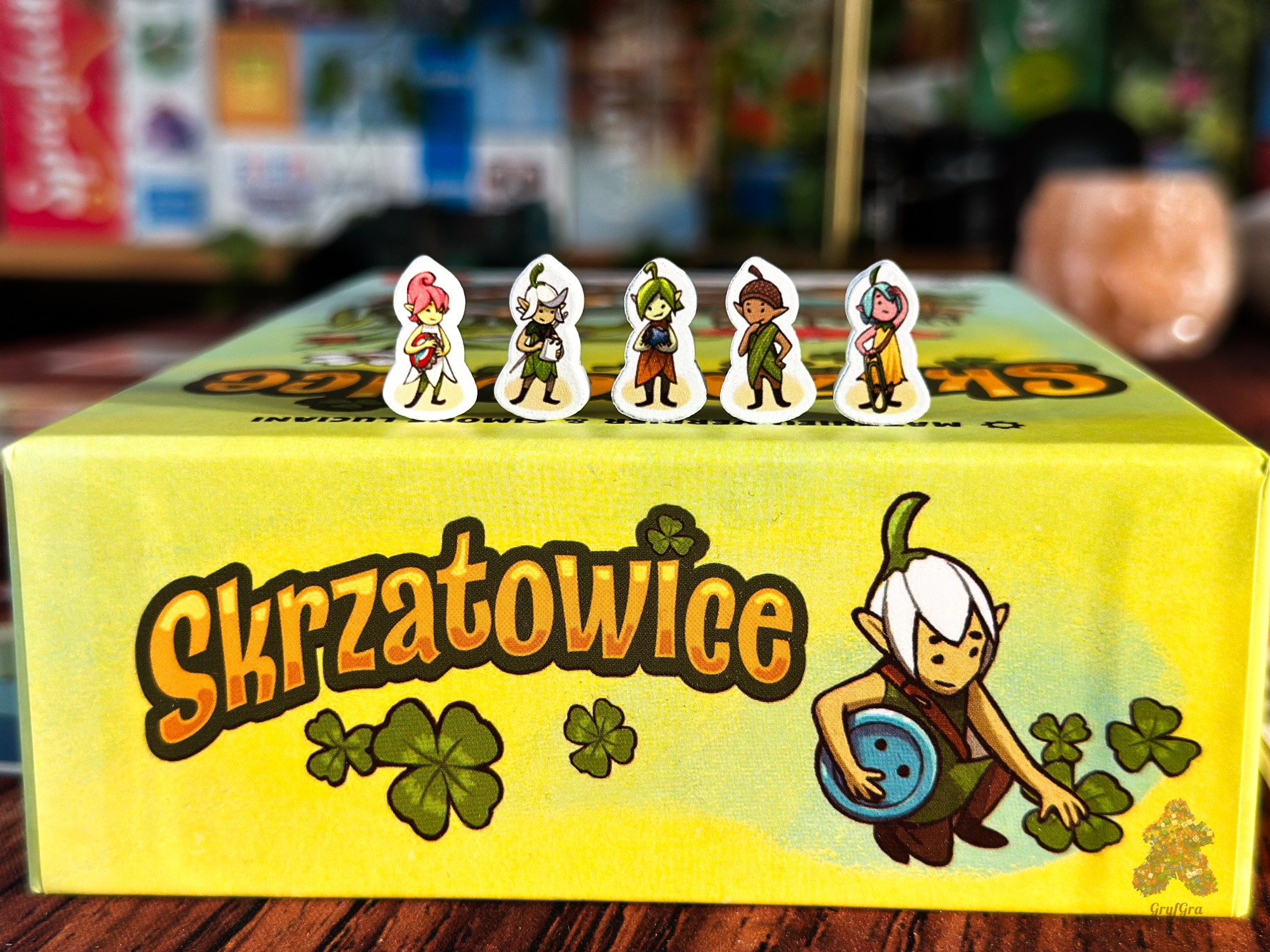
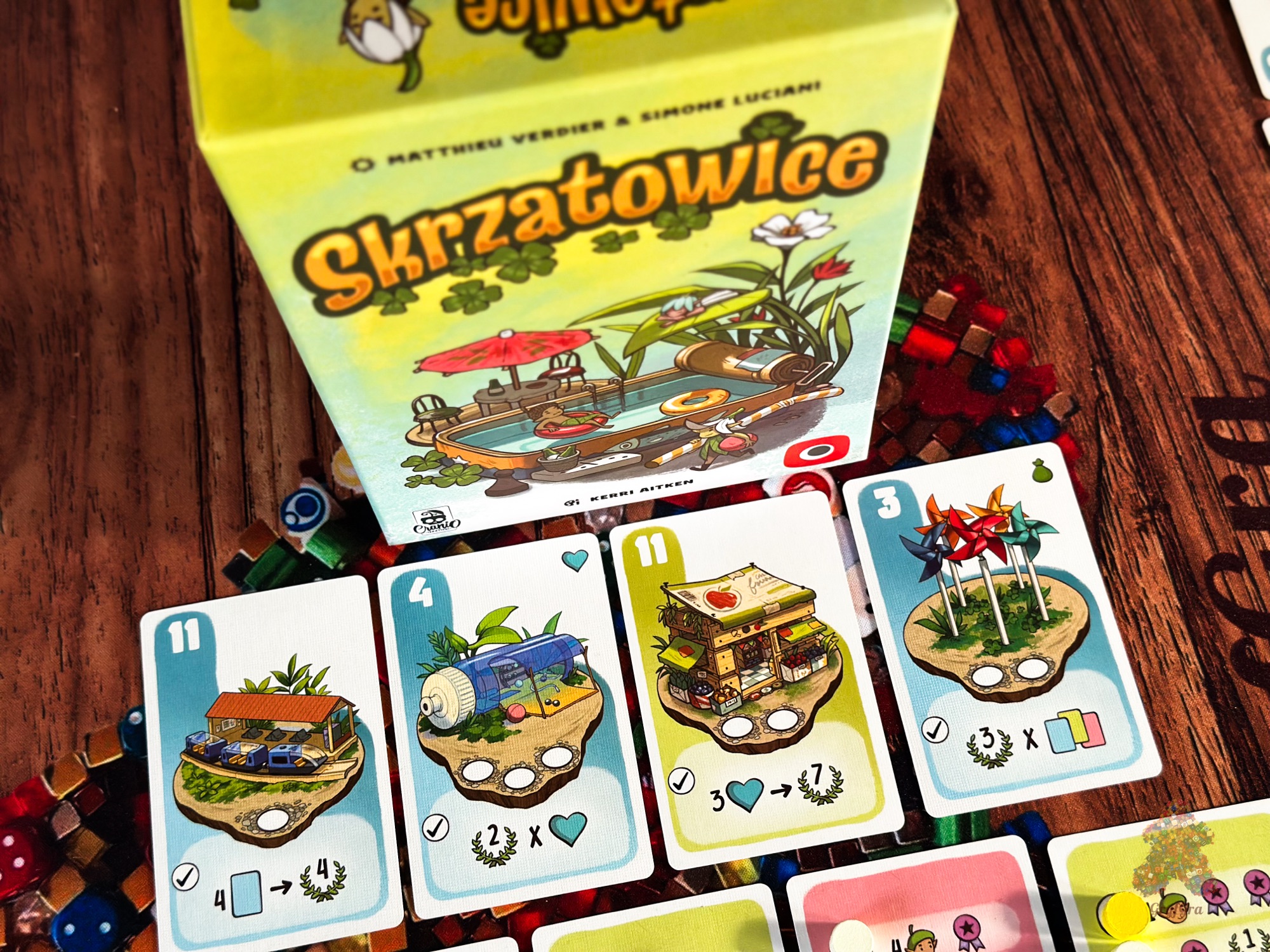
In “Minikin City”, we build small cities inhabited by Minikins, but simply adding more buildings is not enough to win. We also need to provide residents and balance the development of our city with competing for rewards. This card game by Simone Luciani and Matthieu Verdier, published in Polish by Portal Games as “Skrzatowice”, is designed for 2–5 players aged 10 and up, with a playing time of around 30 minutes.
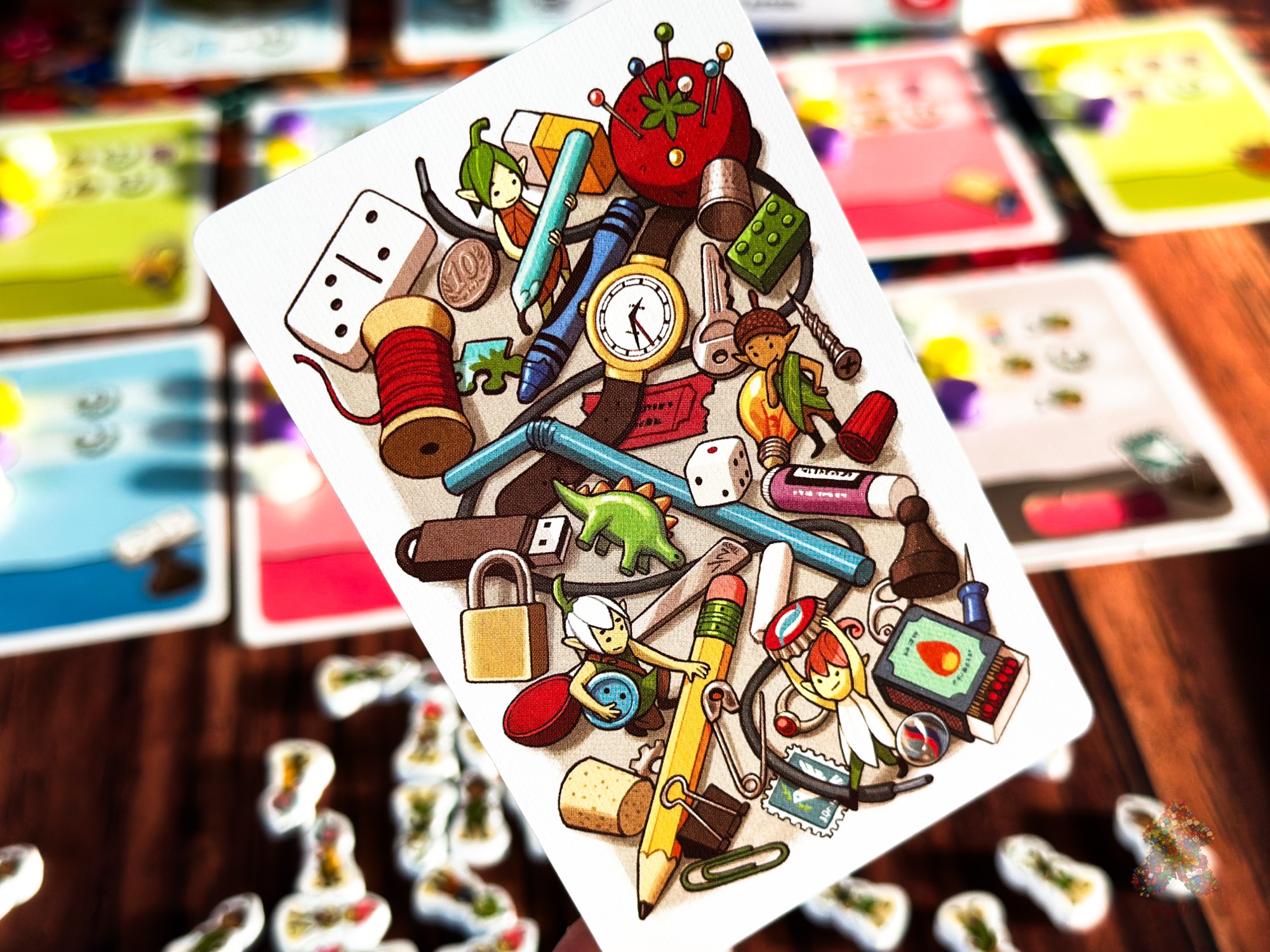
Gameplay
We arrange nine Reward cards in the centre of the table, using the sides appropriate for the player count. Eight of them represent the rounds, while the last is covered by the Endgame tile. All the colours and rewards are visible from the start, so we can take them into account when planning. Each player receives six City cards, chooses four to keep in hand, and takes markers to indicate the rewards they earn.
Each round begins by revealing cards to create a market. Starting with the first player and proceeding clockwise, everyone then plays one card from their hand into their city. If the card has an immediate effect, we resolve it straight away.
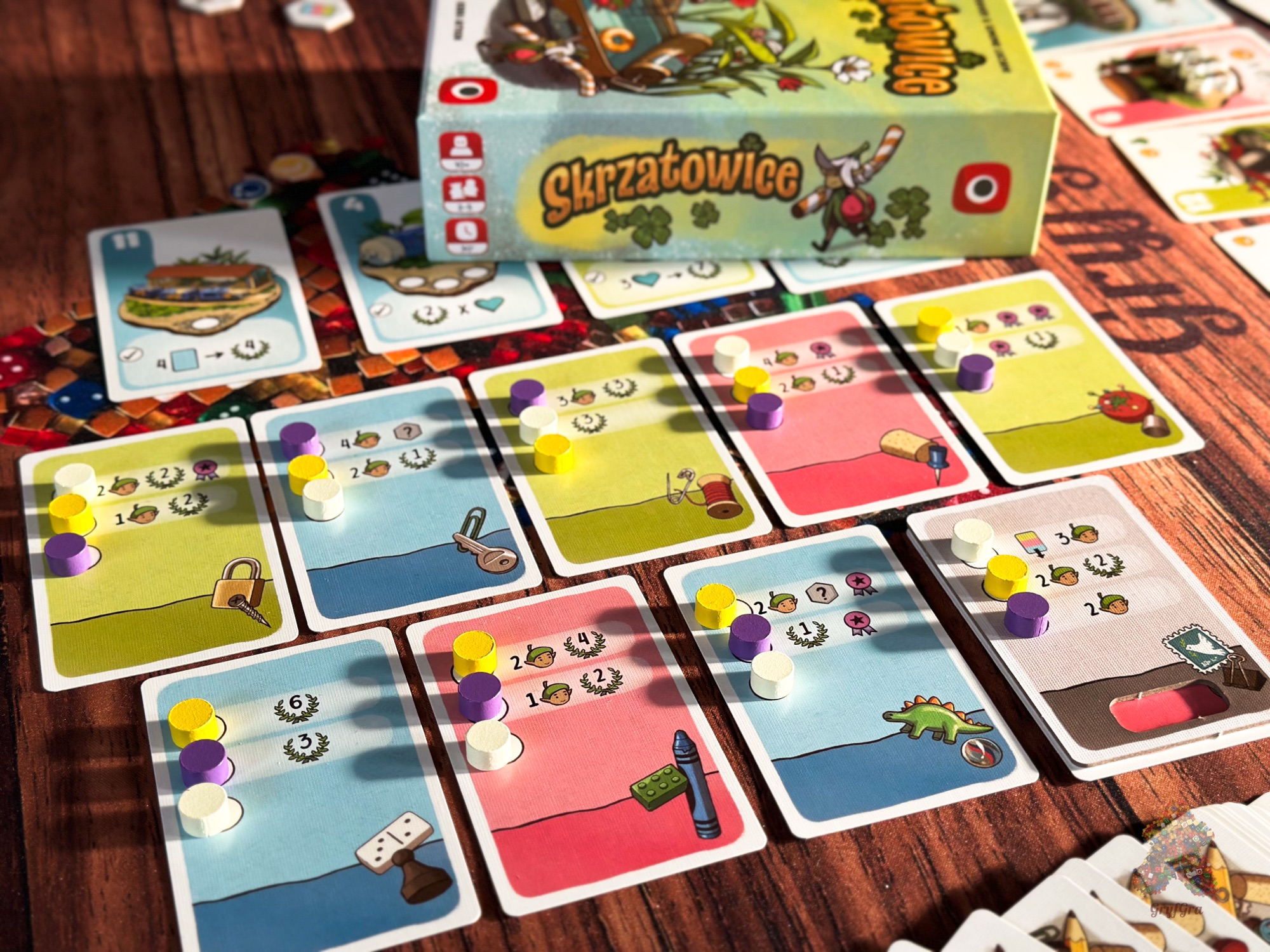
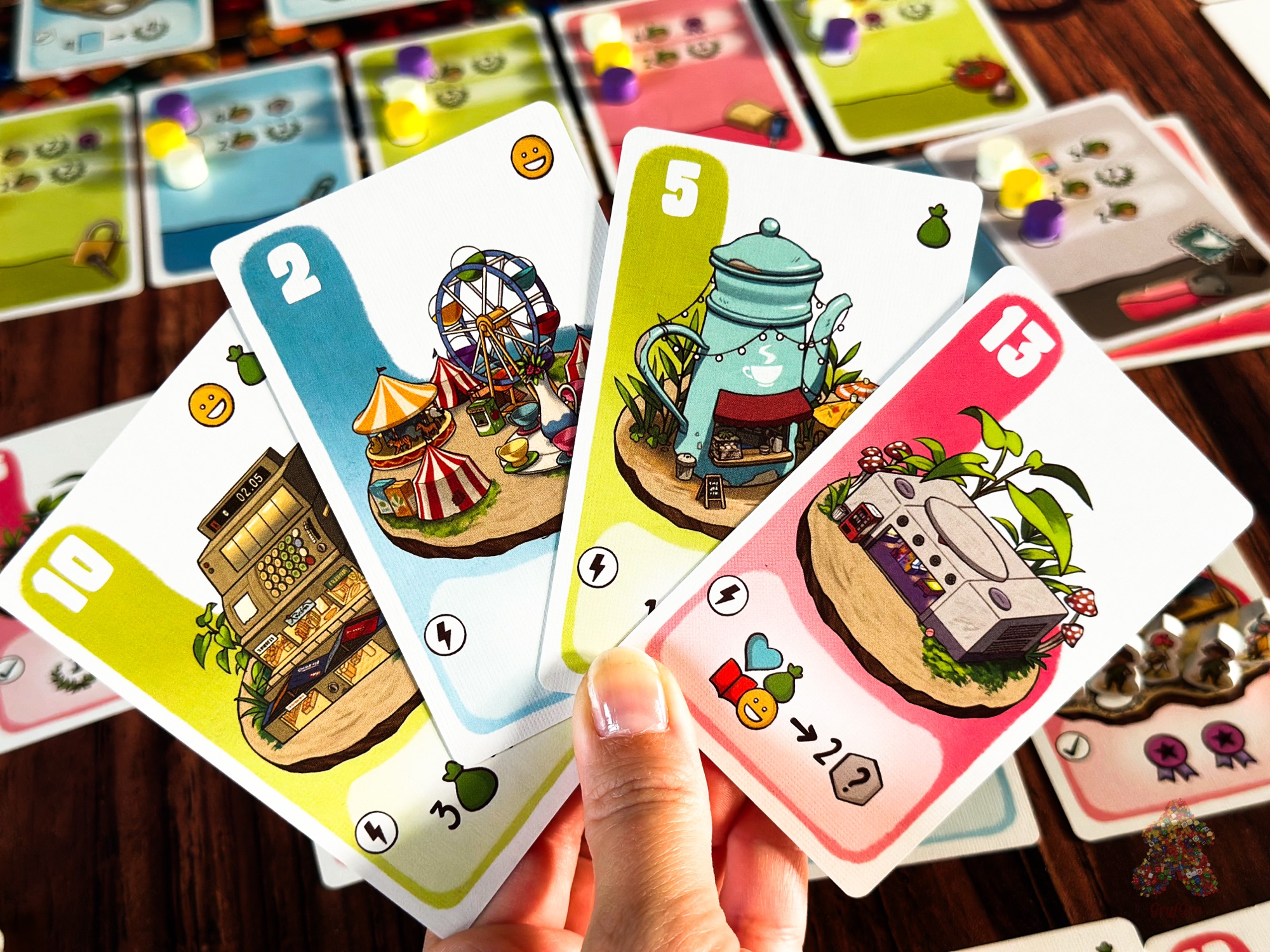
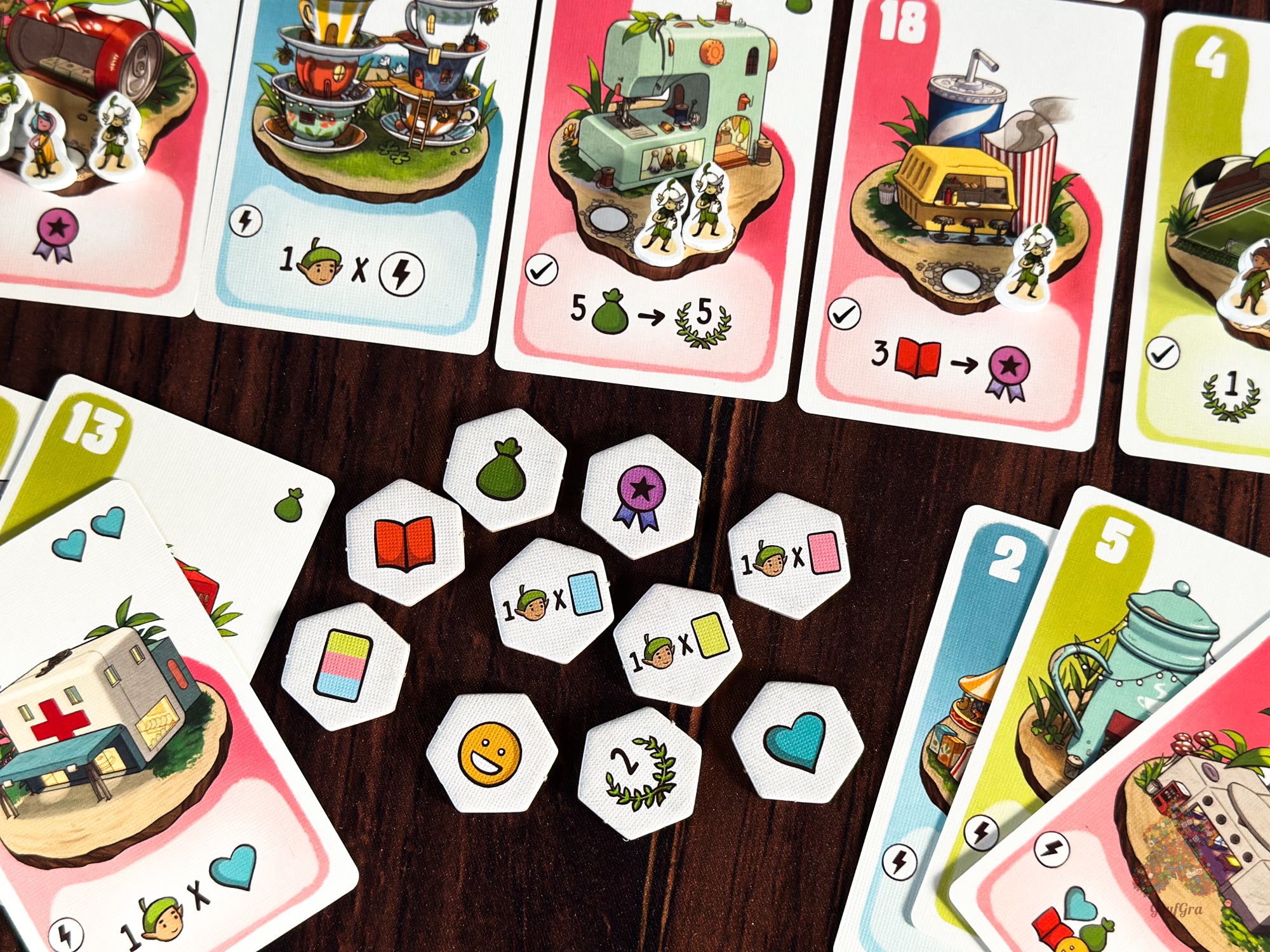
The cards played determine the round’s ranking. Cards matching the colour shown on the current Reward card rank highest, ordered by value. Cards of the other colours come after them. Our position determines the reward we receive: Minikins, a bonus token, points, or ribbons collected for final scoring.
We then each take one card from the market, but in reverse ranking order. The player who finished last chooses first. The round’s winner receives their reward but has to wait until everyone else has picked a new card. They also lead the next round.
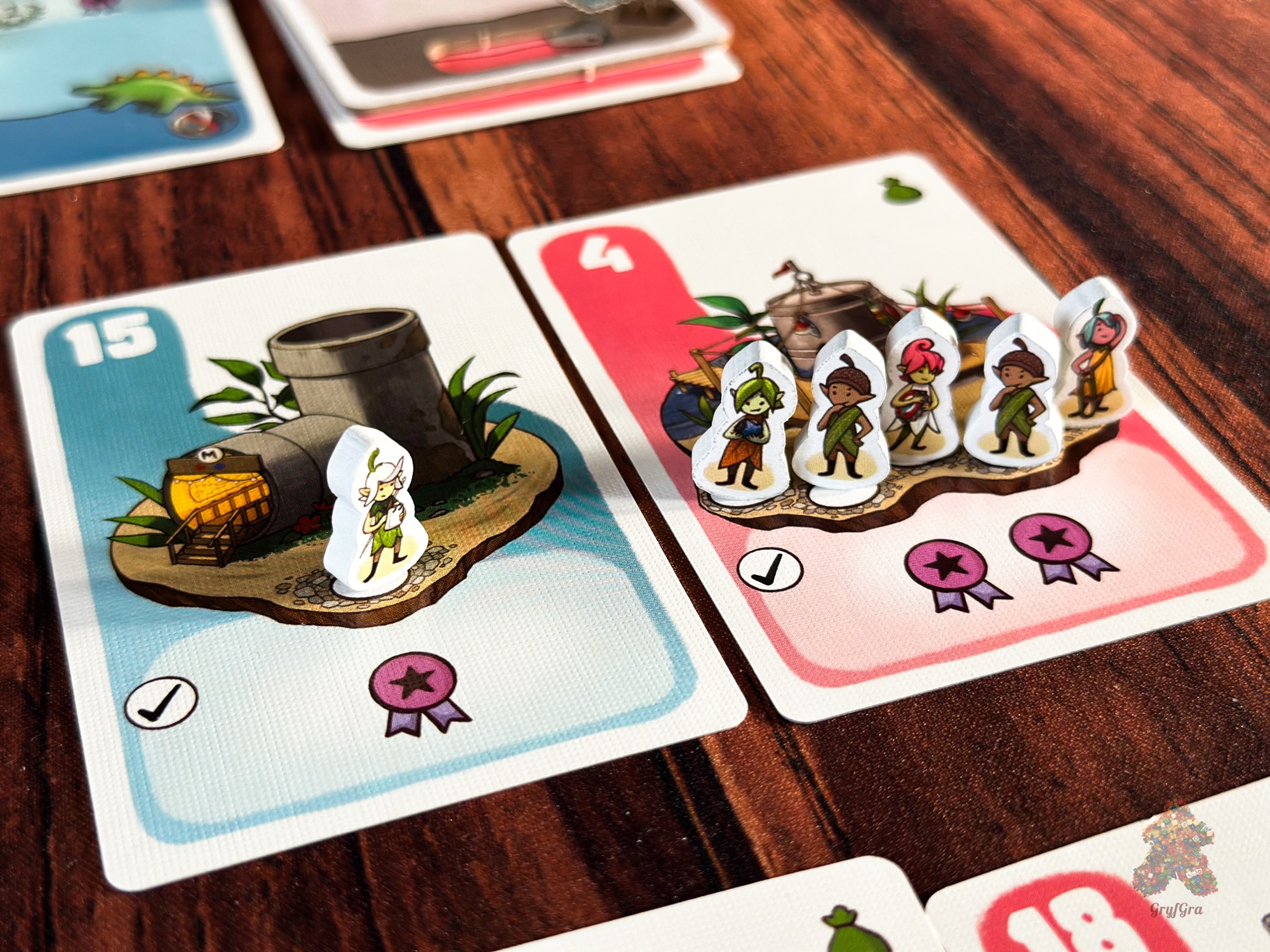
We place the Minikins we gain on empty spaces on our cards. A card’s scoring effect only activates once we have filled every required space. If we have no spaces available, we keep the extra pieces in front of us and must place them at the next opportunity.
After eight rounds, we resolve a final ranking by adding up the values of the cards still in our hands that match the colour shown on the Endgame tile. The winner of this ranking may play an extra card. We then score our rewards, activated card effects, and collected ribbons. The player with the highest score wins.
Review
“Minikin City” is an accessible family game that gives us quite a lot to think about despite its simple rules. The flow of a round quickly becomes clear, and during our games we did not need to return to the rulebook or remind ourselves of individual rules. The iconography also did its job well: both immediate effects and scoring conditions were clear to us.
The most interesting decision is choosing which card to play. Its value and colour might help us earn a desirable reward, while its symbols and scoring effect do not necessarily suit our city. Conversely, a card that completes a set we need might leave us low in the ranking. Sometimes we prioritise symbols, sometimes we add a useful scoring effect, and sometimes the reward available in that particular round matters most.
These decisions also matter because the game lasts just eight rounds. For us, that was the right length. It gave us time to develop our cities while requiring sensible choices about what to collect. There is no room to pursue every idea that appears with the next batch of cards. We have to assess which cards we can make use of and fill with Minikins before the game ends.
We really like the reversed order for choosing cards from the market. A low position does not just mean a weaker reward; it also gives us priority when selecting a new card. This can let us pick up a missing piece of our plan or a strong card that will help us compete for a reward in a later round. Deliberately playing a weaker card can therefore make sense, especially when the market contains something much more useful than the cards in our hand.
This mechanism also softens the impact of luck. Both the initial deal and the cards appearing in the market affect our options. Giving earlier picks to players who finish lower in the ranking lets them improve their hands. It does not remove randomness, but it provides a way to respond to a less favourable selection of cards.
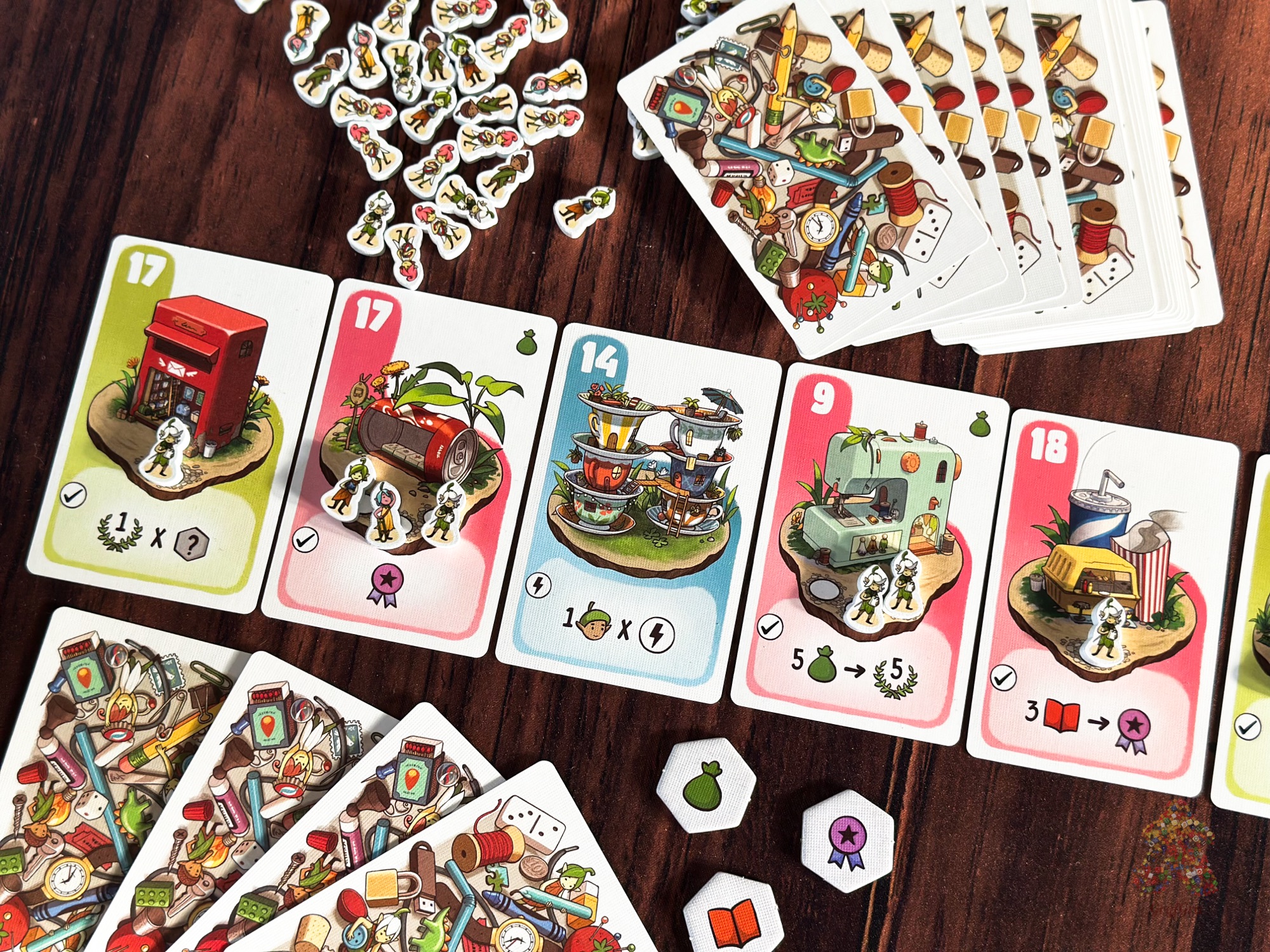
Minikins are another thing we need to keep track of. We might collect cards with promising scoring effects, but we will not benefit from those effects without enough residents. Collecting symbols and adding more ways to score is therefore only part of the job. We also need to acquire Minikins and decide which cards to fill with them.
The final ranking is worth keeping in mind too. The chance to play an extra card is tempting enough to make first place worth fighting for and to encourage us to consider the final colour when choosing cards. Of course, the value of this reward depends on what remains in our hand. The extra card does not always fit our city’s plan perfectly, but it can still improve our score.
In our games, we focused primarily on our own arrangements of cards. We paid little attention to our opponents’ cities because finding ways to score in our own city took up most of our thinking. We compete for positions on the Reward cards and for picks from the market, but we did not feel a strong sense of interaction at the table. Players looking for frequent opportunities to disrupt others may find this aspect less appealing.
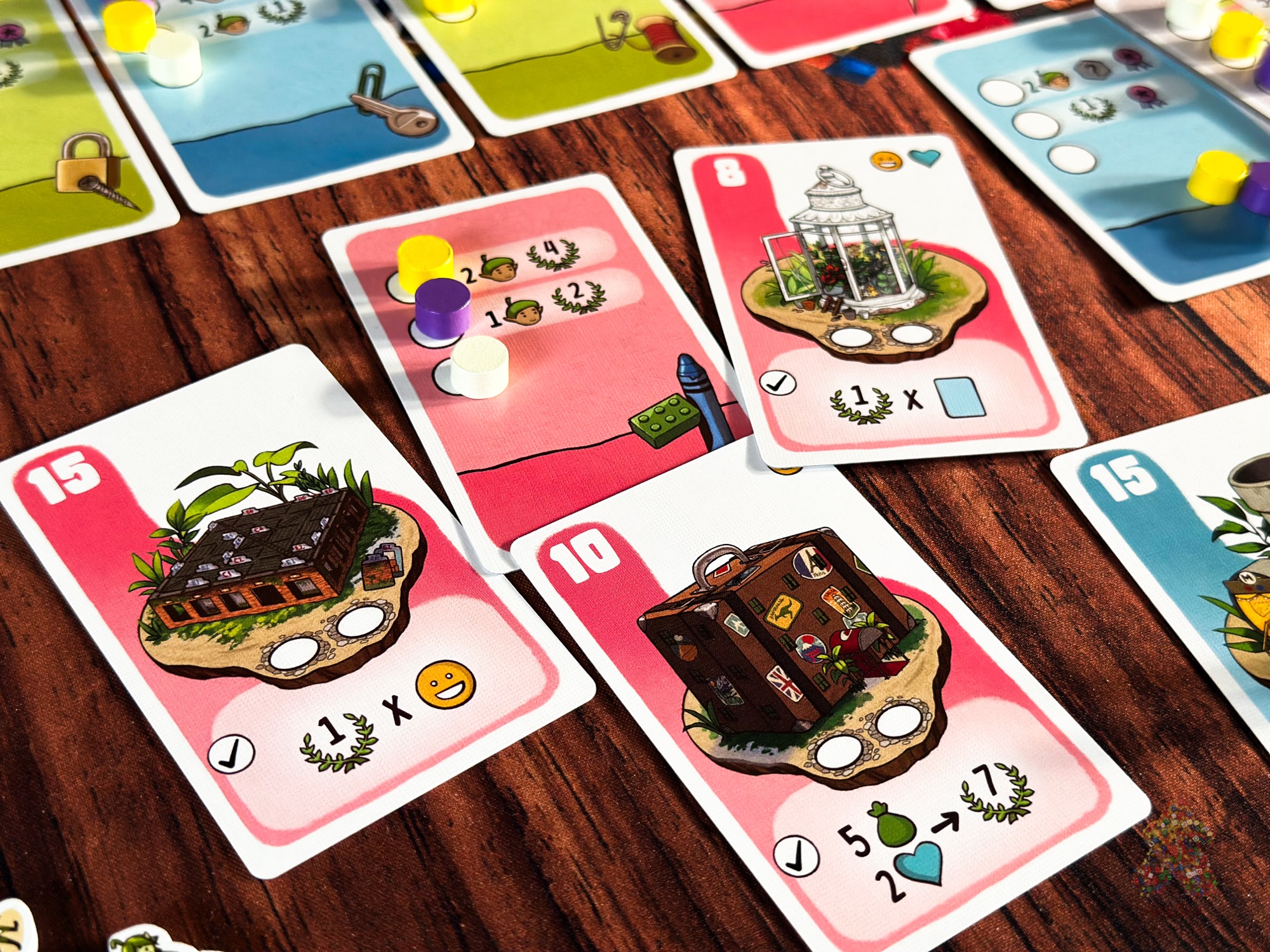
We played “Minikin City” with two, three, and four players. At each of these counts, the game ran smoothly without long waits between turns. We enjoyed the three- and four-player games most. The two-player game works well, but we found it less interesting than playing with a larger group.
We are happy to keep returning to this game. Its different scoring patterns encourage us to look for new combinations, and the short playing time makes another game easy to fit in. It is a quick card game that, despite its simplicity, requires us to think about several things at once. An experienced thirteen-year-old also handled it well and achieved a solid score.
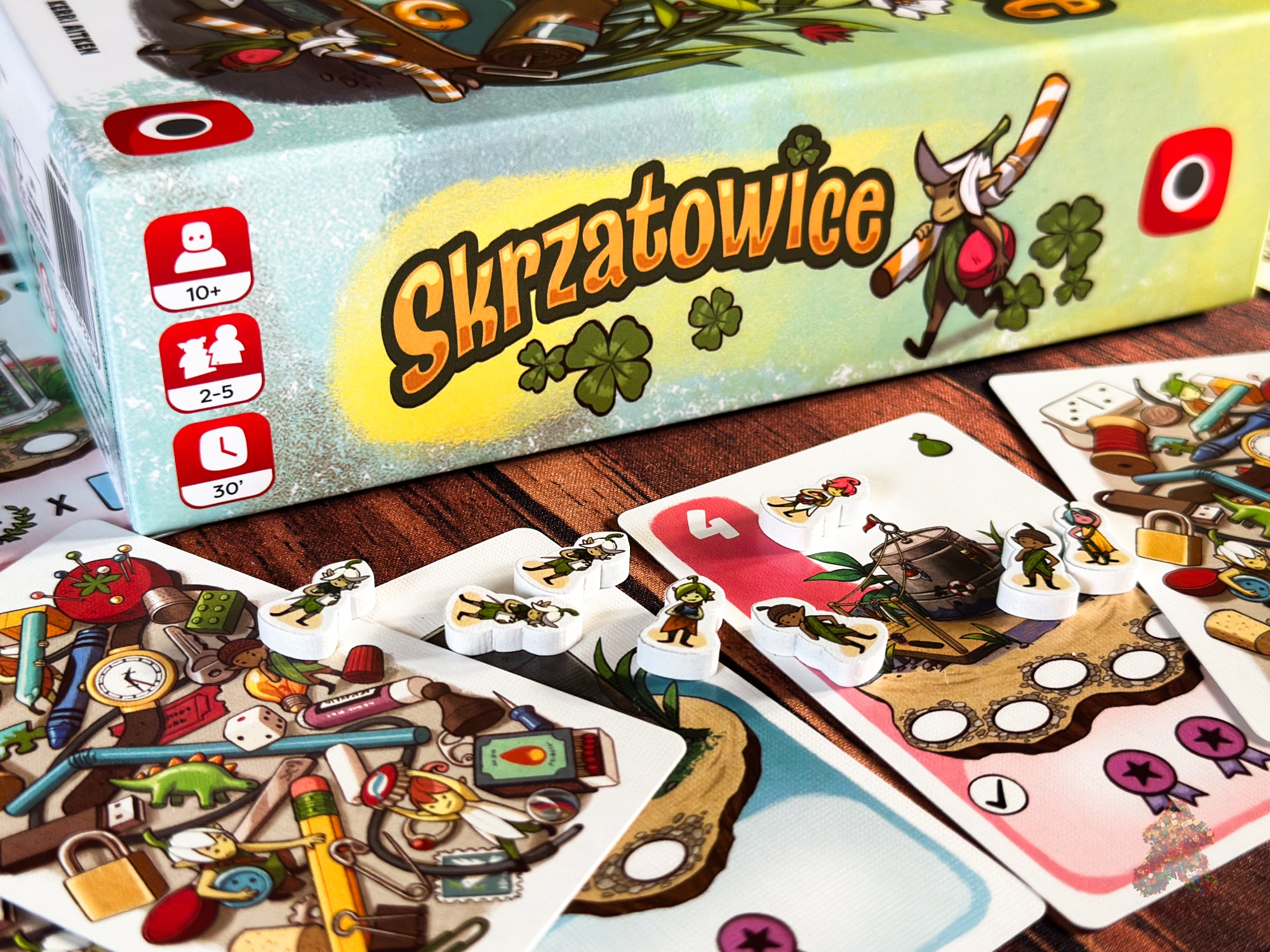
Summary
The biggest strength of “Minikin City” is the number of interesting decisions packed into a simple, short game. We choose between rewards, symbols, and card effects, manage our Minikins, and consider what to keep for the finale. Giving earlier market picks to players lower in the ranking means that passing up the current reward can also be a useful move.
We did not find any major drawbacks, although we prefer playing with three or four people. We recommend it to beginners and players with some gaming experience, to families, and for playing with children from around the age of ten. It is a particularly good fit when we want something quick that offers the satisfaction of putting together our own combinations.