

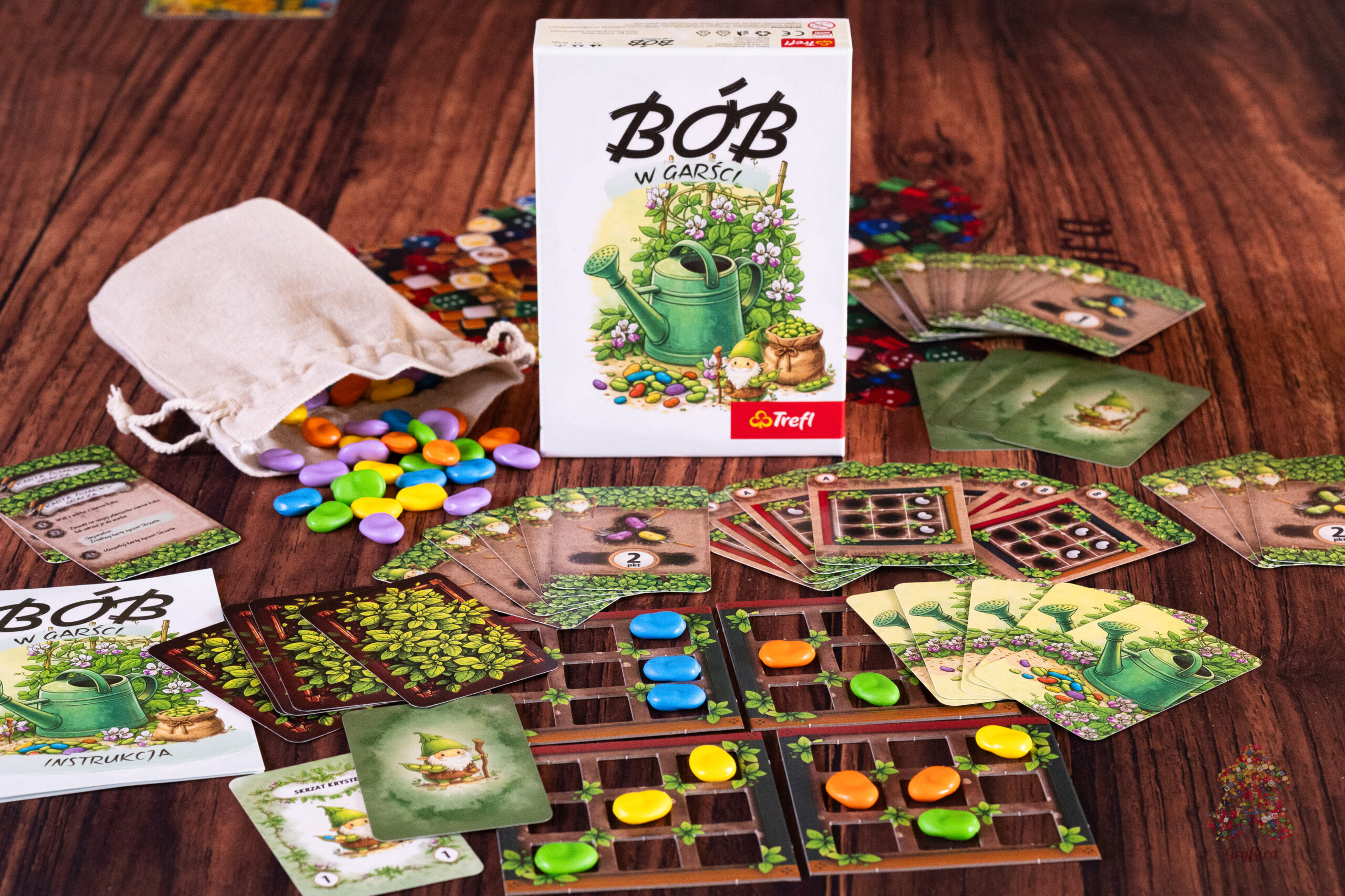
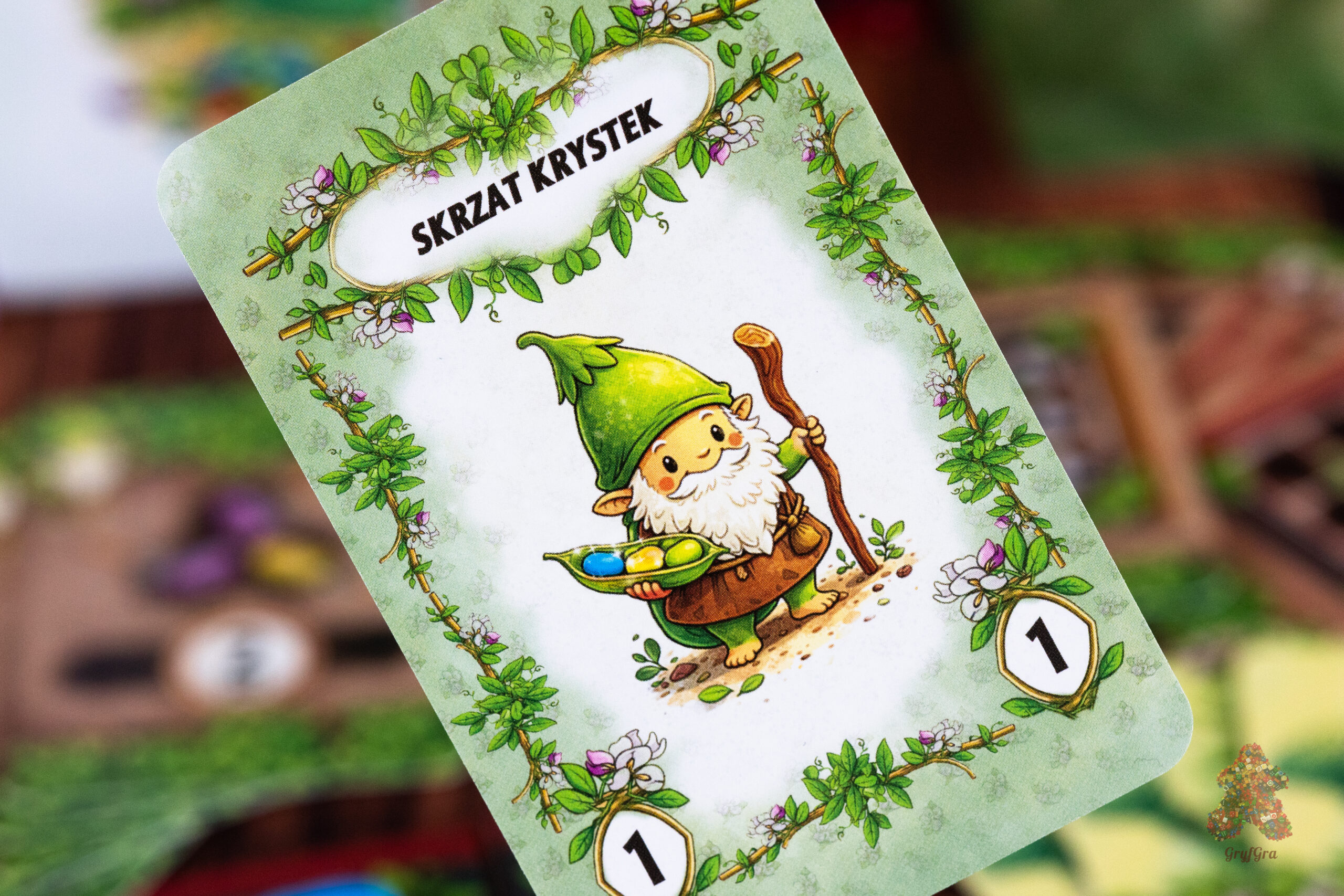
A vegetable patch of our own, colourful beans and a gnome called Krystek whose wishes we need to fulfil: that is the premise of “Bób w garści”, designed by Krystian Munia and published by Trefl. Beneath the gardening theme lies a simple puzzle game in which we draw beans and arrange them on small player boards. Along the way, we have to balance our plans with the handful we draw and the shared objectives everyone is competing for.
Gameplay
Each player receives a board with nine spaces for beans. Eight pattern cards are laid out in two rows in the centre of the table, with four wish cards below them. Each wish has two associated patterns, and we can use either one. All the colourful beans go into a shared bag.
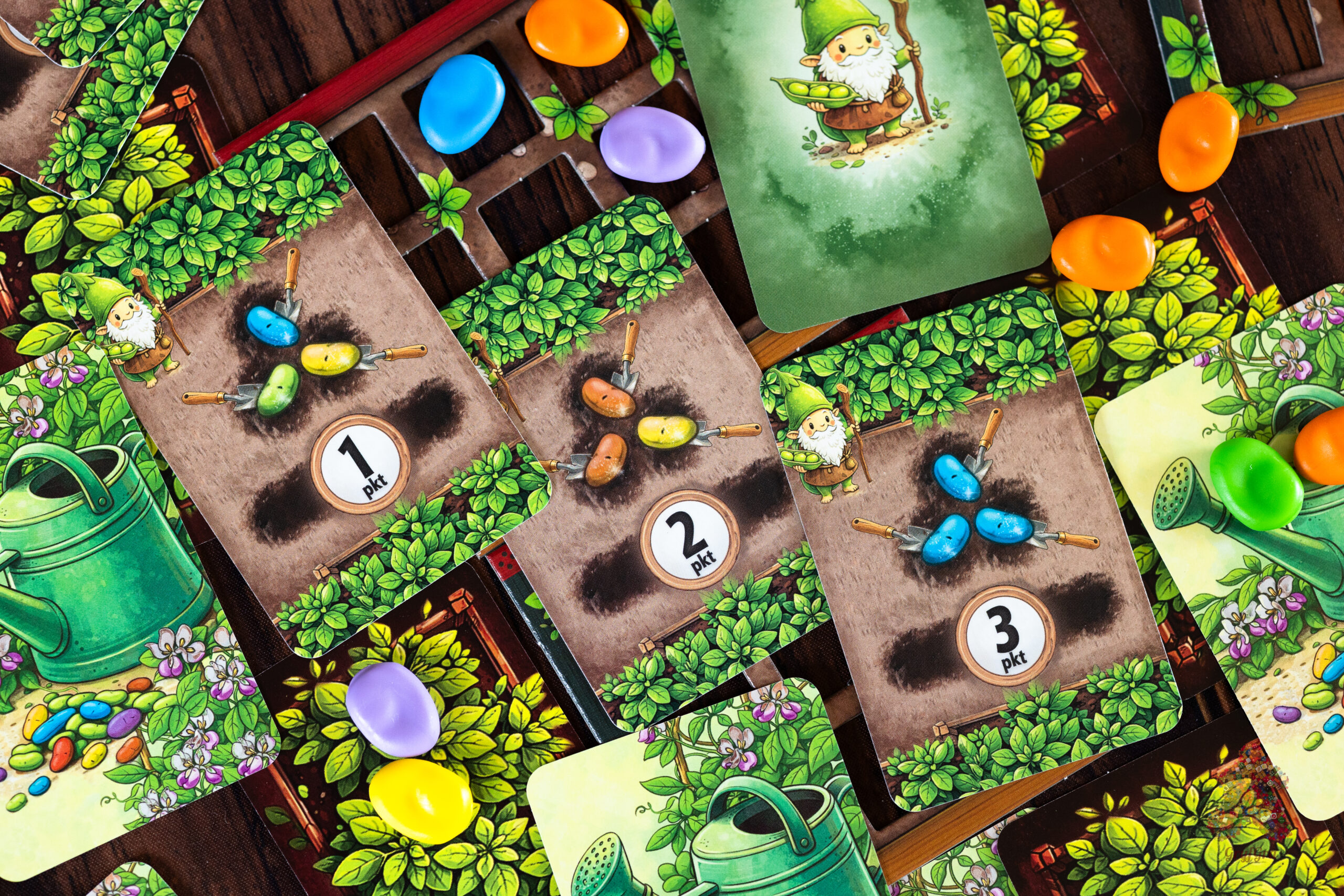
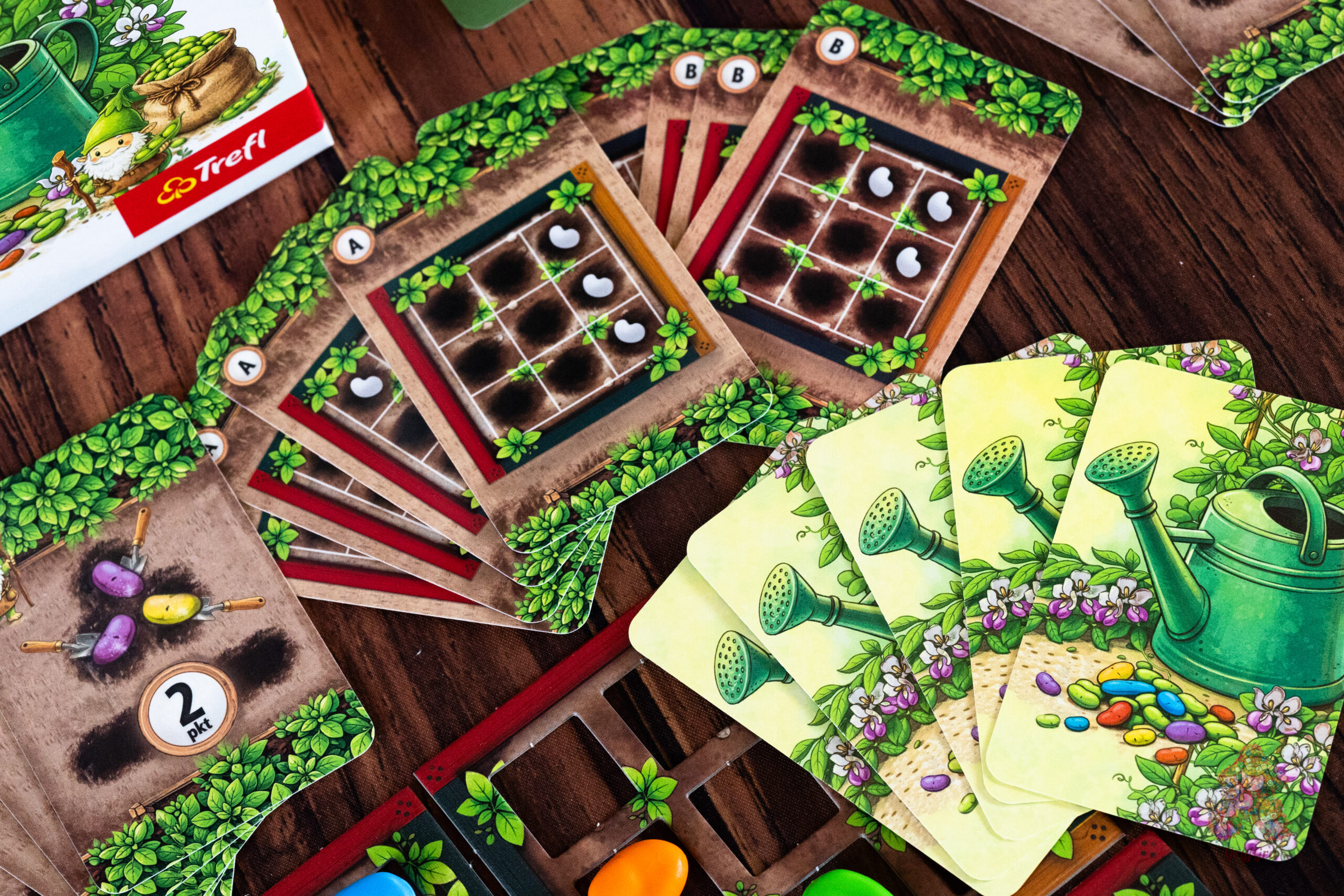
On our turn, we draw three beans and decide which ones to plant on our board. Any unwanted beans can go back into the bag. We can also remove beans planted on earlier turns if we need room for something else. Our aim is to collect the colours shown on a wish card and arrange them in one of its associated patterns. The order of the colours within the pattern does not matter, but its orientation does: we read it from our own side of the table.
Once we meet the requirements, we can return the beans used to the bag and claim the wish card, scoring the points printed on it. We can complete more than one objective in a turn if the beans on our board allow it. New wish cards are revealed only at the end of the turn. When someone reaches at least 10 points, we finish the round so that everyone has taken the same number of turns, then compare scores.
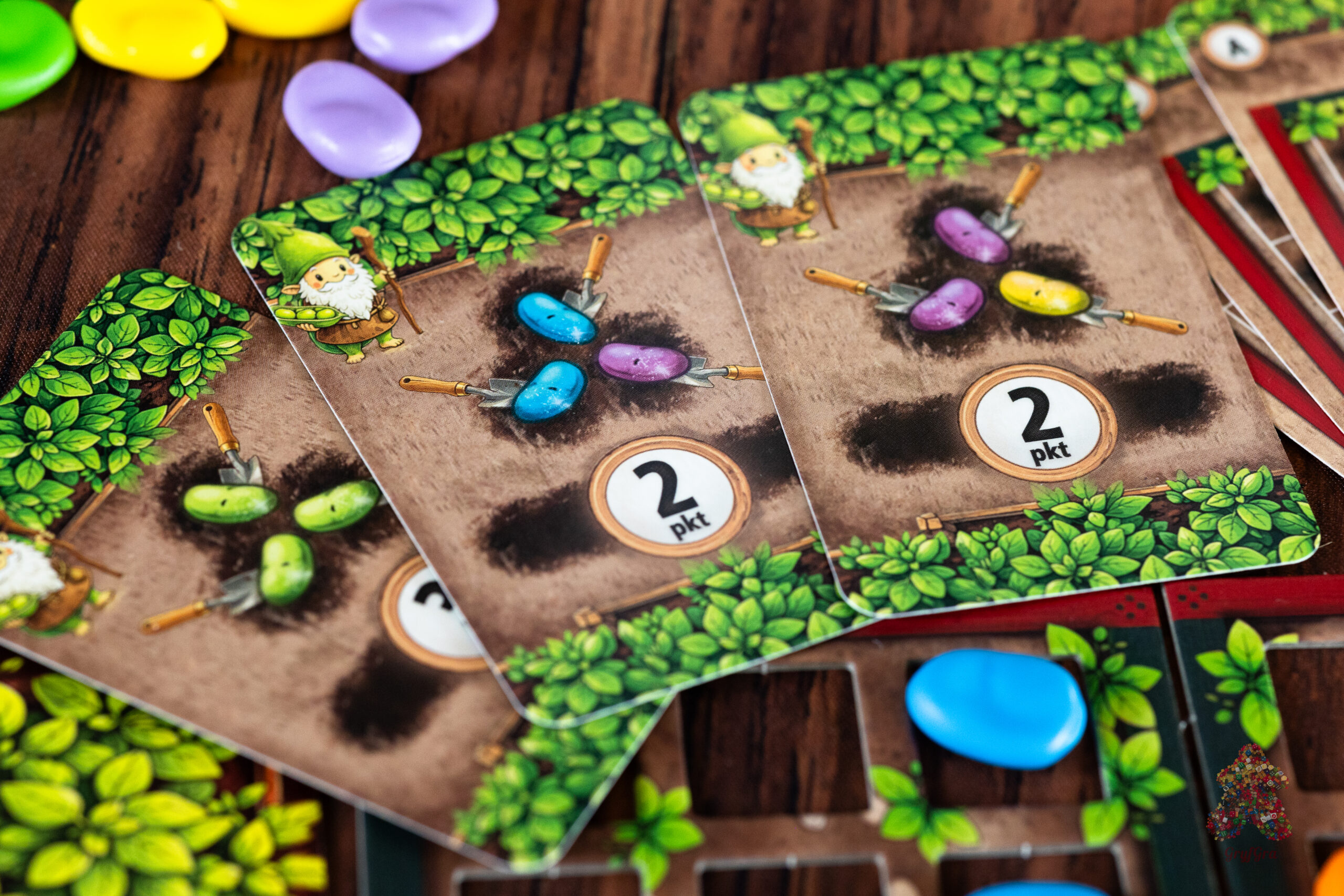
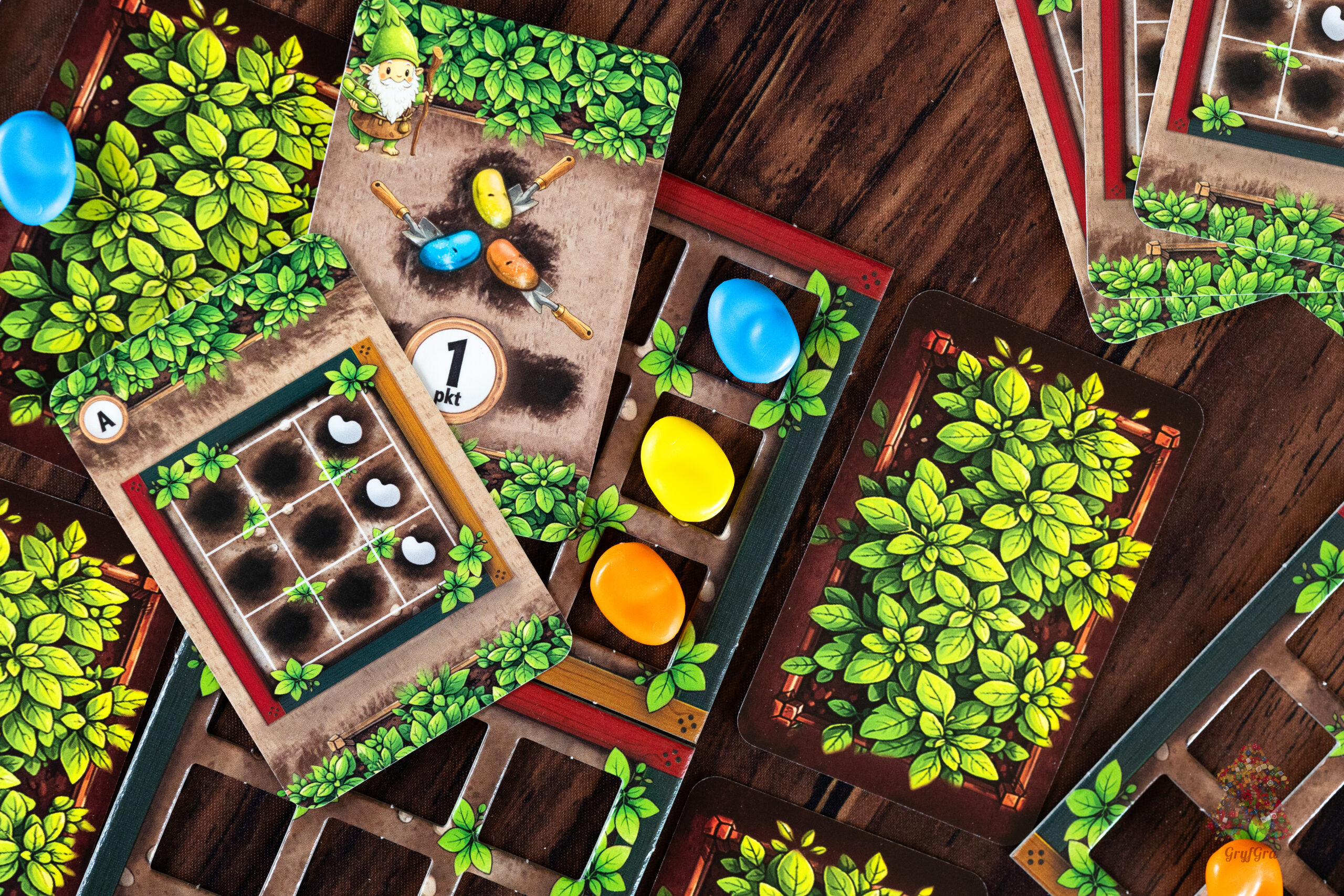
The rulebook also offers several variants. The magic beans variant lets us keep one bean from each completed wish and later spend it on a special action, such as moving a bean or drawing again. We can also use the reverse sides of the pattern cards and secret objectives that award bonus points for particular colours on claimed cards. A simpler variant for younger players removes the pattern cards and instead asks players to collect the required colours in a continuous line.
Review
“Bób w garści” is a light puzzle game about matching colours and patterns to shared objectives. The rules are simple and intuitive: explaining them took us about five minutes, and a game usually lasted around fifteen. That gives a good sense of its scope. There is some planning involved, but little room for lengthy deliberation over future turns.
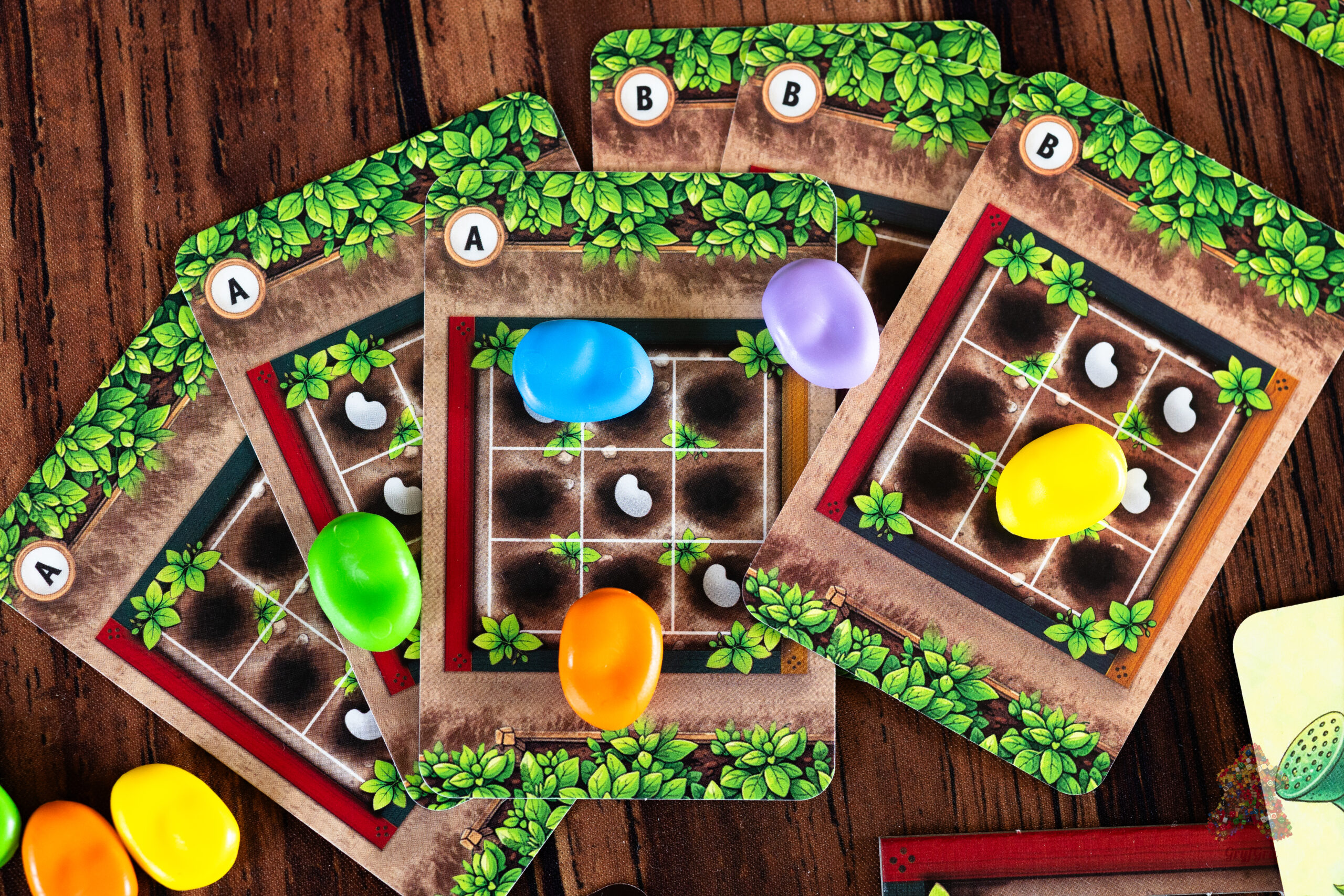
We usually picked one wish and arranged our board with that objective in mind. The beans we drew did not always fit the plan, though. When that happened, it was worth looking at the other cards and trying to prepare for a different objective. Adapting our plans to the current situation made up the bulk of our decision-making. Stubbornly waiting for a single colour could be awkward, especially when other players were interested in the same card.
Luck certainly made itself felt. We might know exactly what we need and where we want to plant it, but the bag does not always cooperate. Preparing an alternative pattern helps us make use of a less helpful draw, although it does not give us full control over the game. We have to accept that some turns will unfold differently from what we had in mind.
The magic beans help here. Moving a bean, swapping beans or drawing again gives us more ways to respond to the situation. In our games, drawing again proved particularly useful. It offered another chance to find the colours we needed, but naturally did not guarantee success. This variant gives us more options when our board is not working out, and choosing which bean to keep also becomes meaningful.
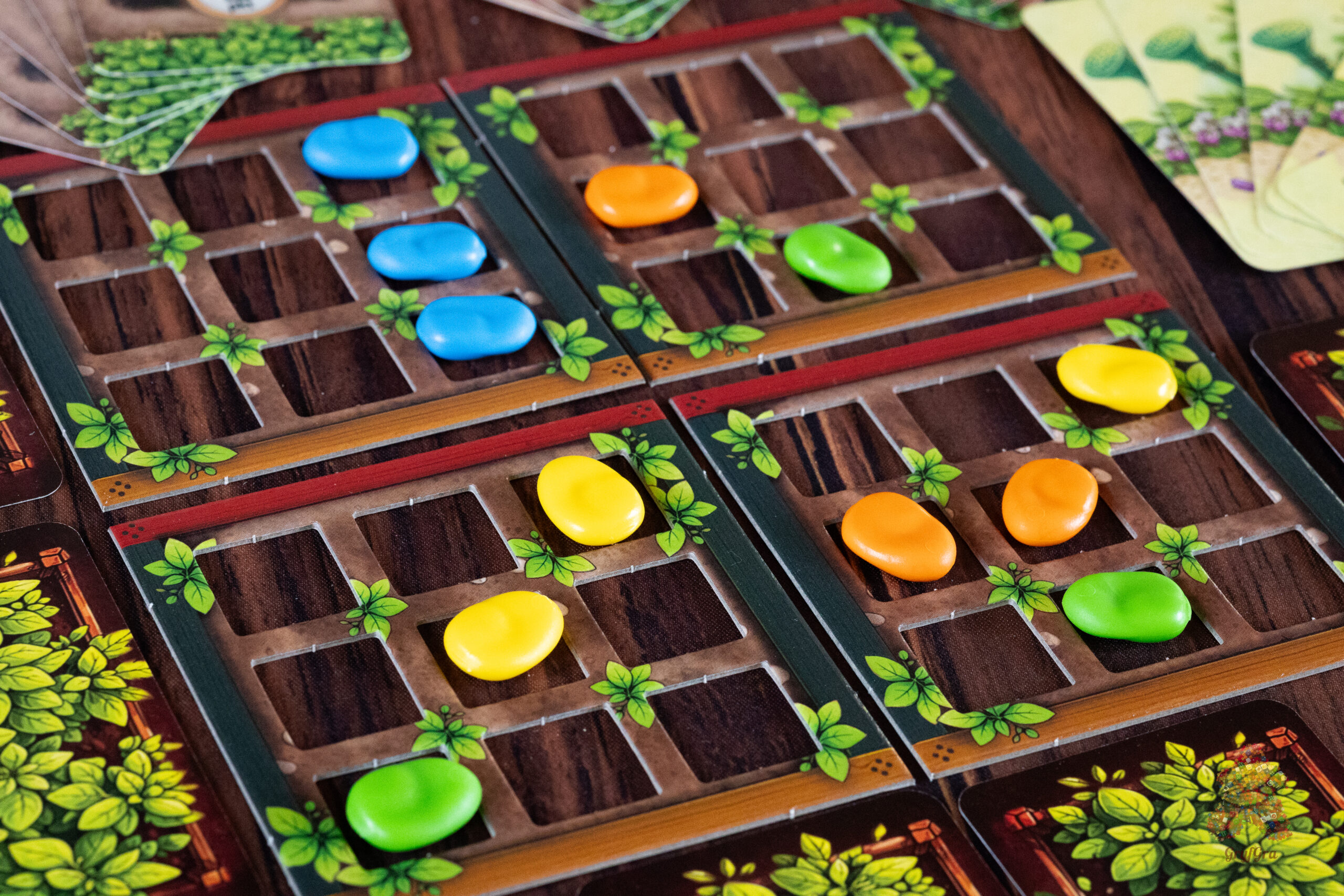
We tried all the available variants and preferred playing with the additional options. The basic game is very simple, while the powers, alternative patterns and secret objectives add welcome variety. It remains a light game, but gives us more reasons to think about which wish to pursue or how to use the beans we already have.
We played with two and three players, including a thirteen-year-old. The rules do not change with the player count, so the same four wishes face more competition with an extra person at the table. With two players, the game felt calmer, less demanding and less interactive. With three, competition increased and there was less scope for planning ahead. It is worth considering whether we prefer more freedom to arrange our own garden or more frequent changes to the shared objectives.
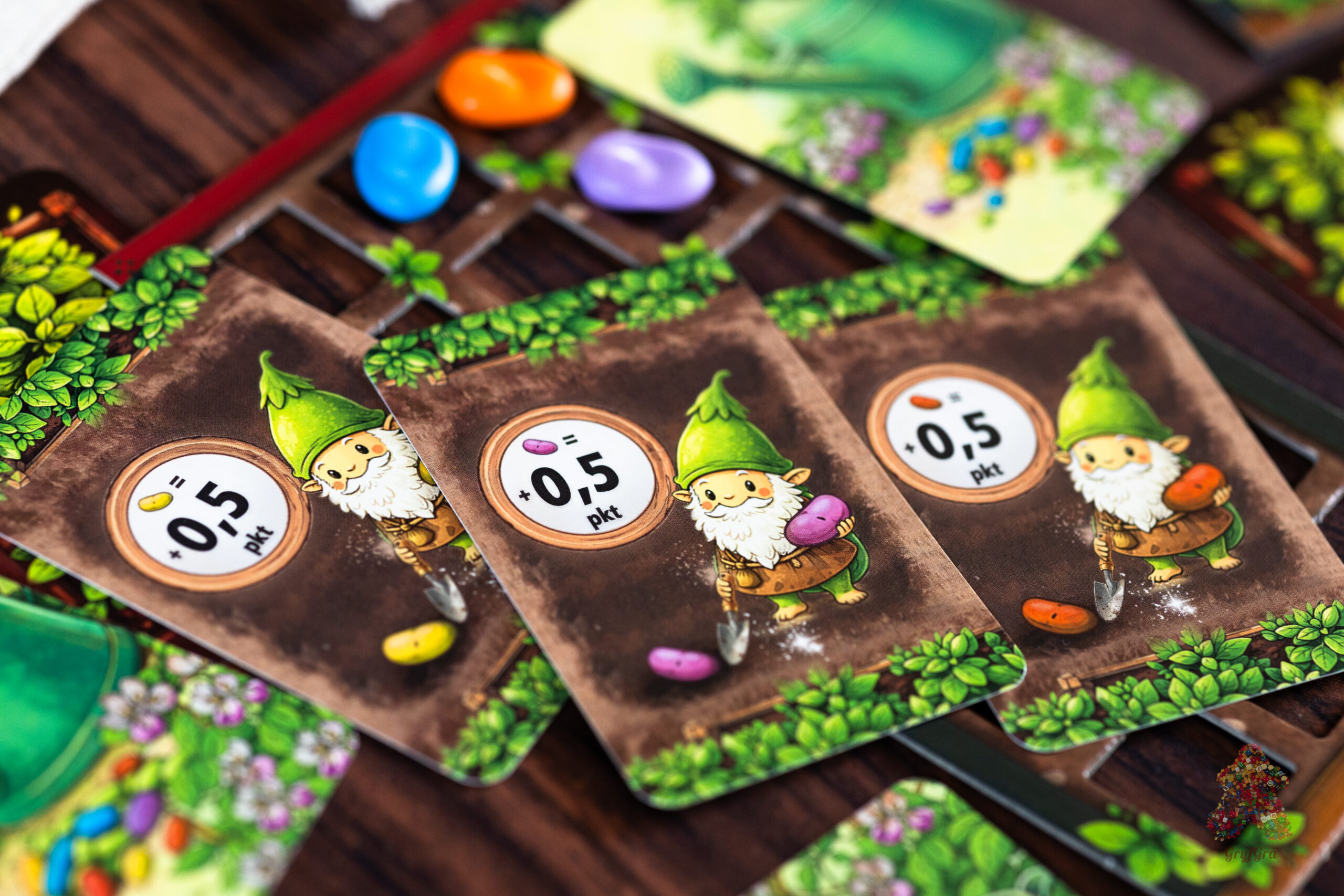
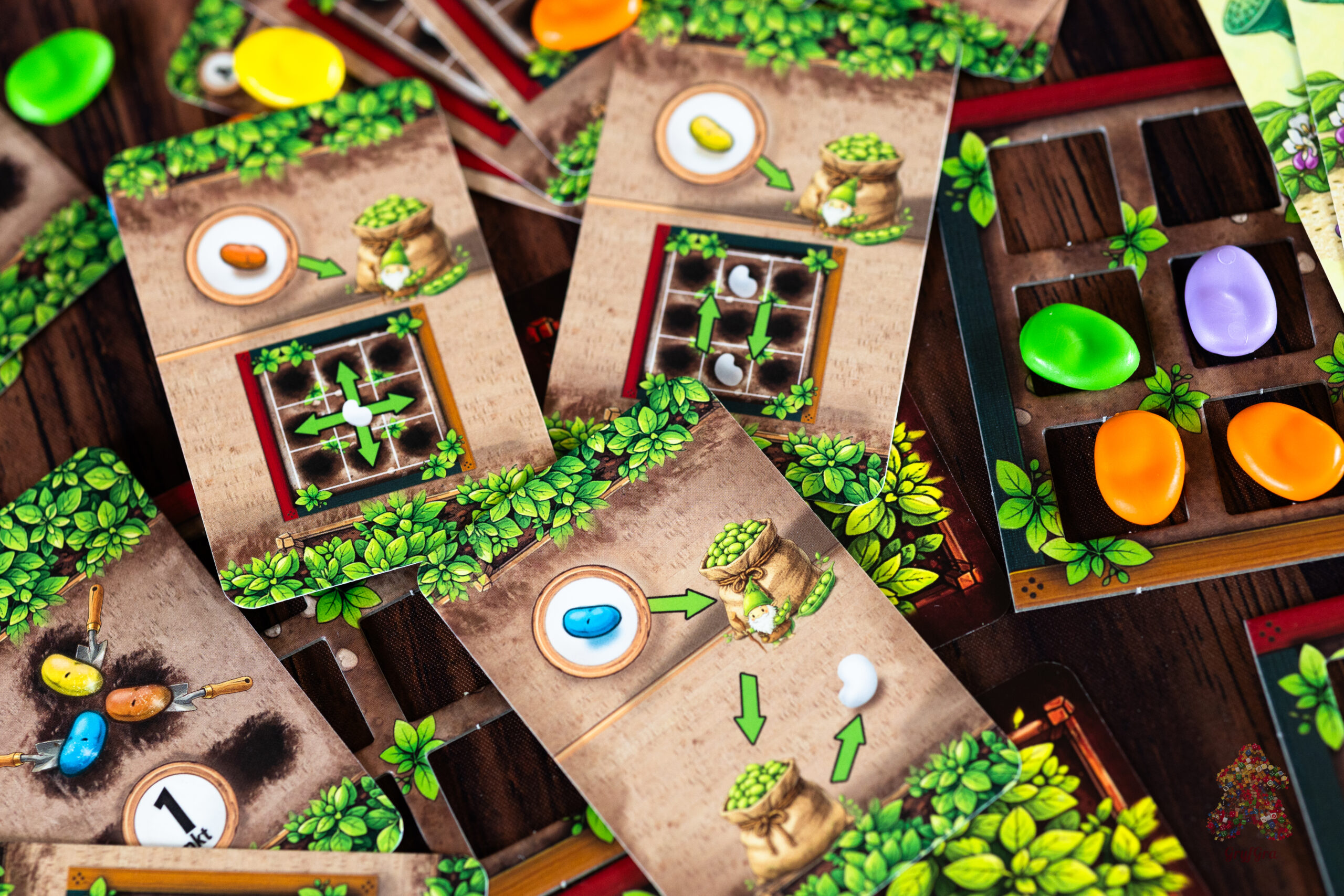
The main differences between games come from the beans we draw and the wishes that appear on the table. That is enough to keep us from making exactly the same moves every time, although it does not change the basic nature of the experience. We are still adapting to the available colours and looking for scoring opportunities. Over a fifteen-minute game, that worked well for us, and we were happy to return whenever we wanted something quick.
The production is pleasant, and the colourful beans themselves were our favourite components. They are easily the highlight of the set. We were less enthusiastic about the illustrations: at times, their style reminded us of AI-generated images. That describes our reaction to the artwork, rather than making a claim about how it was created.
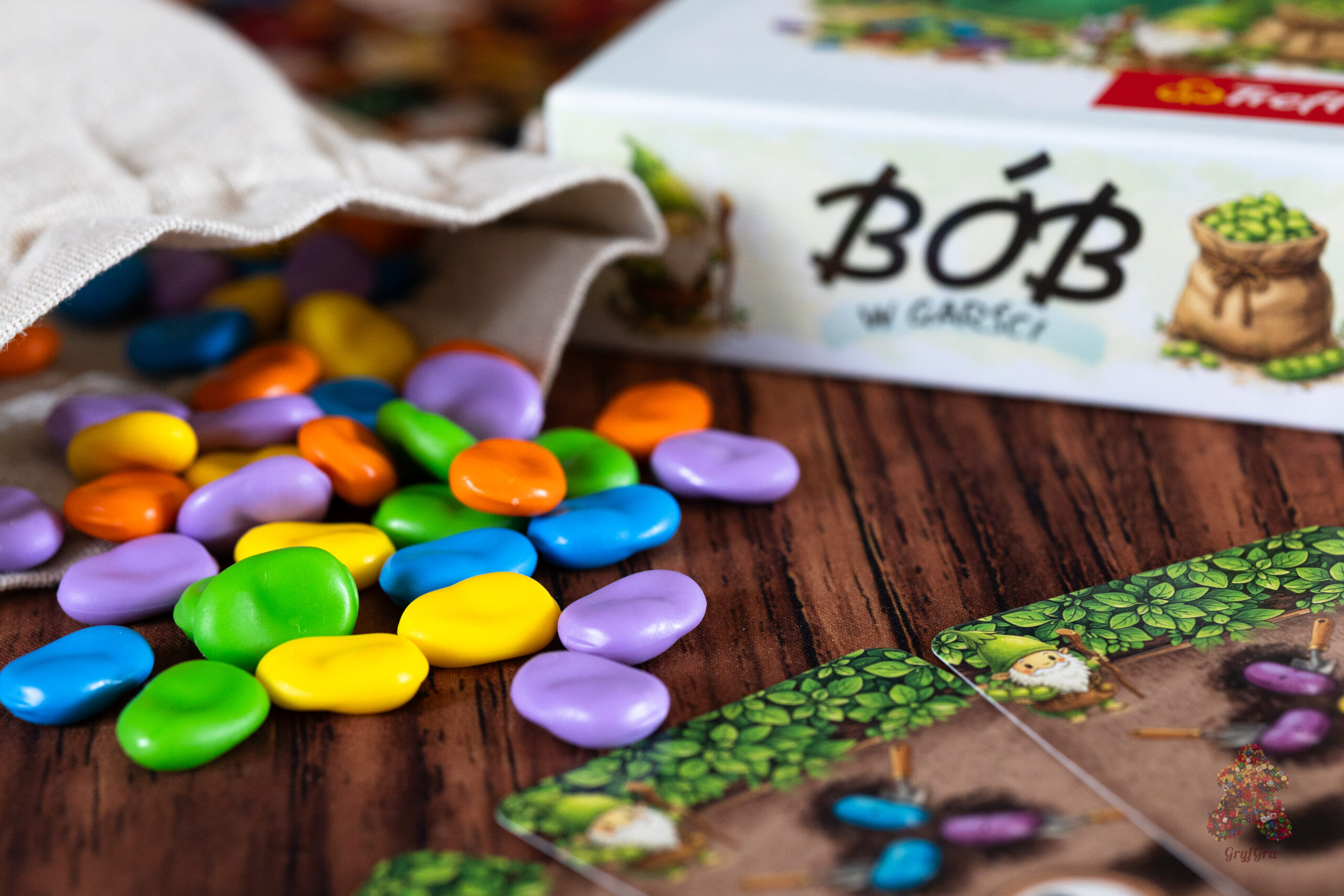
The straightforward rules and short playing time make this a good fit for family play. It seems approachable for eight-year-olds too, although we did not test that lower age limit: the youngest player in our games was thirteen. The option to start with the simplified variant for younger players and introduce further rules later also helps.
Summary
“Bób w garści” works well as a quick game over coffee or when we have fifteen minutes to spare. It has accessible rules, appealing colourful beans and several variants that add variety to its simple puzzle. We had the most fun with the extra options, particularly the magic bean powers.
We do, however, need to enjoy responding to random draws and accept the limited scope for planning ahead. This is a game for families and anyone looking for a light pattern-matching experience. It is calmer with two players, while three brings more competition for wishes. In both player counts we tried, we were happy to bring it out when we wanted a short game that did not require a lengthy explanation.
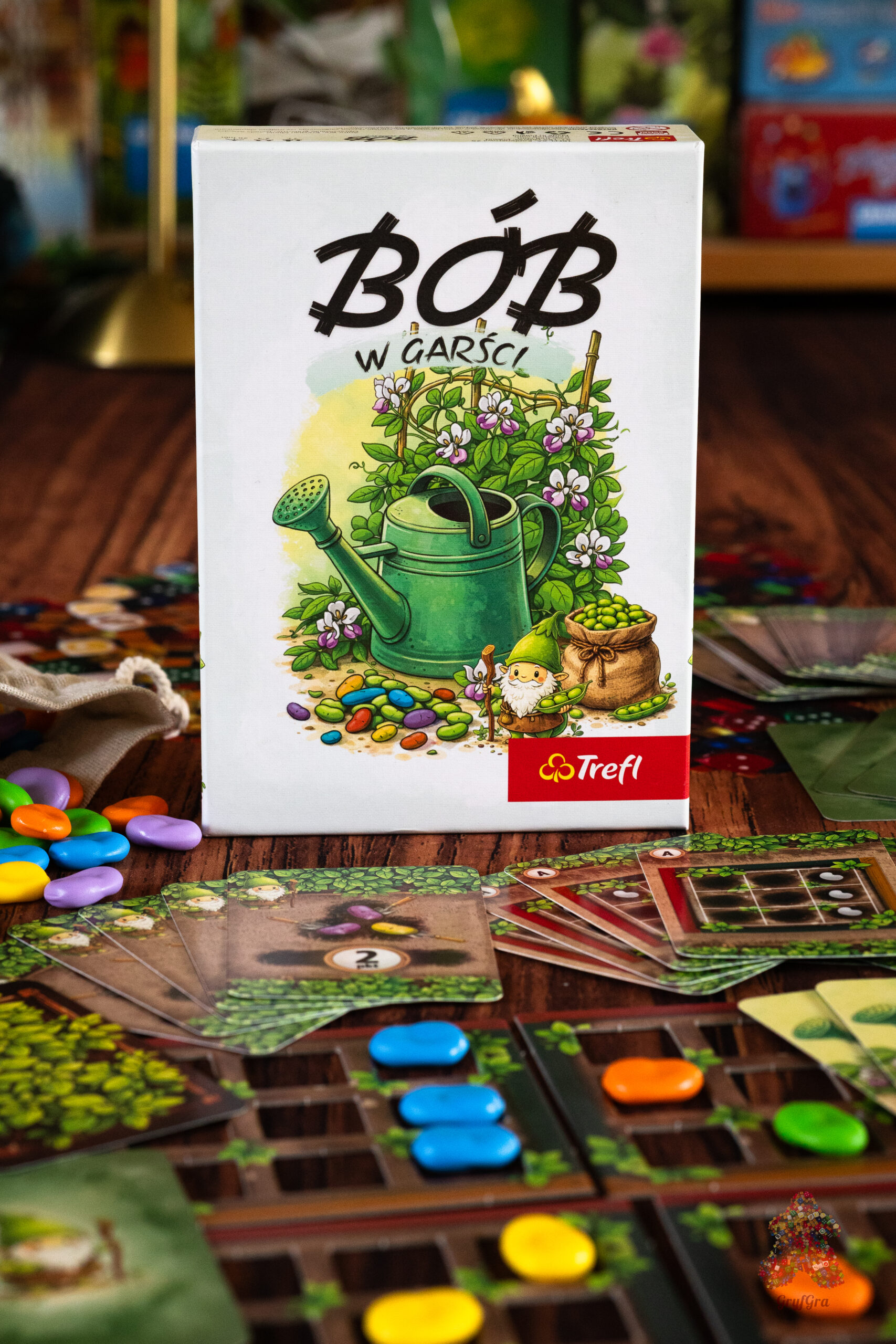
Thank you to Trefl for providing a copy of the game for review.
