

There are many ways to develop an artistic workshop of your own. You could take up ceramics, try metalwork, explore glasswork, or focus on painting and textiles. In “Artistry”, a game by Amy and Dusty Droz published by Dux Somnium Games, we can combine all these interests. We gather materials, buy patterns and recruit artisans who expand our options. All of this takes place against a backdrop of Art Nouveau illustrations that catch the eye from the very first encounter.
Gameplay
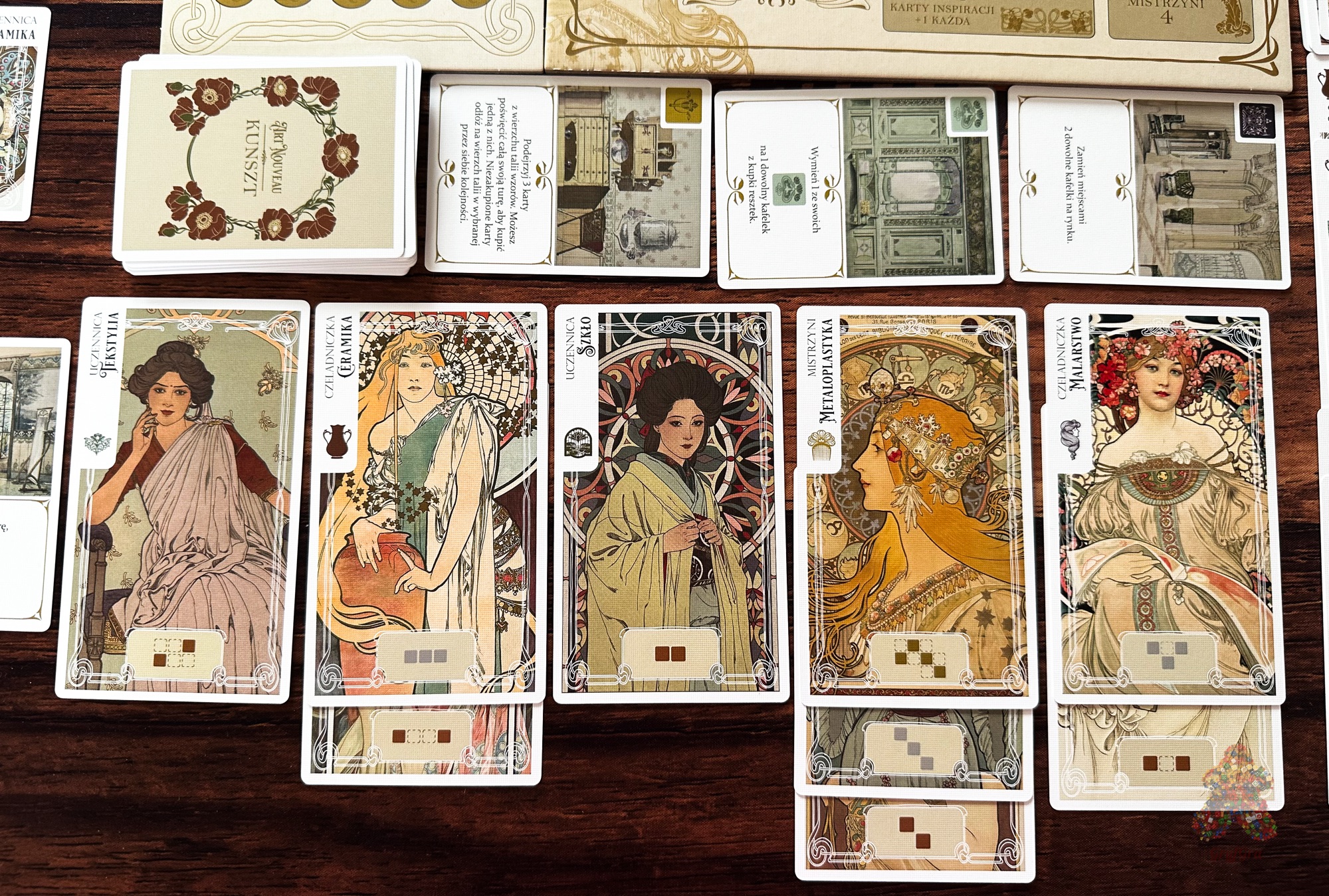
We place the market board in the centre of the table and, at the beginning of each round, fill it with material tiles drawn randomly from a bag. The size of the area we use depends on the player count. Five pattern cards and three inspiration cards are displayed beside it, and everyone starts with one randomly assigned apprentice artisan.
On our turn, we take one of three actions: gather materials, buy a pattern card or pass. Our artisans determine how we collect tiles. Each lets us take materials arranged in a particular shape on the market. We can rotate or mirror that shape, but we must collect every tile it requires. We are also limited to holding ten material tiles.
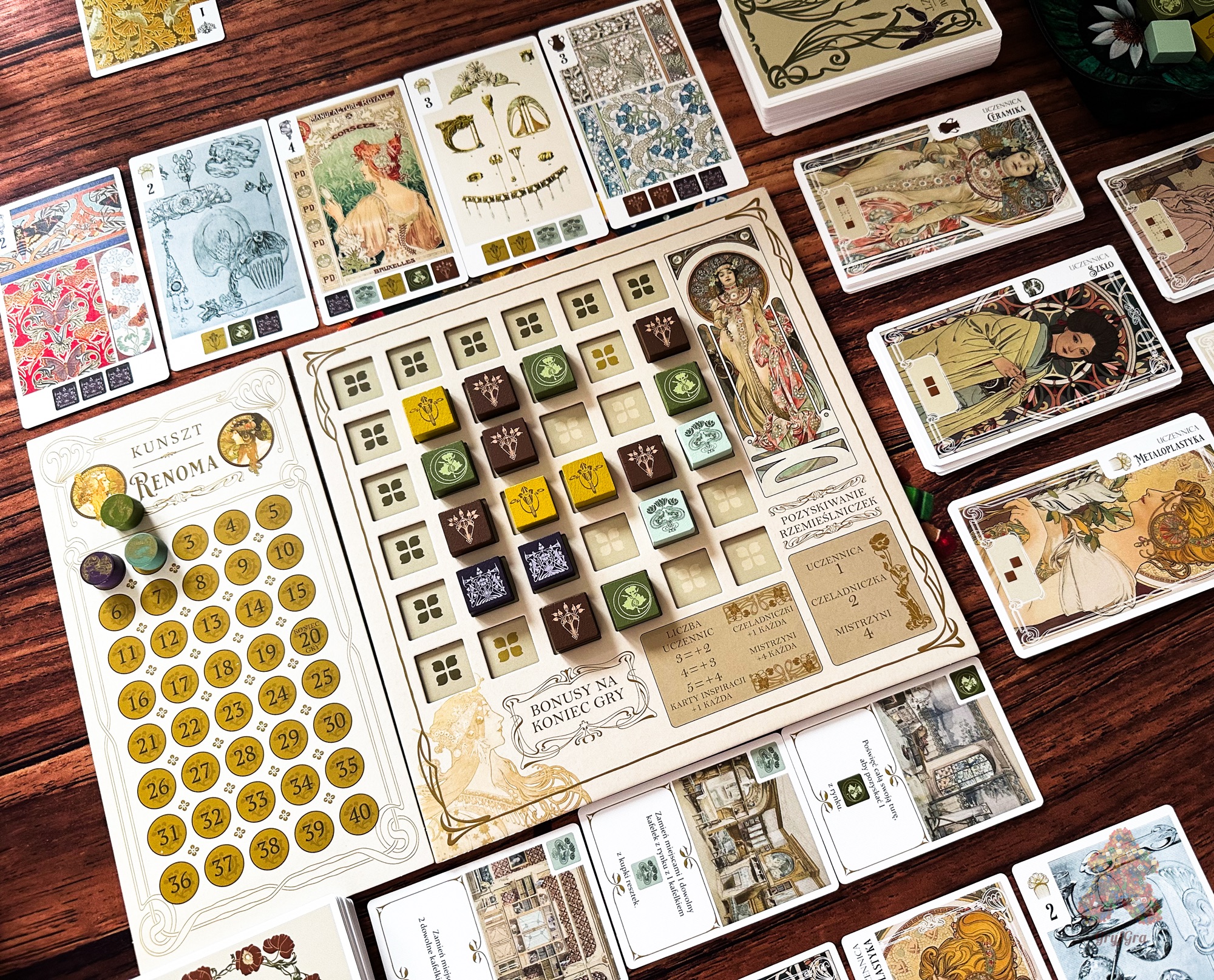
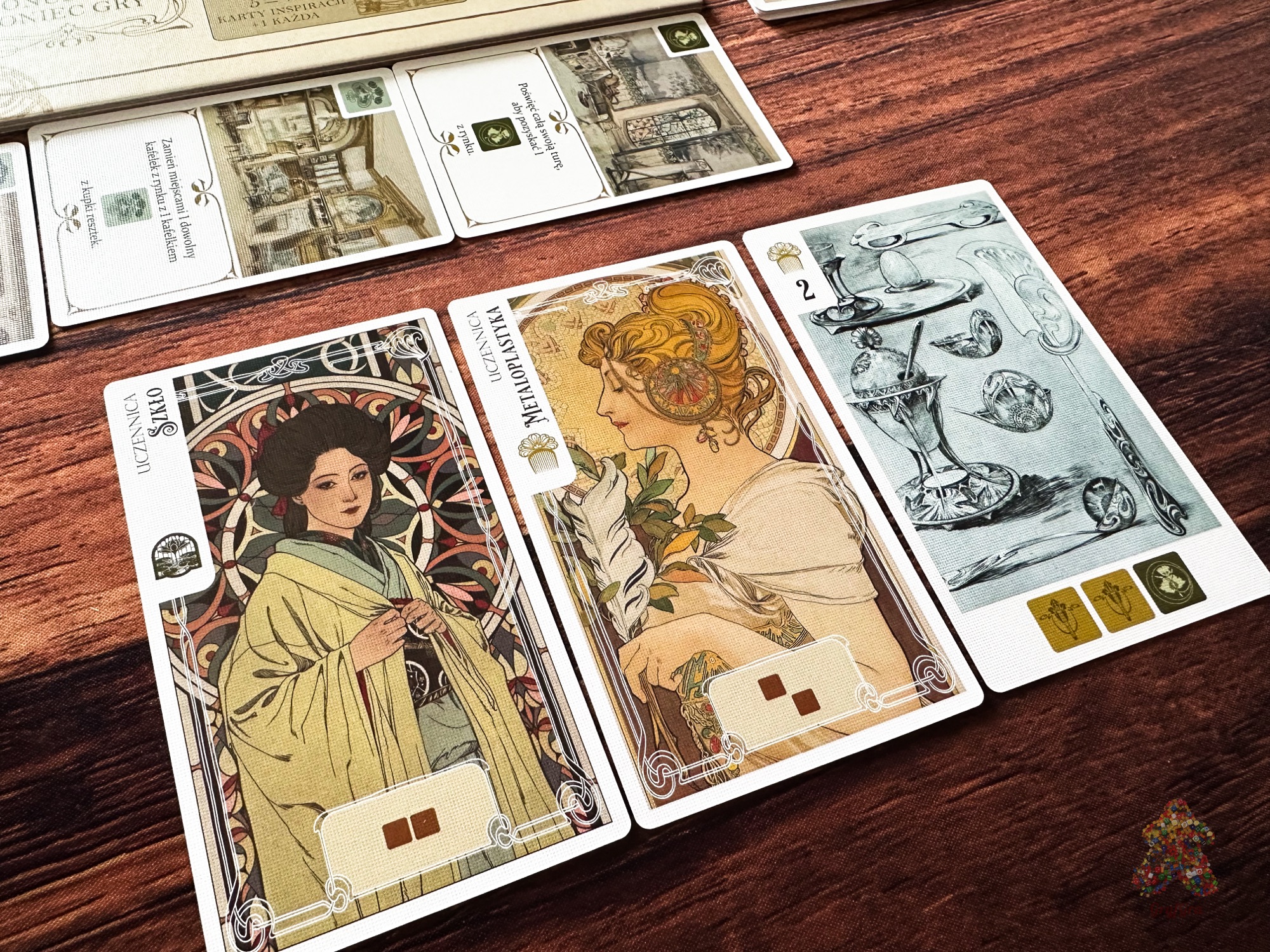
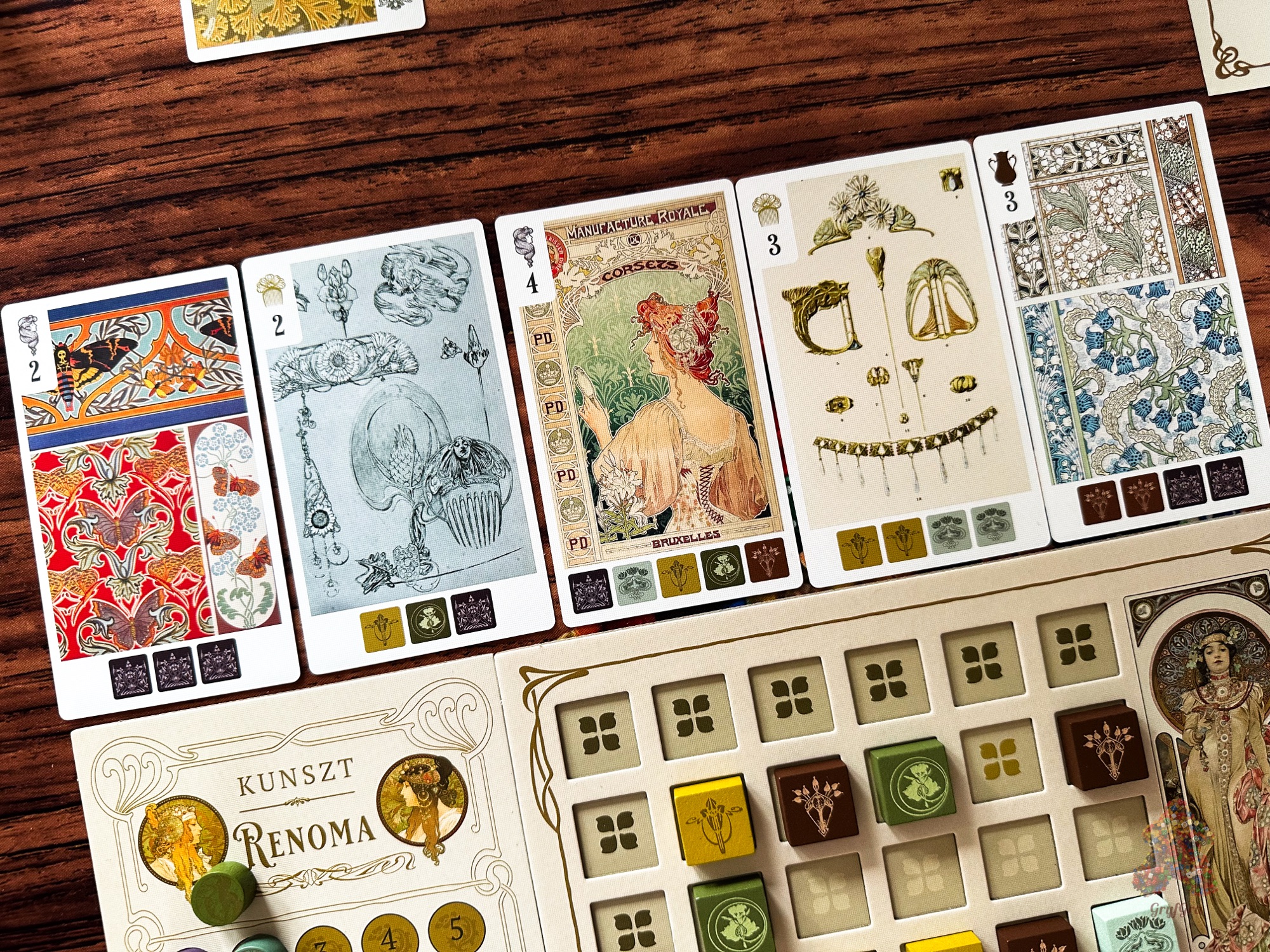
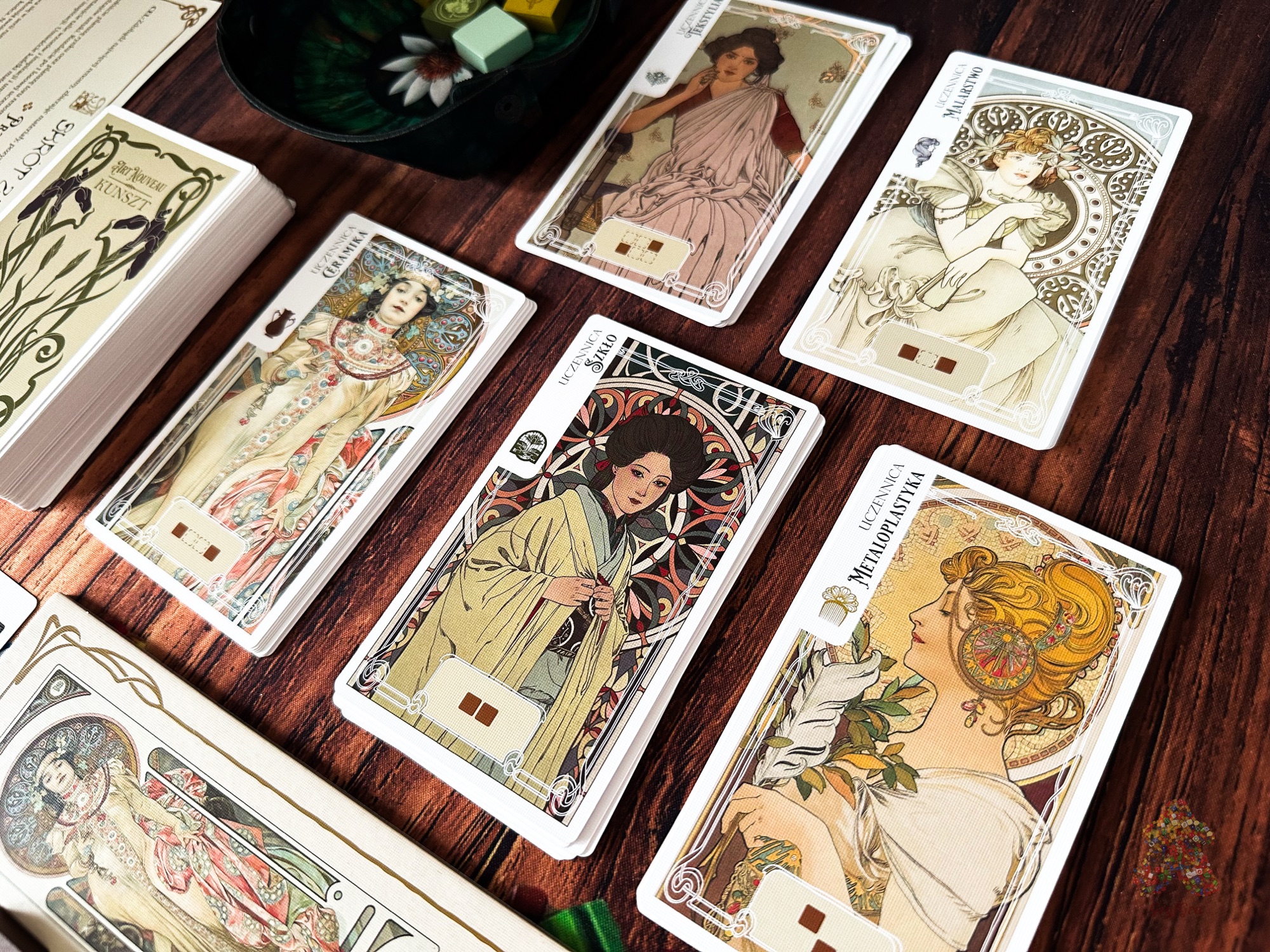
We spend the tiles we have collected to buy the available patterns. If we are missing a particular material, we can replace it with any three tiles. Each purchased card provides renown points and joins our collection of patterns in one of five crafts. Our first pattern in a craft lets us recruit its apprentice, unless we already have her; the second gives us a journeywoman, and the fourth a master crafter. The latter, however, is available only to the first player to meet the requirement. Each new artisan gives us another shape for collecting materials.
It is also worth looking out for the last tile of each colour. Taking that tile lets us claim a matching inspiration card, if one is available on the market. Inspiration cards offer additional abilities that can help us as the game progresses.
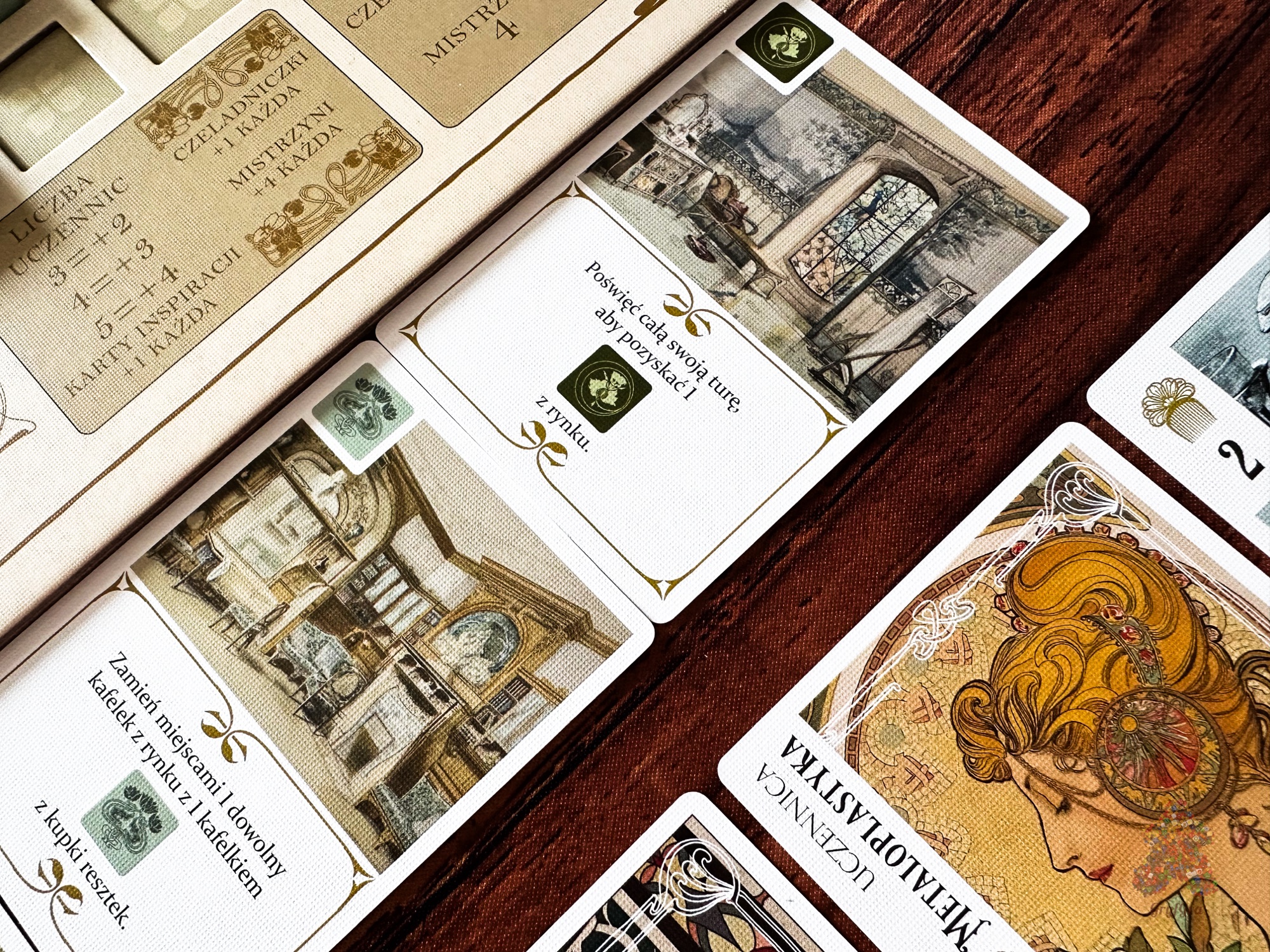
The round ends when everyone has passed. If anyone has reached at least twenty renown points, the game ends as well. We add bonuses for our collection of artisans and inspiration cards to the points earned from patterns. It is this final total that determines the winner.
Review
“Artistry” is first and foremost a set collection game, with several interconnected layers. We gather the materials needed to buy patterns, build collections of patterns in individual crafts, and use those collections to recruit artisans. Those artisans then help us collect more materials. The loop comes full circle, and developing our workshop gives us both points and an increasingly wide range of options. This simple idea works very elegantly.
Even collecting the tiles is enjoyable. Spotting the colours we need on the board is not enough. We also have to work out whether we can reach them with the shapes available to us. We rotate them in our heads, look for mirror images and try to find a move that will yield the most useful materials. The result is a pleasant spatial puzzle that adds another dimension to the basic task of gathering resources.
There is also the temptation to grab the last tile of a particular colour. That move may earn us an inspiration card, giving us an ability we can use in later rounds. We therefore start thinking not just about which materials will pay for the pattern we want, but also about the extra benefits of choosing a particular shape. A well-chosen move can be satisfying on several levels at once.
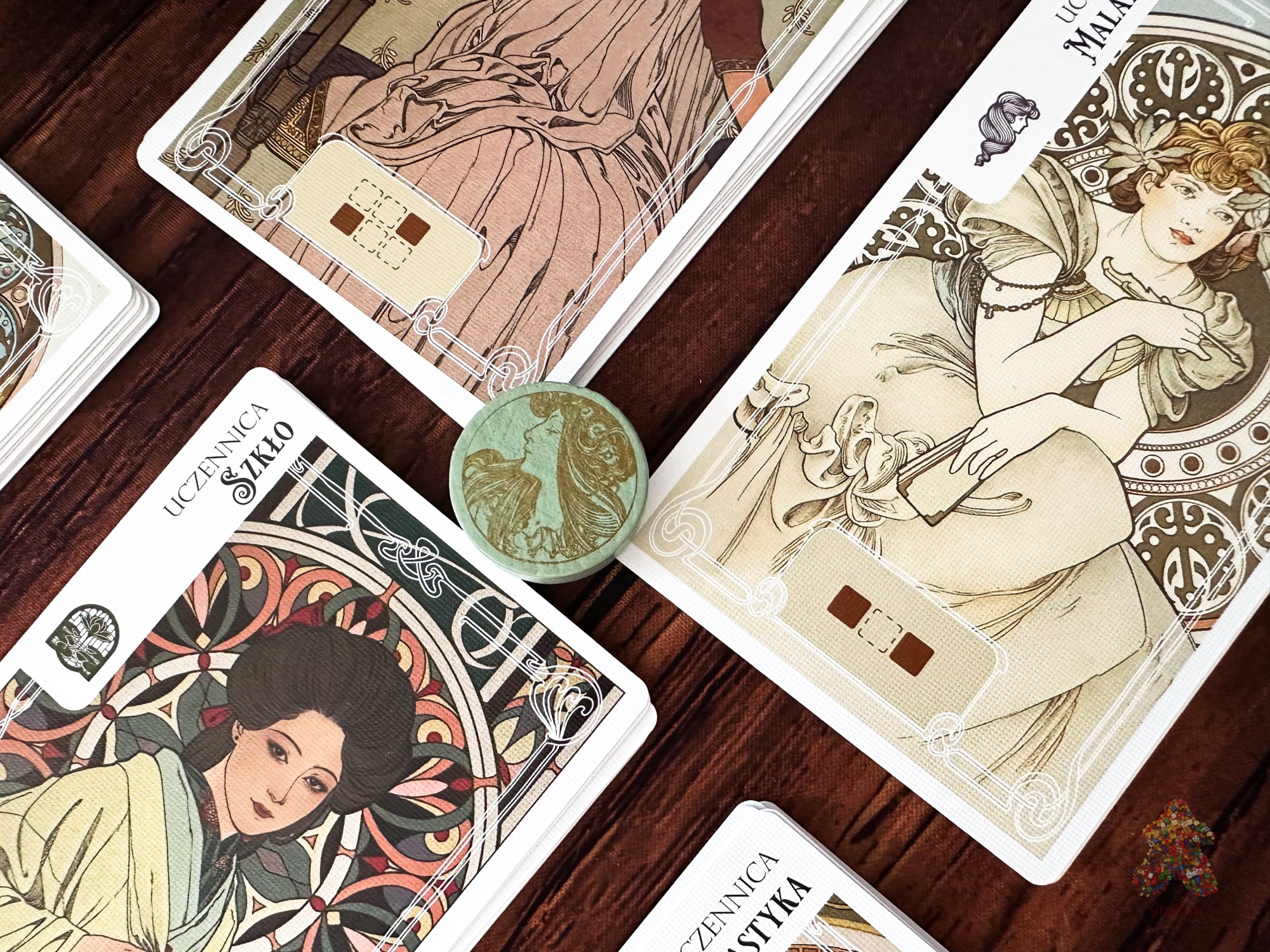
We develop our workshop across five crafts. We can concentrate on one, but the final scoring also encourages versatility. Recruiting apprentices in additional crafts expands our selection of shapes and contributes to a bonus for our collection. Further specialisation, meanwhile, leads to journeywomen and master crafters. There is plenty to consider, even though the basic turn structure remains very simple.
An interesting dilemma arises when buying patterns. More expensive cards provide more points, but collecting the materials to pay for them requires a greater investment. Recruiting further artisans, however, depends on the number of patterns we have in a craft, rather than their point value. Buying a cheaper card can therefore develop our workshop more quickly and give us new ways to gather tiles. We have to balance scoring points against investing in more efficient future turns. Decisions like these make “Artistry” simple without making it too simple.
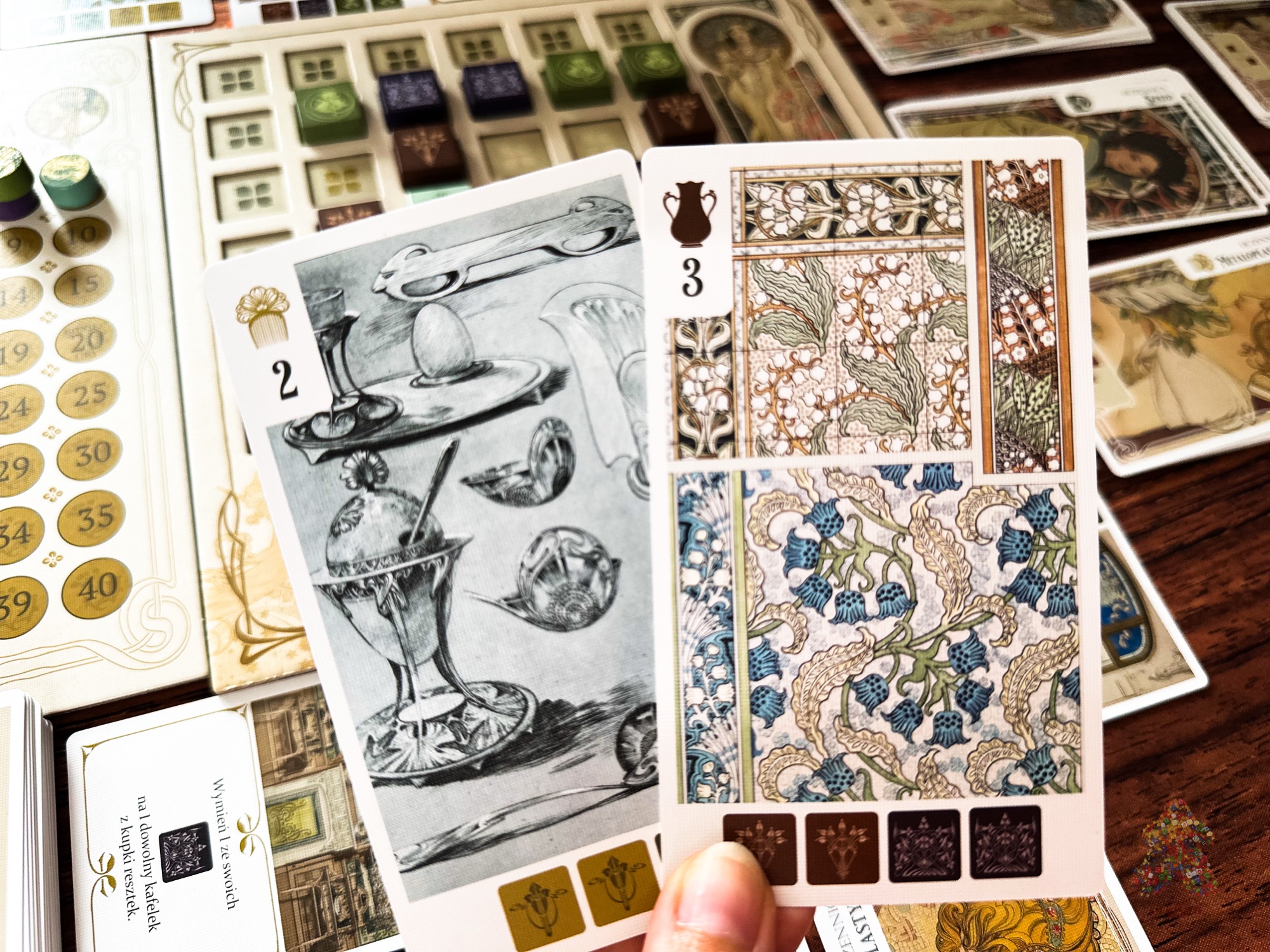
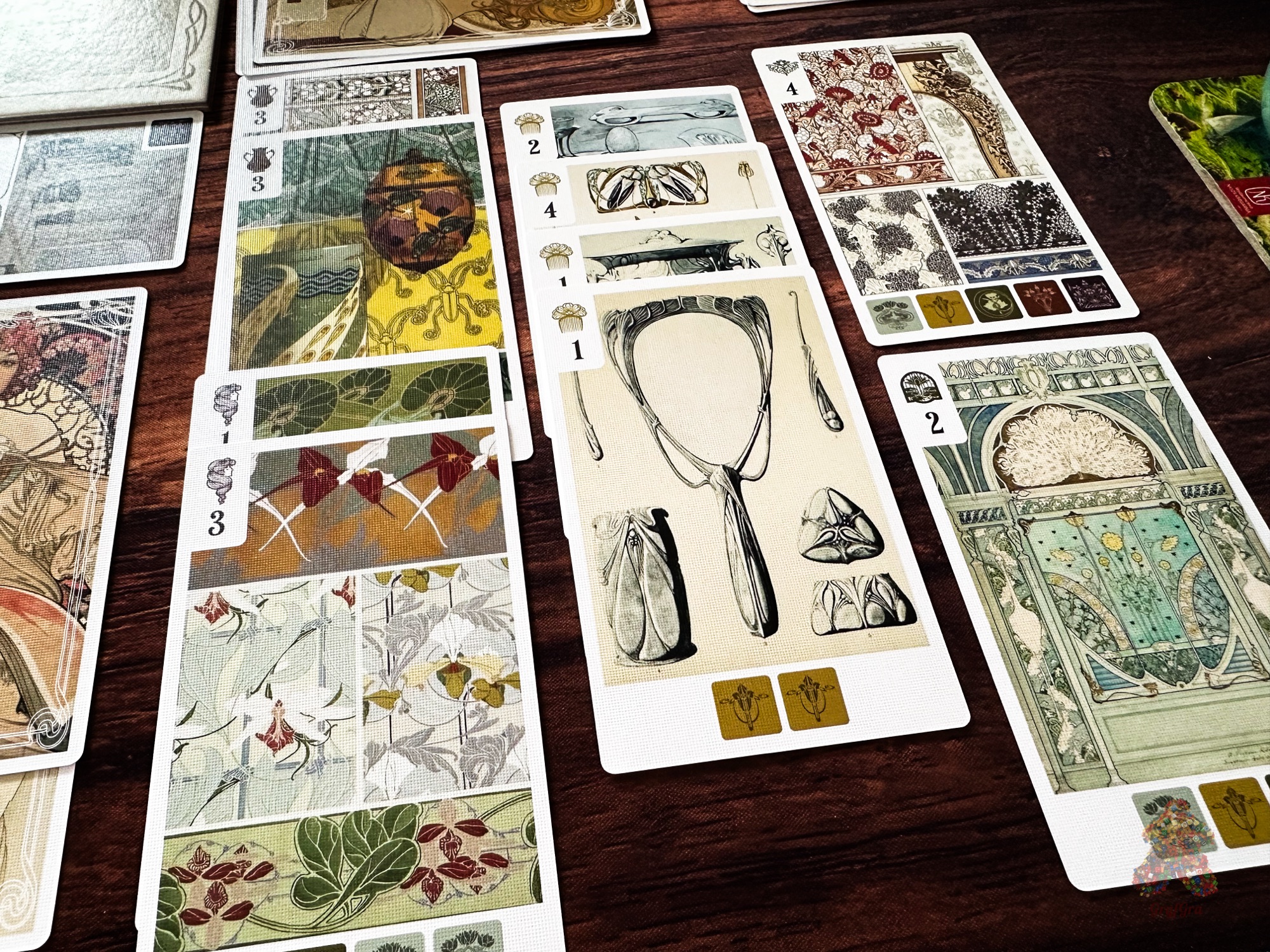
Randomness makes itself felt in two places. First, the material market may lack the colours we need. The option to replace a missing tile with any three tiles helps here. It is costly, but at least it offers a way forward. Second, the available patterns may not include cards from the craft we want to develop. There is no equally straightforward remedy for that. We have to adapt our plans to the offer or wait for something suitable to appear. The development of our workshop therefore also depends on the opportunities the game gives us.
Although we share the market for materials and patterns, our games had a relaxed feel. We did not focus on deliberately getting in one another’s way or taking the pieces our opponents needed. Everyone was mainly trying to develop their own workshop efficiently and score points. In this respect, the competition reminded us of a typical eurogame: we keep an eye on the shared situation, but devote most of our attention to our own options. “Artistry” lends itself to this relatively solitaire-style approach.
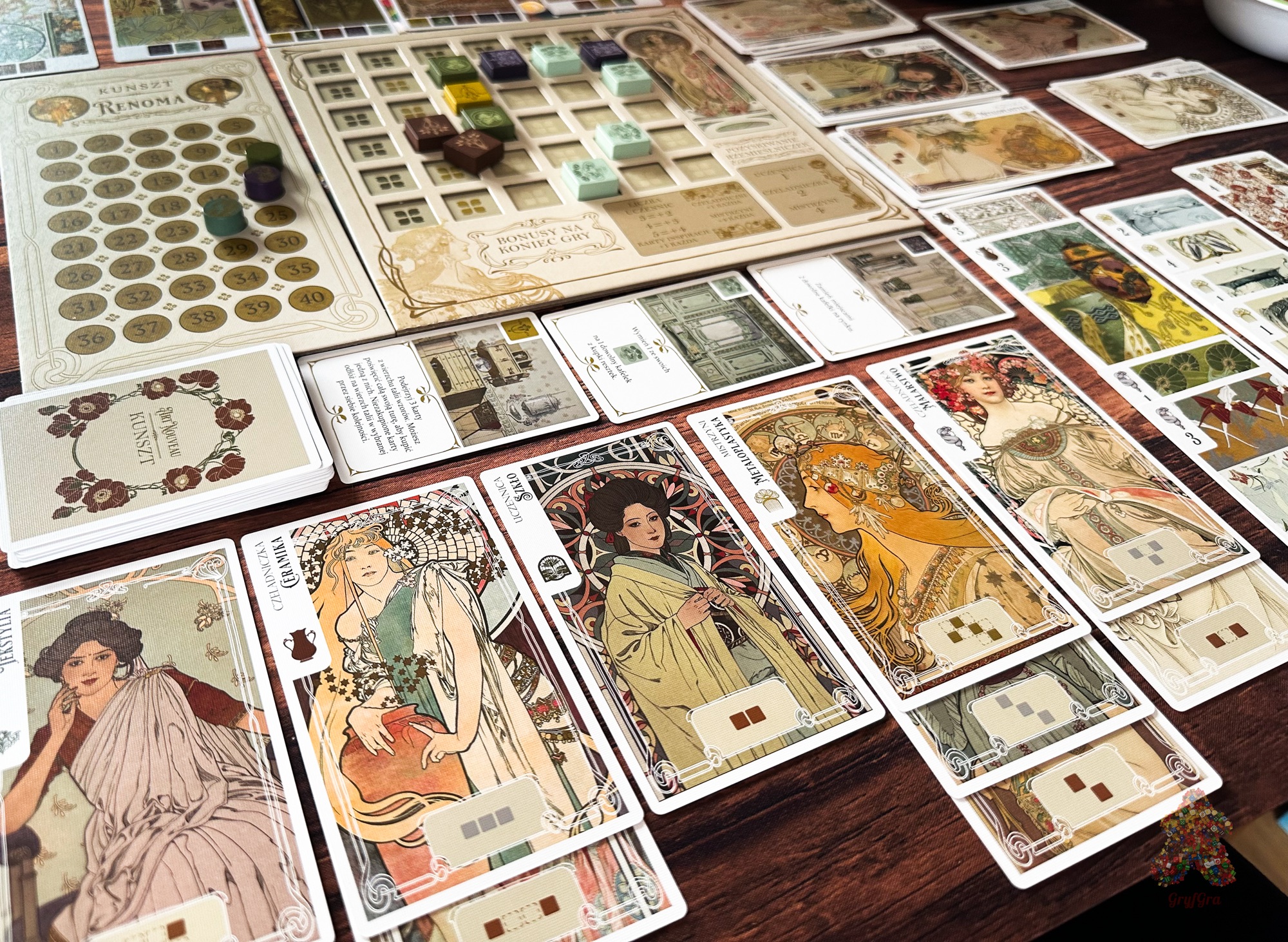
We played with two and three players, and our games usually took around forty-five minutes. Those are the player counts at which we got to know the game and on which we base our impressions. We did not try the included solo variant.
The production deserves a paragraph of its own, because we are delighted with it. The illustrations based on Alphonse Mucha’s work make a wonderful impression and provide a beautiful backdrop to the game. Looking through the cards is a pleasure in itself. The rulebook also did its job, and we have no complaints about it.
That makes the white cardboard insert all the more disappointing. Against the rest of the presentation, it looks plain and unattractive, and it also covers up the illustrations inside the box. Compared with the contents of the Deluxe Edition, the standard solution looks even less impressive. It is a minor issue as far as the gameplay is concerned, but in a game that is such a pleasure to look at, it is hard not to notice.
Summary
“Artistry” combines simple rules with enjoyable decisions. Collecting materials through spatial shapes, developing crafts, and choosing between points and expanding our workshop’s capabilities all come together in a satisfying whole. The random selection of patterns can disrupt our plans, but during our games it never overshadowed the pleasure of building our collections.
This is a game for people who enjoy set collection, relaxed competition and concentrating on their own progress. Fans of beautiful illustrations have an extra reason to bring it to the table. We will happily return to it ourselves — although we will probably grumble about the insert again when we open the box.