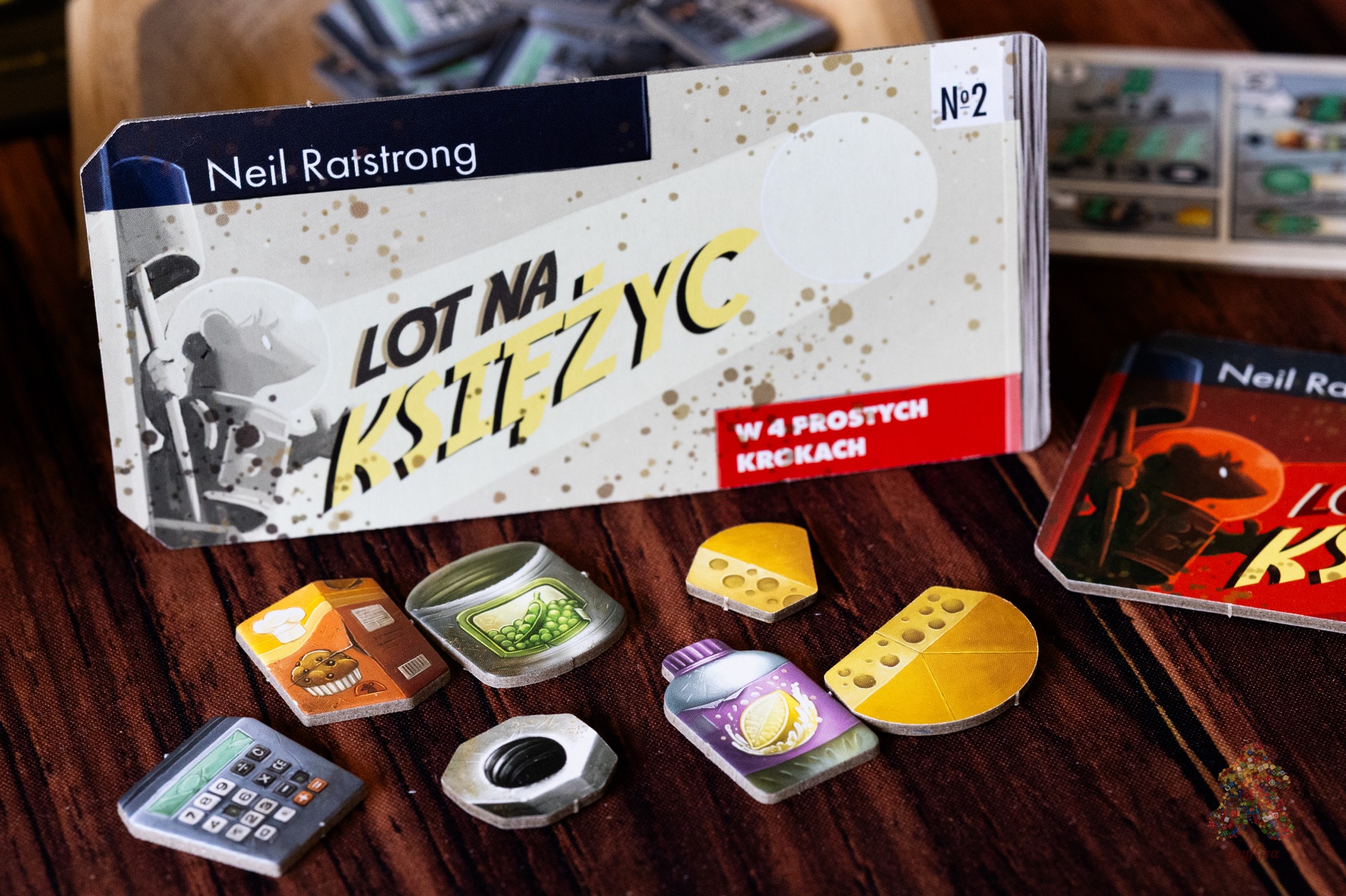
The rats believe the Moon is made of cheese. Having found a comic about space travel in the junkyard, they now have both a destination and enough scientific evidence to start building a rocket. All that remains is to gather materials, stock up on supplies and prepare the crew. First Rat, published in Polish by Nasza Księgarnia as “Pierwszy szczur w kosmosie”, invites us to join this endeavour, although a shared dream soon turns into a contest over who has contributed the most to rat space exploration.
The game was designed by Gabriele Ausiello and Virginio Gigli. Eurogame fans will probably recognise the latter name from Coimbra, Grand Austria Hotel or Lorenzo il Magnifico. Italian designers clearly enjoy working in company: their game boxes often feature two names, sometimes more. Here, too, we have a design duo.
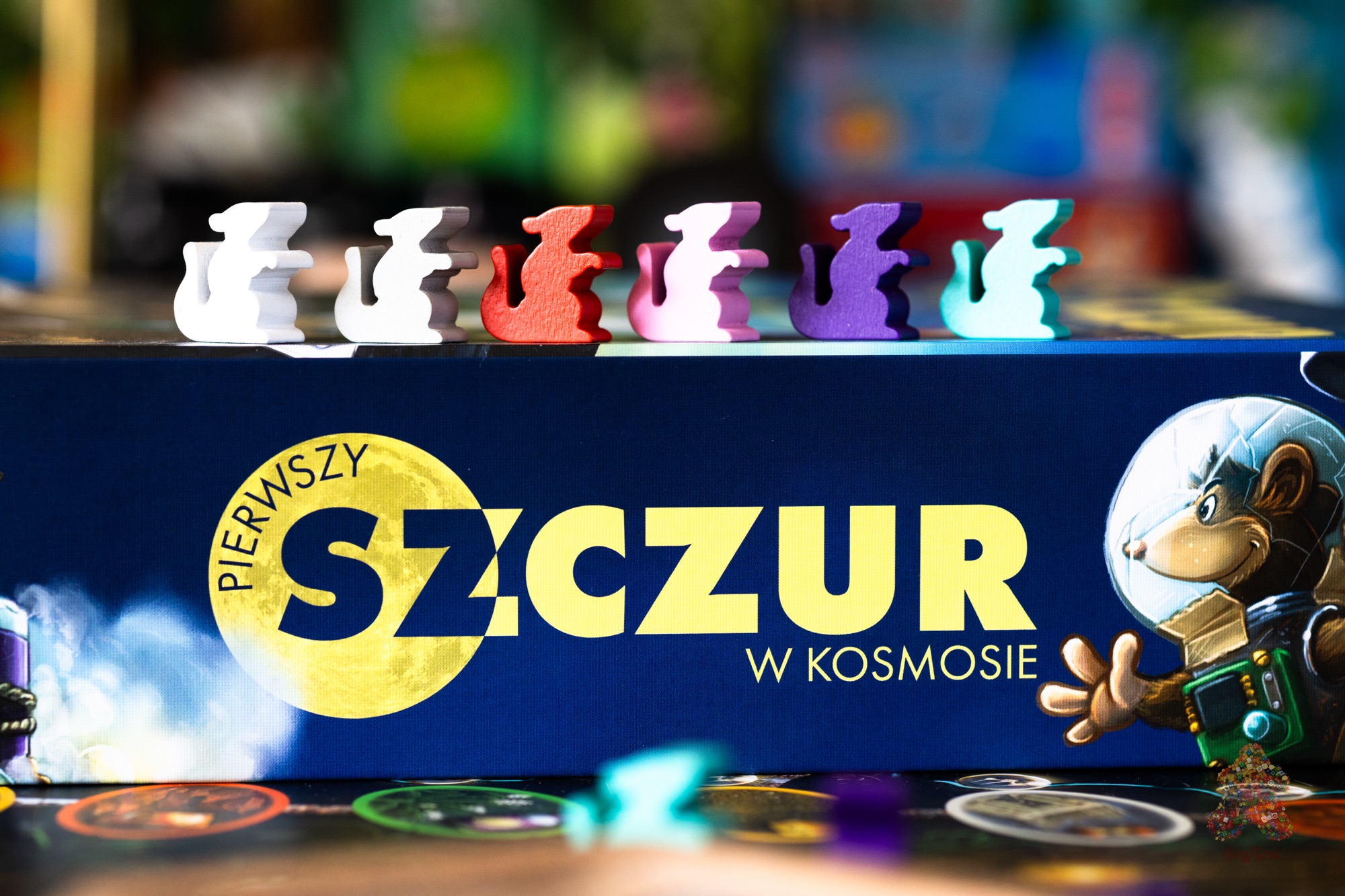
This is not an entirely new design, either. First Rat debuted in 2022 and received a Golden Geek nomination in the Medium Game of the Year category. In 2026 it was also nominated for France’s As d’Or in the Initié category. The rats’ expedition had therefore attracted attention before the Polish edition arrived. BoardGameGeek, Festival International des Jeux in Cannes.
Gameplay
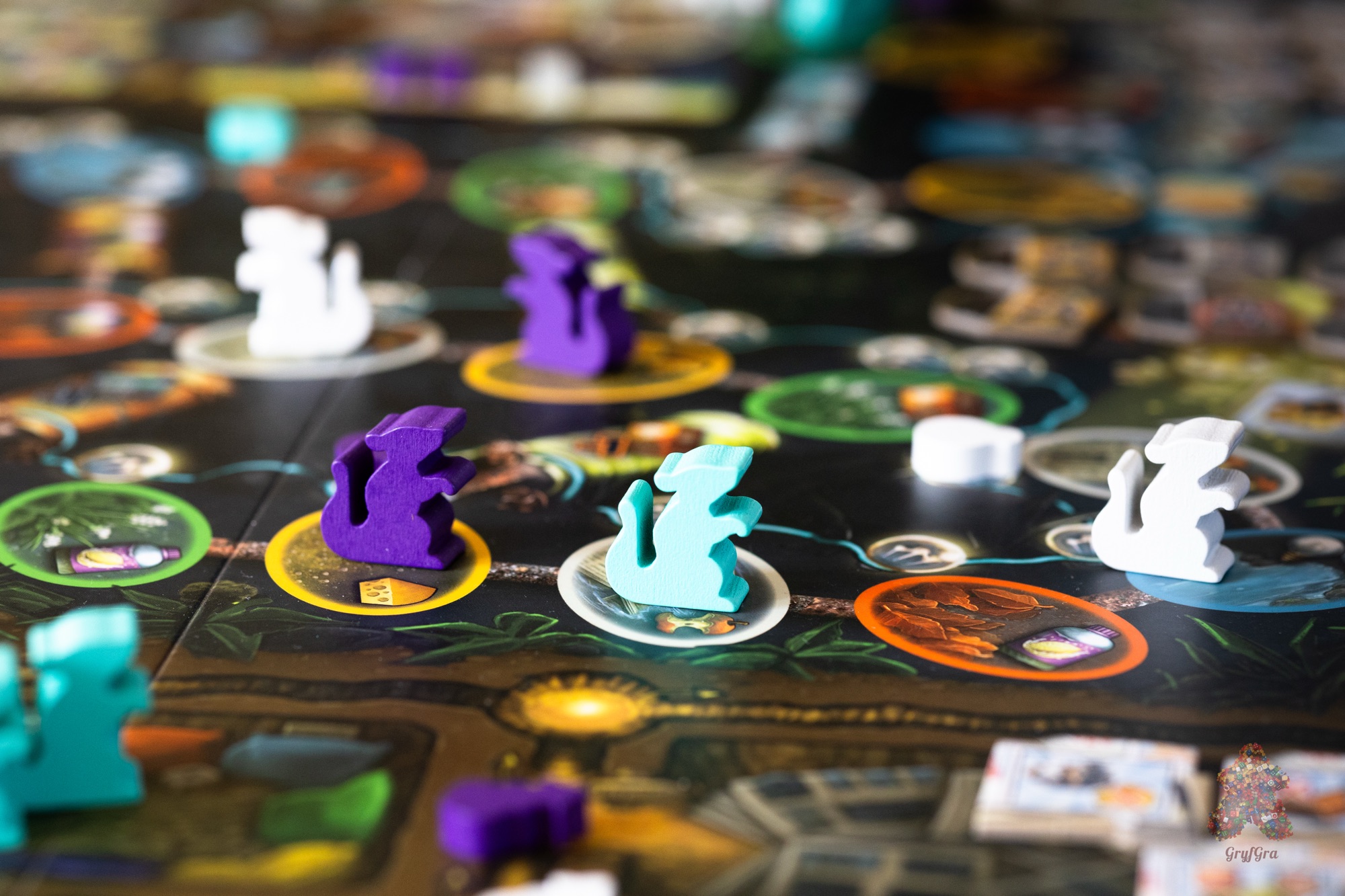
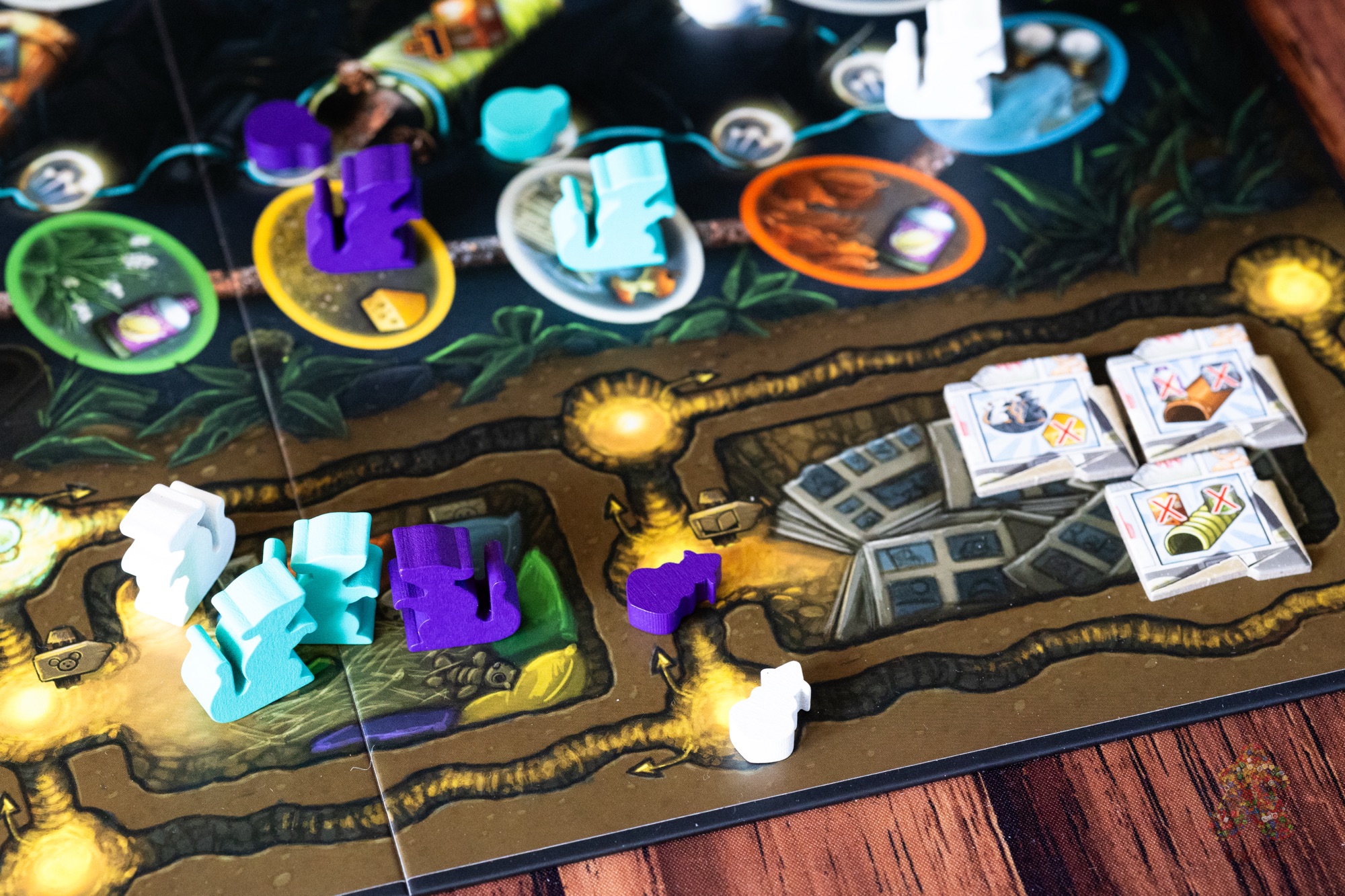
Each player controls a group of rats making their way across the junkyard towards the rocket. We start with two rats on the path and another two waiting in the burrow. A lighting track runs alongside the main route, while underground a little rat visits the storeroom, living room and library. All of this helps us collect resources, develop our abilities and score points.
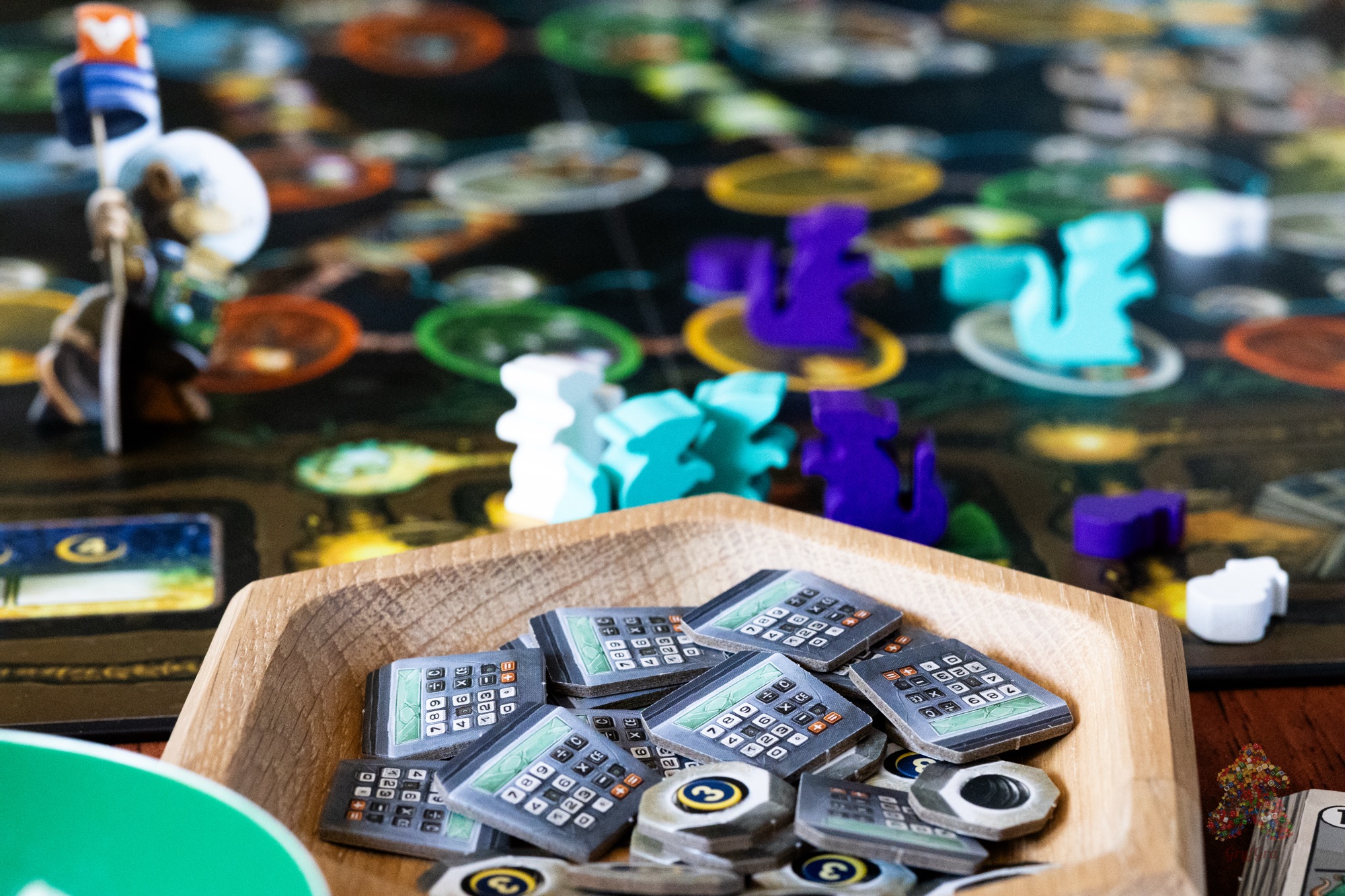
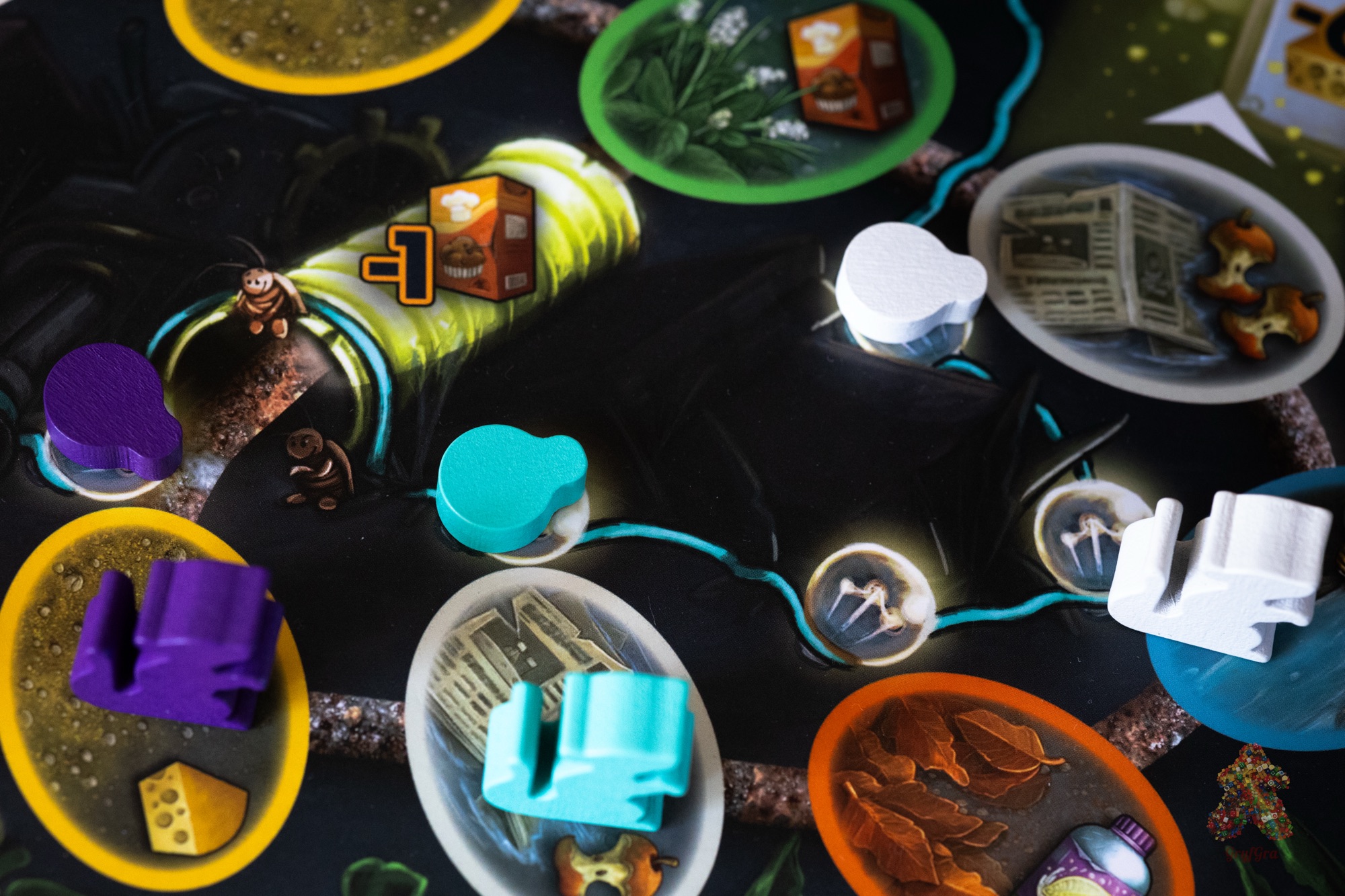
The basic movement rule is very simple. On our turn, we move one rat up to five spaces, or several rats up to three spaces each. In the latter case, all the rats we move must finish on different spaces of the same colour. We then collect whatever the spaces they land on provide. We may enter a space occupied by an opponent, but have to pay them cheese.
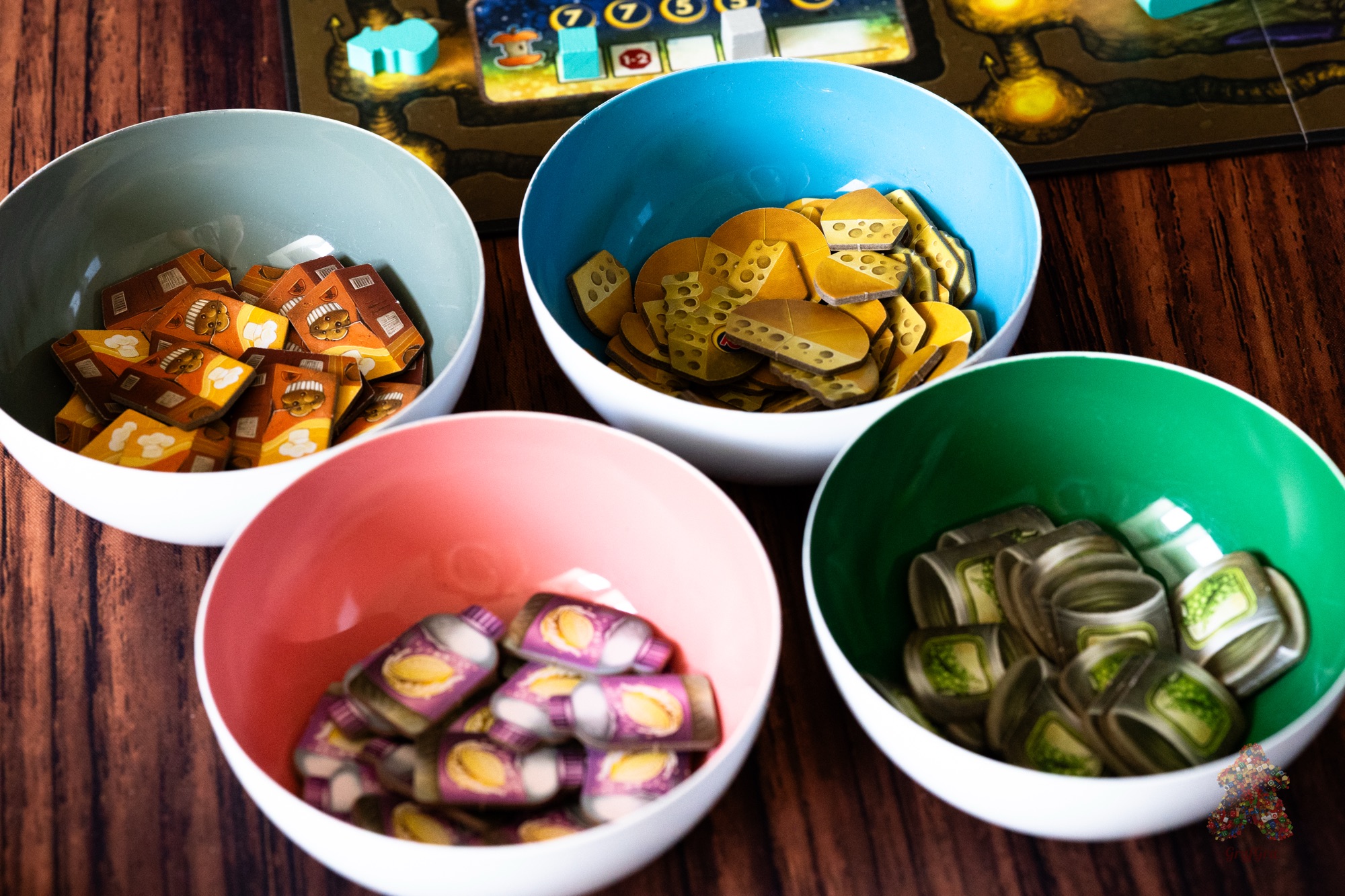
Among the things we find in the junkyard are vinegar, baking soda, pea tins and calculators, which we use to build rocket modules. Cheese serves as both currency and provisions for the journey. Light bulbs let us illuminate the path so our rats can collect more from it. Apple cores move the little rat around the burrow. Its travels can earn points, bring more rats onto the main path or provide comics that grant permanent abilities.
We also visit shops along the way. Backpacks increase our haul, energy drinks let us double it once, and bottle caps provide extra points at the end of the game. We can pay for our purchases or take an item without paying, which usually sends the rat back to the start of the path.
We score on eight tracks, rewarding such things as building the rocket, donating cheese, improving the lighting and sending rats into space. The best spaces go to whoever claims them first. The end of the game is triggered when a player places their eighth scoring marker or turns their fourth rat into a rattronaut. In the first case, we finish the current round and play one more; in the second, we only finish the current round. The player with the most points wins.
Review
During our first games, an unexpected thought crossed our minds: are we sure this is not a Reiner Knizia design? The box quickly set us straight, but that initial impression captures its character quite well. The basic rules are simple, yet a few restrictions and possibilities are enough to turn moving pieces into an interesting puzzle.
Rat movement is the best example. Moving a single rat further gives us more freedom to choose a space, whereas moving several lets us collect more things in one turn. We just have to position them properly. We therefore start looking beyond what we need right now, considering where our rats will end up and whether we can still move them onto a shared colour next time. One small rule gives us plenty to think about.
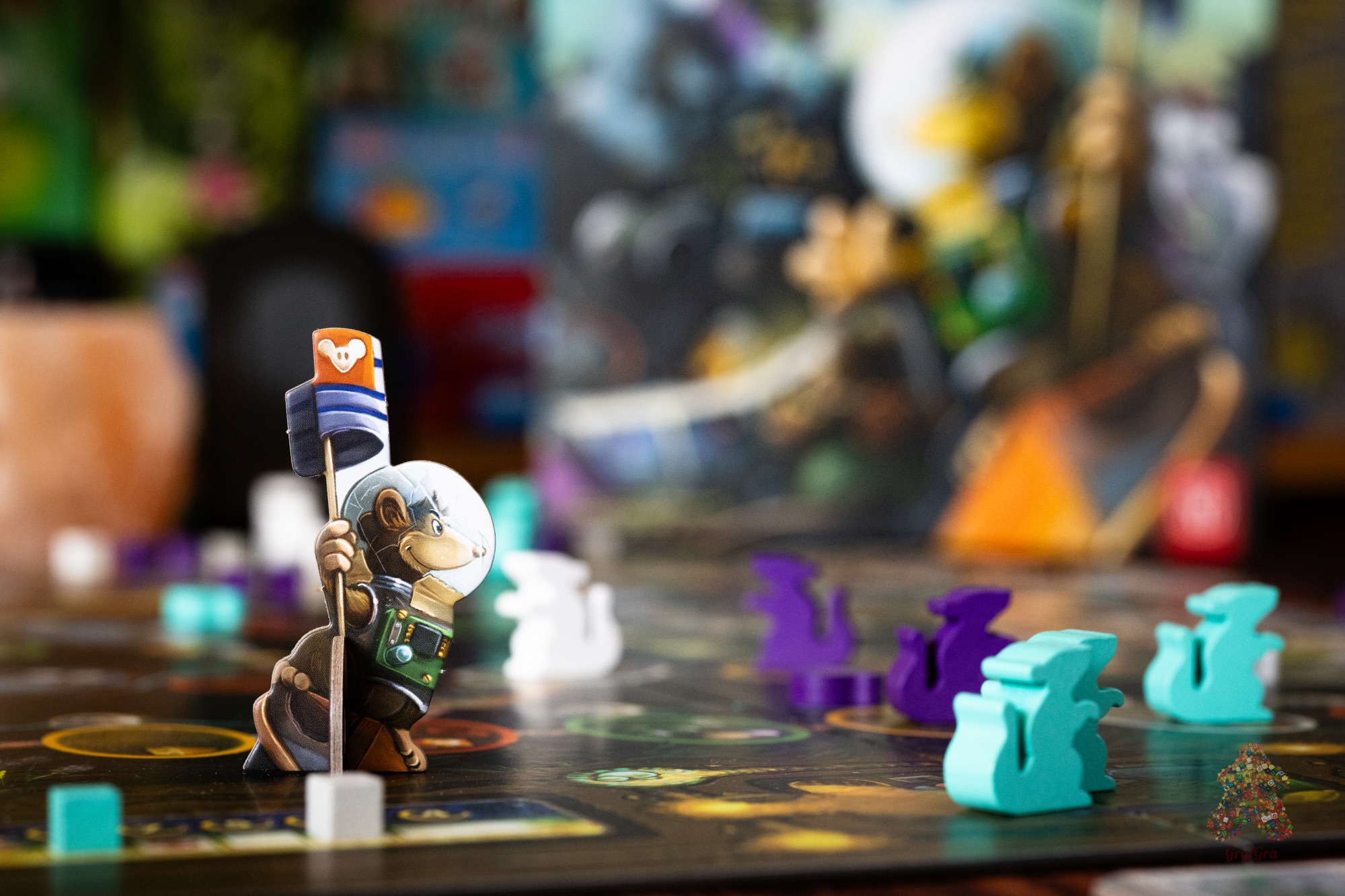
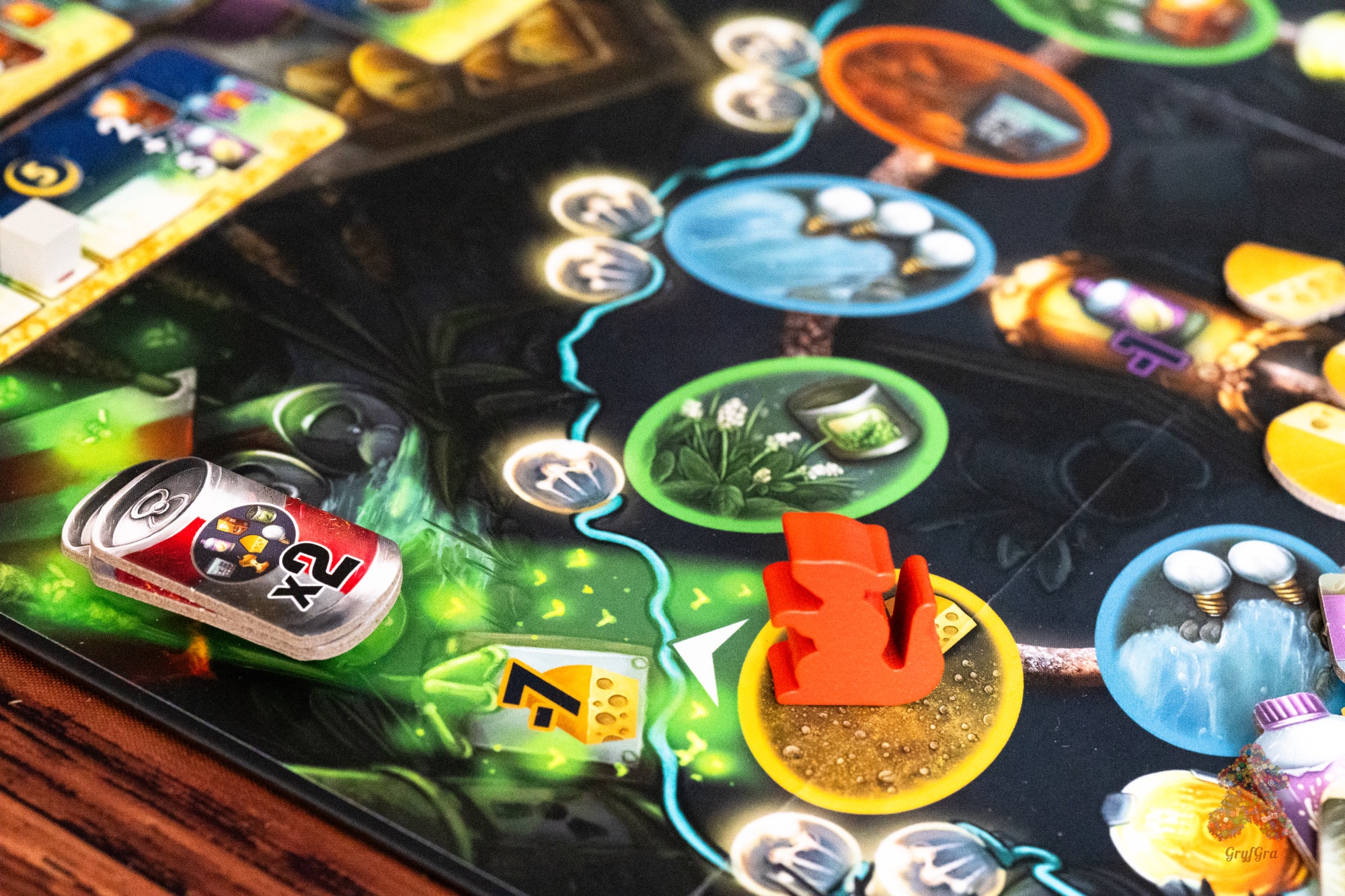
Learning to move and collect items is straightforward. Understanding how to turn those actions into a good score takes more attention. There are plenty of scoring tracks, along with lighting, the burrow and shop items. It takes a little time to grasp how they connect and start building a deliberate plan. Showing someone how to take a turn is easy, but getting to know the game’s possibilities requires a bit more involvement.
First Rat is, above all, a race on several levels. The most obvious one leads up the board towards the rocket, but in our games the competition for spaces on the scoring tracks proved more important. We can take our time setting up our next actions, only for an opponent to claim the more valuable space in the meantime. We therefore also need to judge a plan by whether we can carry it out before someone else gets there.
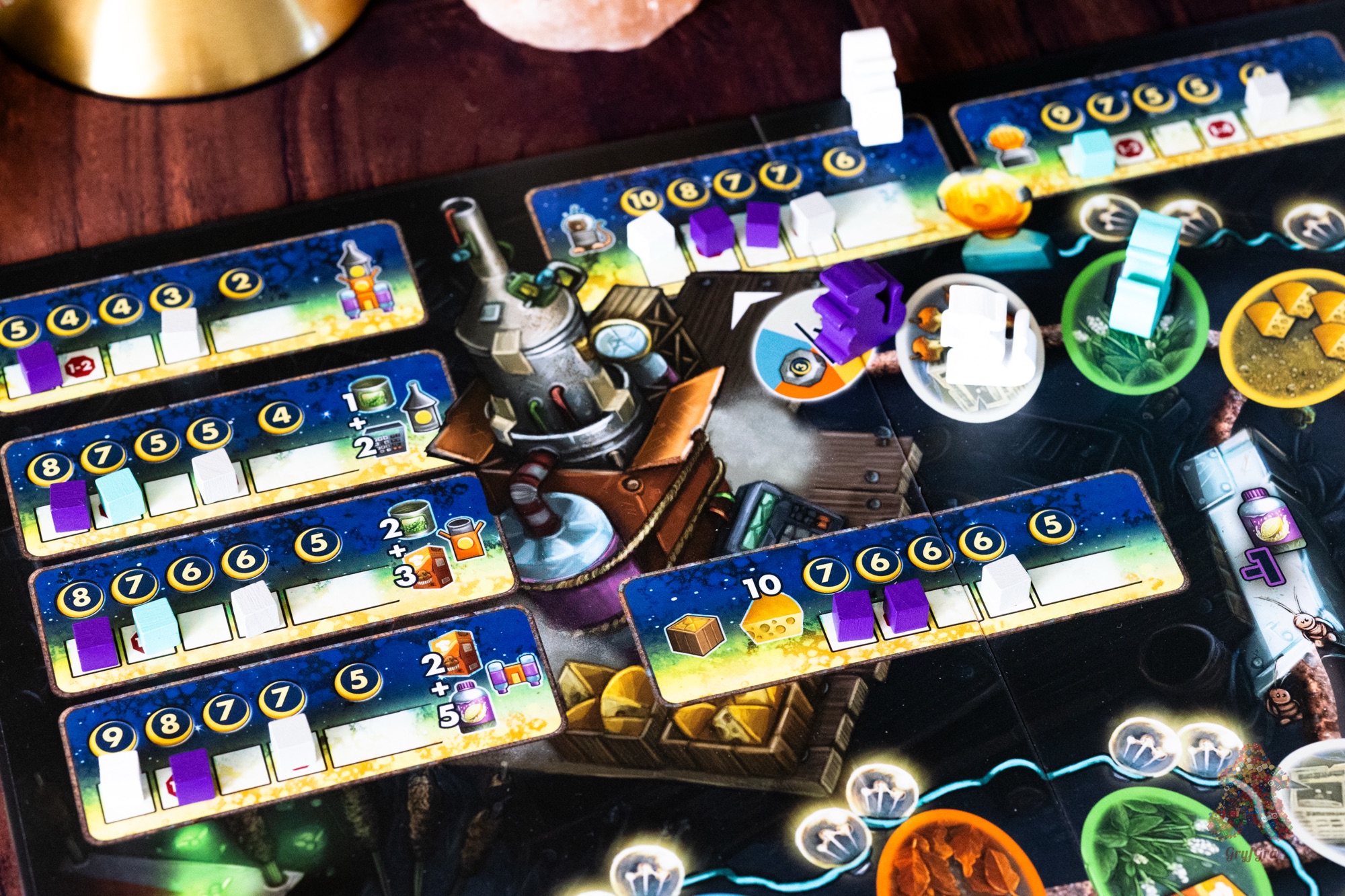
We mostly played with three players, and the competition was fierce. There is no direct combat, but we watched our opponents closely throughout each game. It pays to know who is collecting building materials, who is improving their lighting and who is close to scoring again. Even when we focus on our own rats, it is difficult to ignore what the rest of the table is doing.
The climb towards the rocket felt less important to us than the other races, but it has another role: it lets us influence when the game ends. Sometimes, instead of pursuing more scoring tracks, it is better to bring the finish closer before our opponents can make use of their preparations. That is another reason not to assess the situation solely through our own corner of the board.
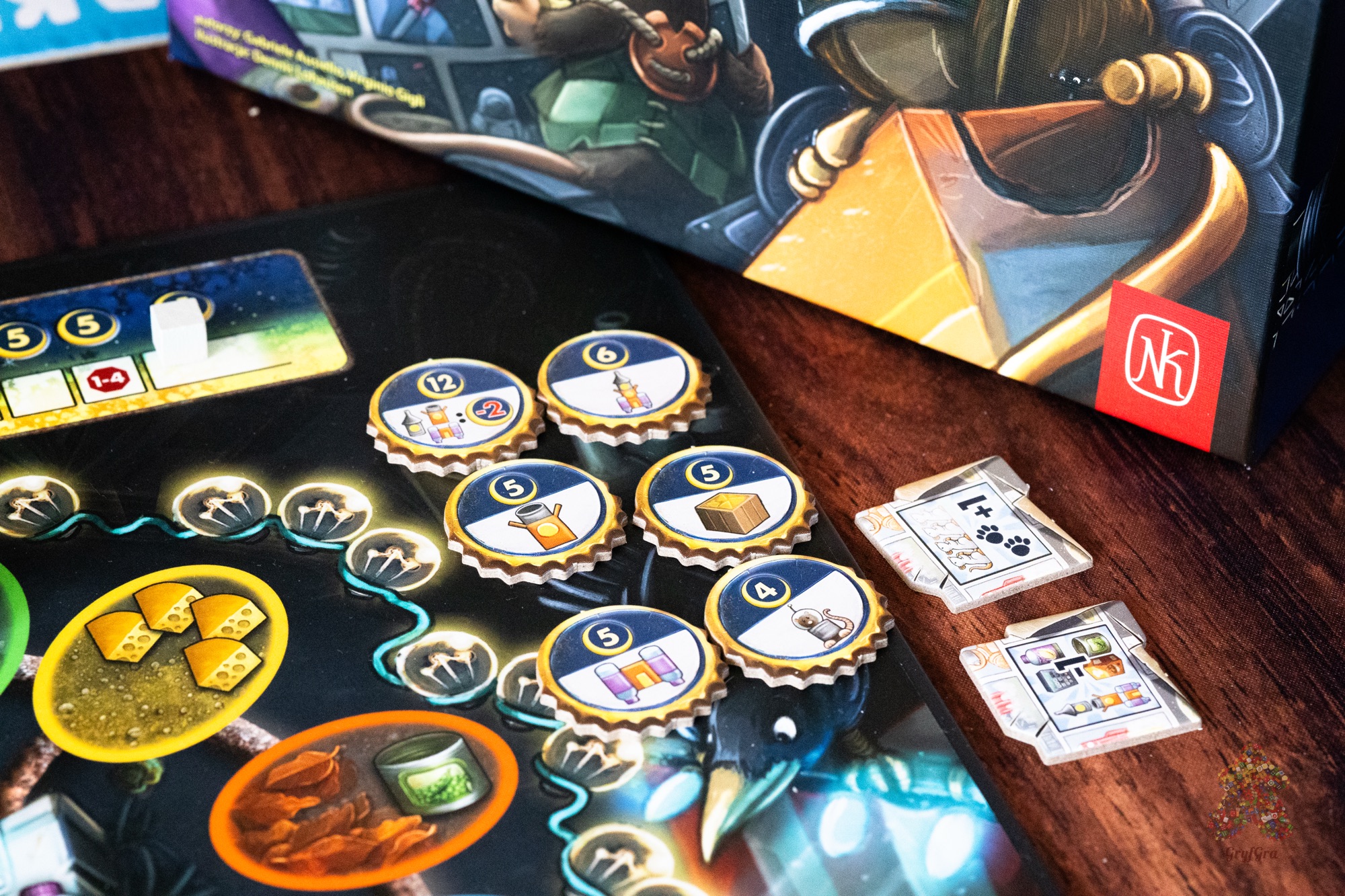
We also really appreciate how little luck is involved. Some elements are randomised during setup, including the board layout in the variable setup, but in multiplayer we do not roll dice to find out whether an action succeeds. We know what a space will give us and how much construction costs. Uncertainty comes primarily from our opponents’ decisions. This makes it easy to connect both successes and mistakes to our own choices.
The many ways to score leave room to explore different approaches. We do not have to concentrate entirely on building the rocket when we can improve our lighting, gather provisions or make use of the storeroom. We like how opportunities to make these actions more effective keep appearing along the way. Collecting items is not just preparation for exchanging them for points: we invest some of them in making future turns more productive.
Even so, after several plays we came to appreciate the variable board and super rats. Both variants freshen things up and make the game less predictable in its patterns. A different arrangement of spaces makes us rethink our routes, while the rat heroes’ special abilities add new possibilities. There is plenty to discover in the basic game, but it is good to have options in the box that encourage us to move away from familiar solutions.
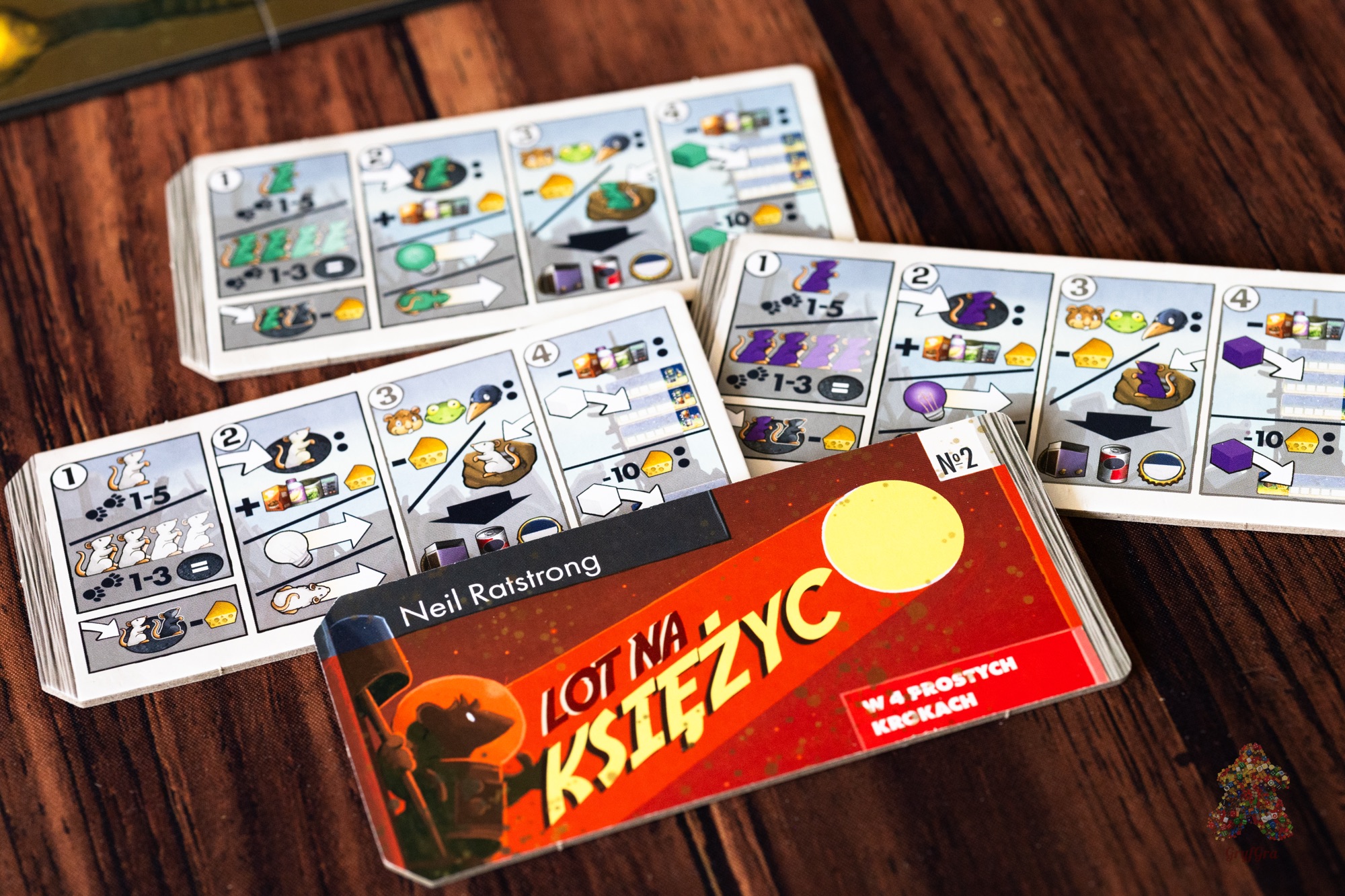
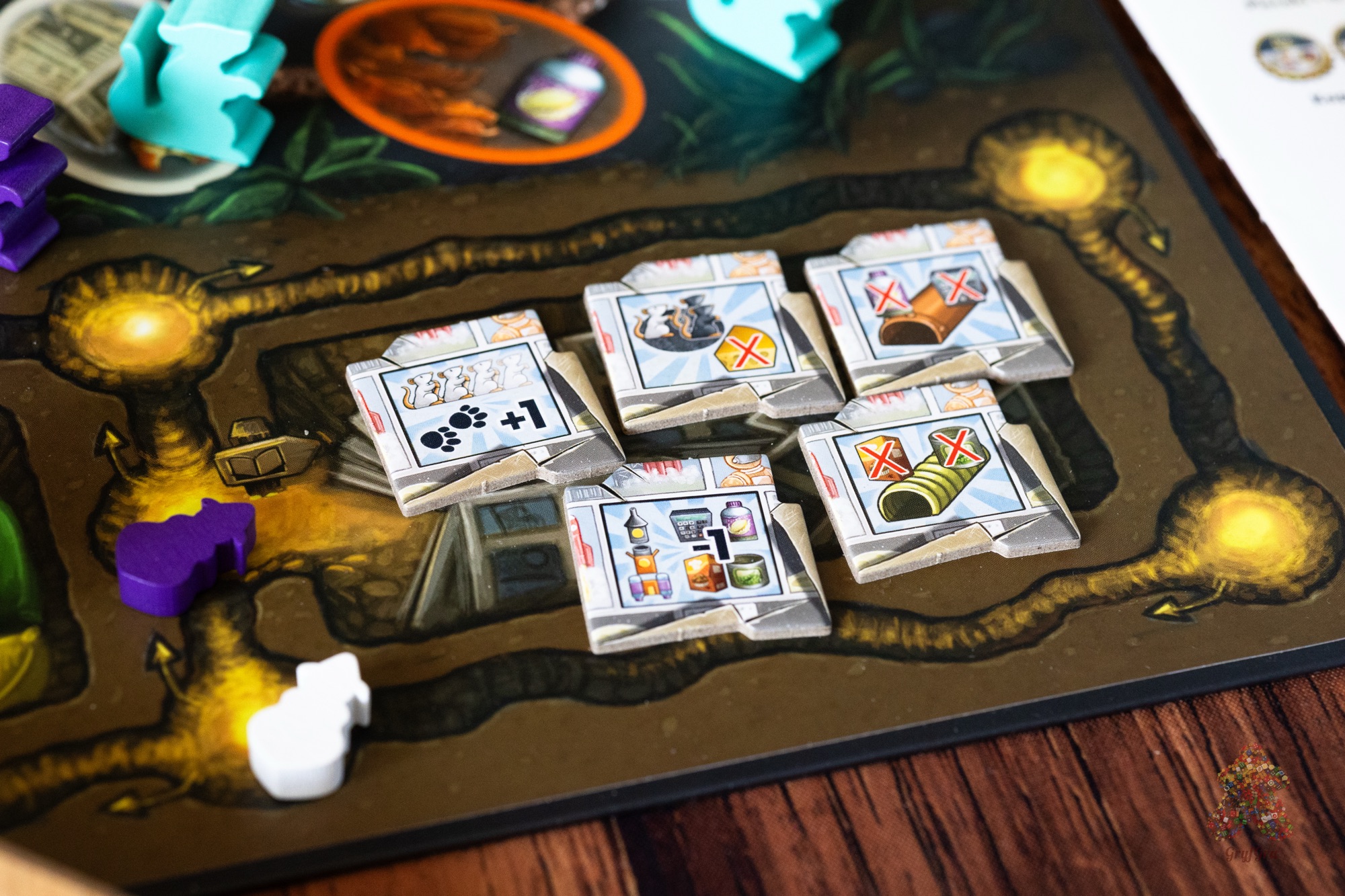
Our feelings about the presentation are more mixed. The illustrations are distinctive and hardly ugly, but they are not entirely to our taste. Then again, we are rats running around a junkyard, so postcard scenery would be a little out of place. For somewhere full of rubbish, it all looks quite good. We particularly liked the comic-style player aids, which fit neatly with the story that sets the whole expedition in motion.
There is also a small linguistic quibble. The Polish rulebook calls our space travellers “szczuronauci”, or “rattronauts”. We would lean towards “astroszczury” — “astrorats” — since the former makes us think of someone sailing among rats. This is playful nitpicking, of course, rather than a flaw in the game. Nothing that happened at the table bothered us enough to dampen our desire to return.
Summary
First Rat combines an imaginative theme with simple movement rules and plenty of decisions. We especially enjoy planning coordinated rat movements, racing for the more valuable scoring spaces and knowing that the outcome depends primarily on players’ choices. The variable board and super rats offer further reasons to play again.
We will happily return to this junkyard. We also see potential for playing with children, probably from around ten years old, when keeping track of the different scoring opportunities becomes easier. Younger players could try it with a more relaxed attitude towards the final score, but the charming theme alone should not suggest a game for the very young. This is one for families and players who enjoy working out a plan while keeping a close eye on their opponents.