

The Quest for El Dorado is a game we really enjoy, so its dice-based counterpart had a lot to live up to. We were curious to see how Reiner Knizia had translated the journey through the jungle onto player sheets and replaced cards with dice. The goal remains familiar—reach the legendary city before your rivals. This time, however, we mark our route with a pencil, and the success of our expedition depends on the available dice results and the supplies we have prepared along the way.
Gameplay
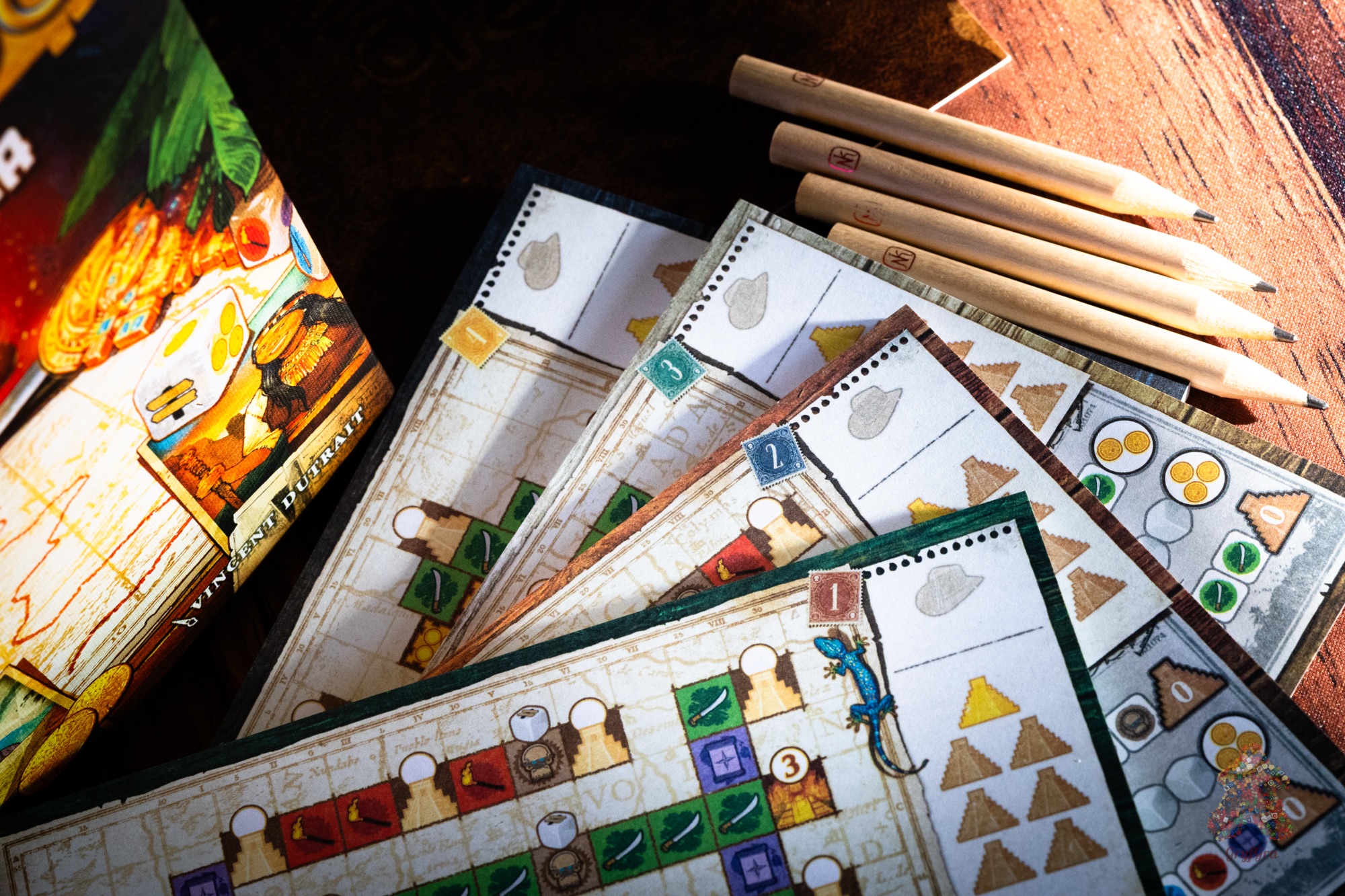
The Quest for El Dorado: The Dice Game is a standalone game. There are four maps to choose from, each introducing further gameplay elements. Everyone receives a sheet with the same numbered map and a pencil. We also choose one of two difficulty levels, which determines how many temples we must visit and make offerings at before completing the expedition.
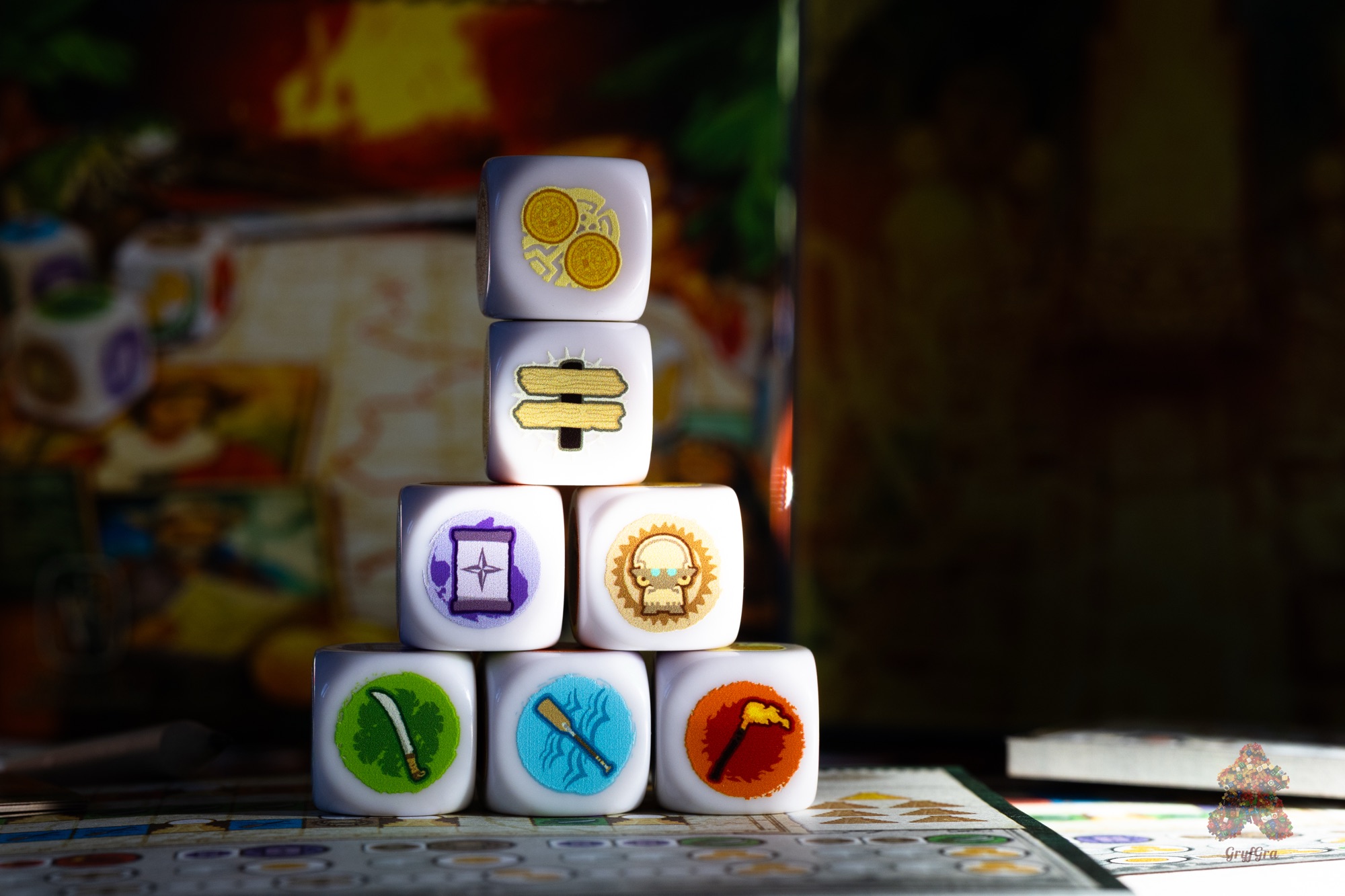
A shared pool of seven dice sits in the centre of the table. On our turn, we choose one die and use its result. The next player chooses from the remaining dice, and once the pool is empty, the following player rolls all seven again. Alongside the chosen die, we may use one resource we have acquired. We can resolve these in either order, and a resource can even be used on the turn we obtain it.
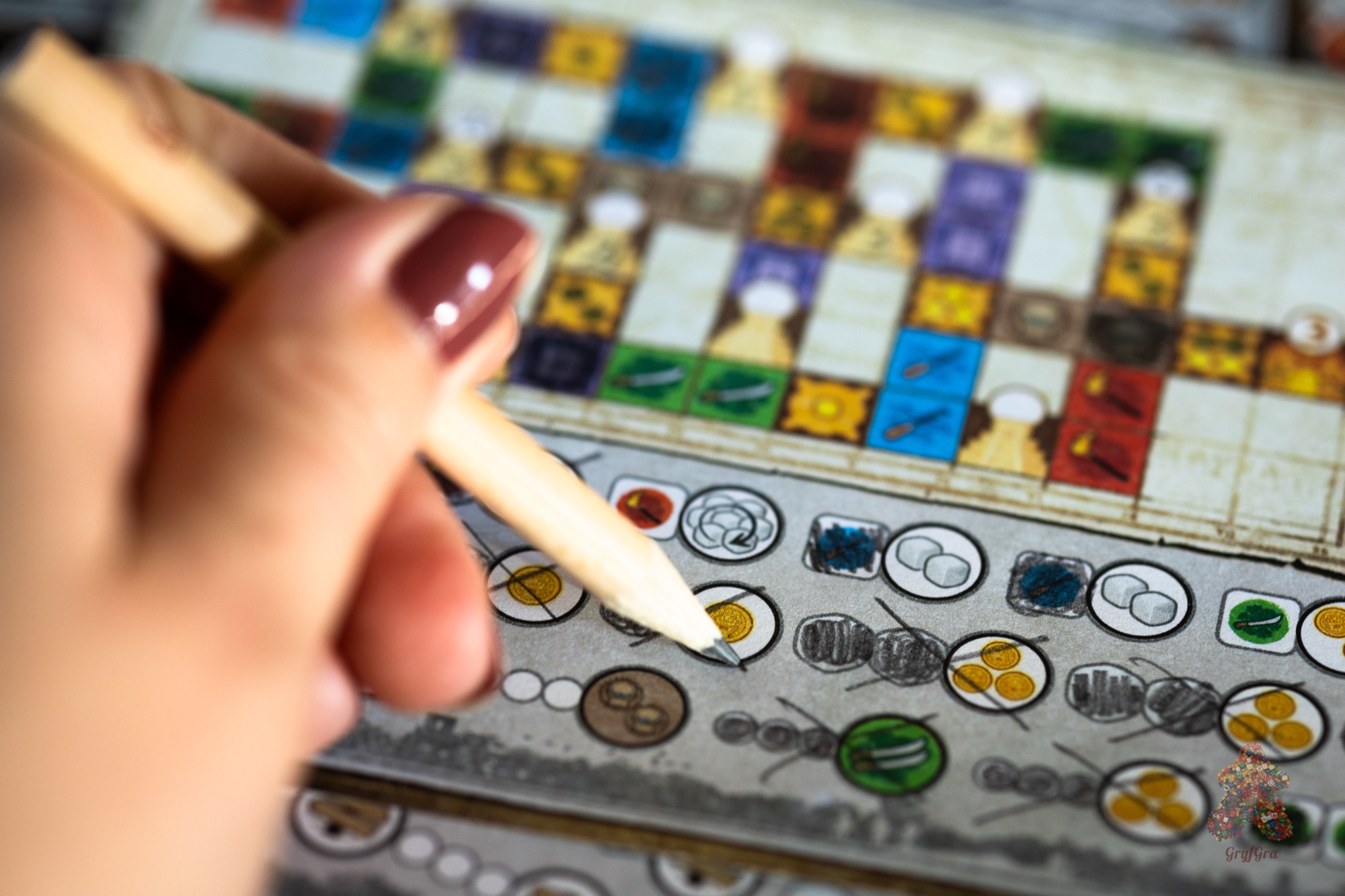
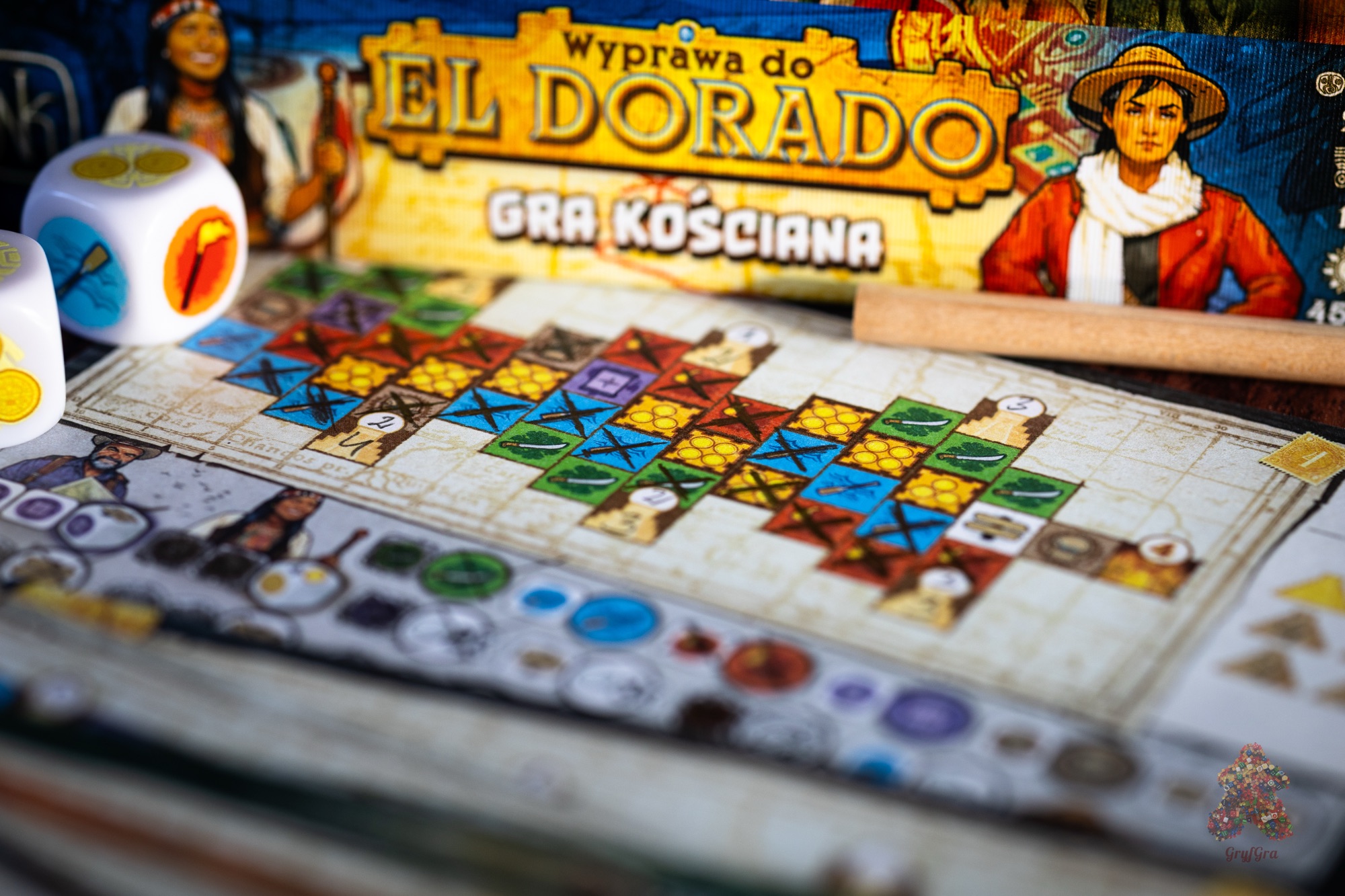
The symbols on the dice let us shade in matching spaces along the route. We begin at any space on the left edge of the map. Each new space must be adjacent to any previously shaded space, so we can extend our route in different directions. The signpost acts as a wild symbol for movement, but it cannot replace coins.
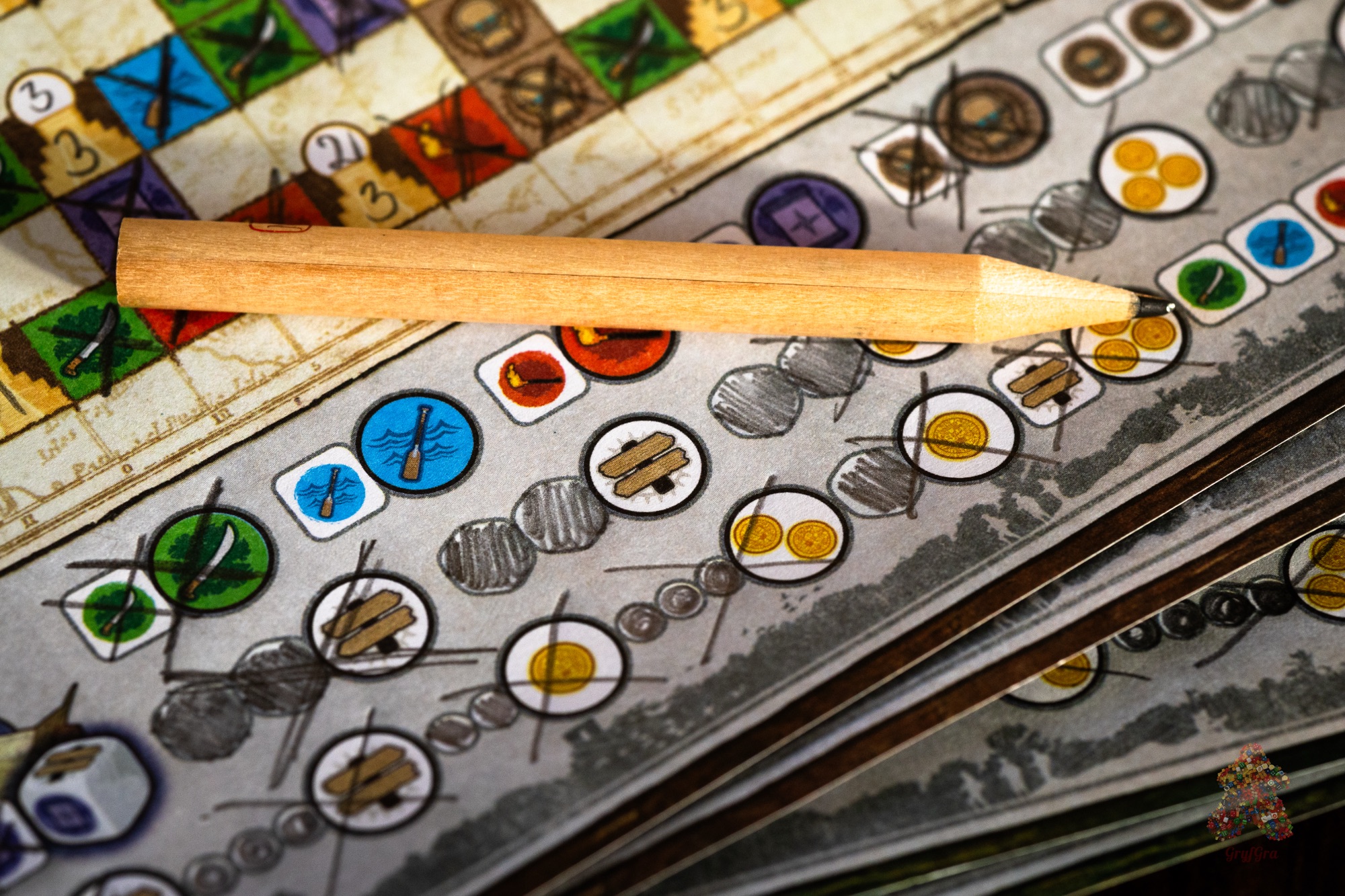
We can also use dice to acquire resources in the lower section of the sheet. Marking all the required spaces unlocks a one-use supply that can help us travel further or acquire additional resources. Later maps also introduce helpers with ongoing abilities and special actions that let us reroll dice or use a chosen die multiple times, among other things.
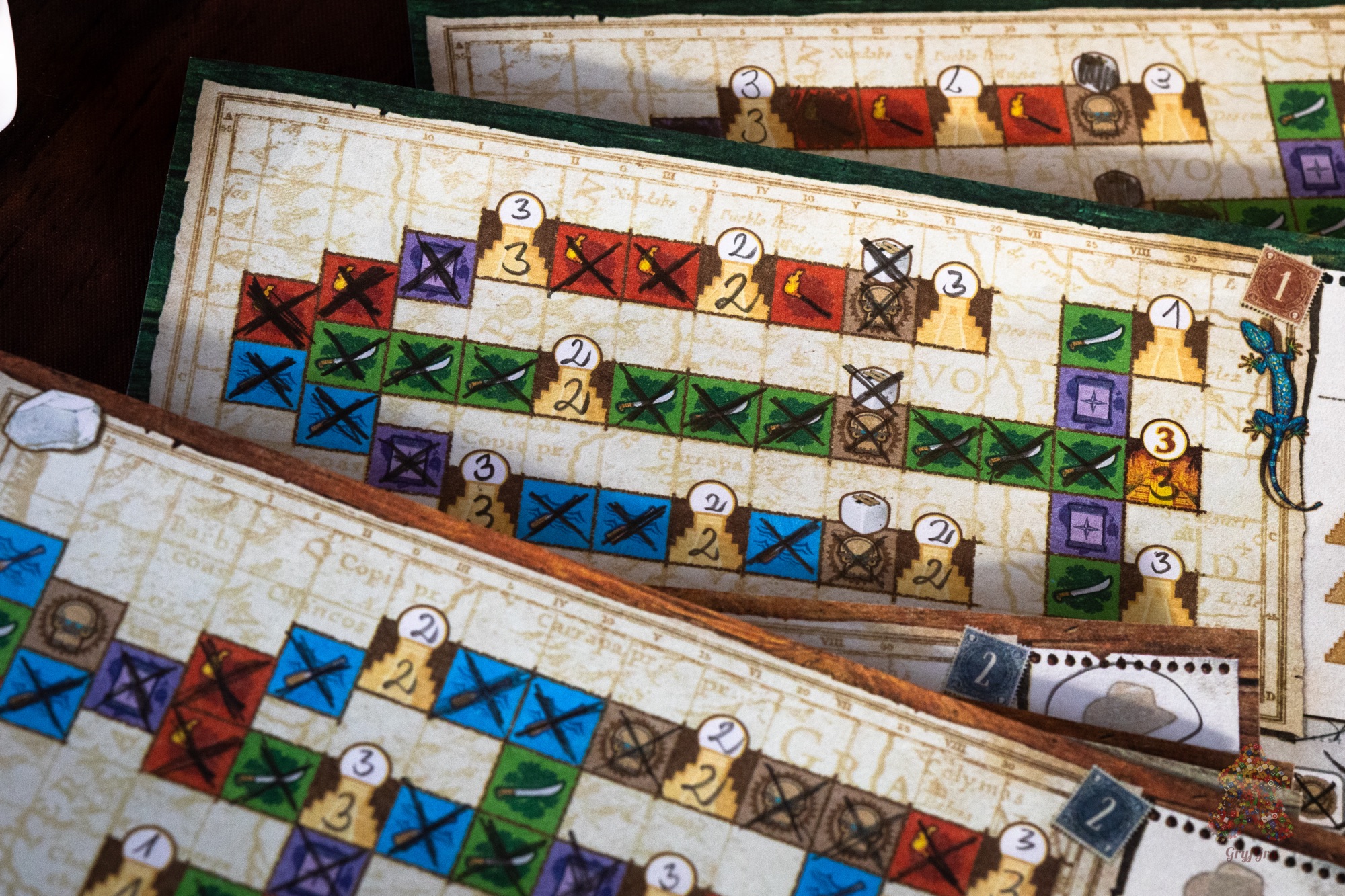
Temples along the route require an offering of coins before we can pass through them. The first player to make an offering at a particular temple sets the minimum amount for everyone else. That value remains unchanged for the rest of the game. When making an offering, we can combine coins from one die with coins from one resource. Maps three and four also feature Muisca settlements. These require payment using coins from dice only, although the cost can be paid over several turns.
To enter El Dorado, we must first make offerings at the required number of temples, then pay to enter the final golden temple. The game ends after the round in which at least one player reaches the destination. If several players arrive in that round, whoever has offered the most coins at temples wins. Any remaining tie results in a shared victory.
Review
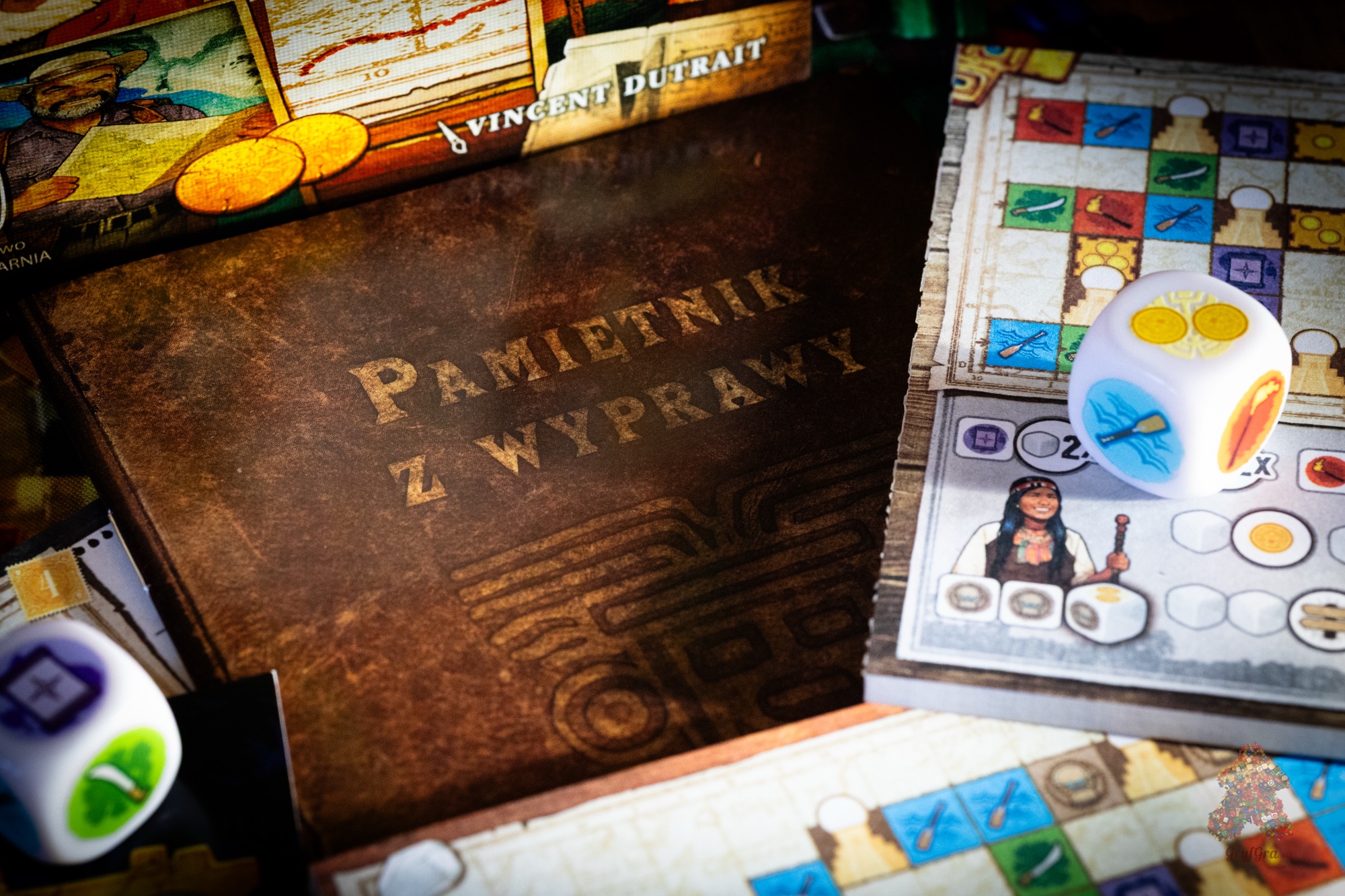
Visually, there is no mistaking which family this game belongs to. The illustrations are consistent with earlier entries, and the adventurous presentation brings Indiana Jones to mind. The sheets themselves proved easy to read, and we had no trouble finding the information we needed or marking our progress. Beneath the illustrations lies a fairly abstract puzzle of symbols, but the artwork suits the race through the jungle well.
We picked up the basic rules quickly. At first, the main thing to remember was the rhythm of a turn: one die and, optionally, one resource, used in either order. After that, everything ran smoothly. Choosing a die usually took us only a few seconds, unless someone had taken the result we wanted and we needed to rethink our plan. Sometimes shading in spaces took longer than making the decision itself. The only rule we occasionally forgot was that Muisca settlements must be paid for using coins from dice alone.
Our games lasted around half an hour, sometimes a little longer. That feels like a very good length for this kind of game. There is time to prepare supplies, plot a route and enjoy an exciting finish, and we sometimes felt like setting off on another expedition straight away—usually on a different map.
When choosing dice, we generally gave priority to our planned route. The available symbols did not always let us go where we wanted, though. That was when the lower section of the sheet came in handy. Rather than waste a turn, we could work towards a resource we would need shortly or at a later obstacle. In practice, we were less likely to deliberately give up movement to stock up; more often, we took the opportunity when the results did not suit our route.
Resources play a major role here. They soften the impact of luck and let us prepare for the journey ahead. Turns where a die, our supplies and a helper’s ability combined to achieve much more than usual were particularly satisfying. Investing in helpers early was worthwhile, as it gave us more time to benefit from their abilities.
You do have to accept that the available results will shape your plans. We had less control over our route than in the original The Quest for El Dorado. Each of us generally followed our own path, adapting it to the dice we could choose from. Taking a slower start and building up supplies gave us more of a sense of preparing an expedition. Charging ahead from the opening turns meant reacting to the current situation more often.
Interestingly, position on the map does not tell the whole story about someone’s chances of winning. A player who had fallen behind might have resources ready to help them catch up quickly. In our games, the race usually remained competitive until the end, without the feeling that the winner had been decided long before the finish. Those final turns were the most exciting, with several players potentially able to reach the golden temple in the same round.
We did not study our opponents’ sheets closely or deliberately choose dice to deny them the symbols they needed. We were generally more interested in our own expeditions. At the temples, however, we were quite happy to make life harder for the competition! Whenever we were first to set the offering, we tried to make it as high as possible. That expenditure served another purpose too: the total number of coins offered broke a tie at the finish on more than one occasion.
We played all four maps and enjoyed the gradual introduction of new options. The first map is a good starting point, and once the basics are clear, the additional rules are easy to pick up. The differences do not completely transform the game, but they are noticeable. We felt we had the most control over our expedition on the final map.
We also tried both difficulty levels. For us, requiring an extra temple mainly served to lengthen the expedition, while leaving it out shortened the game. We chose the variant according to the kind of session we wanted. Returning to the same maps did not feel repetitive either, because the available results kept making us adjust our plans.
We played exclusively with three players, so our impressions are based on that player count. The game flowed smoothly, and the thirteen-year-old playing with us had no trouble with the rules or planning a route of his own.
Summary
We enjoyed The Quest for El Dorado: The Dice Game for its simple rules, quick turns and exciting finishes. There is pleasure both in progressing along the route and in preparing resources that let you speed up at the right moment. We did not find any clear flaw that spoiled our enjoyment. It is worth knowing, though, that the luck of the dice calls for flexibility, and the route you plot will be shaped by the results available.
Both versions of The Quest for El Dorado will stay on our shelf. The original gives us deck-building and a different way to plan our journey. The dice game works well when we have less time and space but still fancy a race to the city of gold. Beyond the theme, artwork and shared goal, we would not expect the two to deliver the same experience.
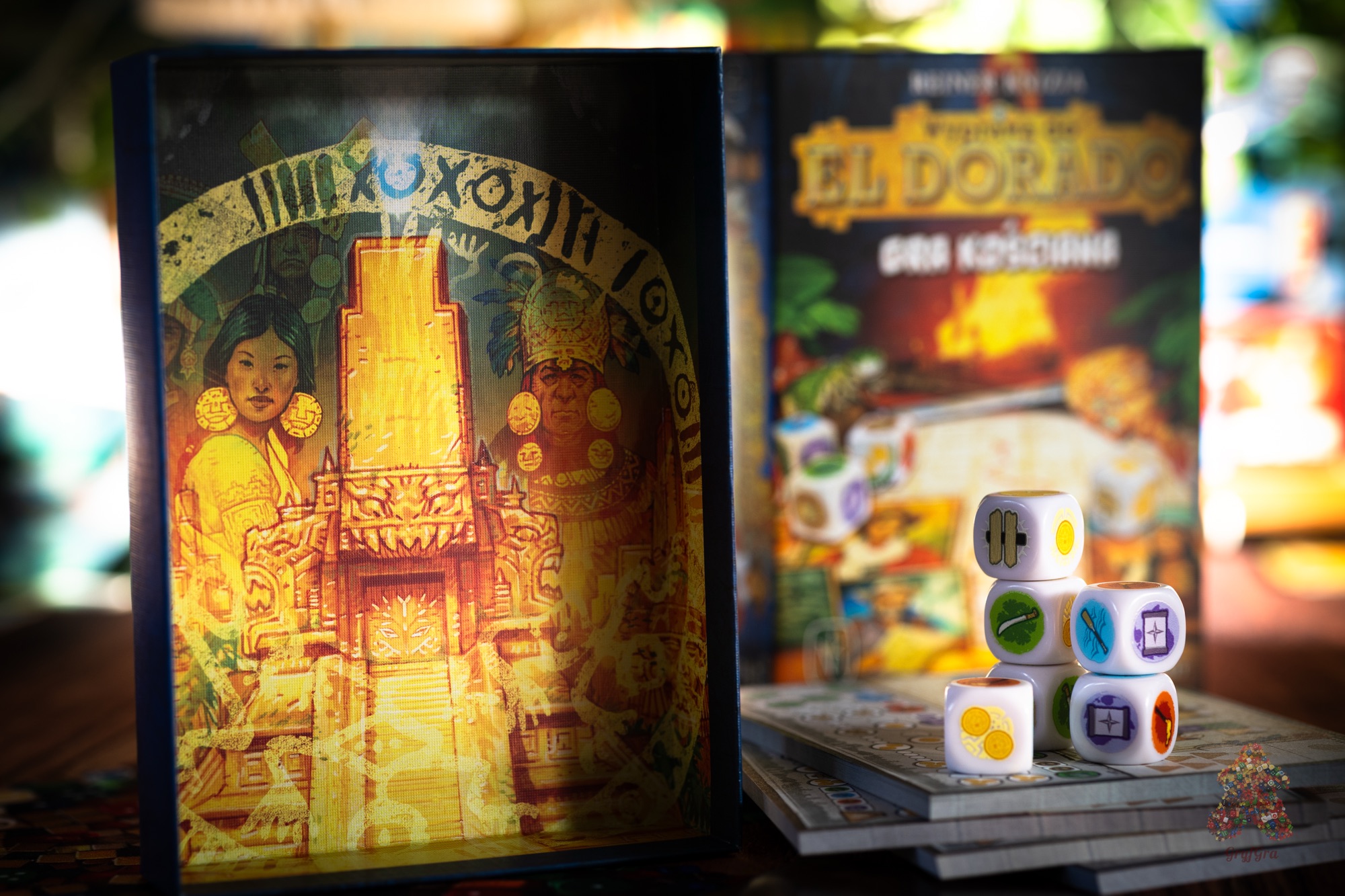
We recommend it to fans of roll-and-write games and anyone looking for an accessible game that takes around half an hour. Fans of the original The Quest for El Dorado may also find plenty to enjoy, provided they are curious about taking a different route to a familiar destination.