

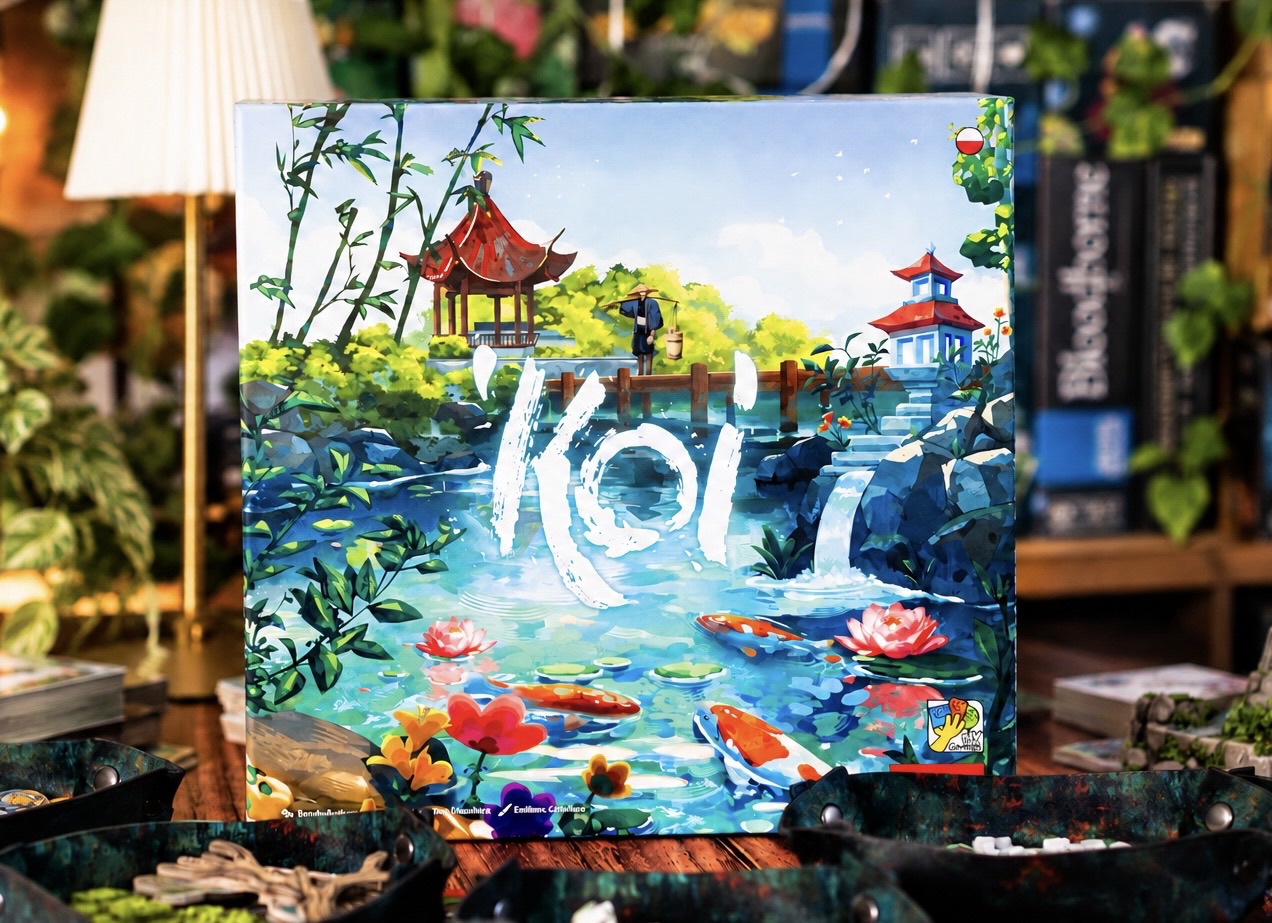
An ornamental pond, water lilies and colourful carp gliding lazily beneath the surface: “Koi” invites us to slow down before we have even started playing. Designed by Rosaria Battiato, Massimo Borzì and Martino Chiacchiera, and published in Poland by Rebel, it lets us create a water garden of our own. Emiliano Castellano provides the painterly artwork. Beneath those beautiful illustrations lies a spatial puzzle in which we expand our pond and gradually increase the number of actions we can perform.
Gameplay
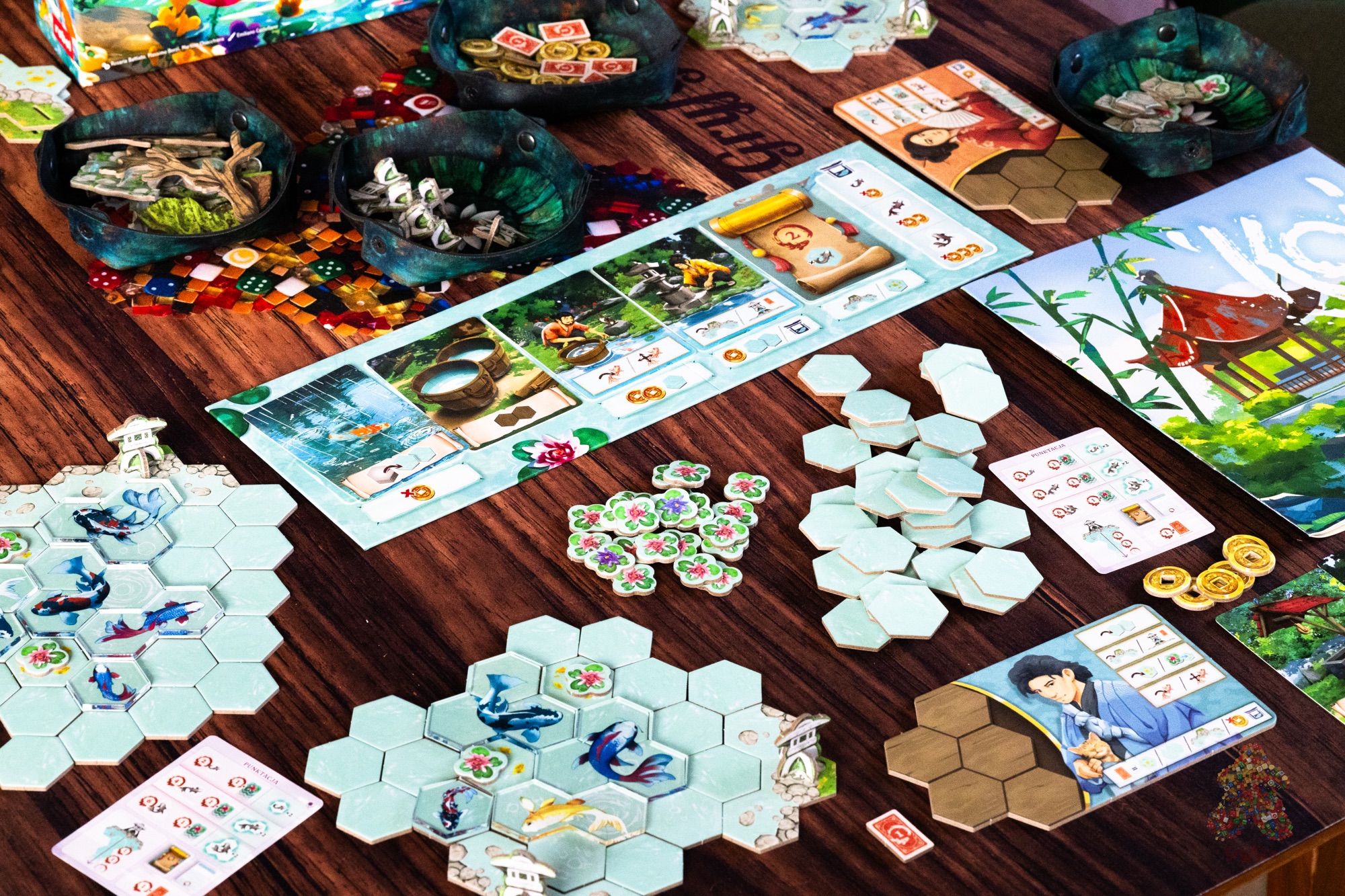
Each player starts with a small spring, a keeper board and limited storage space for the pieces they acquire. Five cards are placed face up on the shared board, with pond tiles, carp and other resources nearby. We can also include three randomly selected objectives, which give us additional tasks and opportunities to earn special garden features.
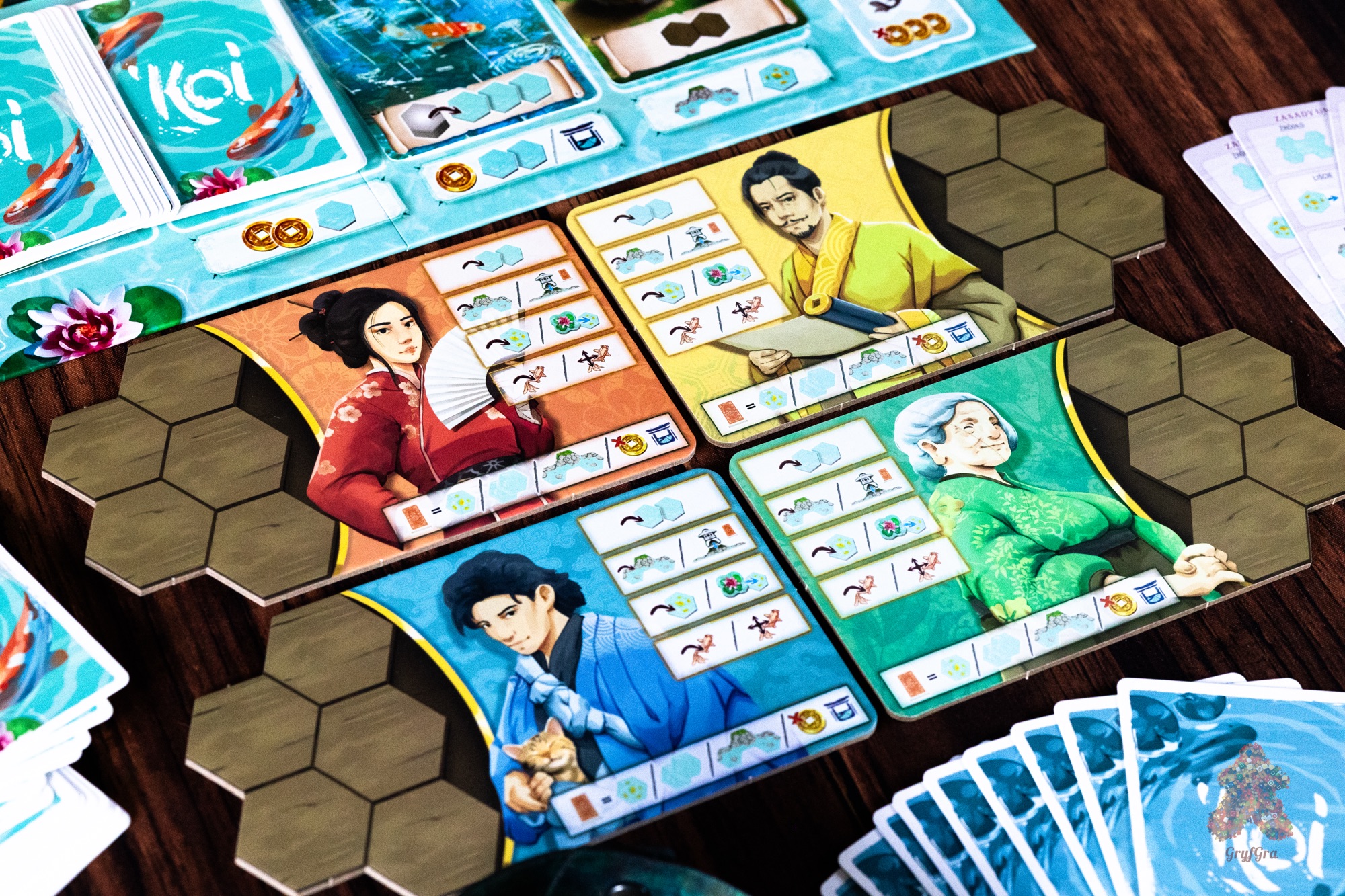
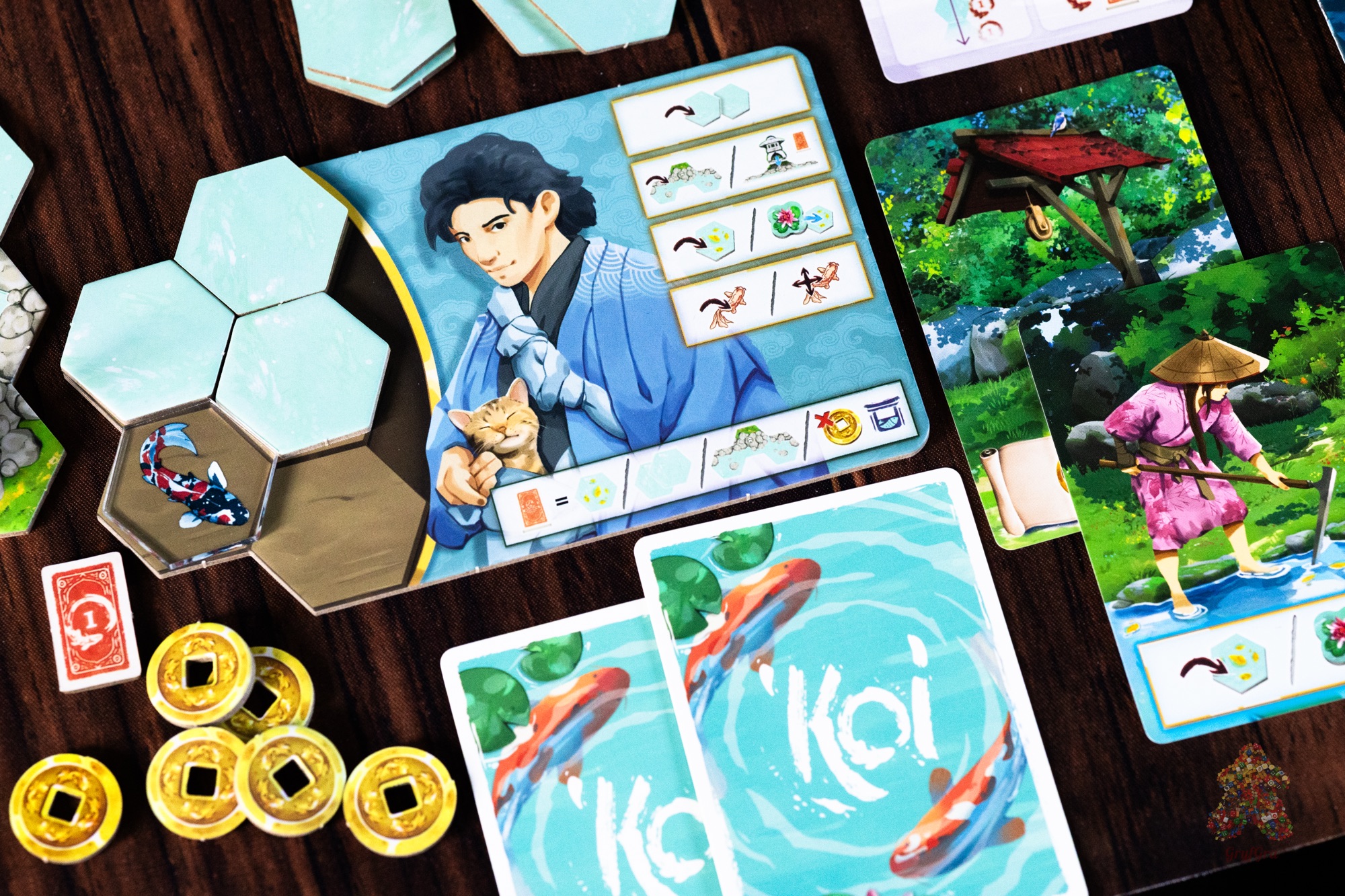
On our turn, we choose either meditation or work. Meditation means taking one of the face-up cards and resolving its effect, together with the cost or reward associated with its position. This is how we acquire resources, helpers and scrolls that provide endgame points, among other things. After a card is taken, the remaining cards slide along the track and a new one fills the empty space.
Work lets us perform one keeper action: expand the pond, place a carp in it, move a fish, or upgrade leaves and banks with a water lily or lantern respectively. We can also activate each of our helpers once during that turn, in any order. We do relatively little at first, but as our collection of cards grows, a single turn can make a much more noticeable difference to the garden.
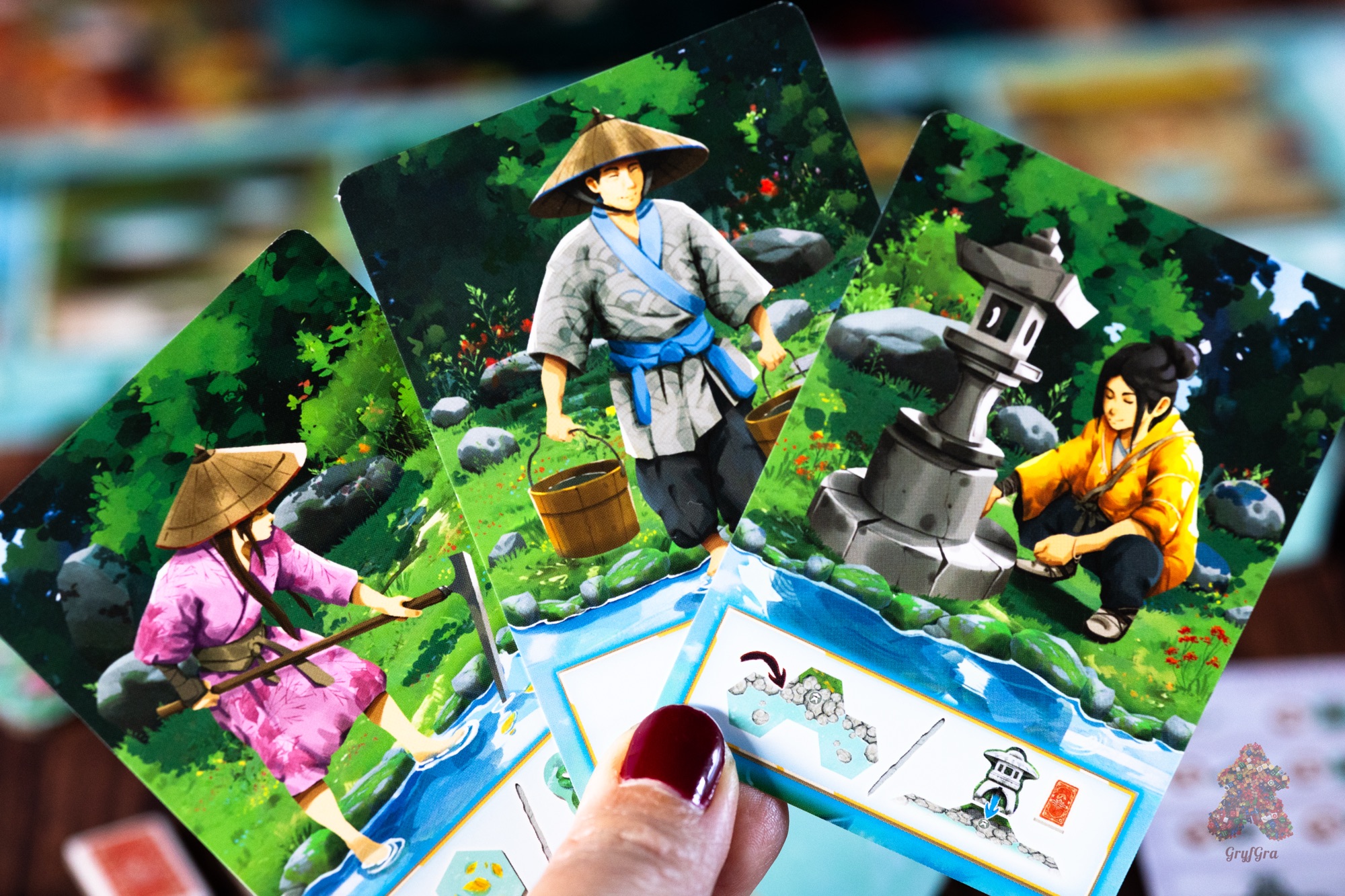
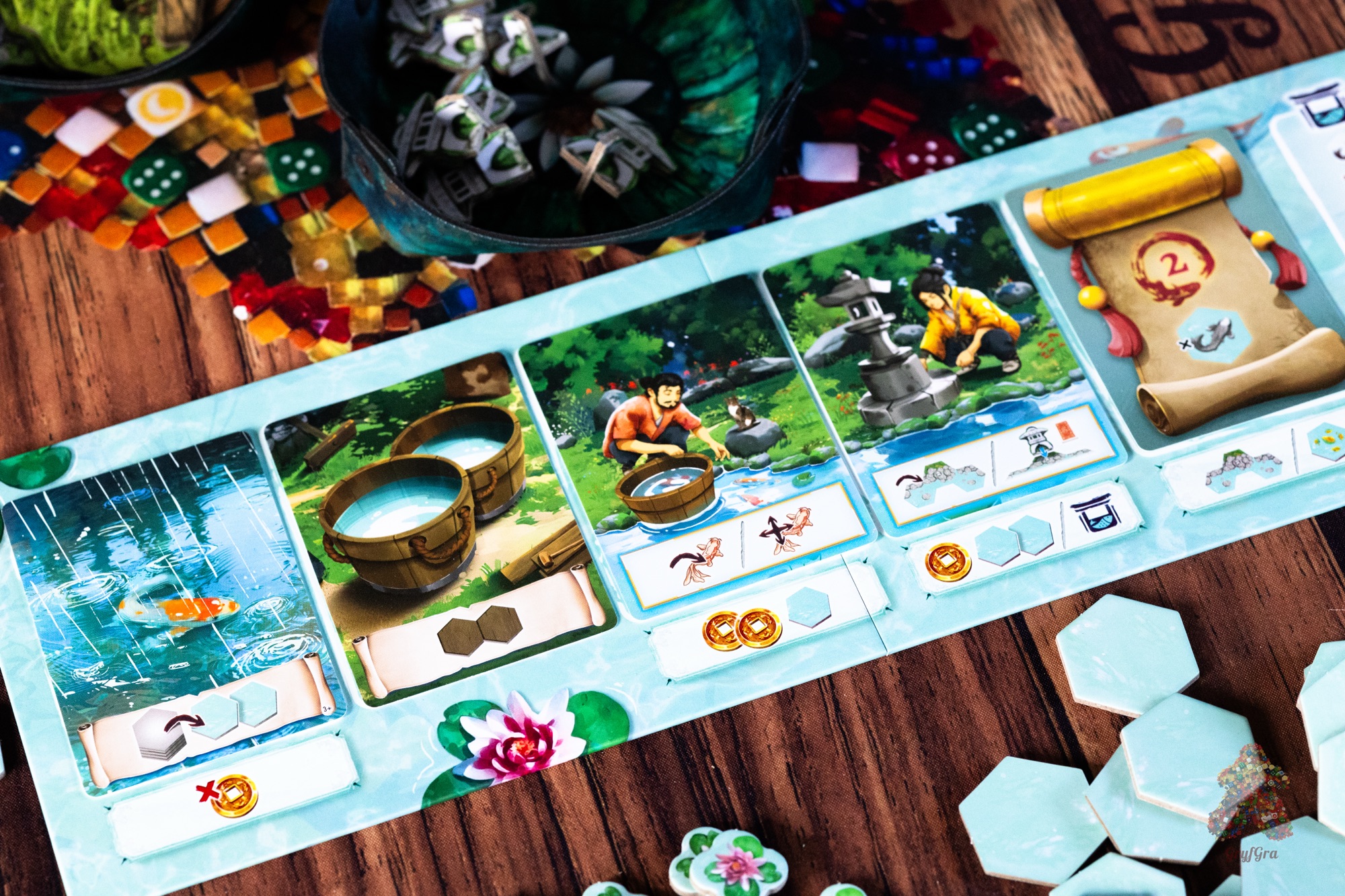
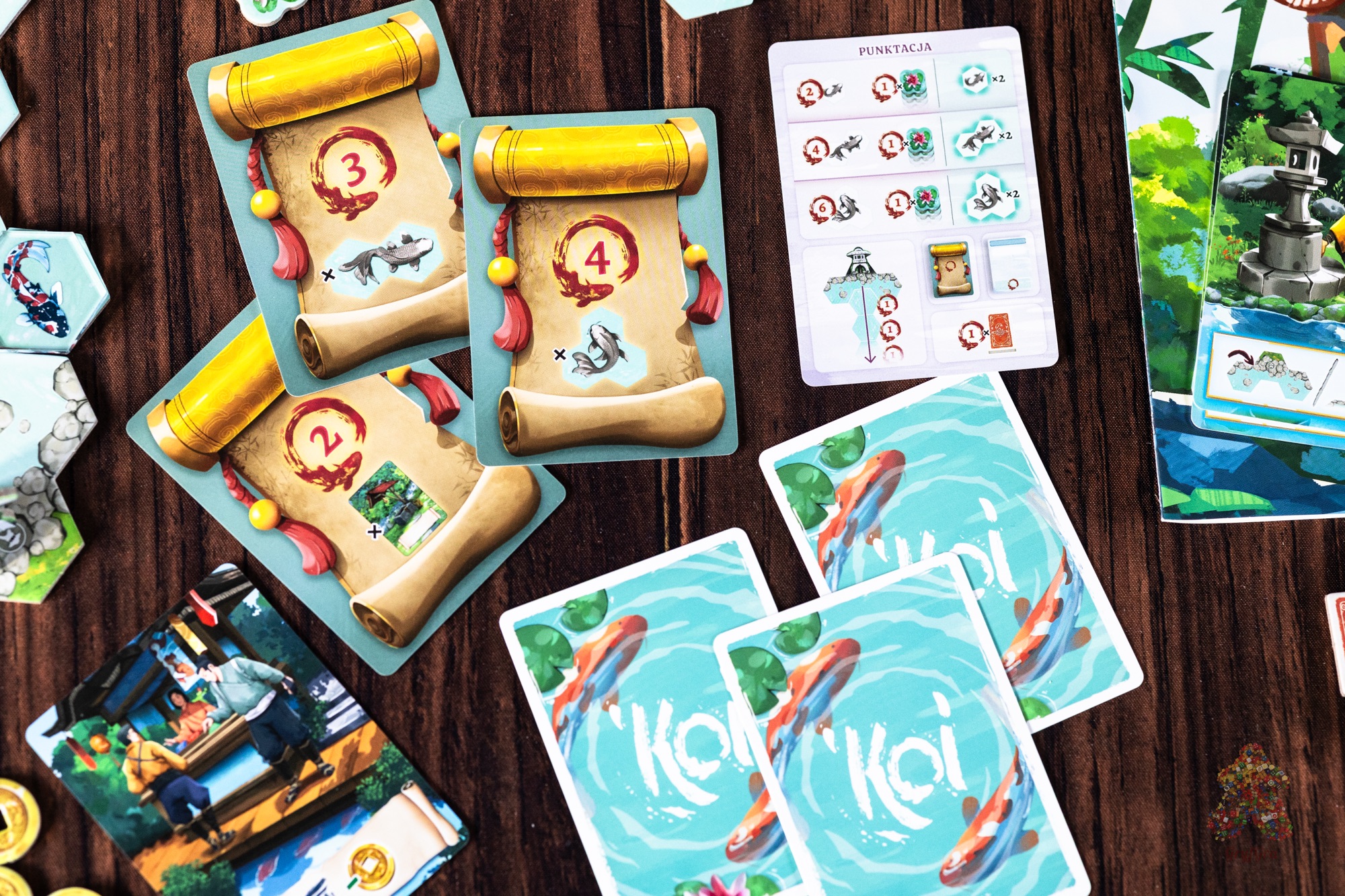
The pond’s most important residents are, of course, the carp. Their value depends on their size, adjacent water lilies add points, and fully surrounding a fish with water doubles that increased total. Lanterns score for water spaces in a straight line in front of them. Scrolls, acquired objective tiles and unused luck tokens add further points. Exhausting the deck or taking the last carp from the supply triggers the end of the game: we finish the current round, then everyone gets one final turn.
Review
For us, “Koi” worked best as a relaxing puzzle with room for thought but little tension. We mainly played with three experienced players, including a thirteen-year-old, and our games took less than an hour. There was planning and a little racing, but we devoted most of our attention to our own ponds. The presentation also encouraged a relaxed attitude towards the competition.
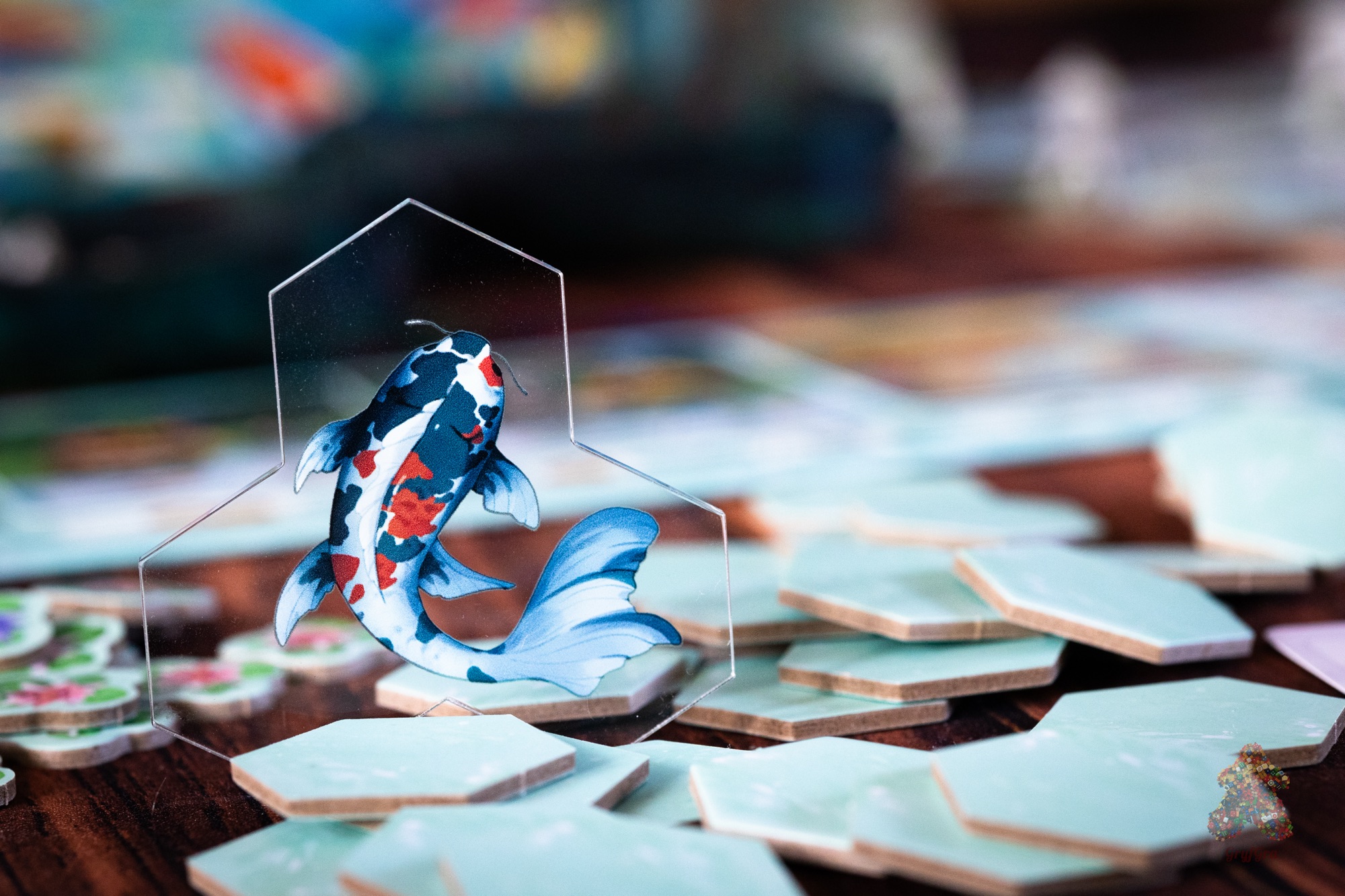
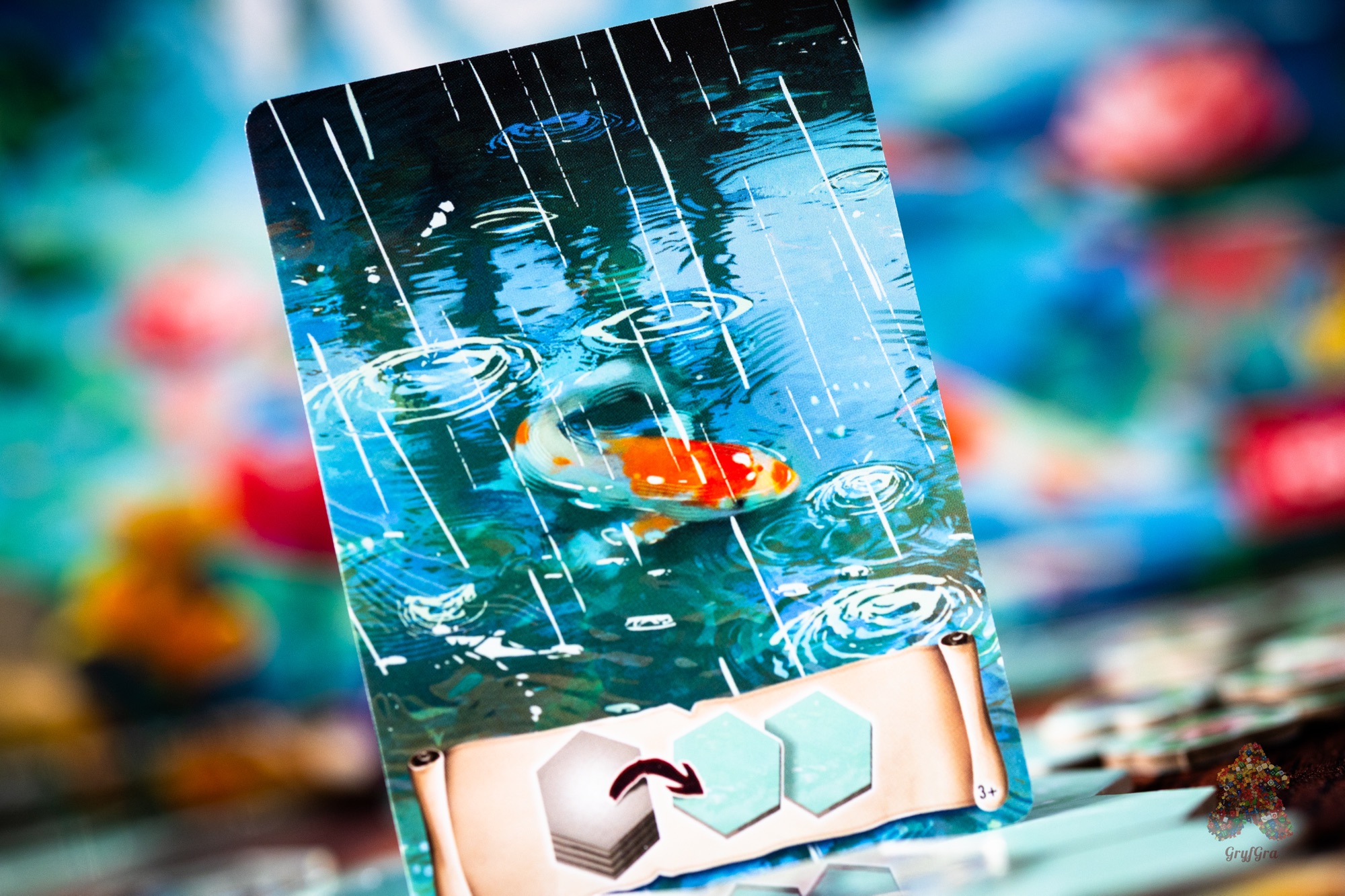
Emiliano Castellano’s illustrations deserve particular praise. They look as though they were painted with a brush, with delicate shapes and carefully chosen colours creating a sense of harmony. The images are not overloaded with detail. They give the water, plants and fish room to breathe, so each new piece becomes part of a coherent landscape. That aesthetic suited the pace of our games very well.
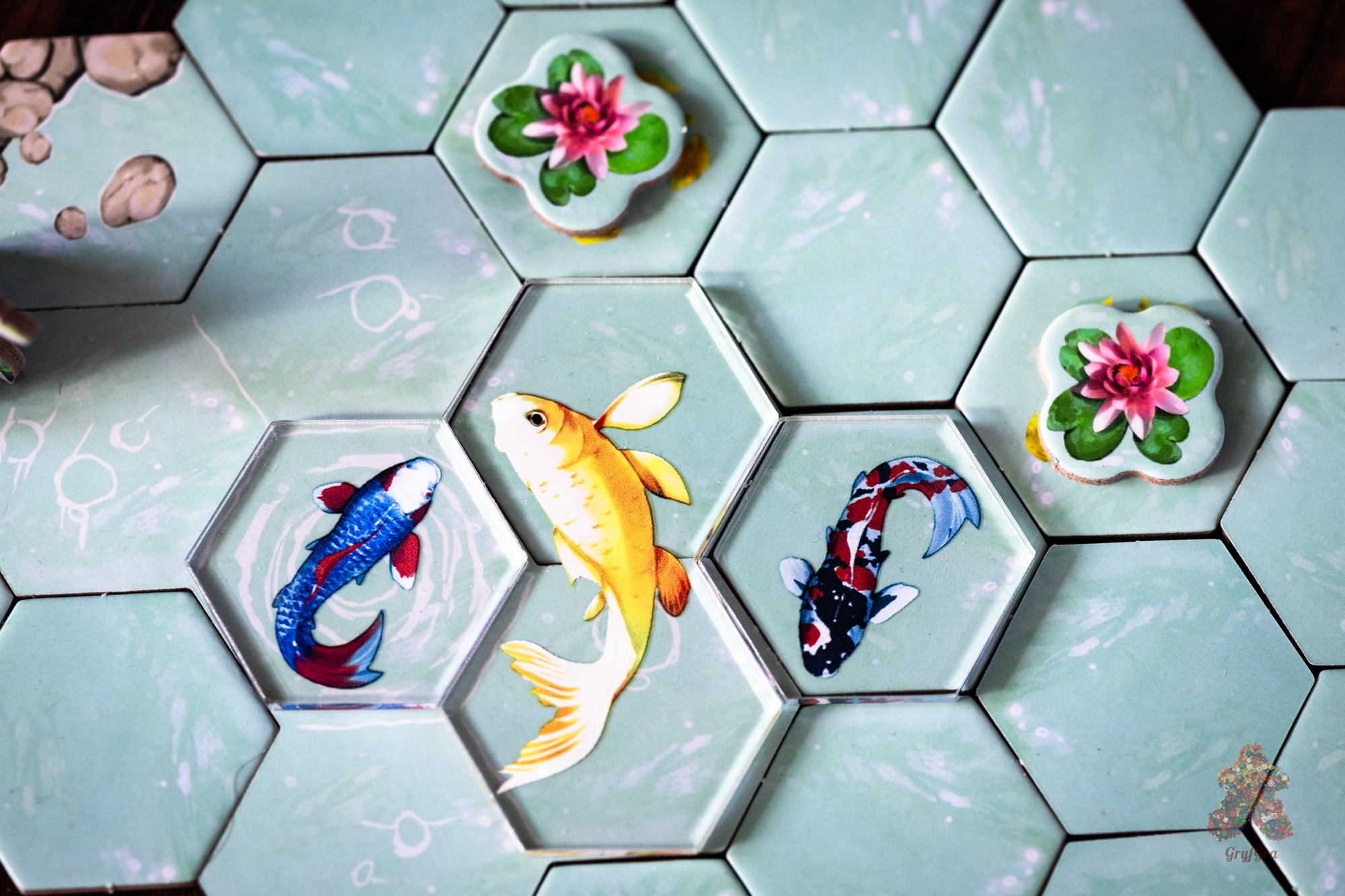
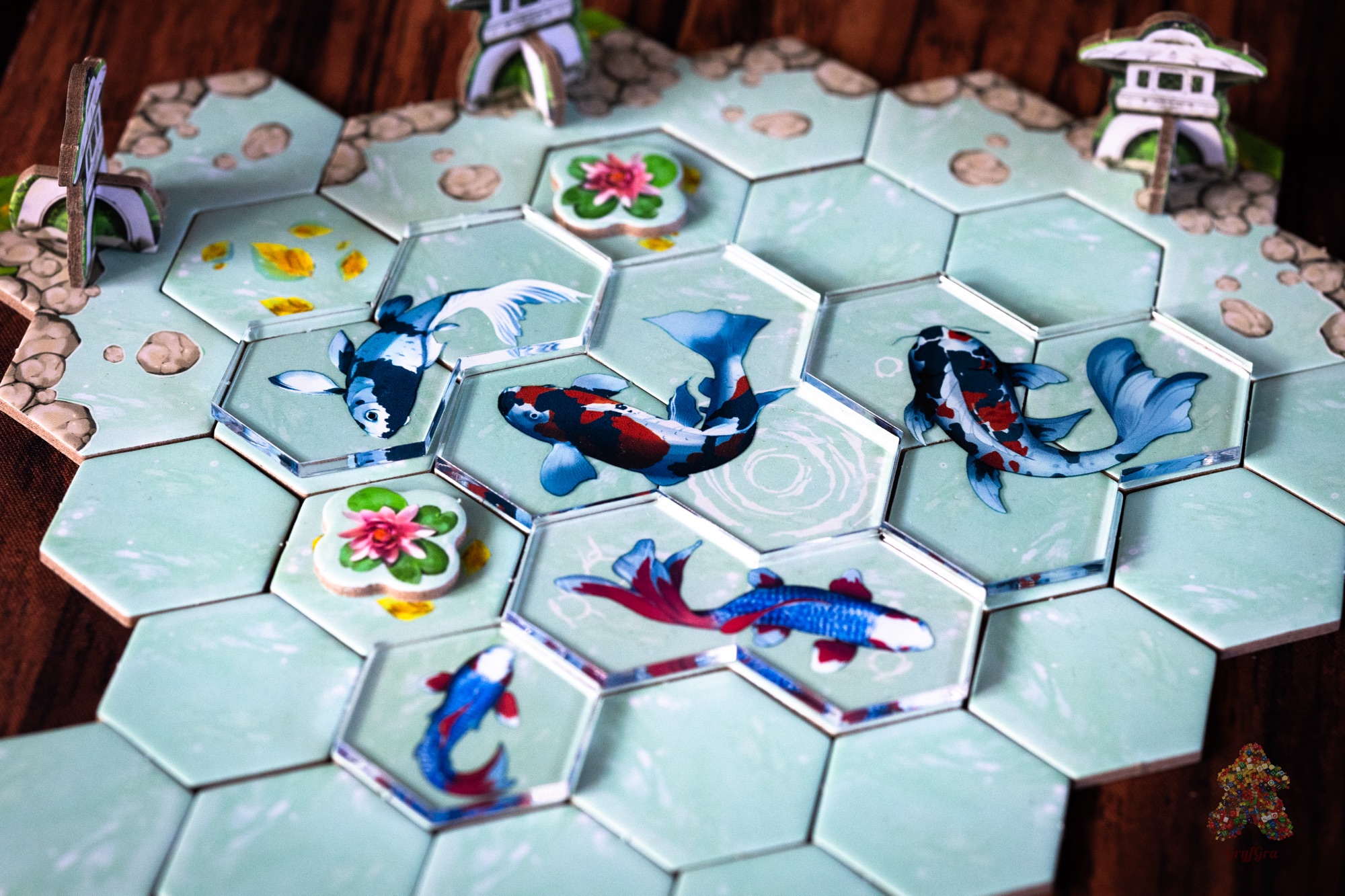
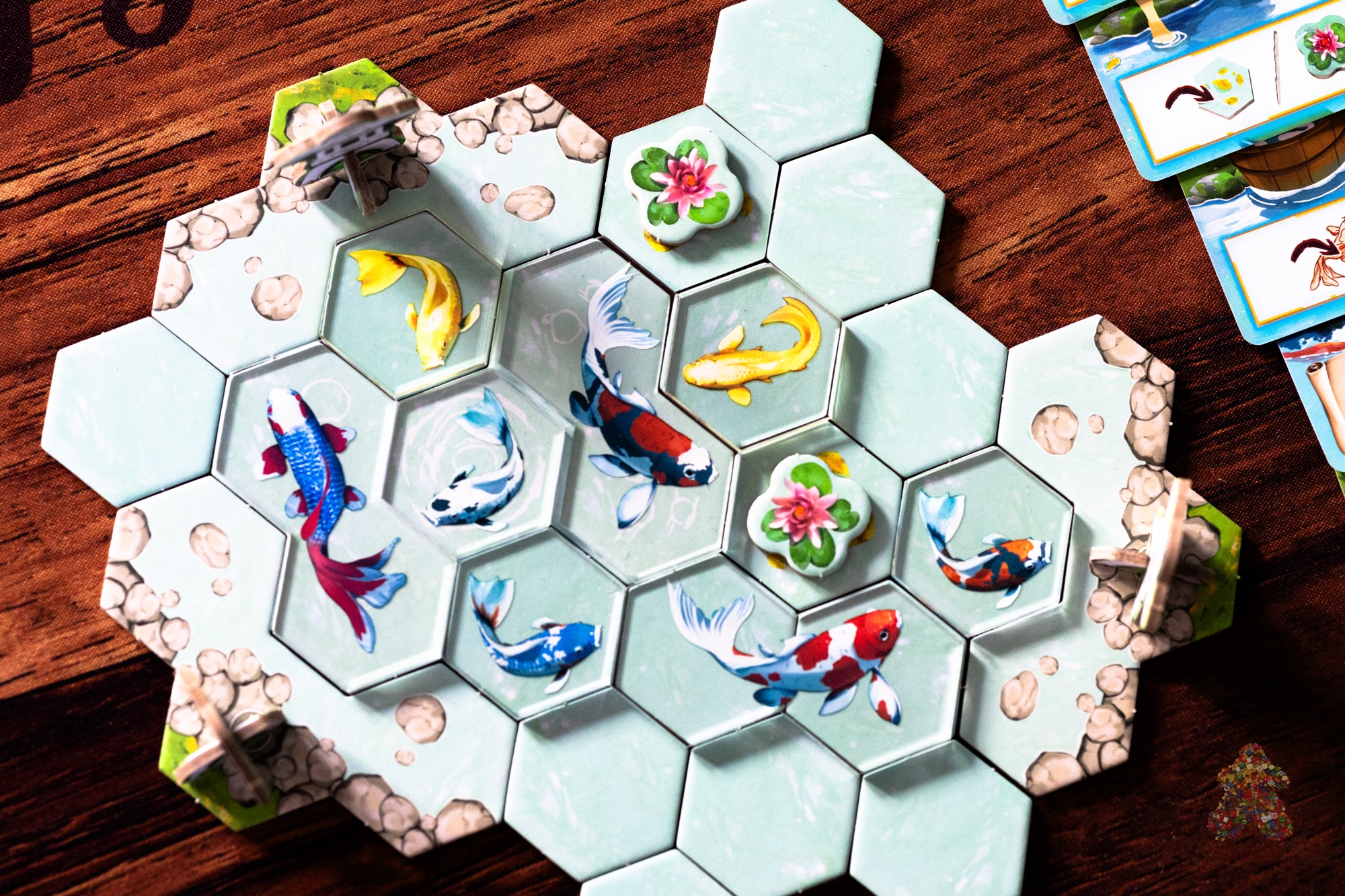
Introducing carp into a space we have prepared for them is especially enjoyable. The transparent tiles blend beautifully with the water visible beneath them and give the scene depth. We particularly liked placing them with the printed side facing down, which strengthened the impression that the fish were actually swimming below the surface. A finished pond is satisfying simply as a picture created through our decisions.
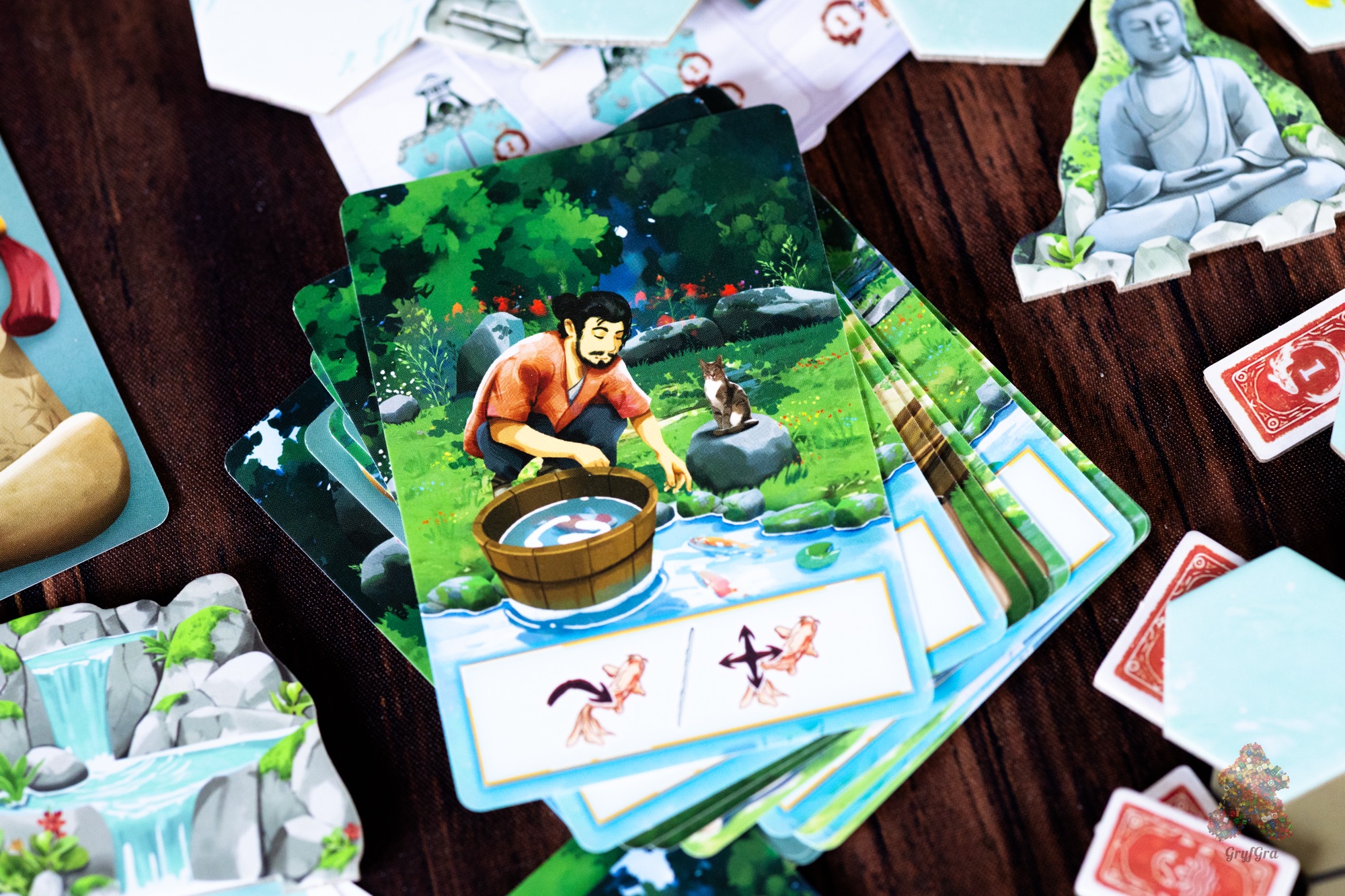
Mechanically, building up our team of helpers is just as rewarding. Each card increases the amount of work we can do in a single turn. Over time, the garden starts growing much faster, and our earlier investments visibly pay off. We found all types of helpers useful, although the builder was easier to forgo if we were not planning to develop lanterns. Crucially, additional cards mainly let us repeat actions we already know. Turns became a little longer towards the end, but this did not lead to frustrating downtime.
Having plenty of helpers does not mean we can keep choosing work indefinitely. We still need resources, fish and money, so meditation remains important throughout the game. The rewards associated with positions on the card track matter particularly in the early stages. Even later, we sometimes chose a card mainly for its accompanying bonus. We can wait for an appealing card to move into a more favourable position, but someone else may take it first. Running short of coins was one of our main reasons for returning to meditation, even late in the game.
Storage adds another consideration: managing the flow of resources. Its initial capacity can be restrictive, so the opportunity to expand it is valuable. We did not feel that increasing storage was an essential step in every game, however. By collecting pieces carefully and placing them in the pond at the right time, we could manage with less space. We simply had to avoid acquiring more than we could use or keep.
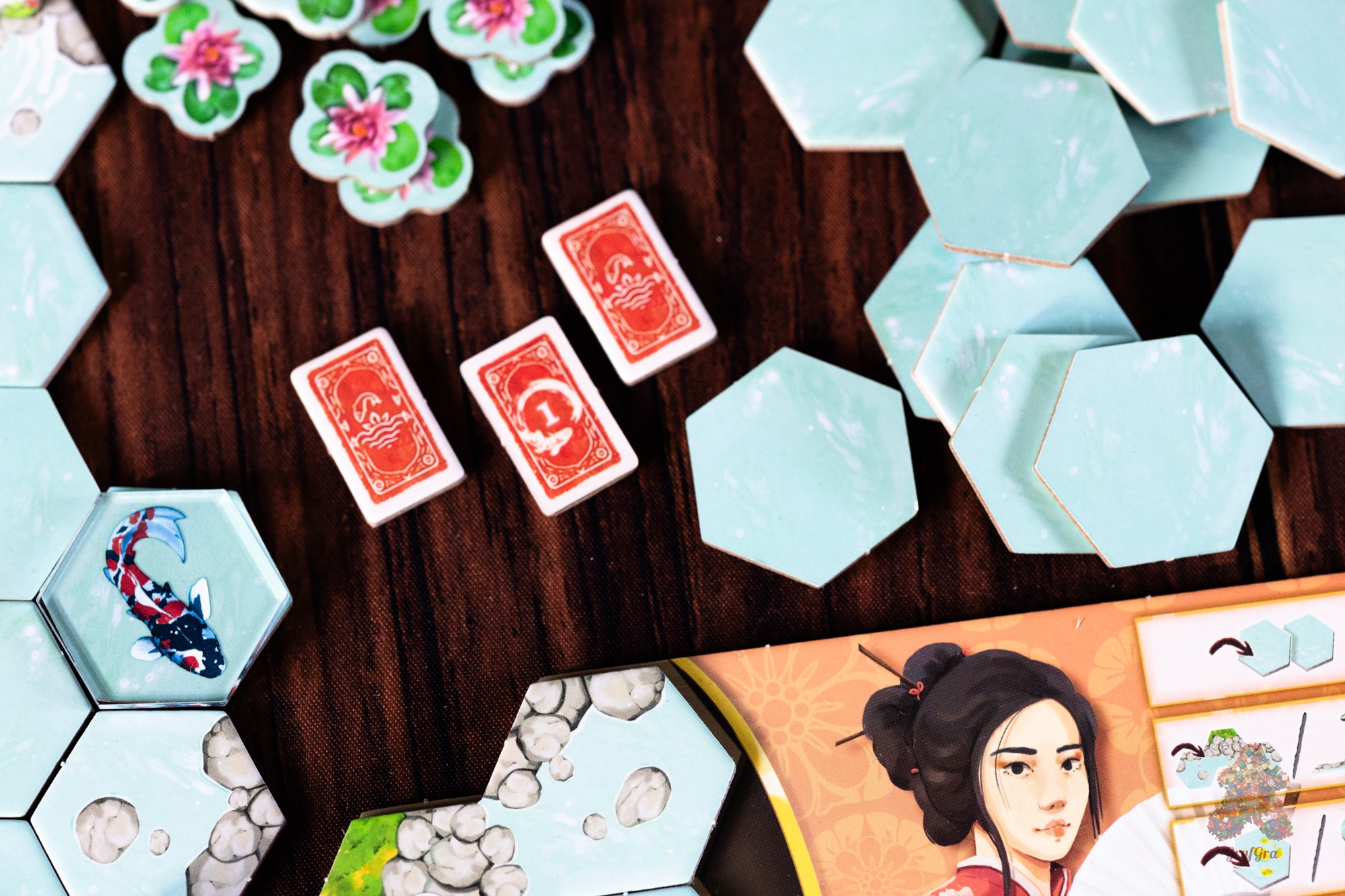
Within the pond itself, we most enjoyed working out the relative positions of carp and leaves that would later become water lilies. Fully surrounding fish with water and boosting their value with lilies felt like the foundation of a good score. Lanterns, scrolls and objectives then provided opportunities to build on that foundation. It is worth leaving long lines of water for lanterns, but positioning them demanded less attention from us than arranging the fish and plants. The option to move a carp is a useful safeguard, even though we did not always need it in our games.
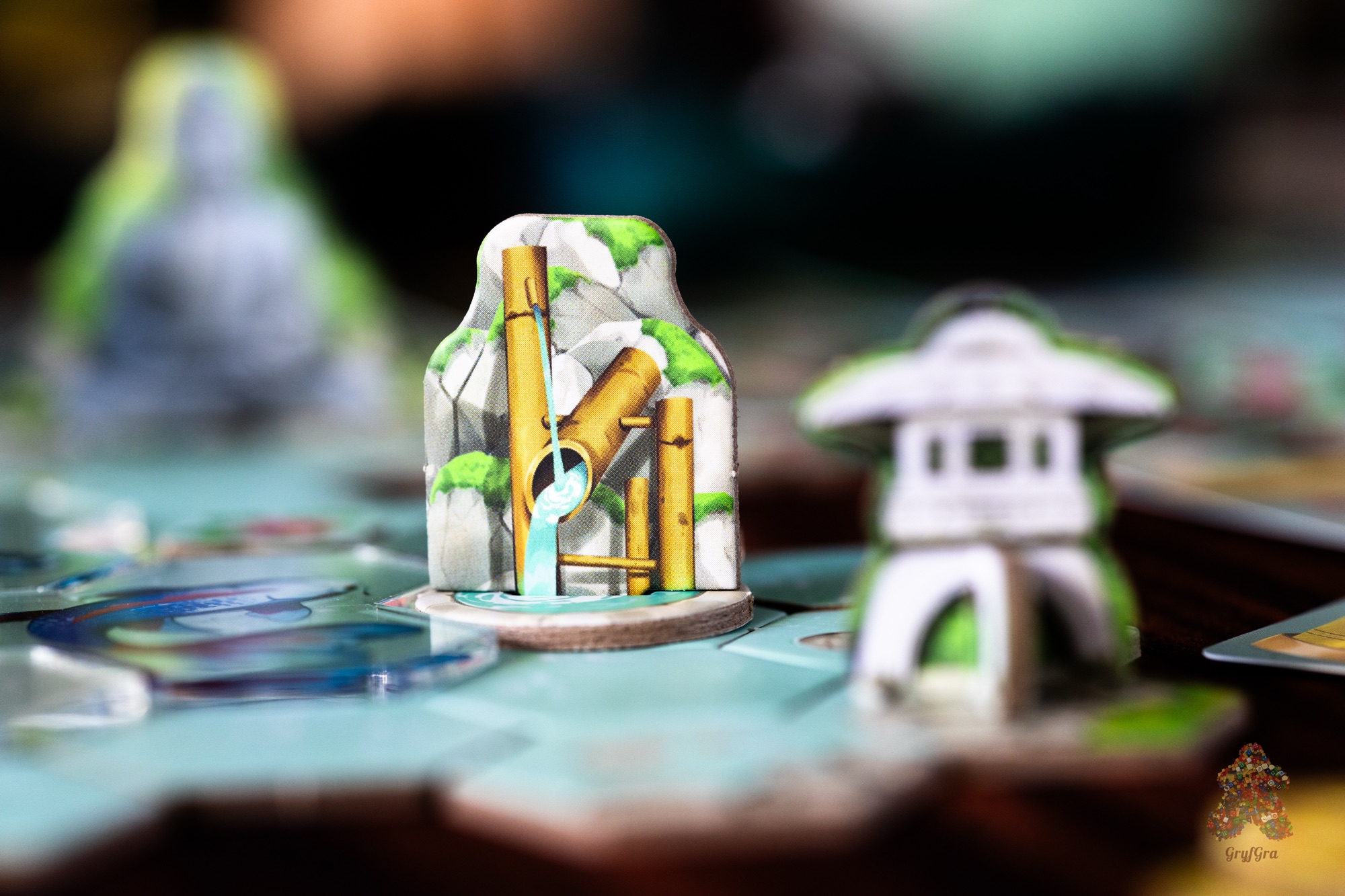
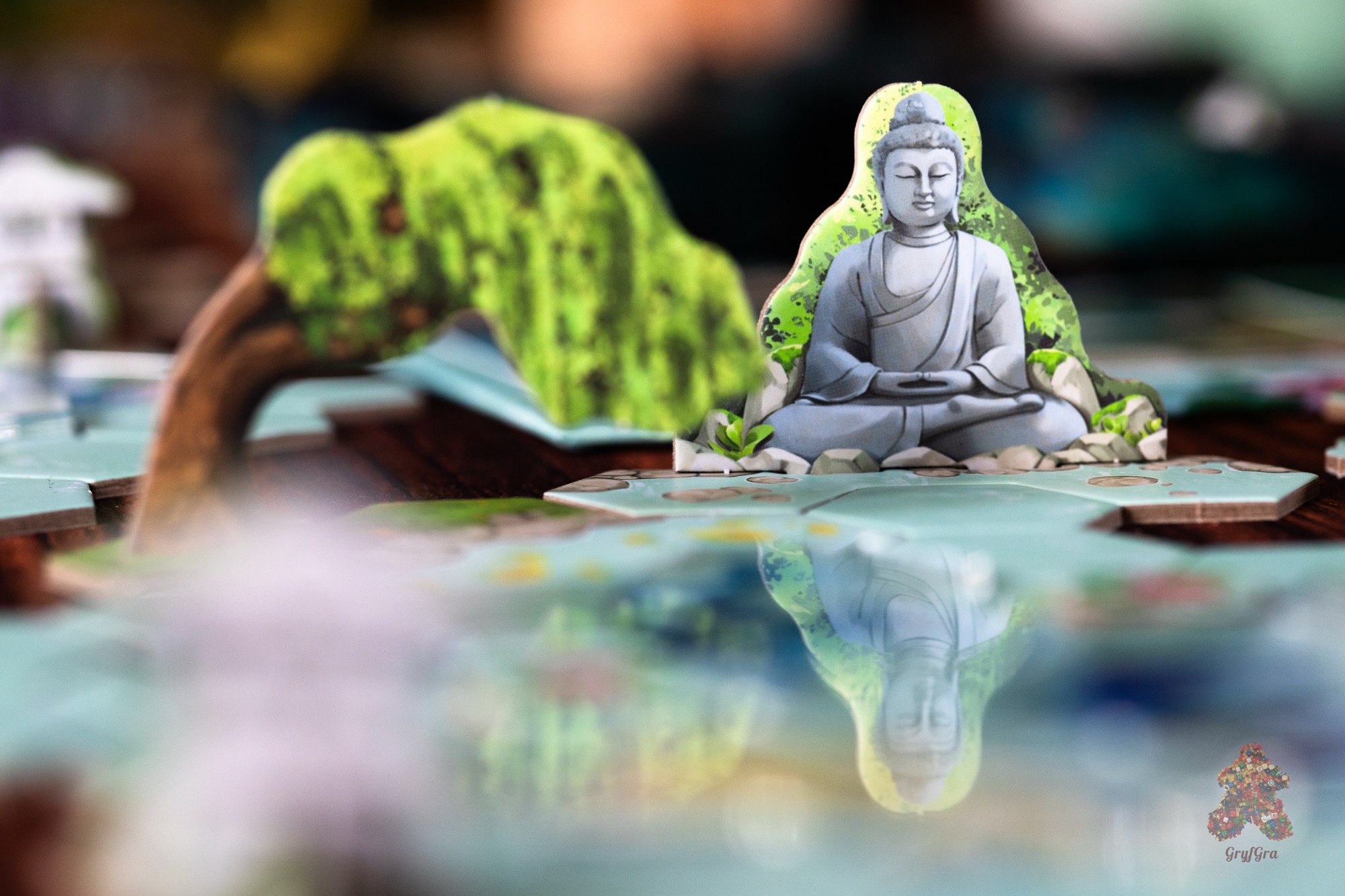
Objectives are well worth adding once the basics are familiar. We also played without them, and that version works well, but the extra tasks give us more reasons to think carefully about the shape of our pond. Different combinations bring variety to subsequent games, while the features we earn enrich the garden’s appearance. It is an effective combination of additional decisions and a reward we can immediately see on the table.
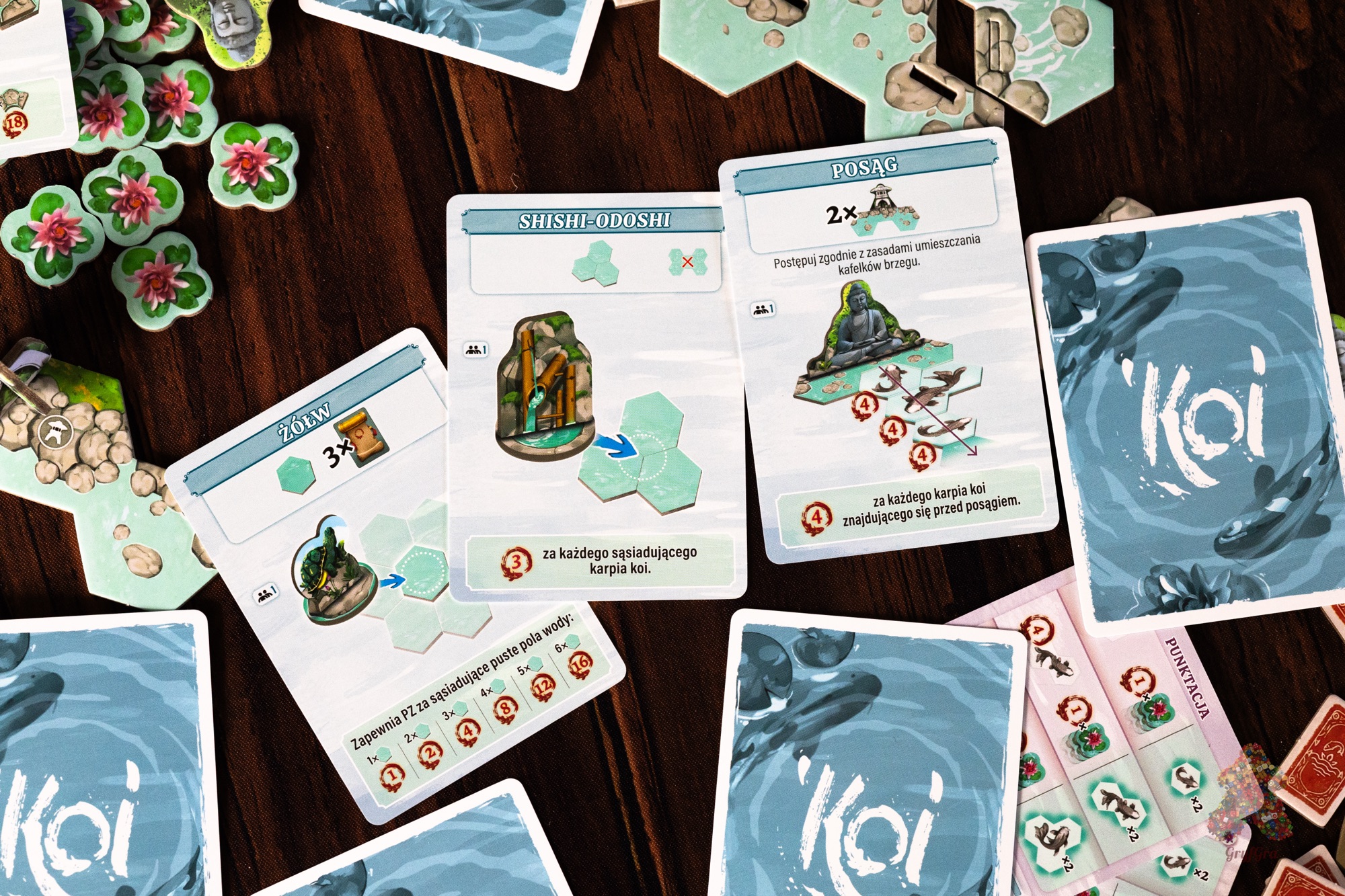
Interaction remained in the background for our group. The shared card display, carp supply and limited objective rewards create room for competition, but we rarely chose something primarily to hinder someone else. We took a similar view of randomness. Only two scrolls appeared in our first game, leaving one player without that particular opportunity for extra points. We noticed the imbalance, although with our approach it did not become a serious frustration. It is worth remembering that access to the cards we want is not guaranteed.
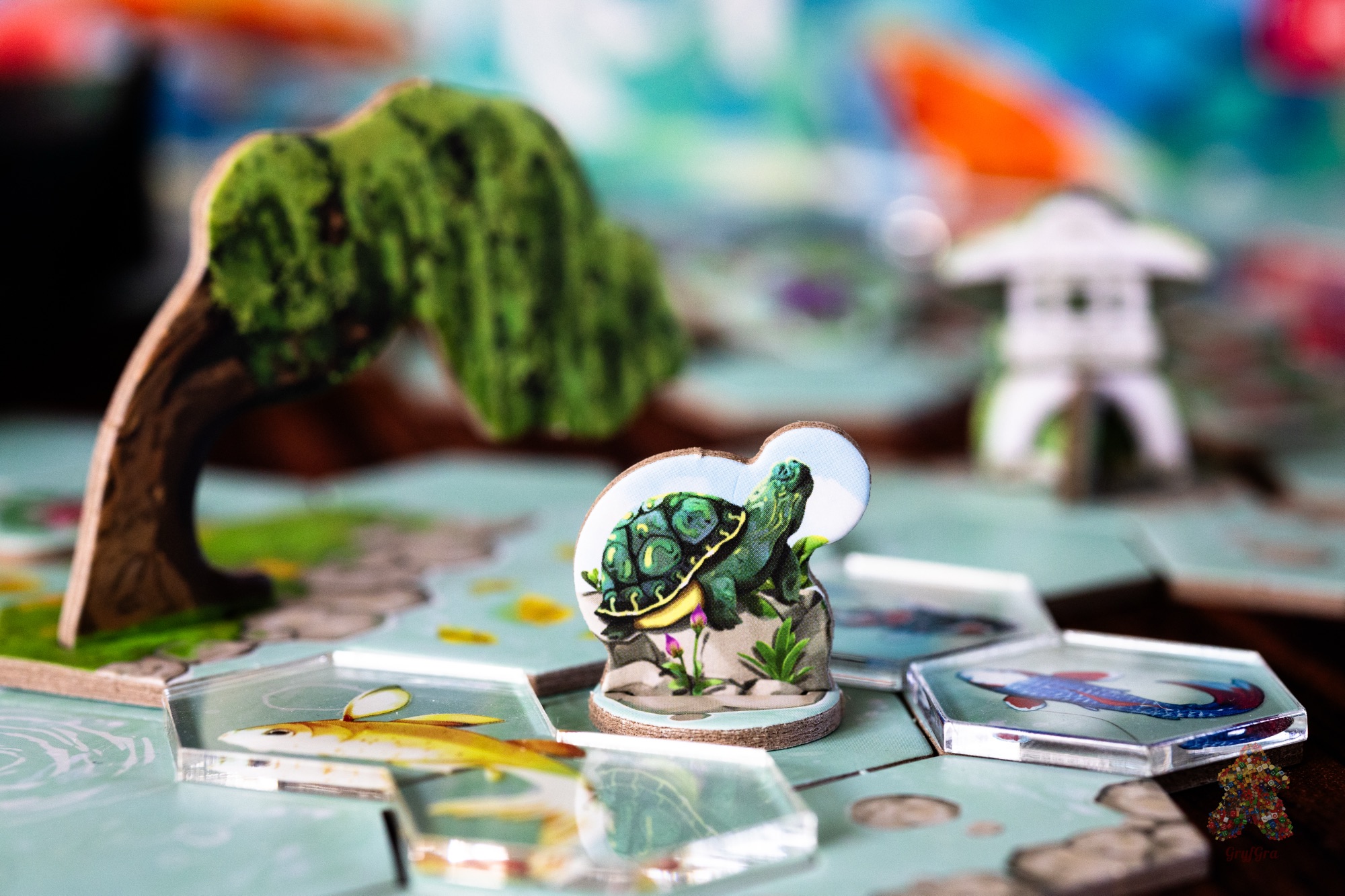
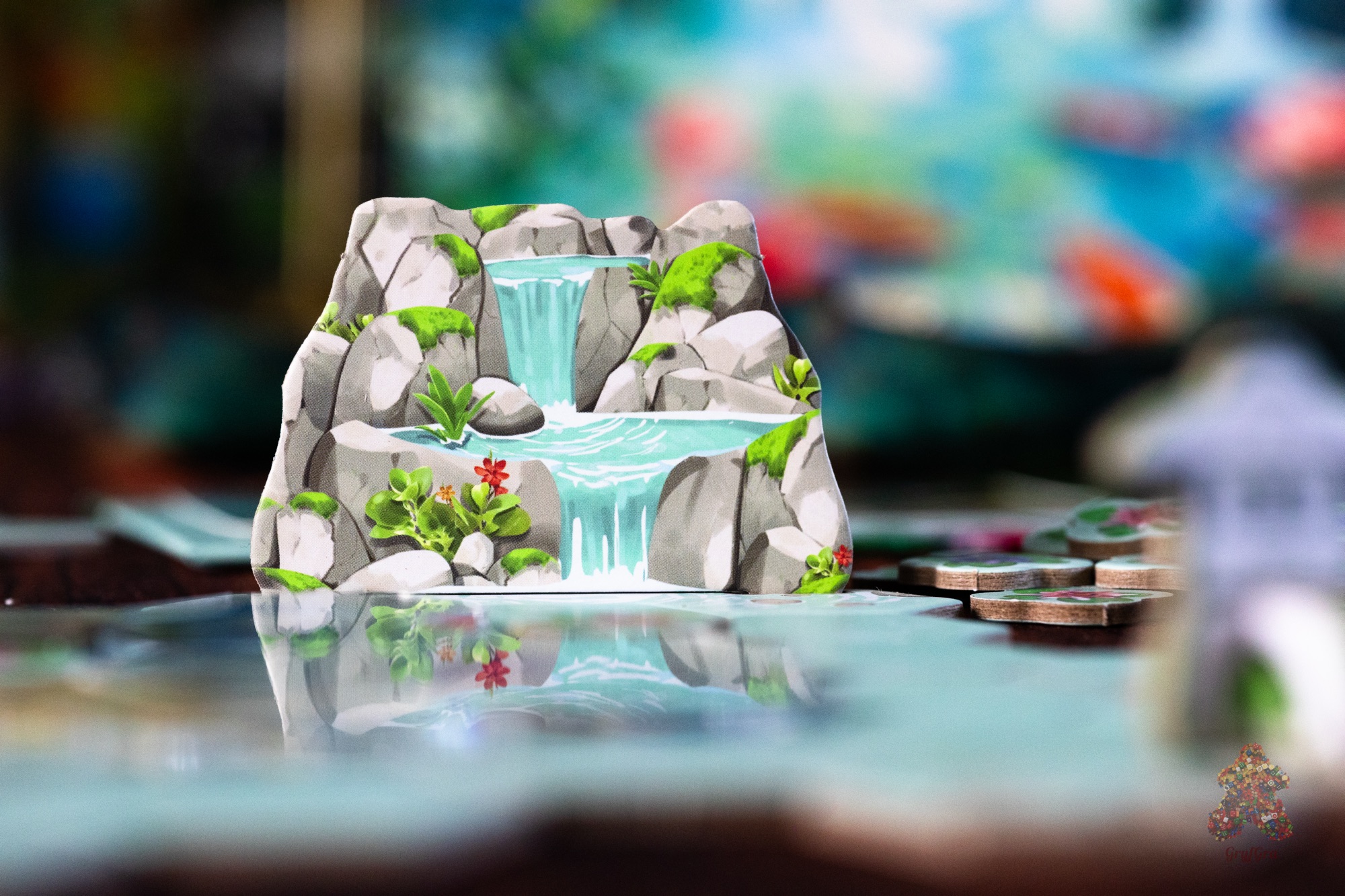
Our biggest initial difficulty was reading the iconography and distinguishing how tiles moved into play. For the first few turns, we confused effects that let us add a piece to storage, place one from storage, or put it directly into the pond. We also had to get used to the fact that all our helpers become available again every time we choose work. Picking one of the two main actions is simple, but using all their possibilities smoothly takes a little practice. The player aids were most useful when calculating the final scores.
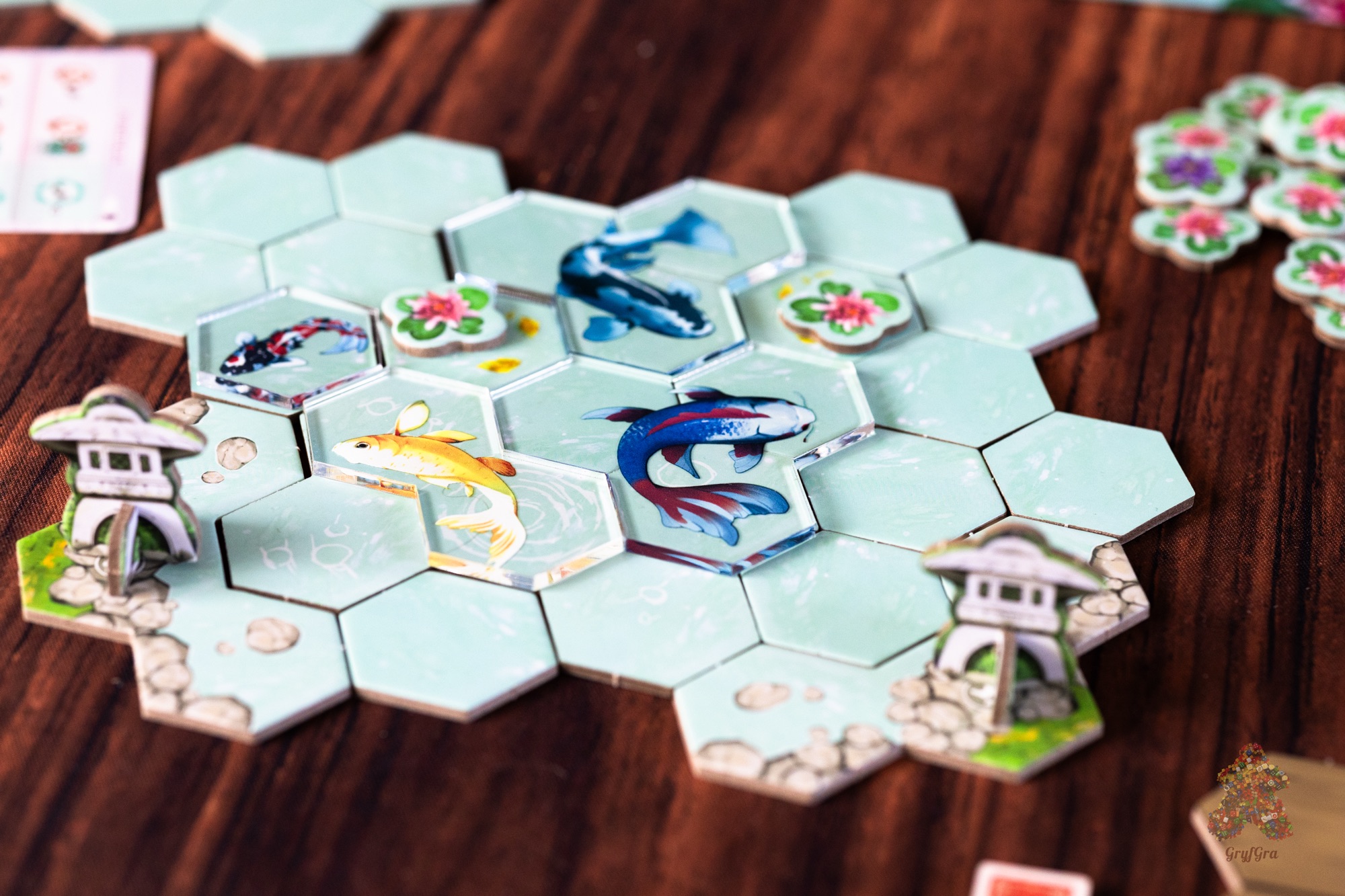
We had no complaints about component quality. Once the pieces had been sorted into bags, setup and packing away did not take excessive amounts of time. Our three-player games fitted on a 120 × 60 cm table, although that surface could become cramped with more players. Our games ended when the carp supply ran out, and the finish was never a surprise: the dwindling number of fish helped us judge how much time remained to put the finishing touches to our ponds.
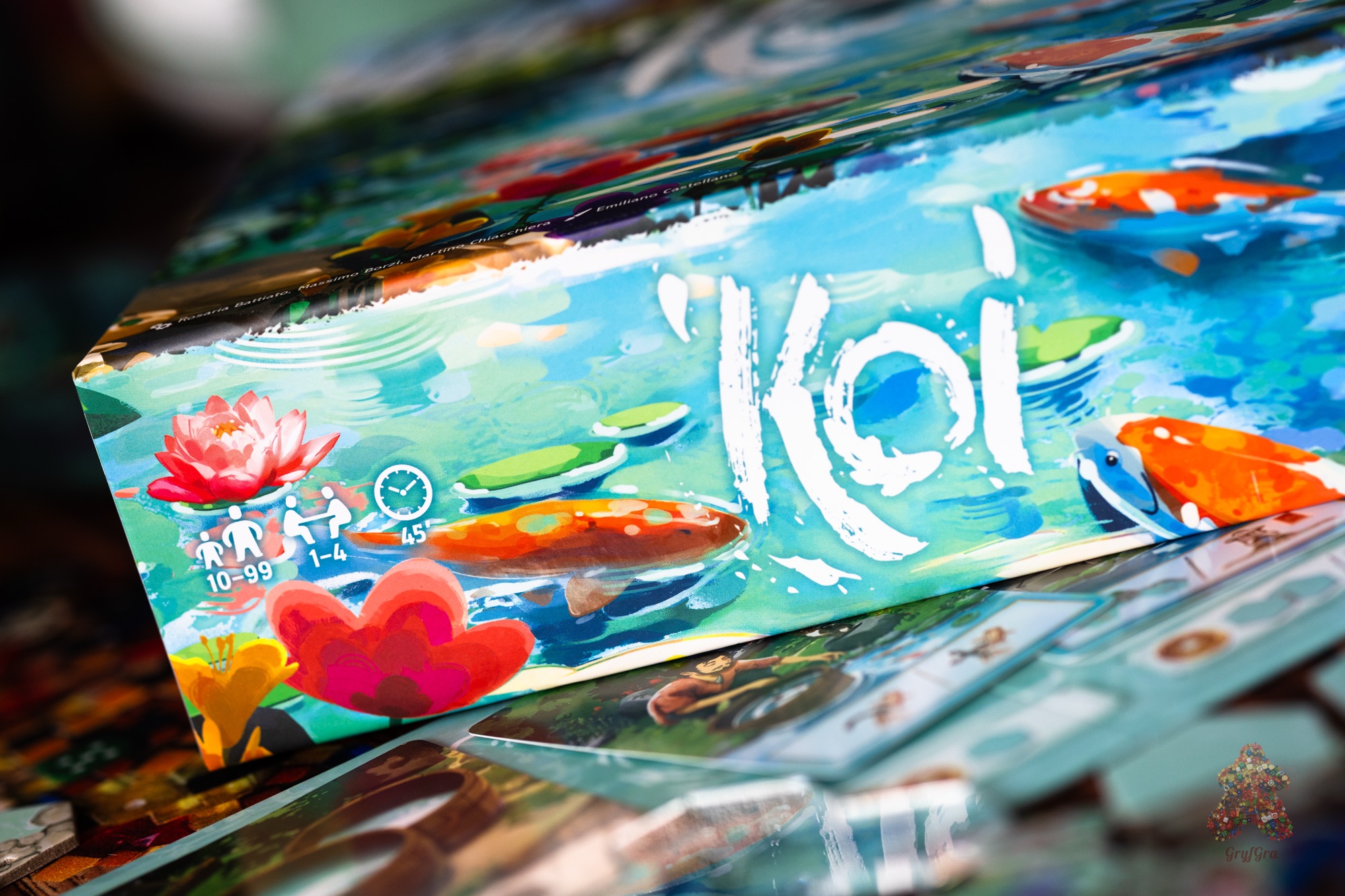
Summary
“Koi” offers two satisfying forms of progress: an increasingly efficient team of helpers and an increasingly beautiful water garden. Emiliano Castellano’s painterly illustrations and the transparent carp tiles make building a pond enjoyable regardless of the points it earns. The changing objectives also provide fresh ideas for subsequent games.
This is primarily a game for people who enjoy relaxing spatial puzzles and gradually expanding their options. The iconography takes some getting used to, and the limited direct interaction may not satisfy players who prefer fiercer competition. For us, though, that very pace, combined with the satisfying development of our ponds, was what made us want to return.