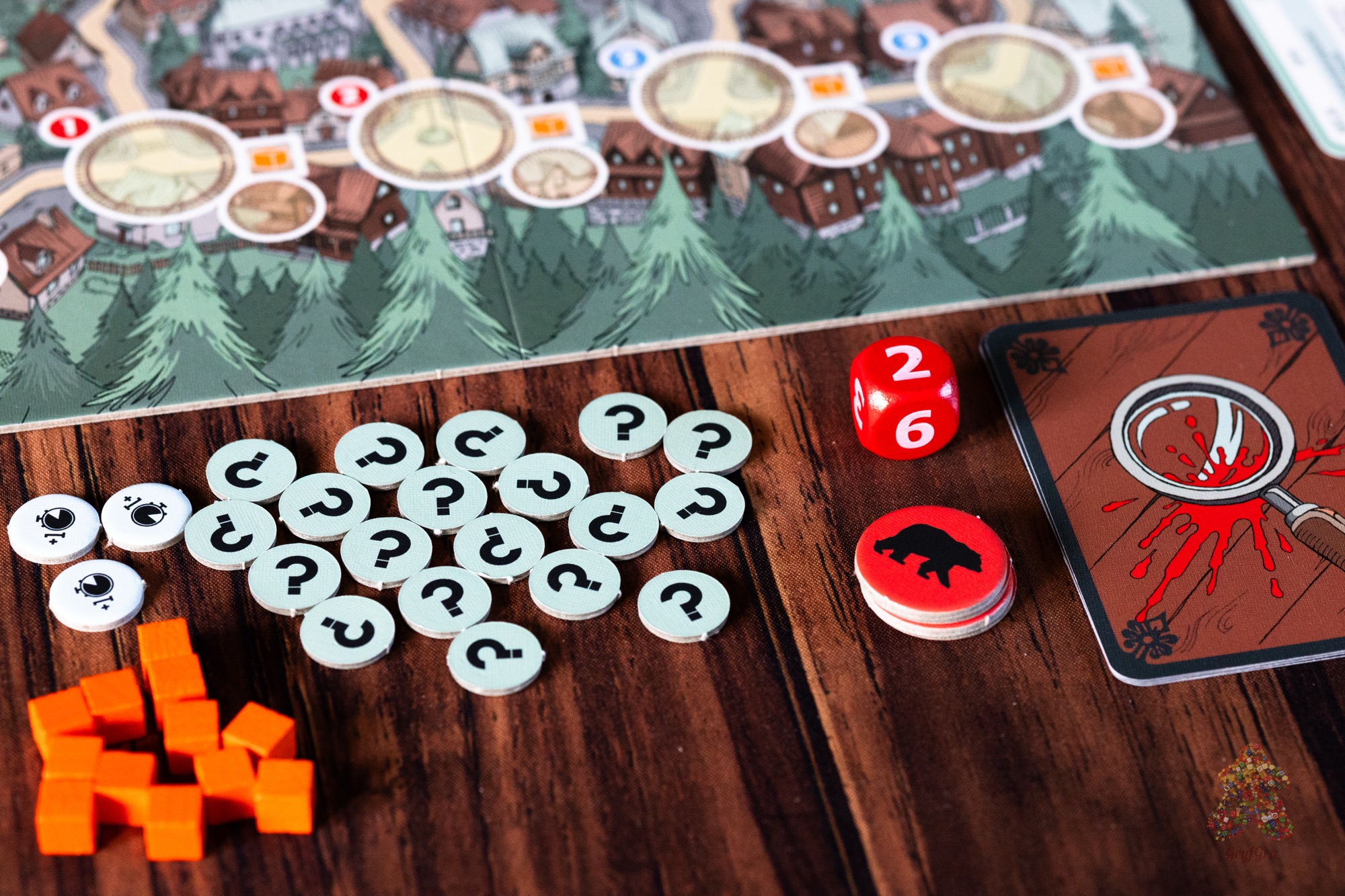
The Podhale region, characters from Małgorzata and Michał Kuźmiński’s crime novel, and cases waiting to be solved: “Śleboda” by Michał Friedrich, published by Muduko, invites us to investigate together. We collect information, gather evidence and race to finish before unfolding events undo our efforts. Beneath the crime theme, however, lies a cooperative puzzle about counting available actions, planning movement across the board and keeping the situation under control.
Gameplay
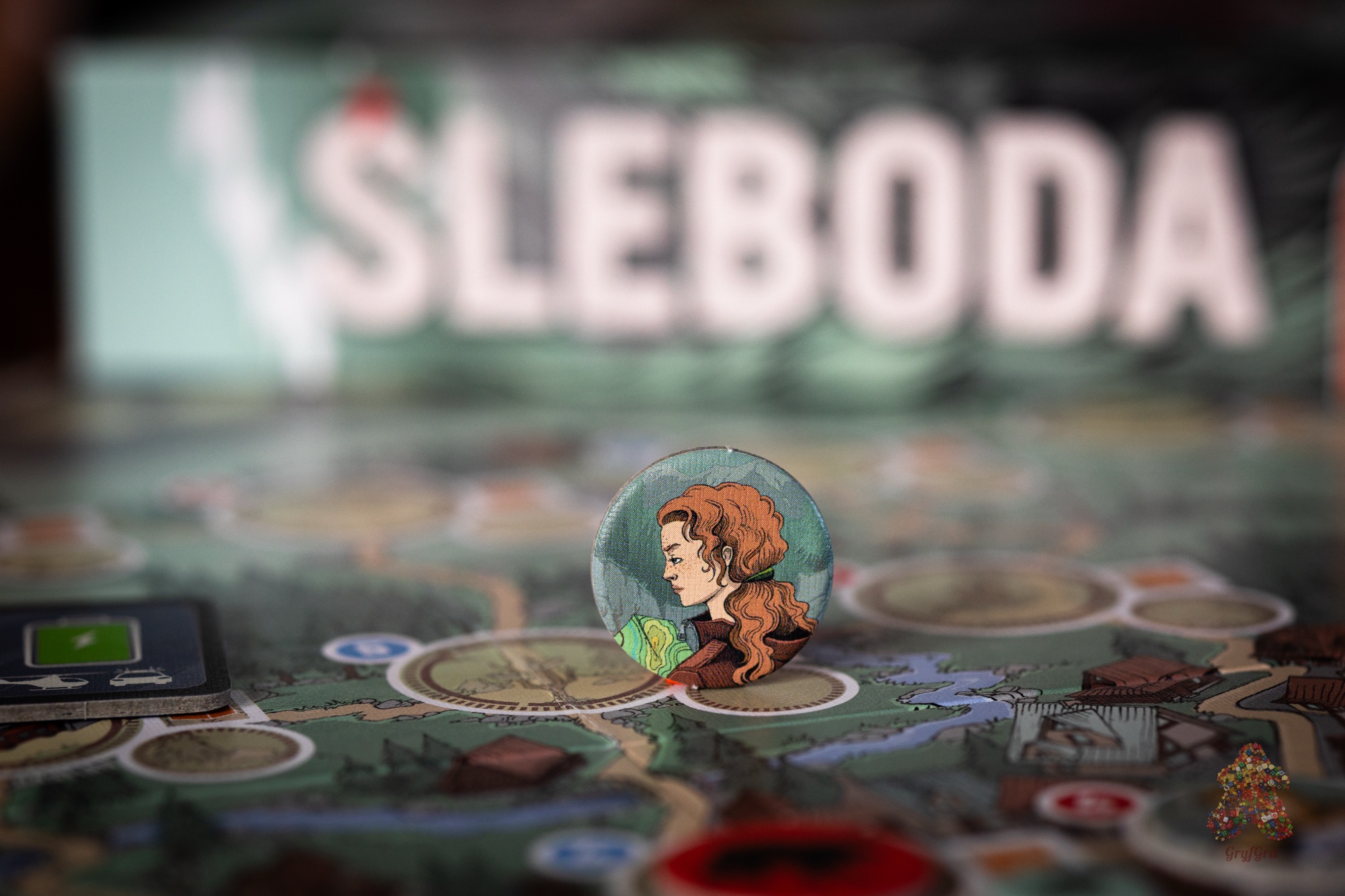
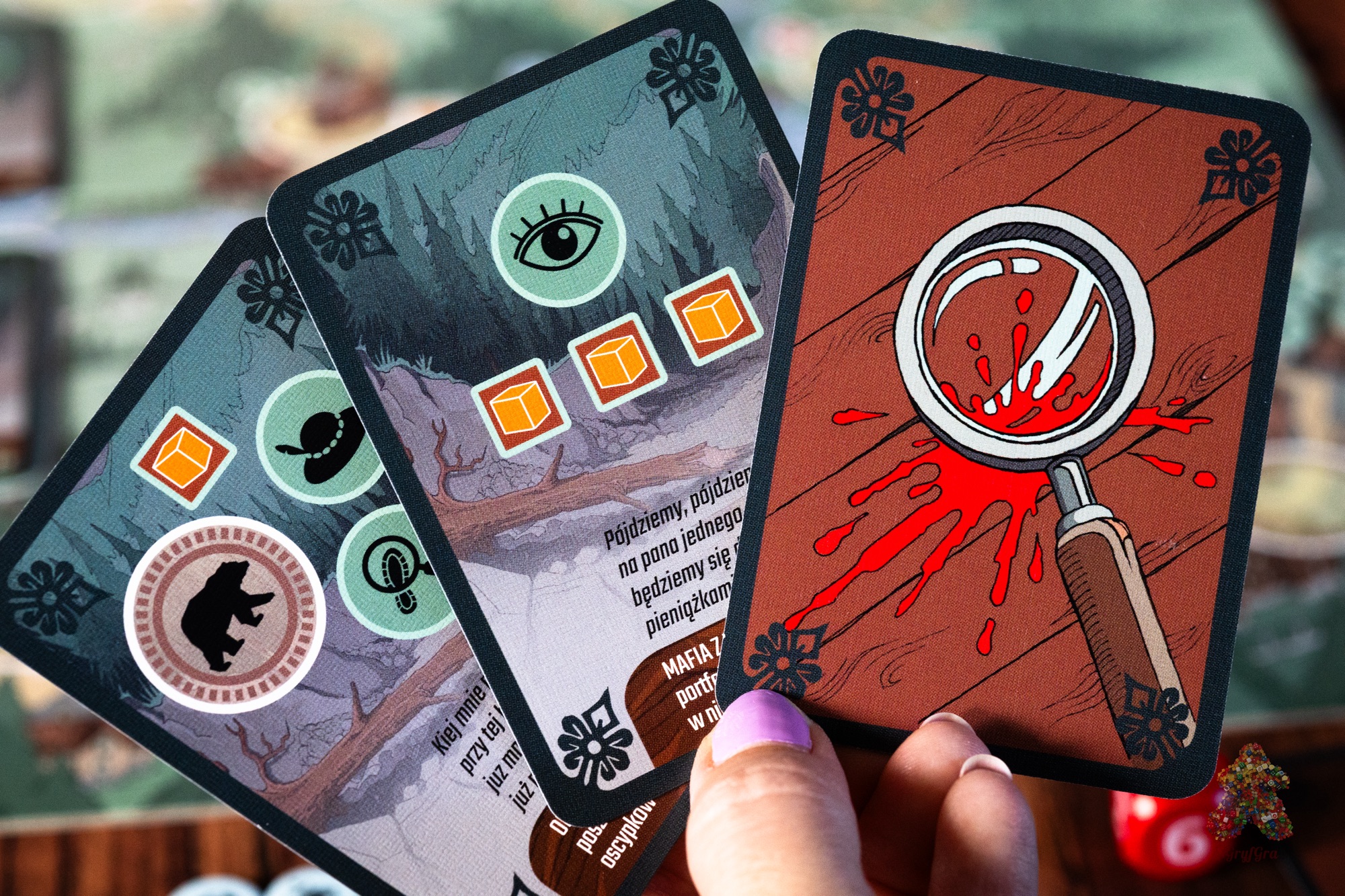
Each player receives a character, a card defining their information collection range, and their own deck of Story cards. The first information tokens appear on the board, and Investigation cards set out the requirements we need to meet. In the standard game, we must complete three of these cards together, although only two are initially revealed.
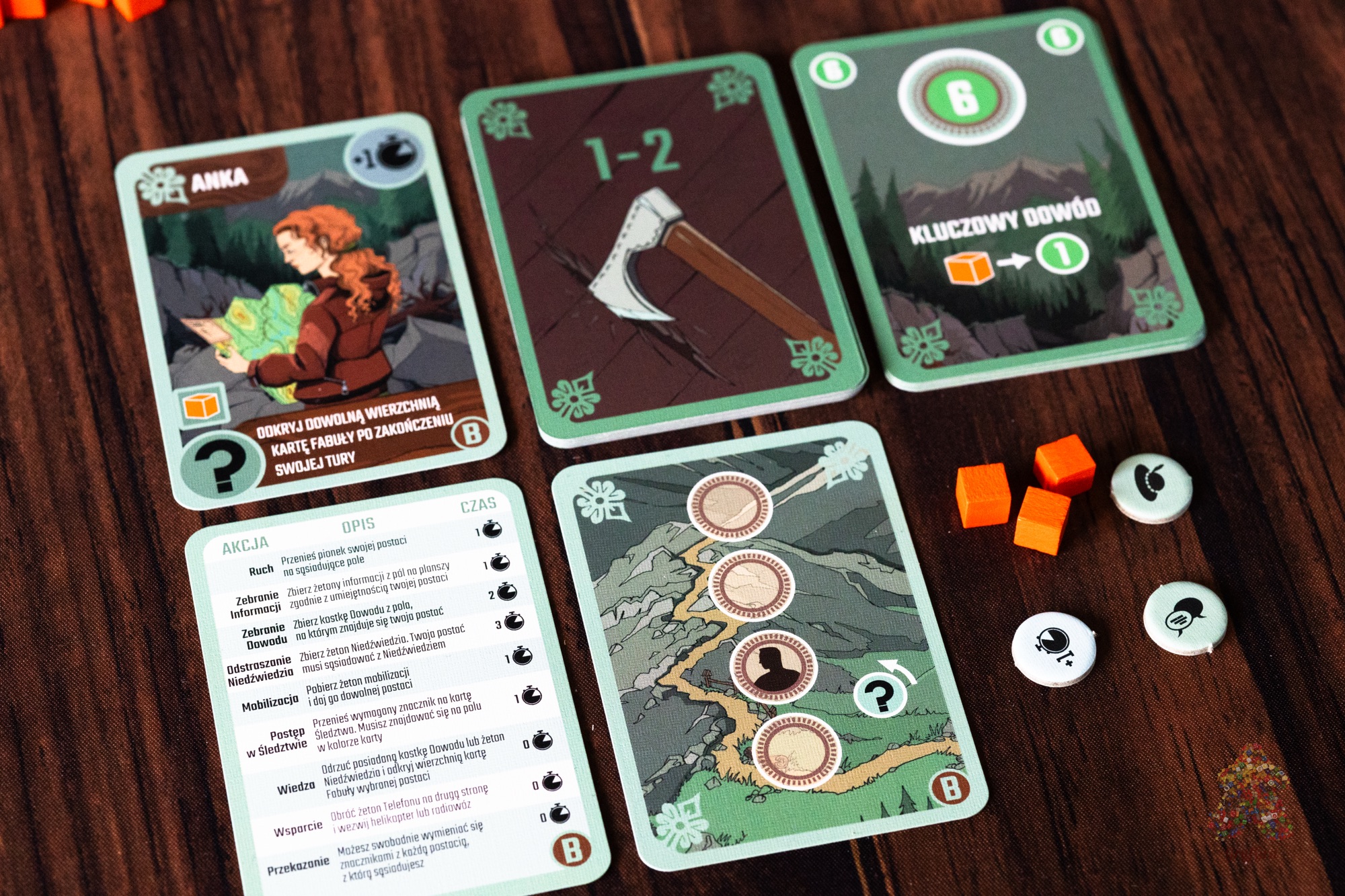
On our turn, we have two hours, represented by action points. We spend them on movement, collecting information and evidence, and delivering the required components to Investigation cards. Information is collected according to our character’s range, so a single action can bring in several tokens. Gathering evidence usually requires being on the relevant space and spending both available hours. To advance an investigation, we must be on a space matching that card’s colour.
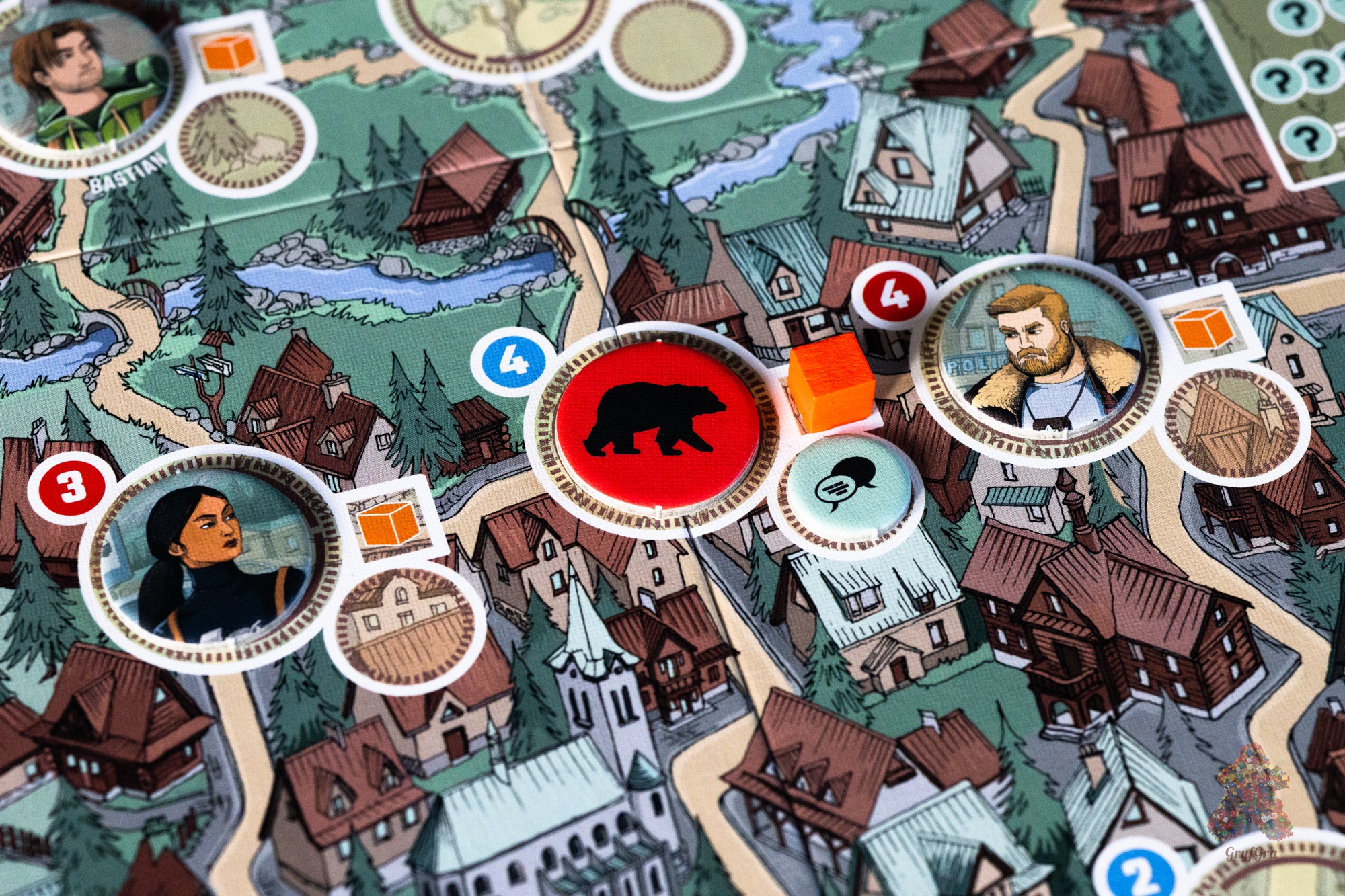
We can also mobilise ourselves or other characters, providing an extra hour for a chosen turn. This helps with tasks such as scaring away bears, which block spaces and cost three hours to remove. Characters also have individual abilities, active as long as they hold at least one Information or Bear token. These abilities let us gather evidence more efficiently, move diagonally or peek at upcoming events, among other benefits.
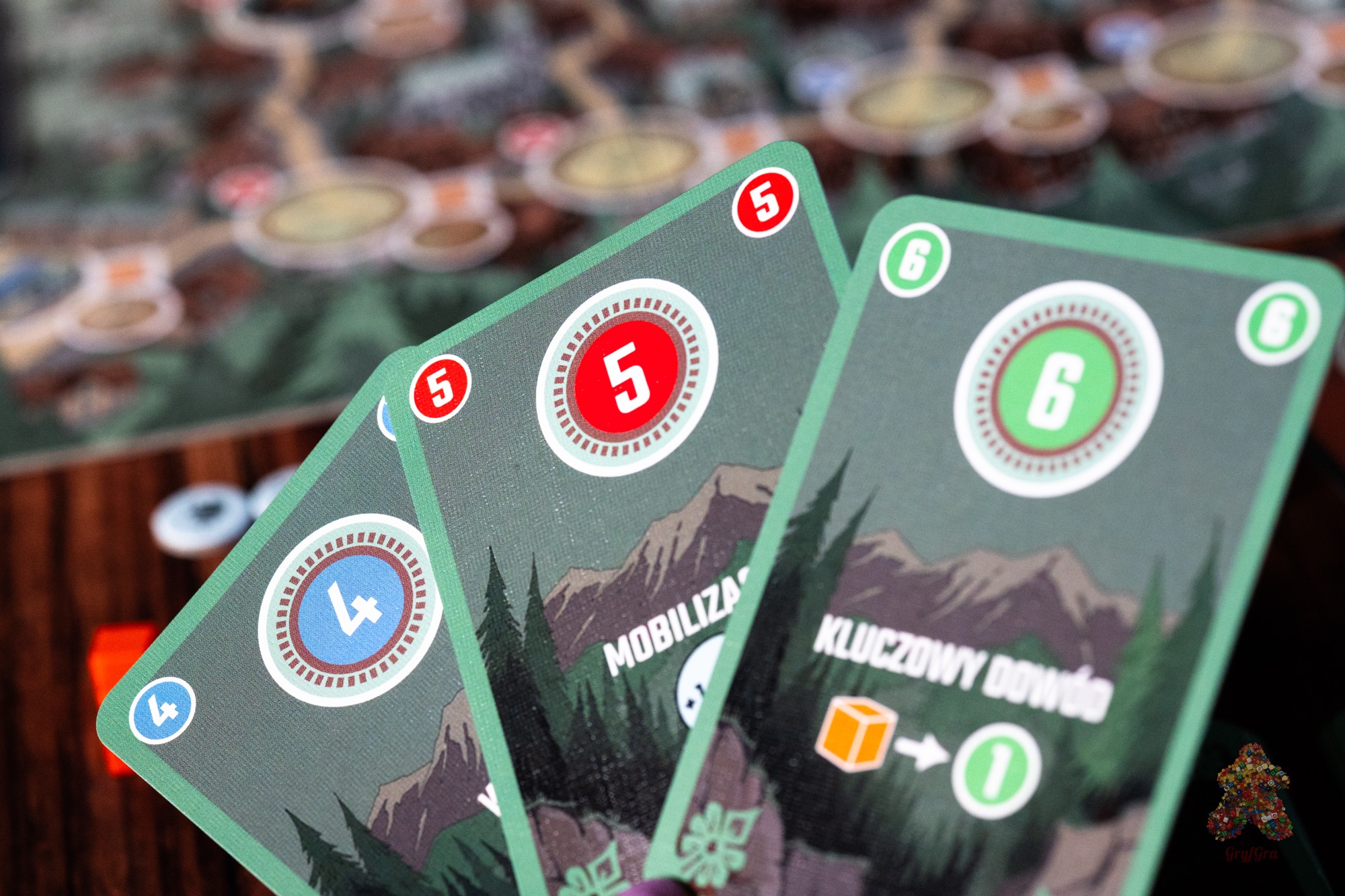
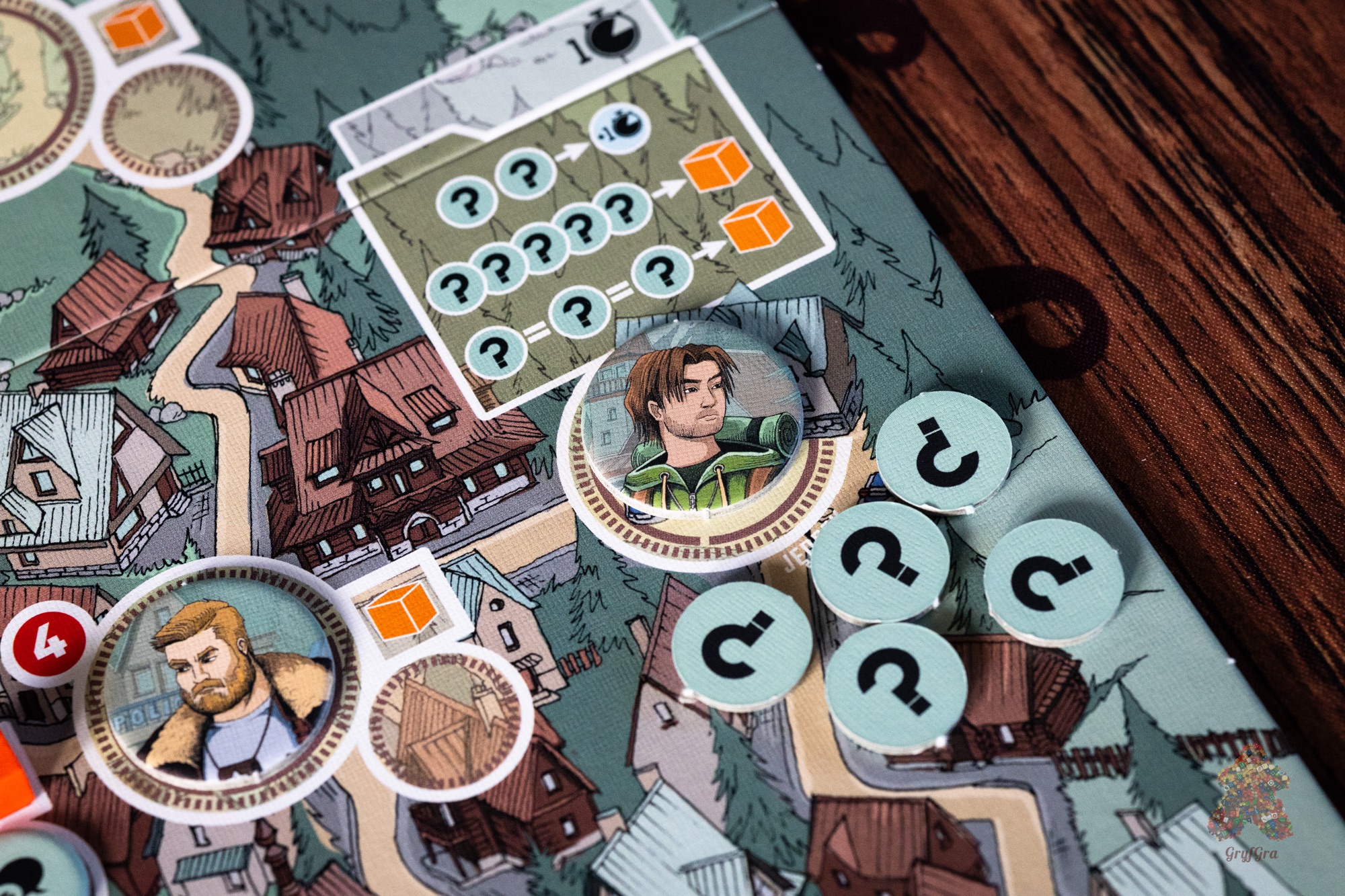
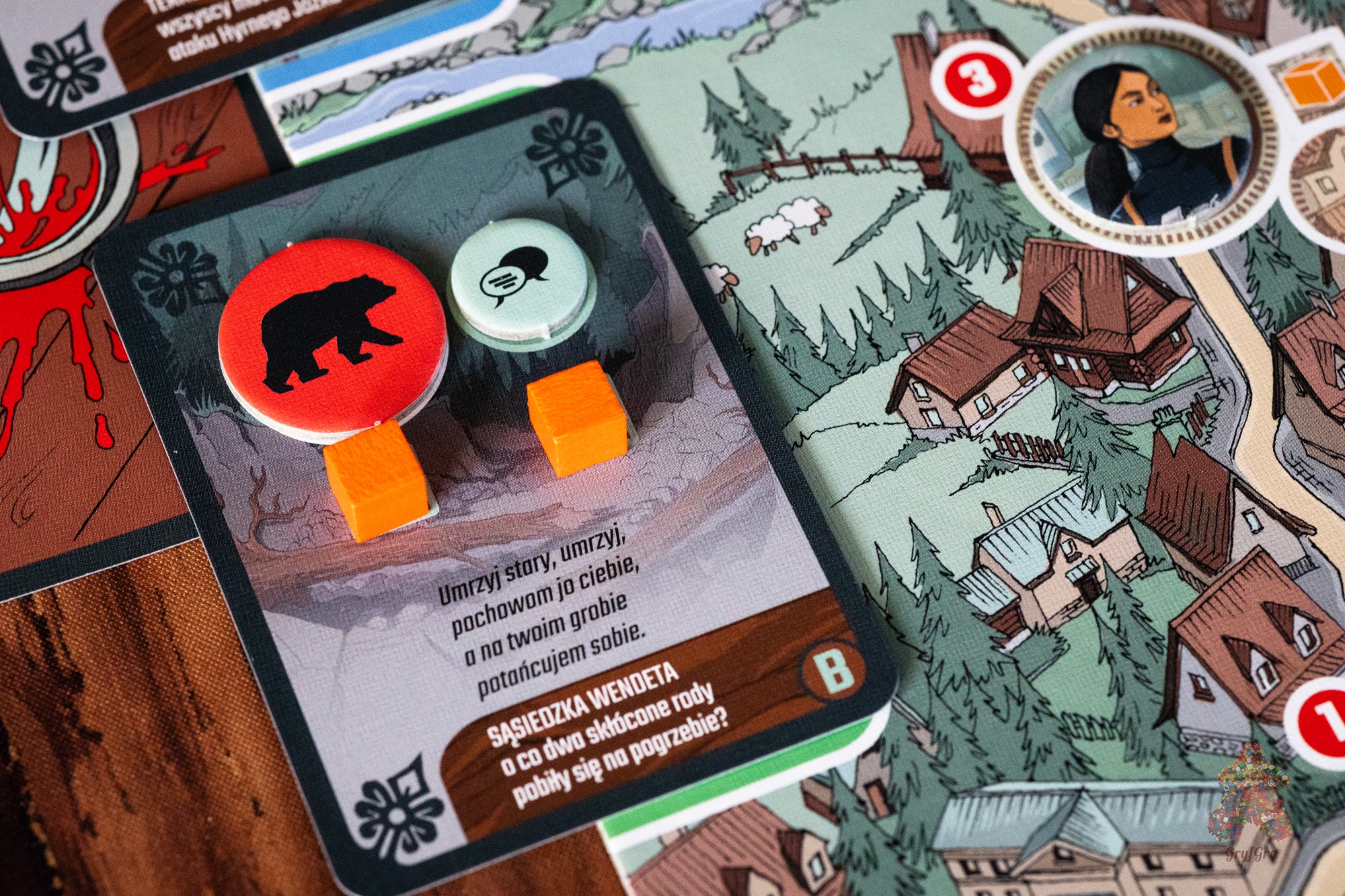
After taking our actions, we reveal a Story card. It shows where new information appears and sometimes triggers an additional event. If information already occupies that space, we move the existing token to the failure track instead of adding another. Losing a fifth token this way means an immediate defeat. Running out of information tokens in the shared supply is another danger, so it is worth visiting the Police Station, where collected tokens can be exchanged for benefits and returned to circulation.
Twice per game, we can use the phone to call a helicopter to move a character or a police car to remove information from the board. We win by completing three investigations and surviving the Story phase that ends the turn. We lose if we first lose five information tokens or exhaust all the Story decks.
Review
“Śleboda” is primarily about managing limited actions and picking up and delivering resources. Despite the terminology, we are not identifying a culprit from clues or piecing witness statements into a logical explanation. In our games, distances, token placement and the order of actions took centre stage. That is the mindset with which it is best approached.
The rules proved very accessible. We started straight away with the standard difficulty and three Investigation cards, without feeling any need to try the introductory variant. Once we had learnt the rules, we hardly needed to return to the rulebook. Straightforward play does not mean easy victories, though. “Śleboda” can present a demanding situation even when we understand the available actions during our first game.
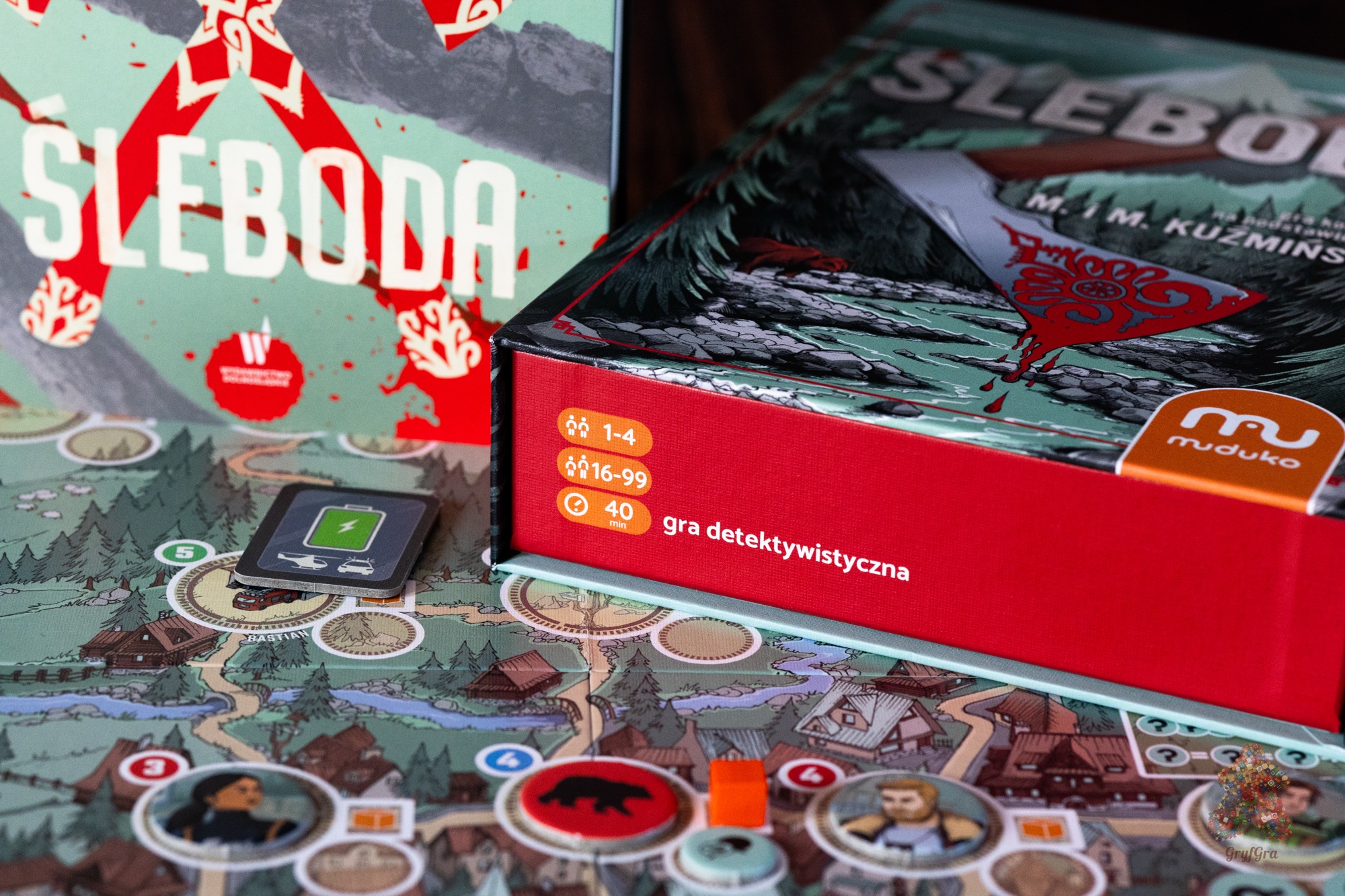
The box carries a 16+ rating, while the publisher’s website lists 14+. In terms of the mechanisms themselves, however, “Śleboda” is also accessible to younger children. Simple rules and the opportunity to discuss moves together make it easier for them to take part, although the crime theme should be considered separately.
Two hours per turn really is not much. Just reaching the right place can consume the resources we would rather spend collecting information or advancing an investigation. We therefore need moves that achieve as much as possible, and sometimes we can only lay the groundwork for our next turn. We regularly used mobilisation, both to support others and to save an extra hour for ourselves. Its importance is particularly clear when dealing with bears: without preparing in advance, we cannot scare one away on our own.
Our division of responsibilities depended mainly on the characters’ positions. Crossing the board takes too much time to send the character with the most suitable ability to every task. Abilities provided useful support, but we mostly worked with whatever was within reach. Keeping an ability active was rarely a problem, as a token usually remained on the character card. We did not use resource transfers, however. In our two- and three-player games, we rarely stopped on adjacent spaces.
The most interesting tension lies between pursuing the objective and managing the board. Collecting information needed for an investigation sounds like the obvious priority until another token is about to be lost elsewhere. Sometimes clearing the board became more important than making direct progress. We had to set our own plans aside and deal with a space that could otherwise bring the game to an end.
Visits to the Police Station matter for similar reasons. Collected information cannot stay with characters indefinitely, because the shared supply is limited. We managed to keep it circulating, but doing so required attention. Most of our defeats came from information appearing again on occupied spaces, rather than a shortage of tokens to place. This shows that collecting resources efficiently is only part of the task: where we collect them from matters too.
Ways to anticipate events help, although they do not offer complete control. Hints on card backs narrow down the threatened area, while the ability to peek at a specific card allows more precise preparation. We found it easier to use this knowledge with three players, as more characters could respond in the right place. With two, we more often knew where trouble might arise but lacked the means to prevent it effectively.
Luck also has a major influence on the game. The location and type of incoming information can make our task easier or force us to keep responding to threats. One particularly awkward situation arises when both available Investigation cards require a bear, but the relevant event refuses to appear. Better planning alone cannot produce the missing component. Sometimes, then, the cards severely restrict our chances.
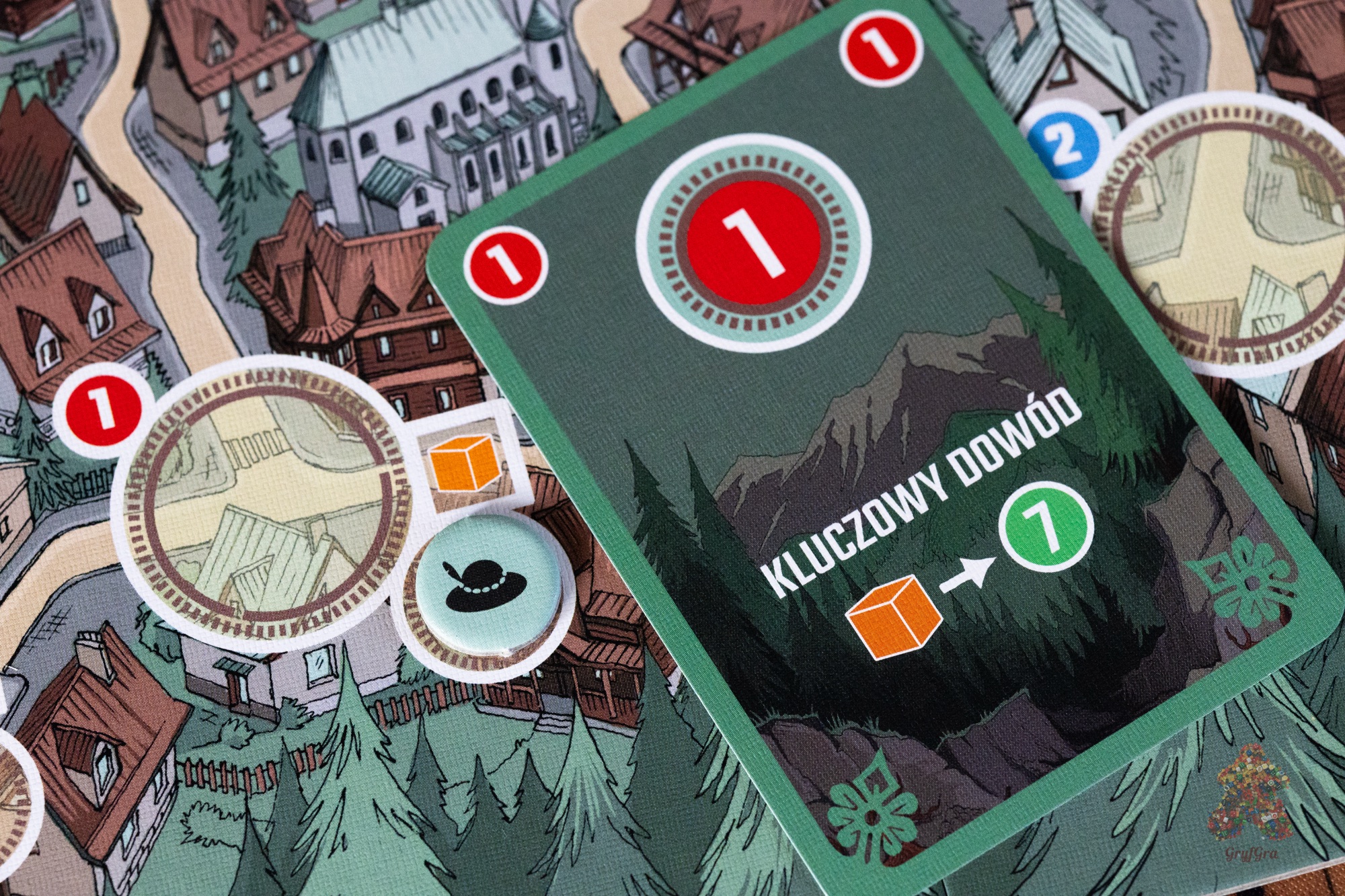
Not every event worked as its name might suggest. A False Lead usually benefited us, because it let us move a chosen character elsewhere without spending hours. We could usually put that movement to good use. We tried to remove bears whenever a suitable opportunity arose, especially if we needed them to complete an investigation.
Support available through the phone is valuable too. The helicopter saves hours of travel, while the police car can prevent information from being lost. The limit of two uses, however, makes it easy to become overly protective of these options. We saved them for emergencies, sometimes waiting too long to call for help. Deciding whether the moment has finally come fits neatly into managing the team’s scarce resources.
The game kept us involved outside our own turns as well. Everyone planned their actions in consultation with the others, since the state of the board affects the whole team. We consciously avoided letting one person take over everyone’s decisions. Discussing moves is natural here, but leaving the final choice to the active player also depends on the group’s habits. Our games generally took up to around 40 minutes, although we once lost in just 20.
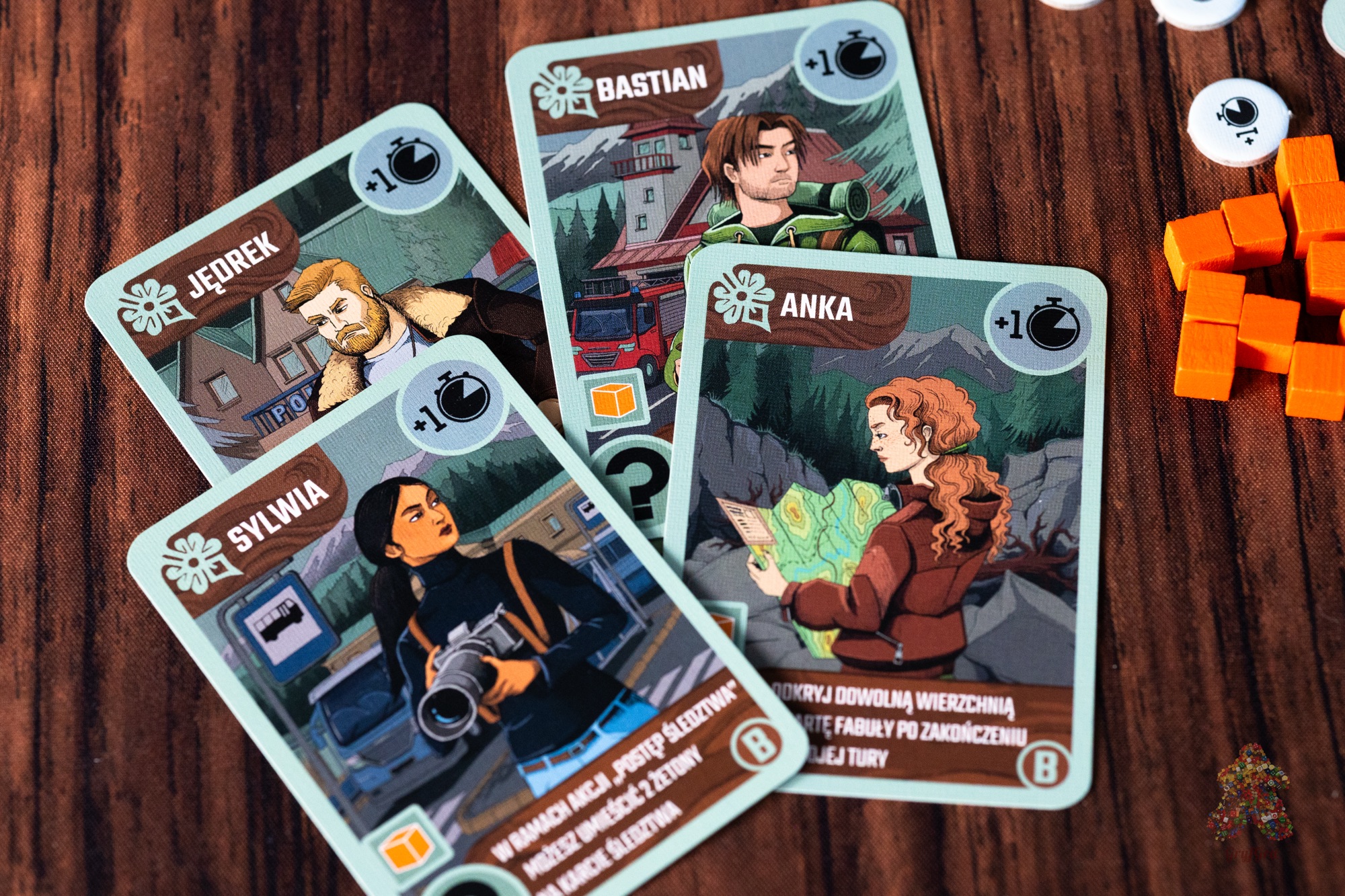
Across repeated plays, the different range cards provided the most refreshing changes. They alter how information is collected and, with it, the best positions and movement plans for our characters. Character abilities also encourage trying different combinations. Changing the investigations themselves did not produce particularly different experiences. We are mainly returning to the same puzzle under different conditions.
We rate the production quality and illustrations very highly. The presentation gives the game its character, but it quickly faded into the background when we were planning. These mechanisms could work with another theme as well. The main attraction remained the effort of forming a shared plan and adapting it to information appearing in inconvenient places.
Summary
“Śleboda” is a solid, accessible cooperative game that demands more thought than its simple rules might suggest. A small action allowance, the need to clear the board and the circulation of information create interesting decisions. The greatest satisfaction comes from finding a way to address several urgent team needs within limited time.
Players do need to accept the substantial influence of luck and the fact that the crime theme does not translate into deductive mystery-solving. We recommend it primarily to those who enjoy shared spatial puzzles, picking up and delivering resources, and responding to a changing situation. It works best when planning itself is enjoyable, including in games where Podhale ultimately gets the better of us.