

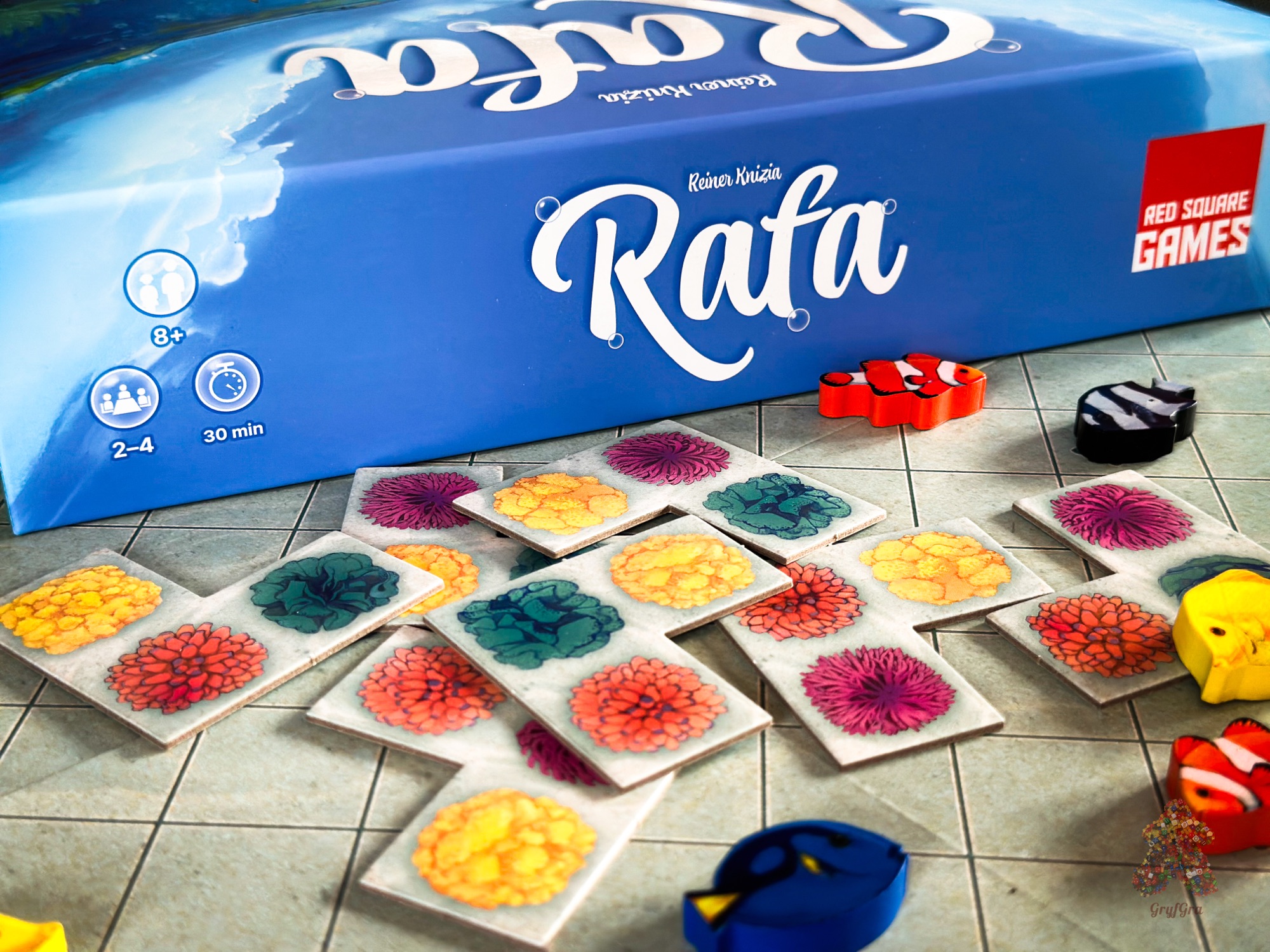
Reiner Knizia has designed many excellent games. A considerable number of his designs combine simple rules with one small idea that makes the gameplay much more interesting than it might initially appear. “Blooming Sea”, published in Poland by Red Square Games, is no exception.
This time, our task is to restore a coral reef. By placing tiles, we will connect corals into increasingly large groups and create habitats for the fish swimming among them. Beneath the calm and colorful theme, however, lies an engaging competition for points and space on a shared board.
Gameplay
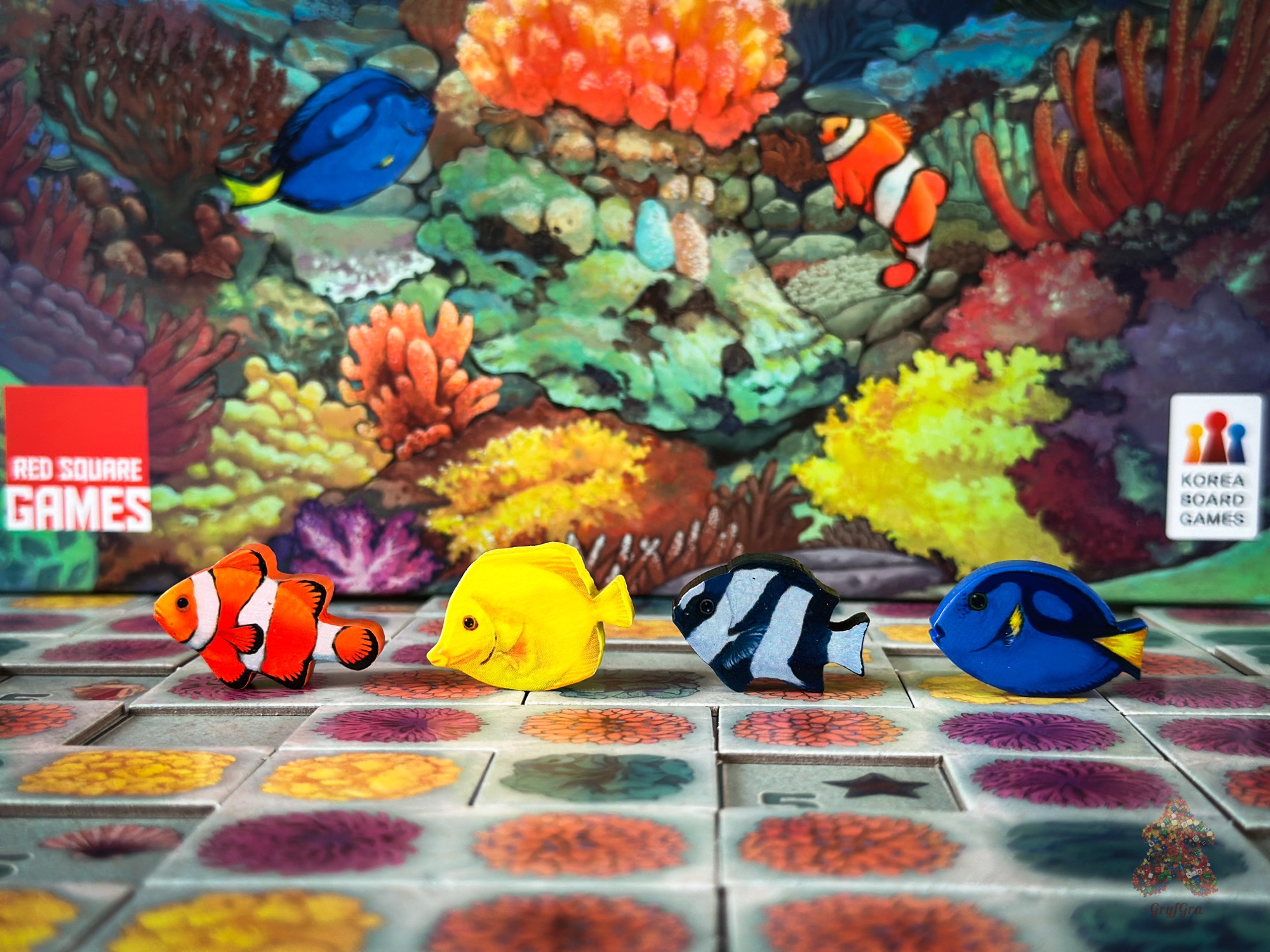
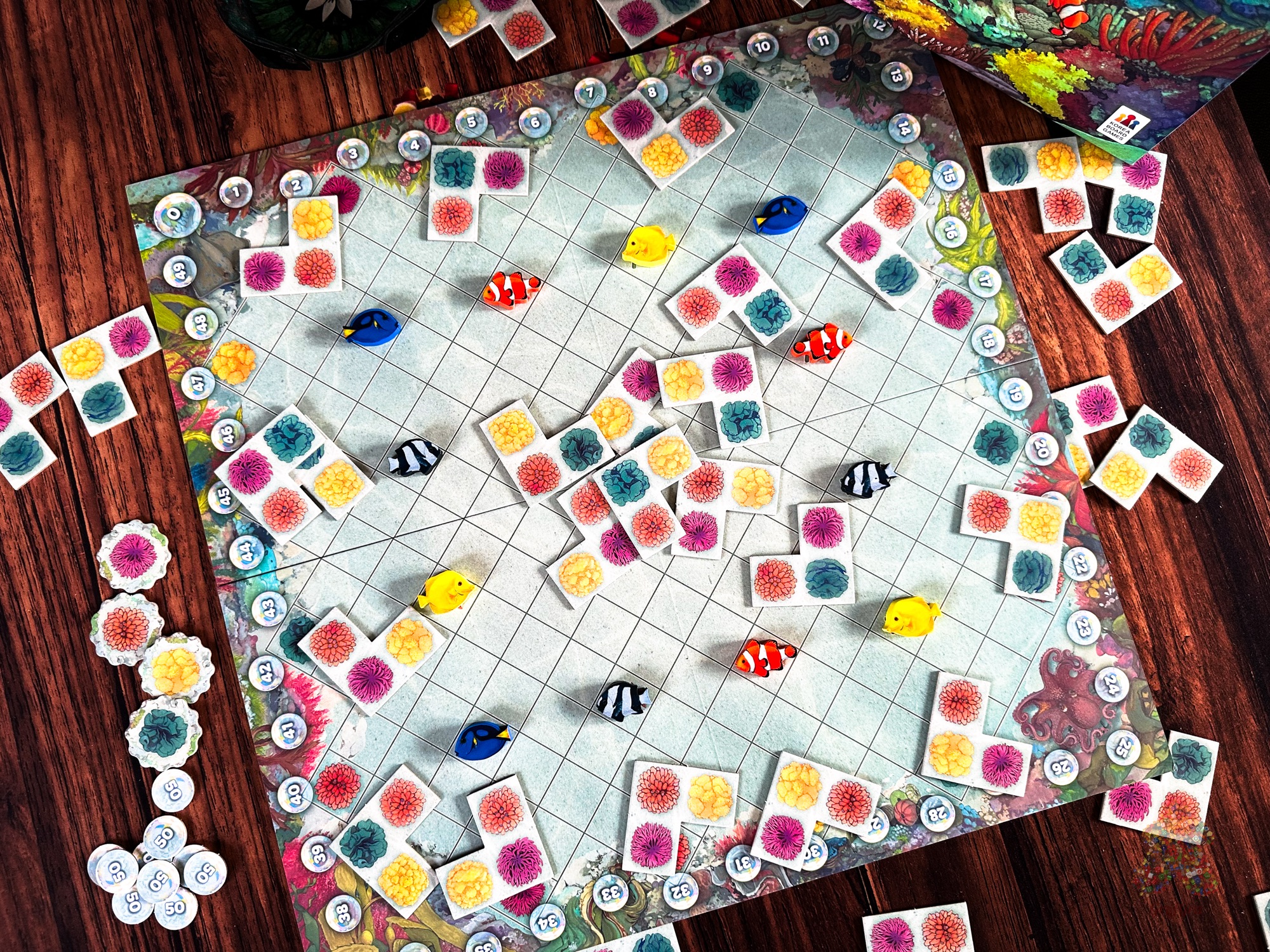
At the beginning of the game, we choose one side of the board and place the fish on the marked spaces. Each player takes markers in their chosen color, placing one of them at the beginning of the scoring track. The coral tiles are shuffled and arranged into a face-down stack. Each player draws one tile into their hand.
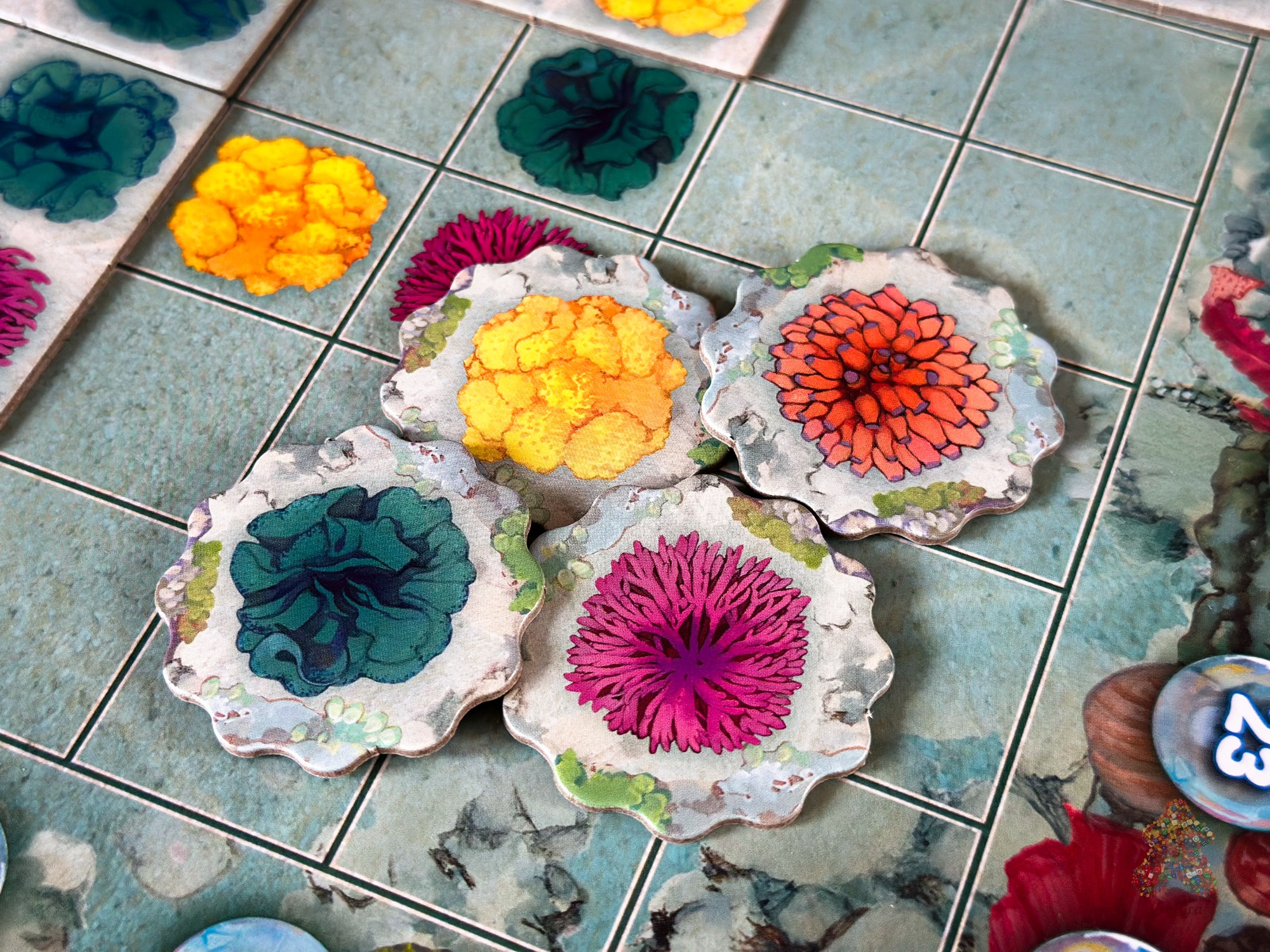
During their turn, a player performs three actions:
- places their coral tile on two empty spaces on the board;
- calculates the points they have scored;
- draws a new tile from the stack.
Two or more corals of the same color connected orthogonally form a reef. If a placed tile creates a new reef or expands an existing one, the player scores as many points as there are corals in that reef after completing the move. If several reefs are developed at the same time, each of them is scored separately. A single coral does not yet form a reef and therefore provides no points.
Importantly, the color of the corals does not matter during this part of scoring. We do not own individual reefs. We can therefore expand a group in an opponent’s color and score the points ourselves.
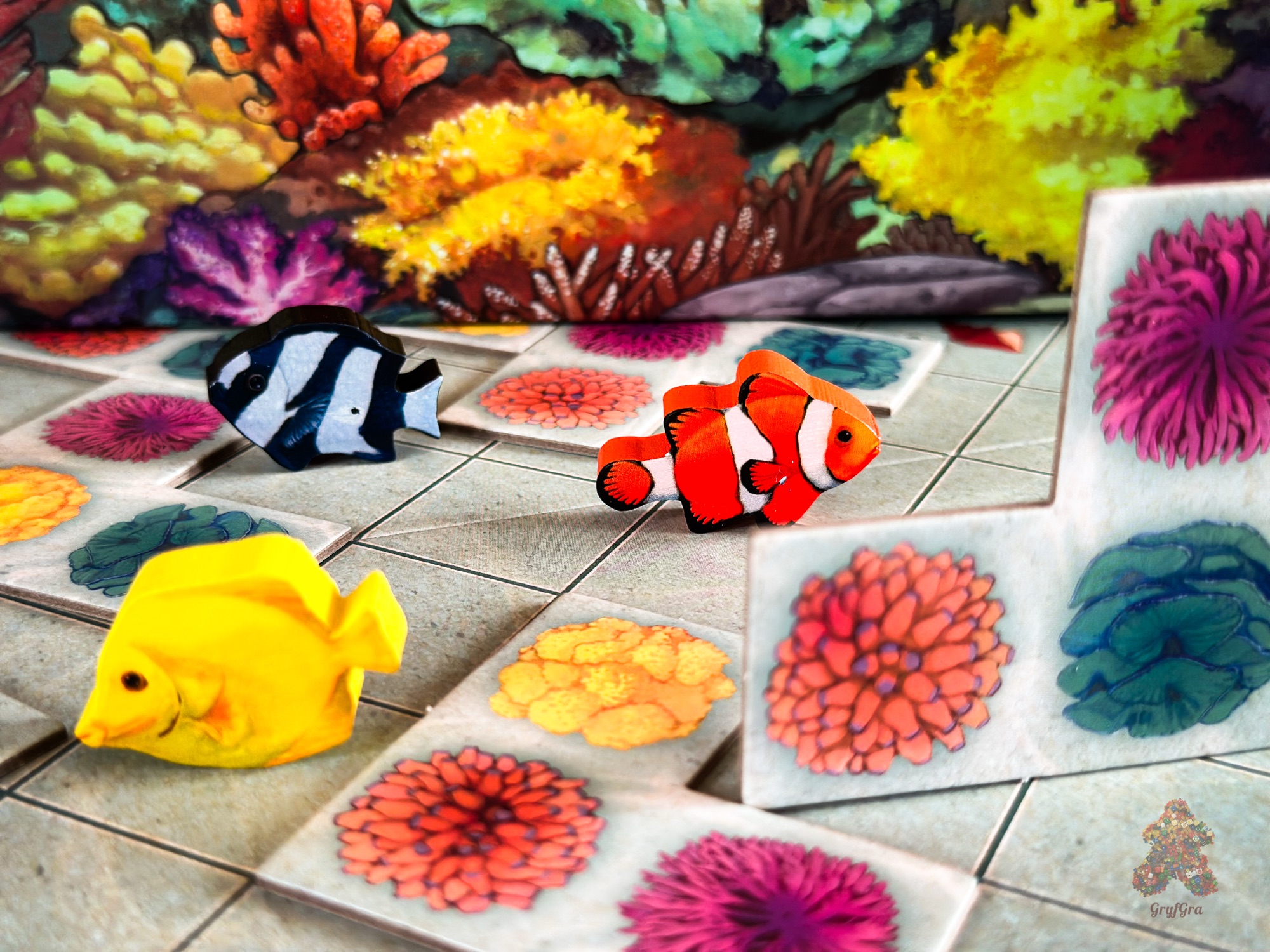
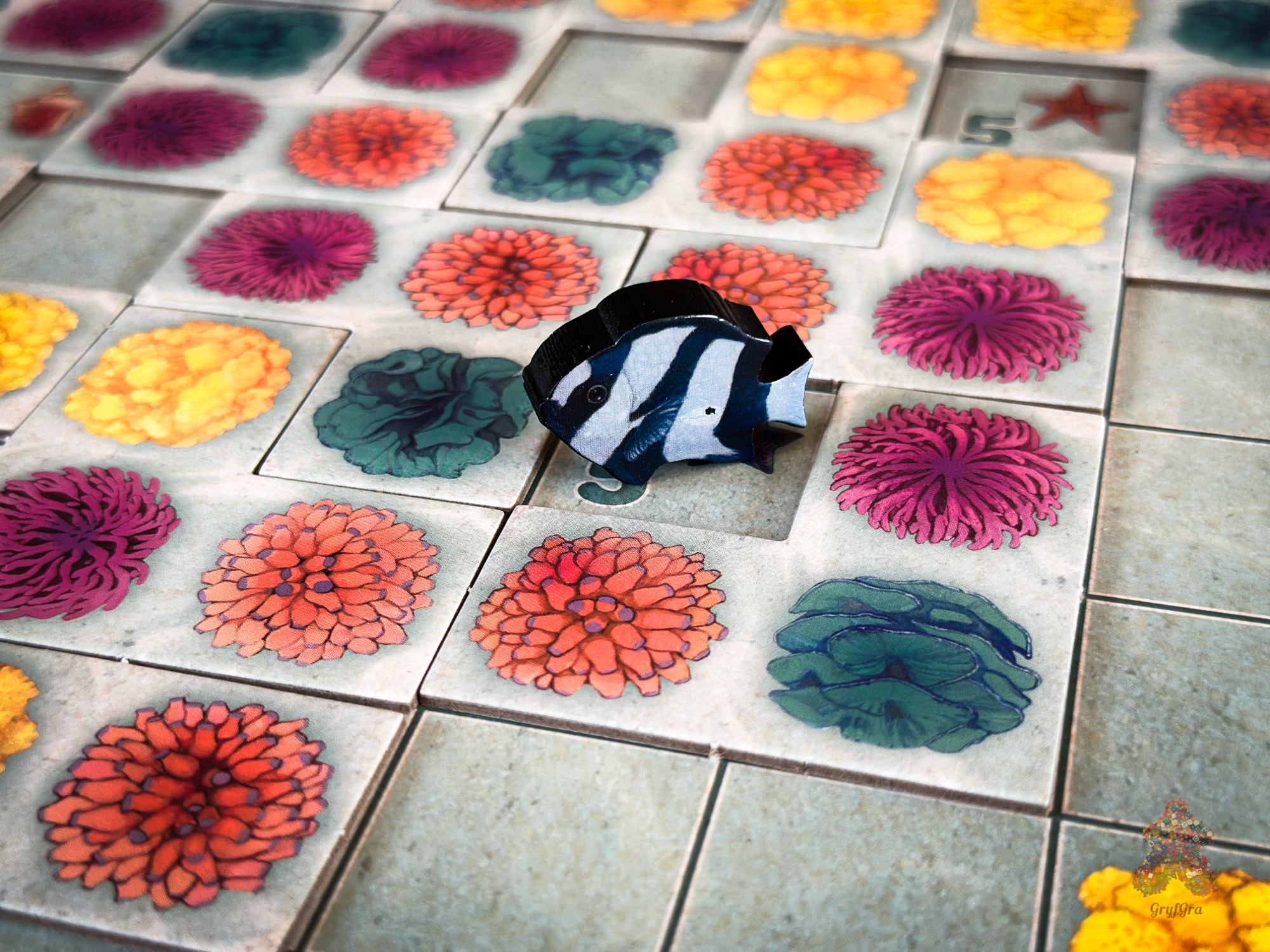
The situation changes when competing for fish. Once all available spaces adjacent to a fish have been occupied, we determine who captures it. Each player counts the corals in their own color next to the fish, along with the remaining corals belonging to the reefs to which they are connected.
The player with the largest connected area in their color takes the fish and scores the associated points. In the event of a tie, the fish is discarded and nobody receives any points.
The game ends after the turn in which the final fish is captured or discarded, or the final coral tile is placed on the board. The player with the most points wins.
After the first game, players can use the full-game mode. In this version, the fish are not all worth the same number of points printed on the board. Their value depends on their species and ranges from 5 to 8 points.
Review
“Blooming Sea” is one of those Reiner Knizia games that can be explained in a few minutes, even though the decisions are not always as straightforward as they first appear. Placing the tiles itself is extremely simple. All the finesse comes from the combination of two different scoring methods.
Points for expanding reefs are awarded to the active player, regardless of the color of the corals being placed. This means that an opponent’s reef can be just as attractive to us as one in our own color. If the right tile allows us to expand a large area belonging to another player, we can score quite a few points from it.
At the same time, such a move may help that opponent capture a nearby fish. In this case, color becomes important again, and we want our reef to be the largest. Every tile placement therefore requires us to consider whether the immediate benefit is worth strengthening an opponent’s position.
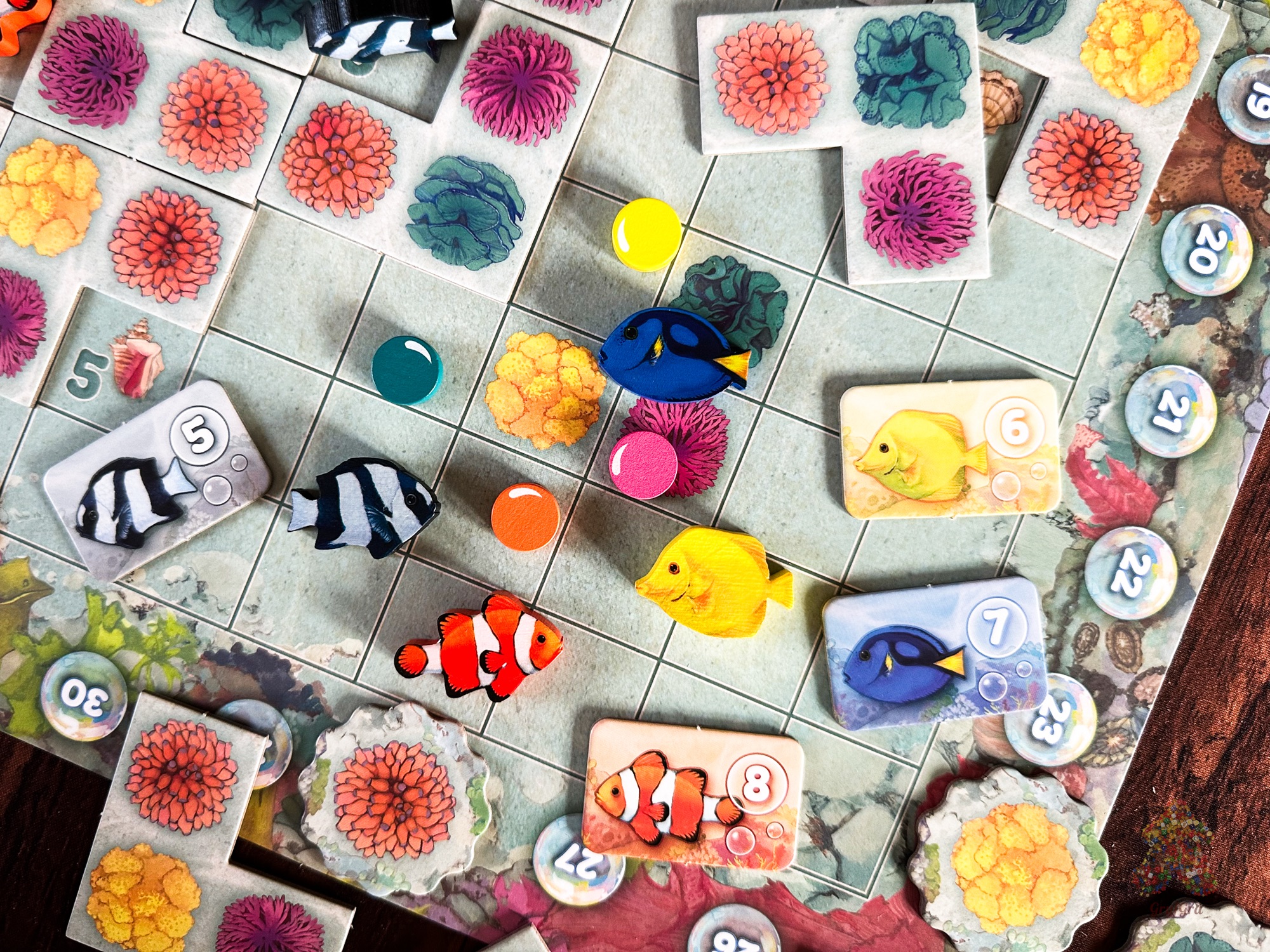
It is a very simple but elegant solution. For most of the game, everyone benefits from a shared board, while the boundaries between “our” areas and “their” areas remain rather fluid. Only the presence of fish gives the different colors clear owners.
The most interesting moves occur when the interests of several players meet in the same area. We may add a tile to an opponent’s large reef and score points from it while simultaneously bringing them closer to capturing a fish. We can also attempt to force a tie so that nobody receives the points or occupy a space an opponent needs to connect two groups of corals.
The interaction is therefore quite noticeable, even though it does not involve taking resources away from opponents or destroying their constructions. We observe the shared board, take advantage of patterns created by other players and try to predict who will benefit the most from each new coral.
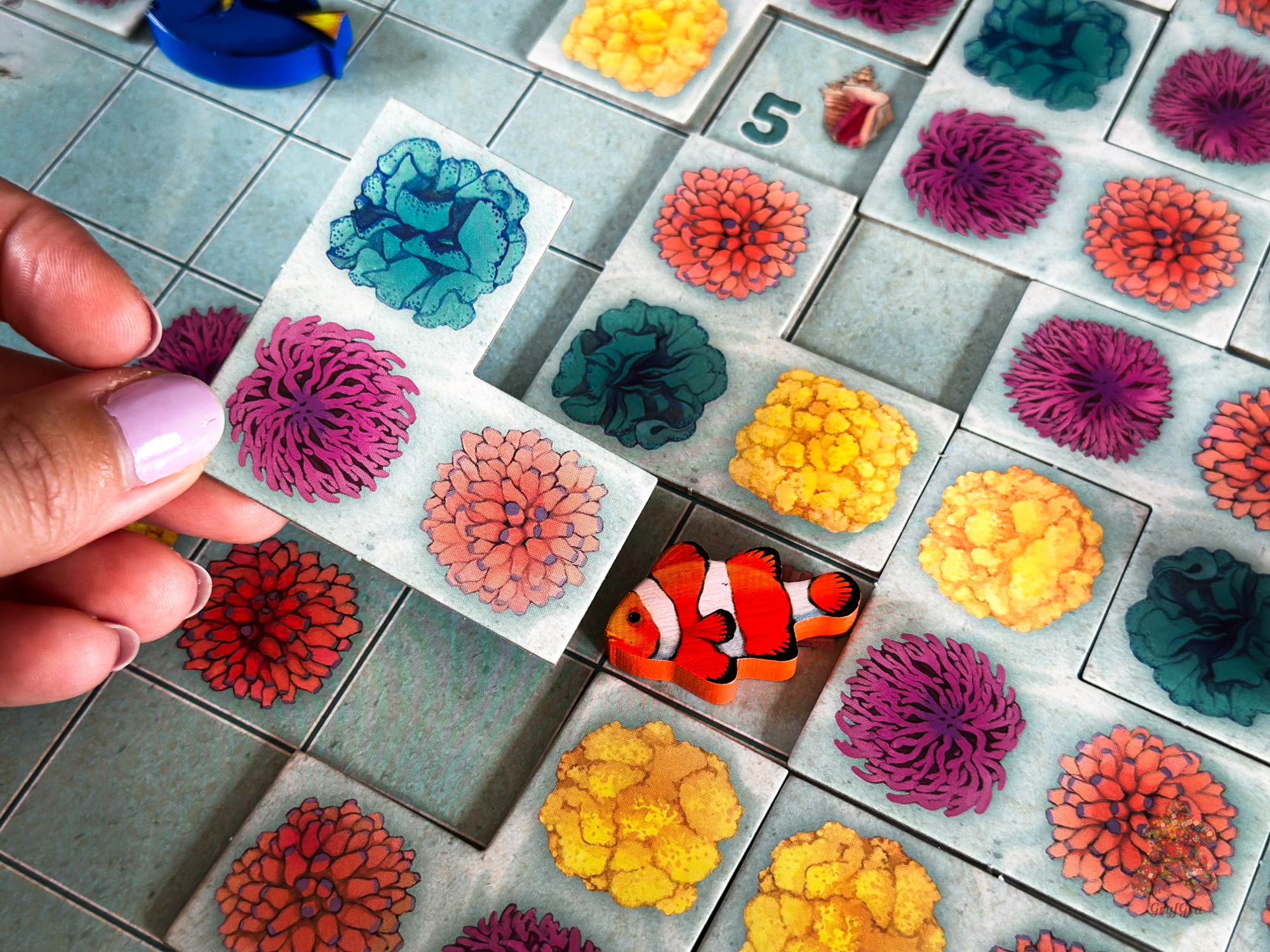
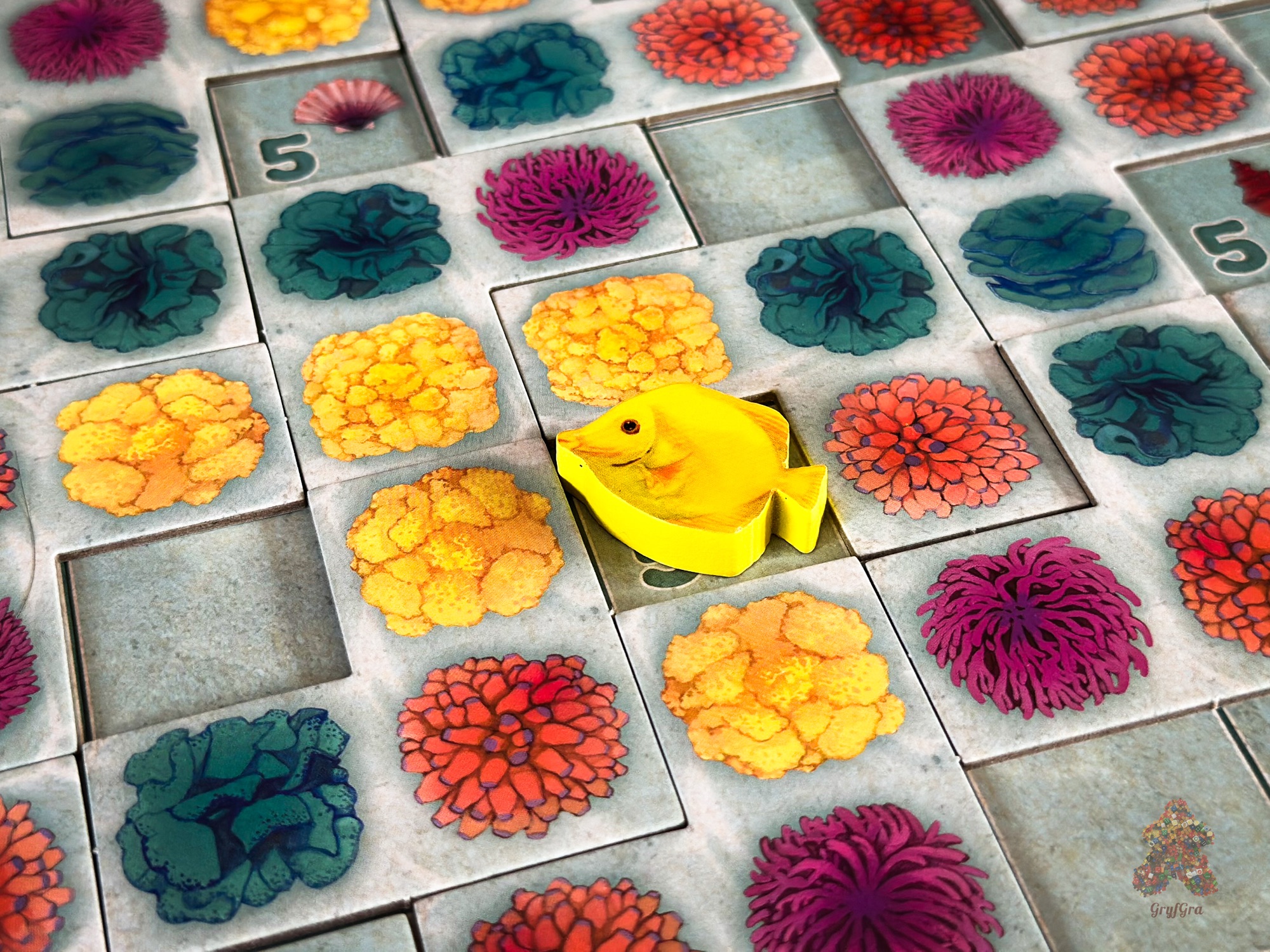
Drawing tiles at random makes “Blooming Sea” primarily a tactical game. We only have one tile in our hand, so it is difficult to prepare an elaborate plan several turns in advance. Instead, we look for the best place for the currently available tile and respond to the changes taking place on the board.
This may bother players who expect a great deal of control over the game. Sometimes the drawn tile fits the current situation perfectly, while at other times it offers no particularly attractive options. However, the short playing time and simplicity of the available moves ensure that the randomness never becomes excessively frustrating.
The number of players primarily affects the level of control. With 2 players, it is easier to follow the opponent’s plans and prepare subsequent moves. With more participants, the board changes much more quickly, so players have to take advantage of emerging opportunities more often. At the same time, competition around the fish increases, as does the likelihood that someone will interfere with our plans.
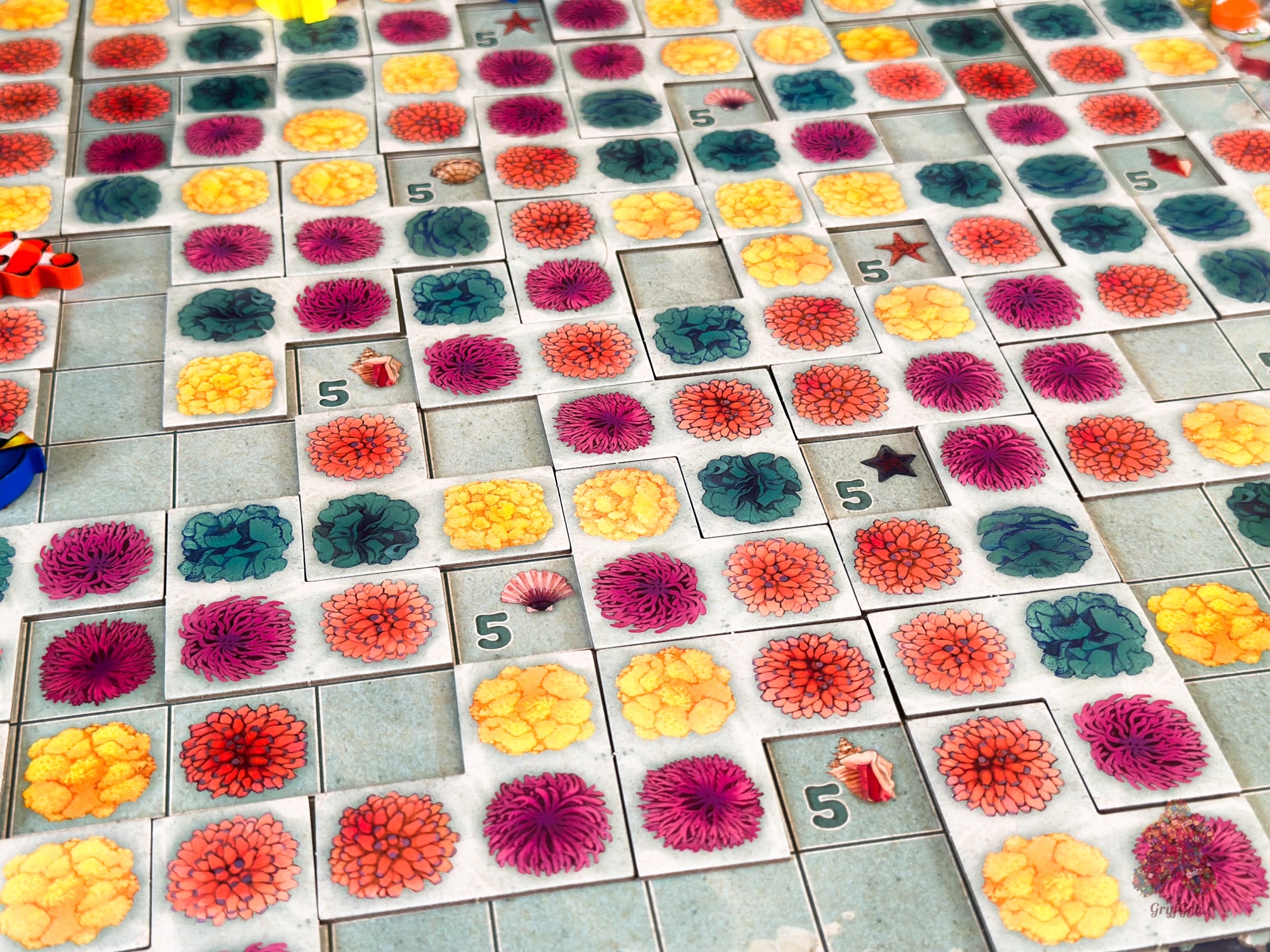
It is also worth moving to the full-game mode fairly quickly. Giving the different fish species different values means that not every part of the board is equally attractive. A fish worth 8 points inspires more competition than one worth 5, making the spatial decisions more interesting. The basic scoring method works well while learning the game, but the full mode feels like the intended way to play.
Despite its theme of restoring an underwater ecosystem, “Blooming Sea” remains an abstract puzzle at heart. Its colorful presentation looks good on the table and makes the developing areas easy to read, but the relationships between the tiles, reefs and fish are what truly matter.
Summary
“Blooming Sea” is a light and accessible tile-laying game built around very simple rules and one elegant scoring idea. We can score points by expanding our opponents’ reefs, but we must be careful not to make it easier for them to capture the most valuable fish.
The game is quick, interactive and does not require lengthy preparation. It is best suited to players who enjoy abstract puzzles, shared boards and tactically exploiting emerging opportunities. The random tile draws limit long-term planning, but fit well with the game’s family-friendly playing time of approximately thirty minutes.
It is a very characteristic Reiner Knizia design: a few easy-to-remember rules, one small twist and a surprising number of reasons to examine the entire board once again before placing a tile.