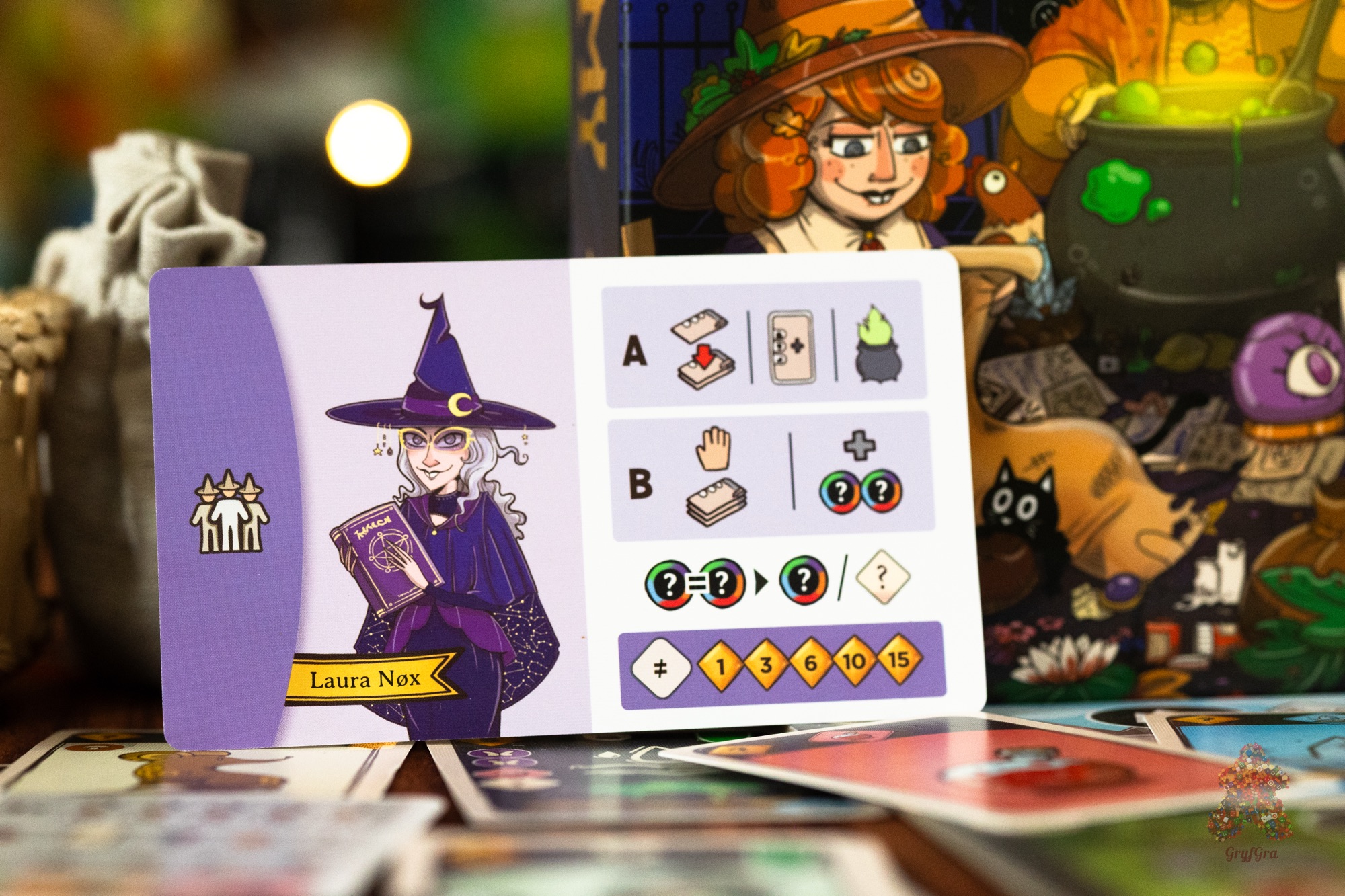
Witchdom is a family card game designed by Michal Peichl and published by Albi. We lead a witch clan, recruit promising apprentices, gather magical ingredients, and brew potions worth victory points. It all comes in an accessible package that is easy to explain while still offering several clever decisions.
Gameplay
We place a small board in the centre of the table, divided into three locations: the mountains, forest, and lake. Each location holds ingredients, a face-up witch card, and a potion card. A selection of objectives, which we will compete for throughout the game, is displayed beside the board.
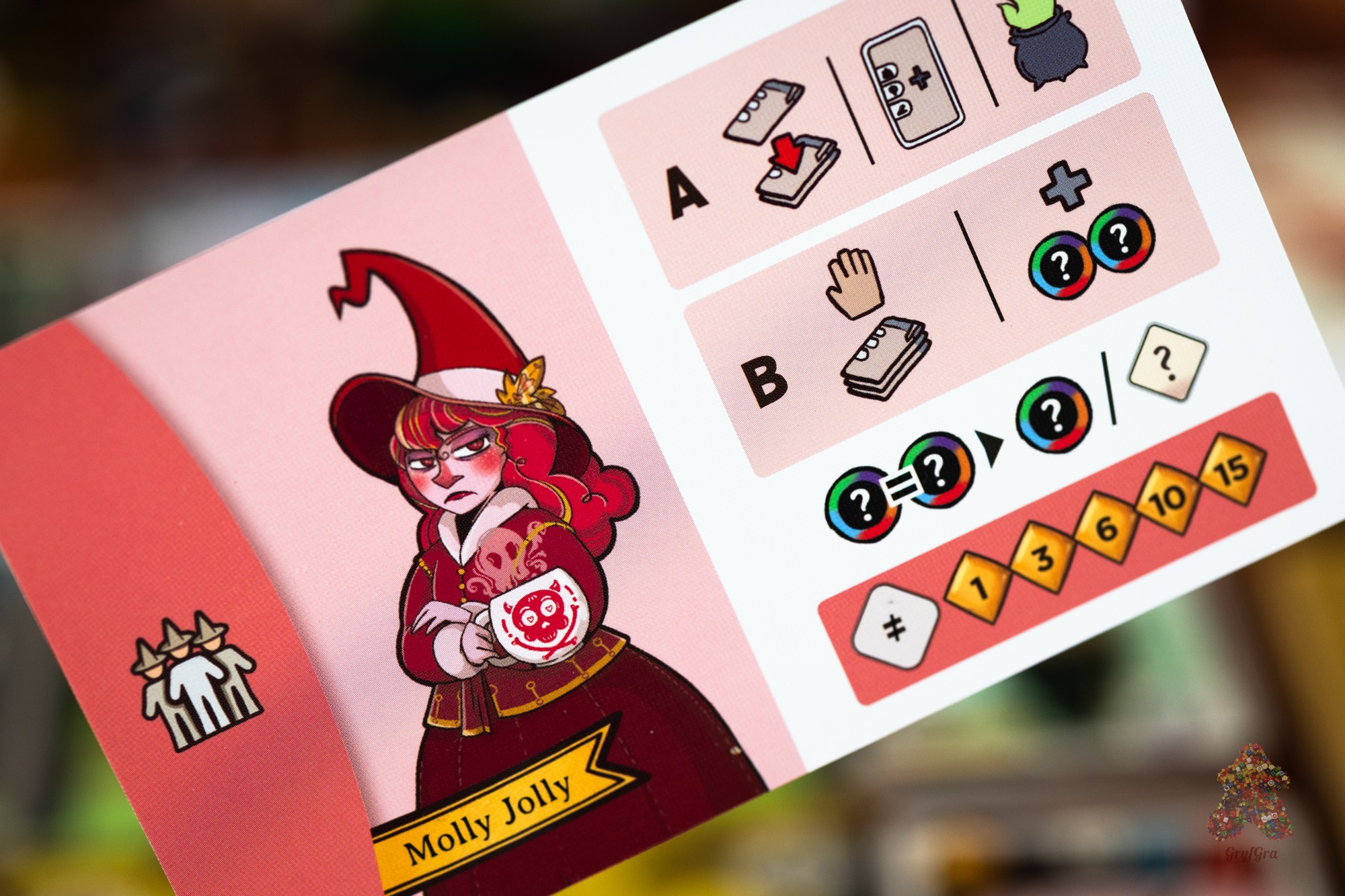
Each of us starts with a clan card, a starting potion, and two novice witches. On our turn, we choose one of two actions: gathering or resting.
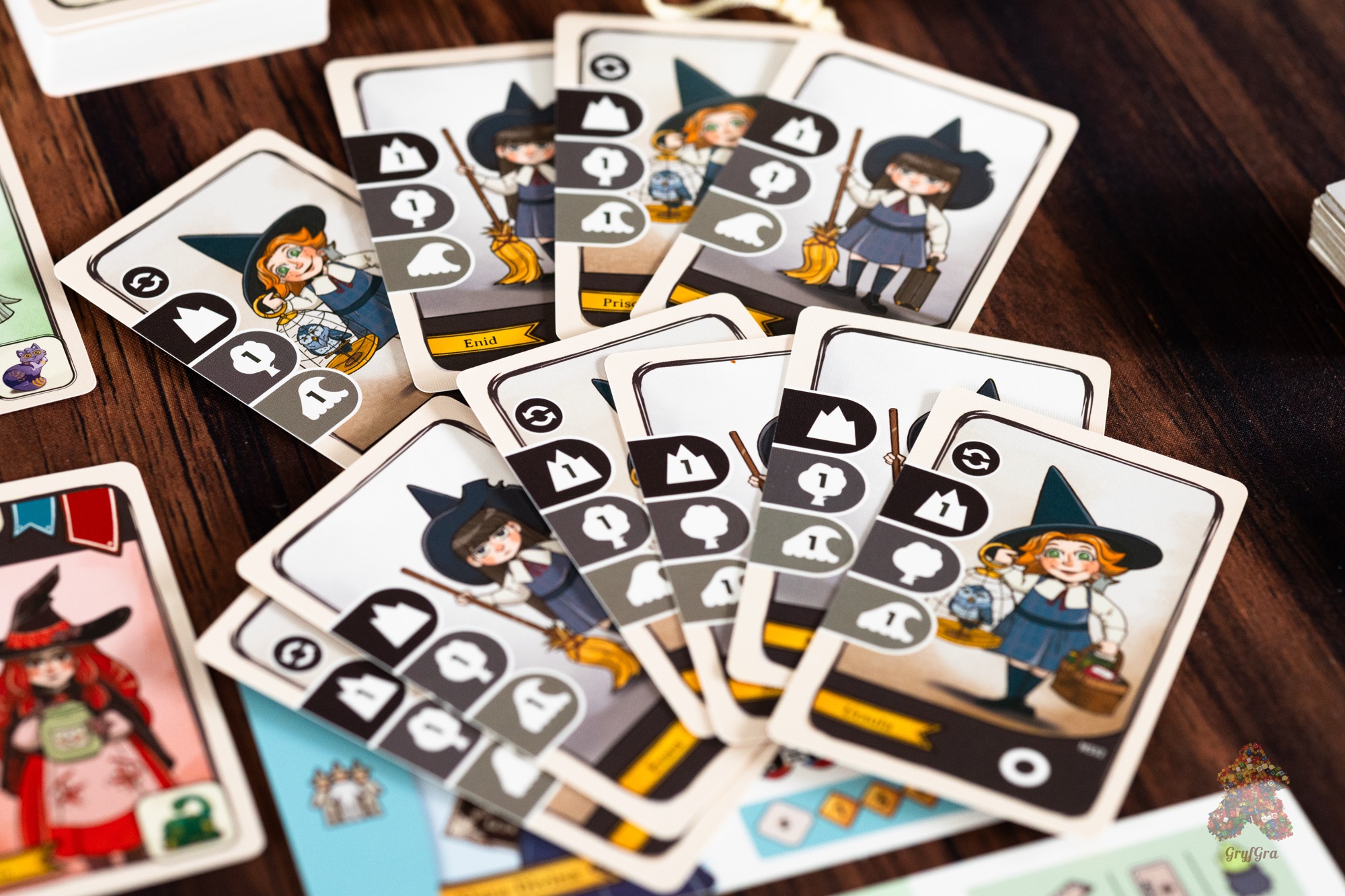
To gather, we play a witch from our hand. Her card shows how many actions we may perform in each location. For every action point, we can take an ingredient, a potion, a piece of equipment, or another witch. Everything we take is replaced immediately, so when we have several actions in the same location, we may also choose an item that has only just appeared. Some witches let us refresh one of the displays first.
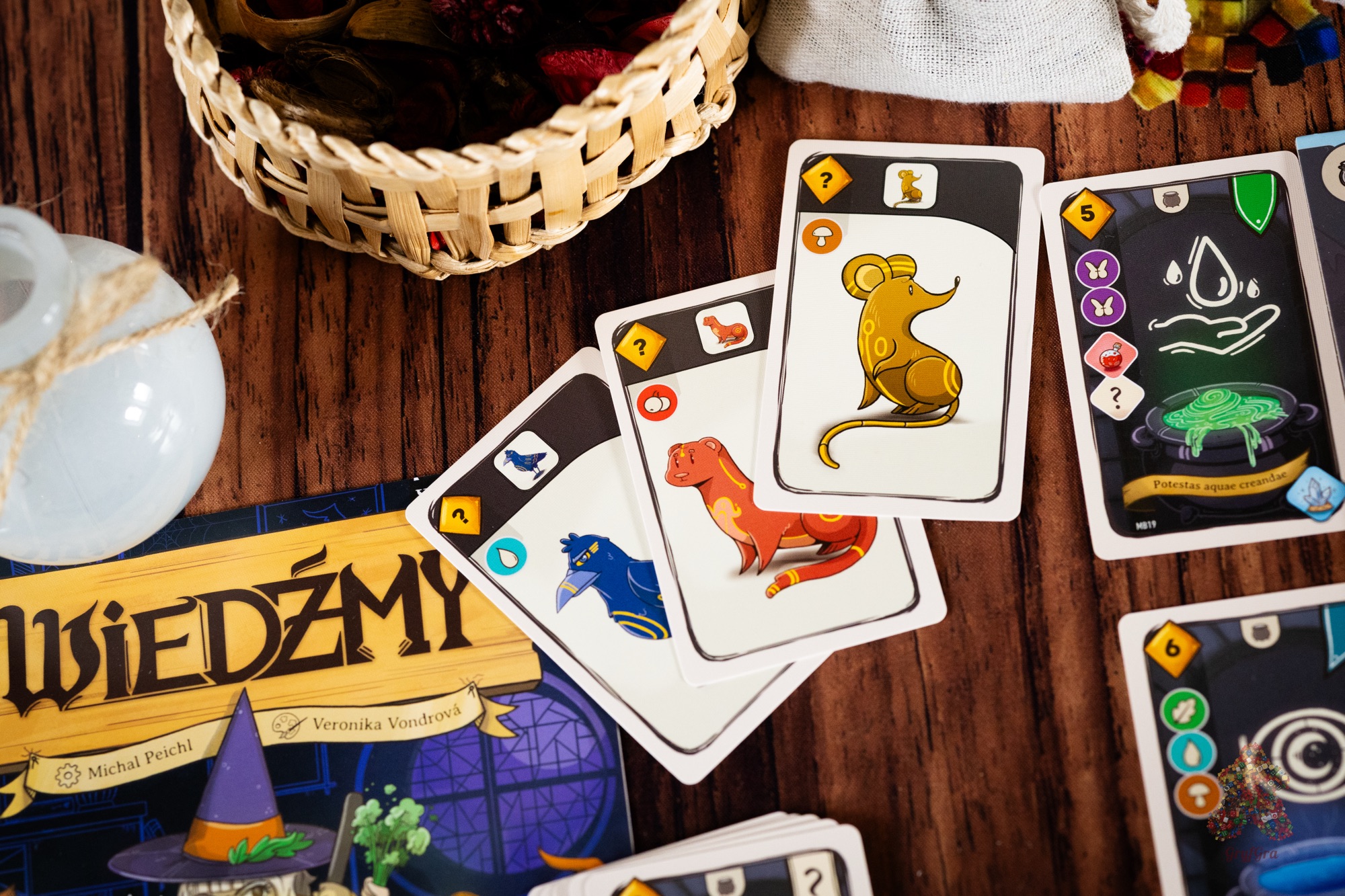
The cards serve two purposes. The reverse sides of potion cards show equipment needed for more demanding brews, while the other sides of witch cards become animals in the optional variant. Whenever we take a card from the display, we must therefore decide which of its two uses matters more to us.
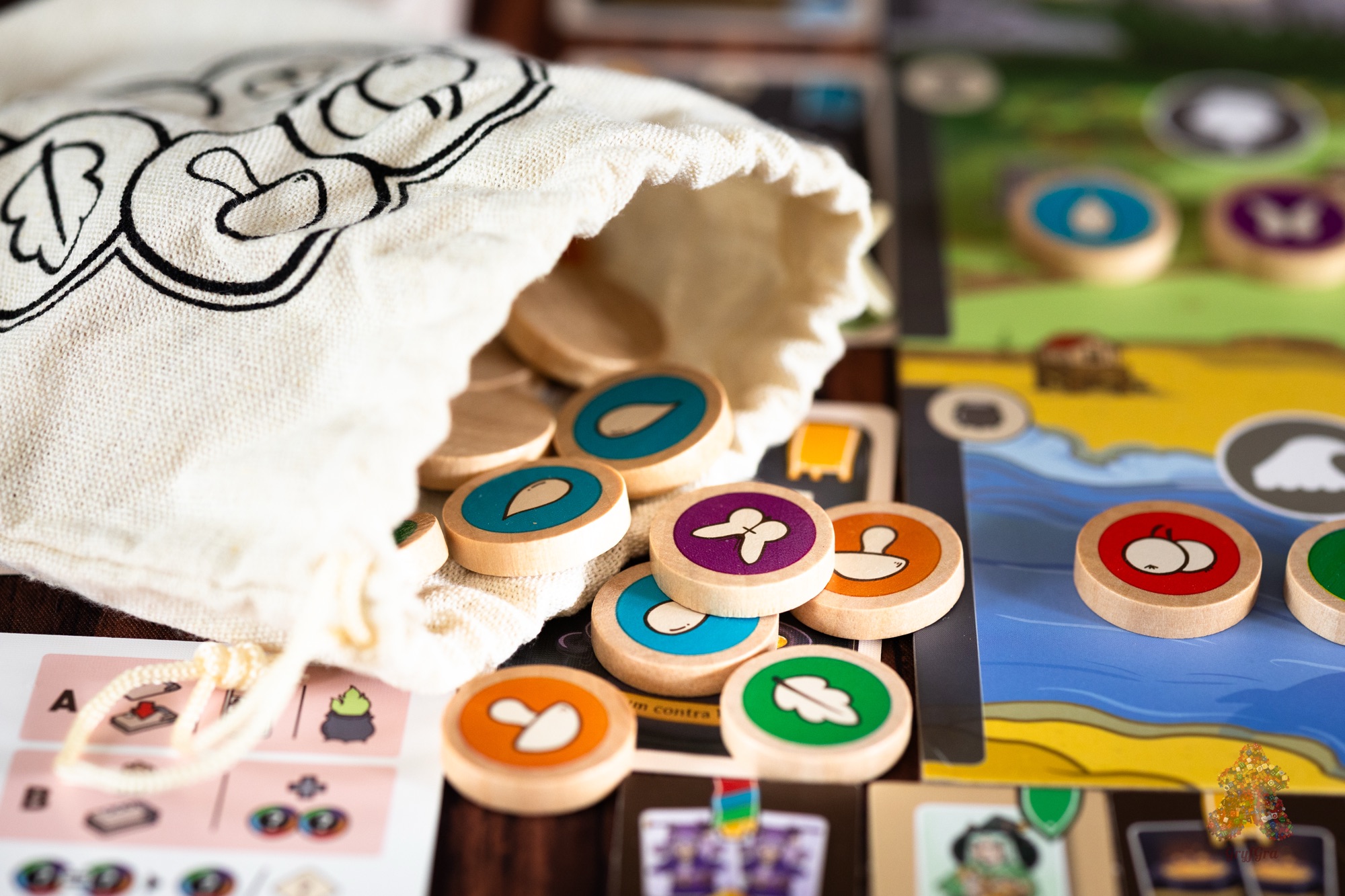
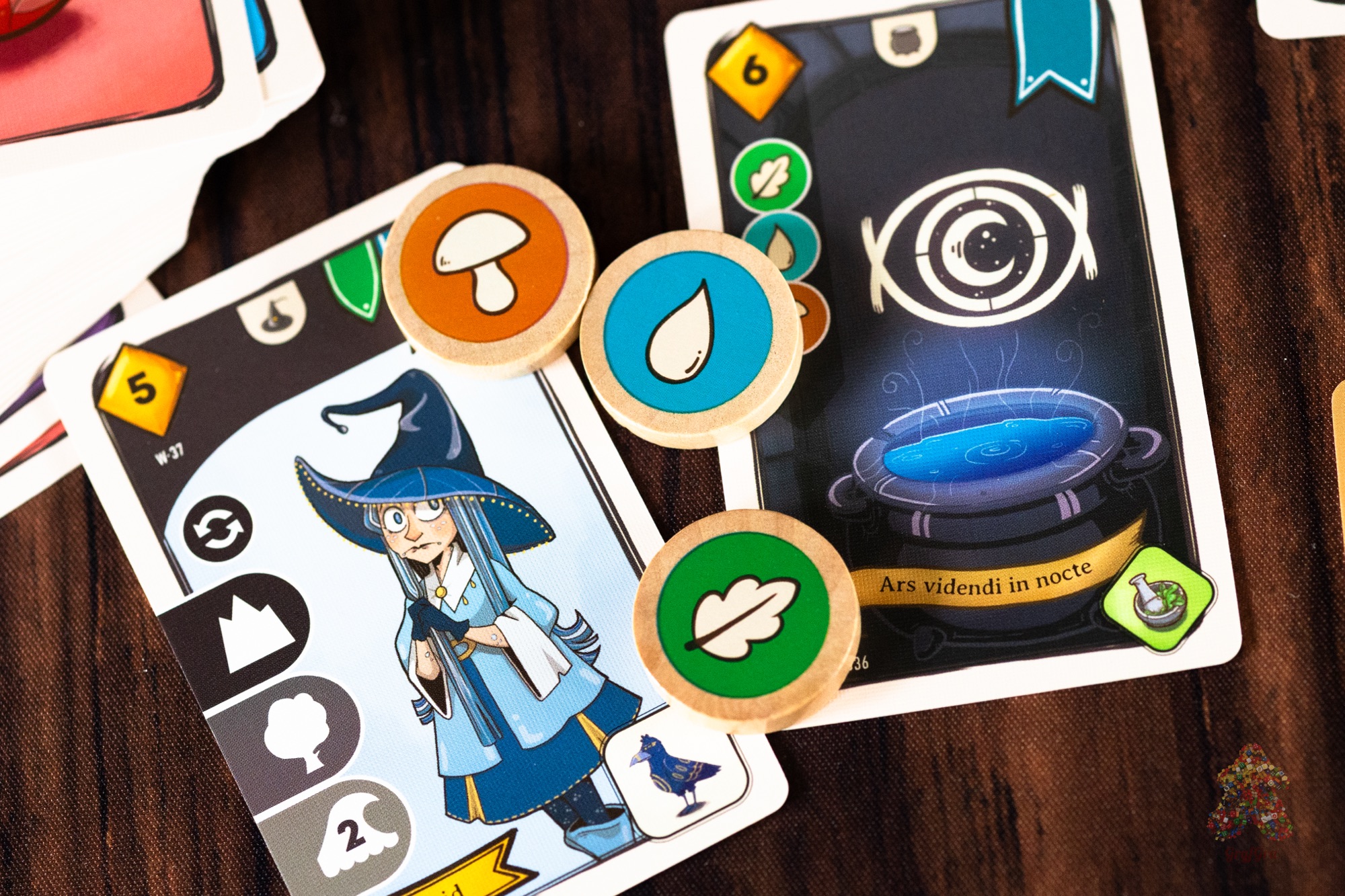
After gathering, we may brew one of our potions. We need the listed ingredients, sometimes the correct equipment, and, most importantly, an active witch who can brew a potion of the corresponding colour. Spent ingredients return to the bag. If we are missing one ingredient or one piece of equipment, we may substitute it with a pair of identical ingredient tokens.
The completed potion, the witch who brewed it, and any equipment used all join our clan. The witch remains there for the rest of the game, so we can no longer use her action points. Equipment works differently: once used, it stays in our clan and can help us brew further potions.
Resting allows us to return all previously played witches who have not joined the clan to our hand. We also take two ingredients from the board. Sooner or later, we have to pause our gathering and rebuild our hand.
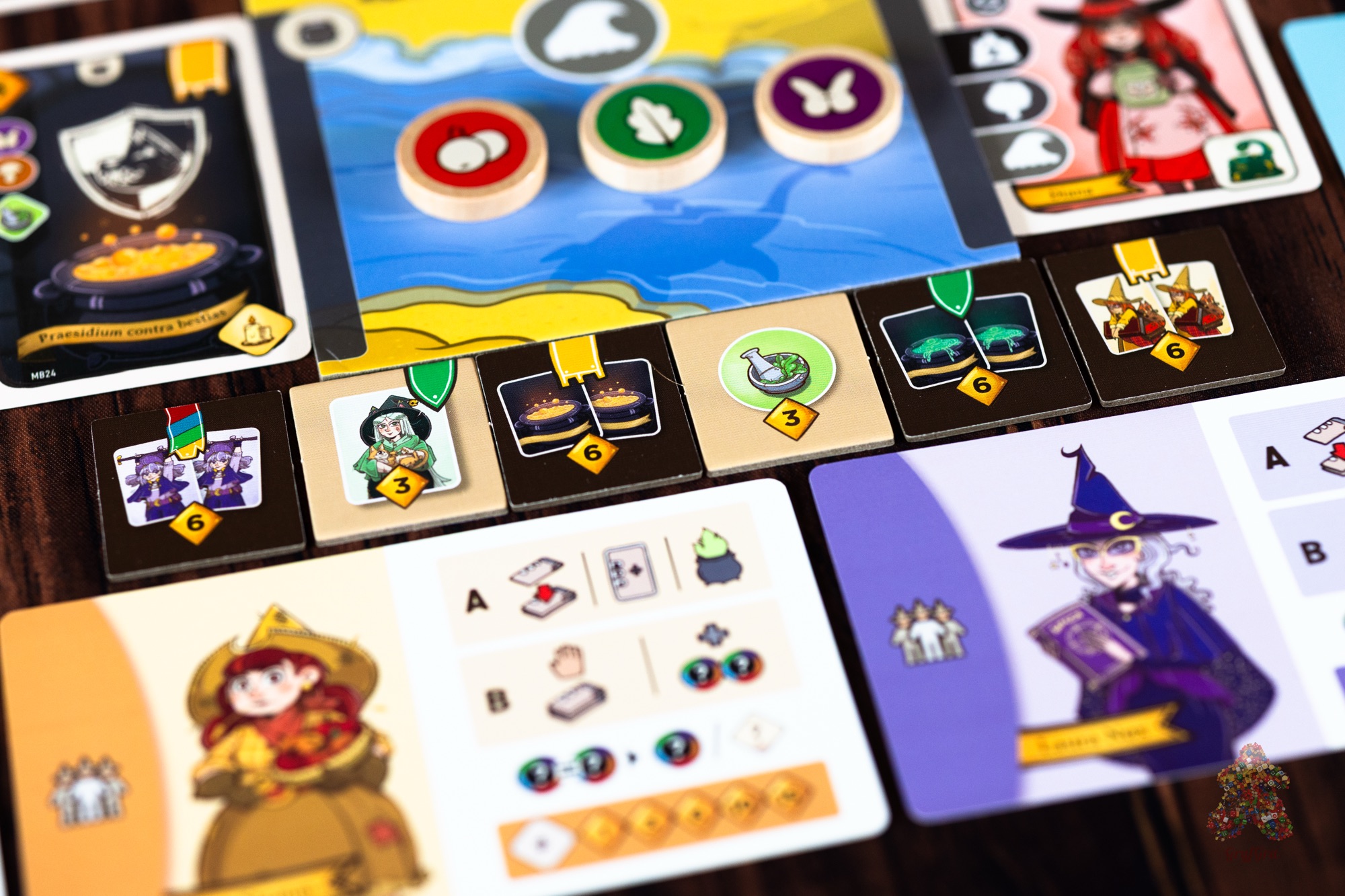
We gain additional points by completing the visible objectives. When we fulfil the requirements of one of them, we immediately take its token, denying the same opportunity to everyone else. Claiming the penultimate objective or exhausting either the witch or potion deck triggers the end of the game.
We score for brewed potions, witches in our clan, collected equipment, completed objectives, and different types of unused ingredients. In the expanded variant, we can also tame animals and build another scoring set.
Review
Witchdom is a relatively straightforward card game, but it offers more than mechanical ingredient collection. Its most interesting idea is placing different elements on the two sides of the same cards. A potion can instead become equipment, while a witch can become an animal in the expanded variant. Every choice therefore means giving up another possibility.
The witches themselves also work well in two distinct roles. First, we use their action points to collect what we need. Later, one of them can brew a potion and join our clan, creating a scoring set. This benefits us, but it also removes from our hand a card we previously relied on for gathering. Developing the clan does not simply mean becoming more powerful. We have to recruit new witches continually and make sure that brewing a potion does not leave our hand too weak.
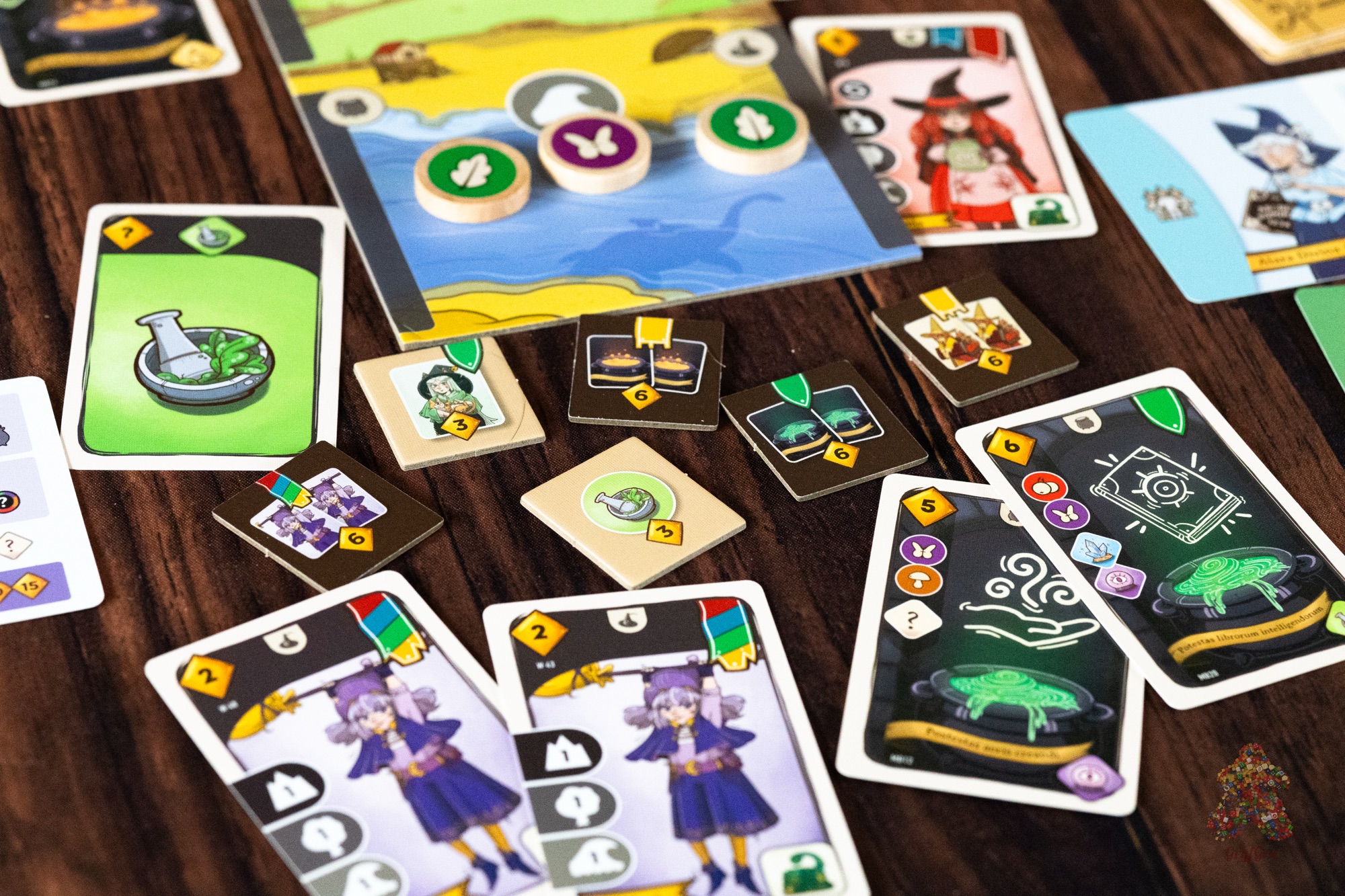
Equipment follows the opposite pattern. Taking a useful item means giving up the potion on the other side of its card, but once used, that tool remains in our clan. It helps with future brews and scores points for collecting different equipment types at the end. Over time, we can genuinely feel our clan becoming better prepared for its work.
Even the basic game offers several ways to score. We can concentrate on valuable potions, collect equipment, race for objectives, or preserve a variety of unused ingredients. This does not create a heavy strategic puzzle, but for a compact card game it gives us a satisfying amount to consider.
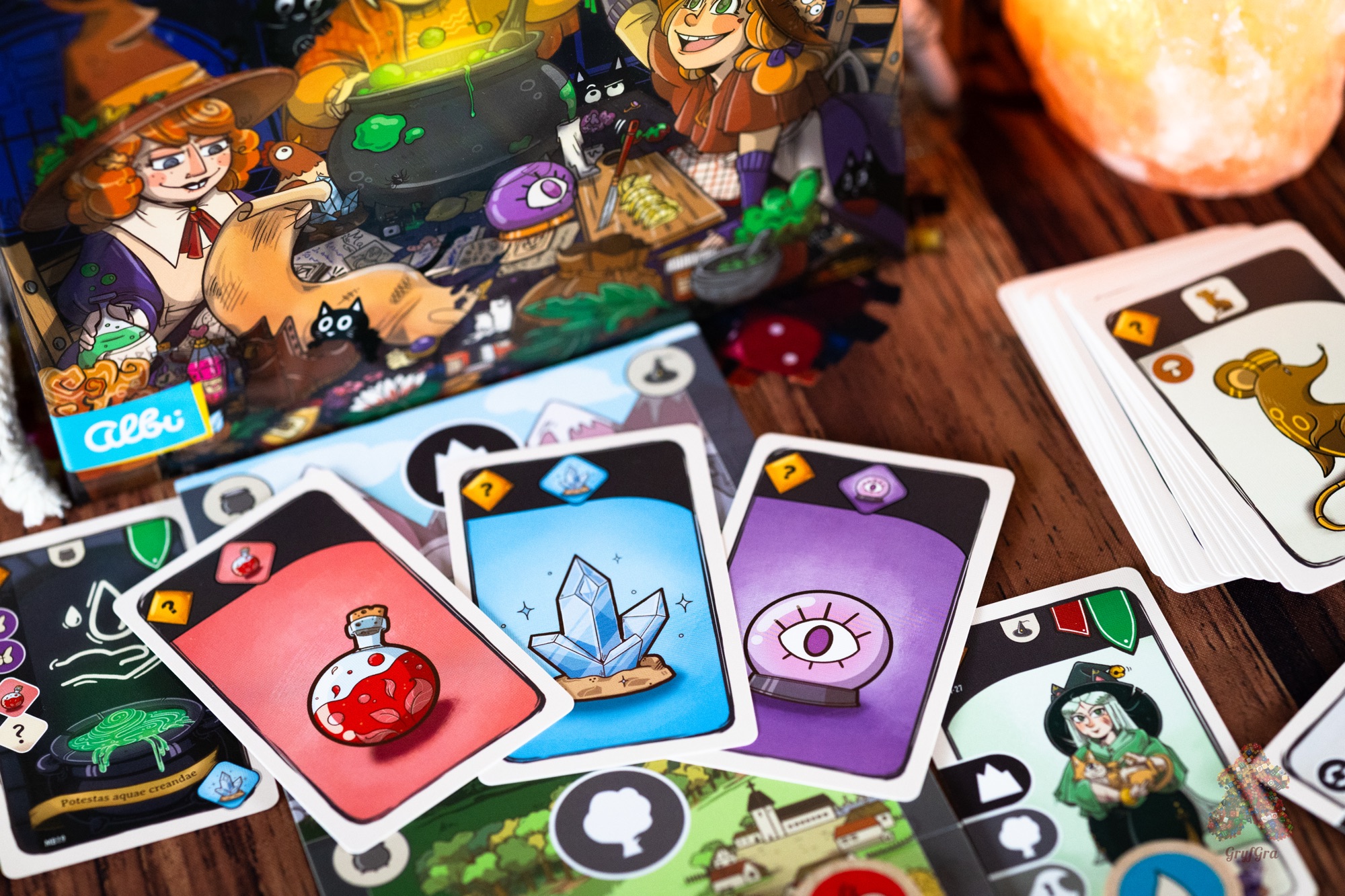
The animal variant adds another scoring route and one more question whenever we choose a witch card. Animals do not alter the foundations of the game, but they increase the number of small dilemmas. Once we know the basic version, they are worth including whenever we want slightly more room for manoeuvre.
Randomness is present on several levels. We have no control over which witches, potions, and ingredients appear in the displays, while everything we take is replaced immediately. Sometimes a needed token refuses to appear, or another player unintentionally takes something we had been counting on. We did not find this especially troublesome. The game encourages us to adapt our plan to the current table state, and the option to replace a missing element with a pair of identical ingredients softens the unluckiest situations.
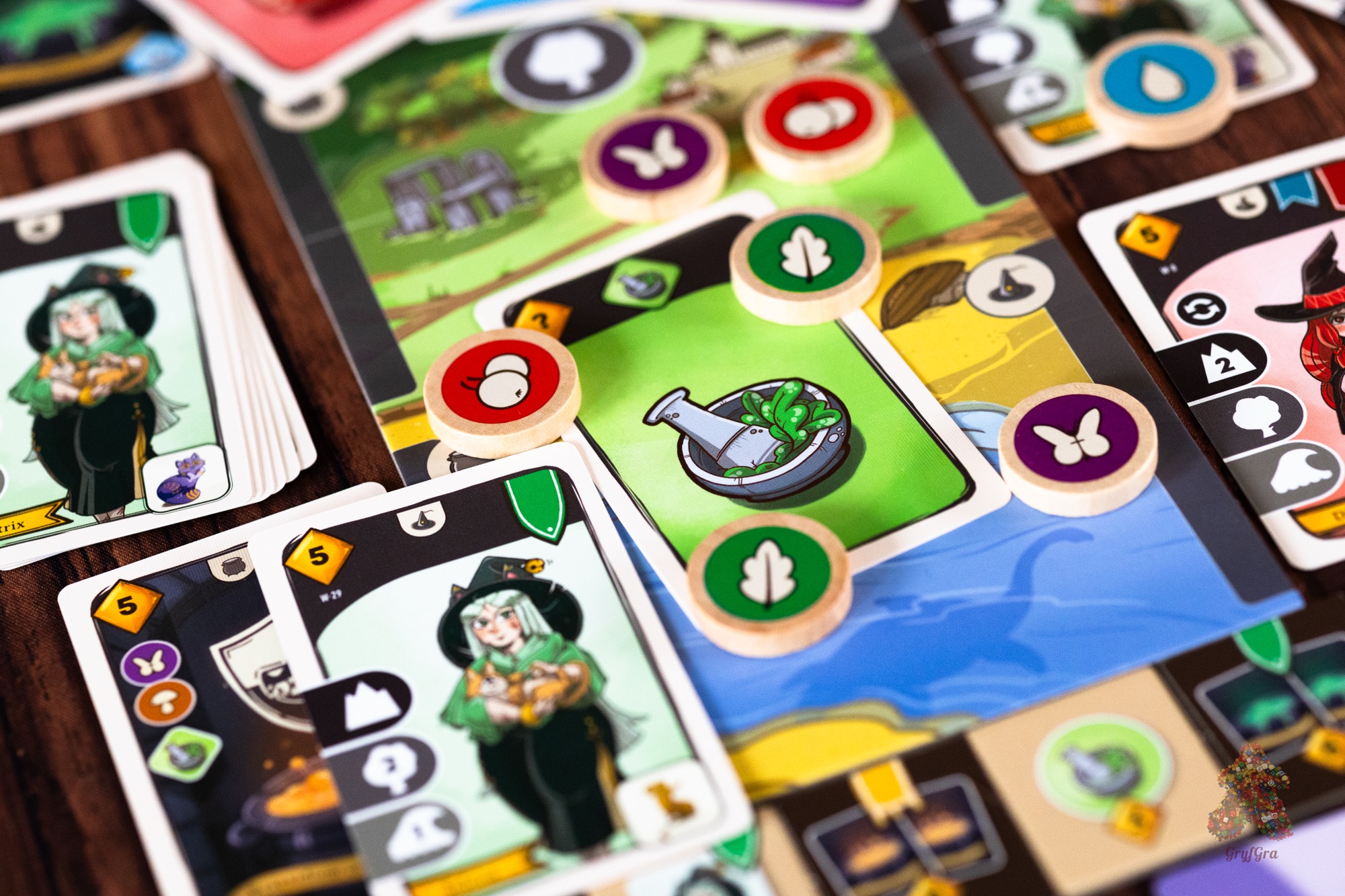
There is little direct interaction. It mostly comes from taking cards and ingredients from the shared display. We usually do not do this simply to hurt someone else; while following our own plan, we inevitably reach for something another player also needs. The objective tokens create a more deliberate race because each one can be claimed only once. This is still not a game for anyone looking for confrontation or aggressive effects.
Our two- and three-player games worked in much the same way. With more players, the display changes more frequently, which makes planning ahead more difficult. This is a typical consequence of using a shared market rather than a fundamental change in how the game plays. We experienced no troublesome downtime, and the turns continued to flow smoothly.
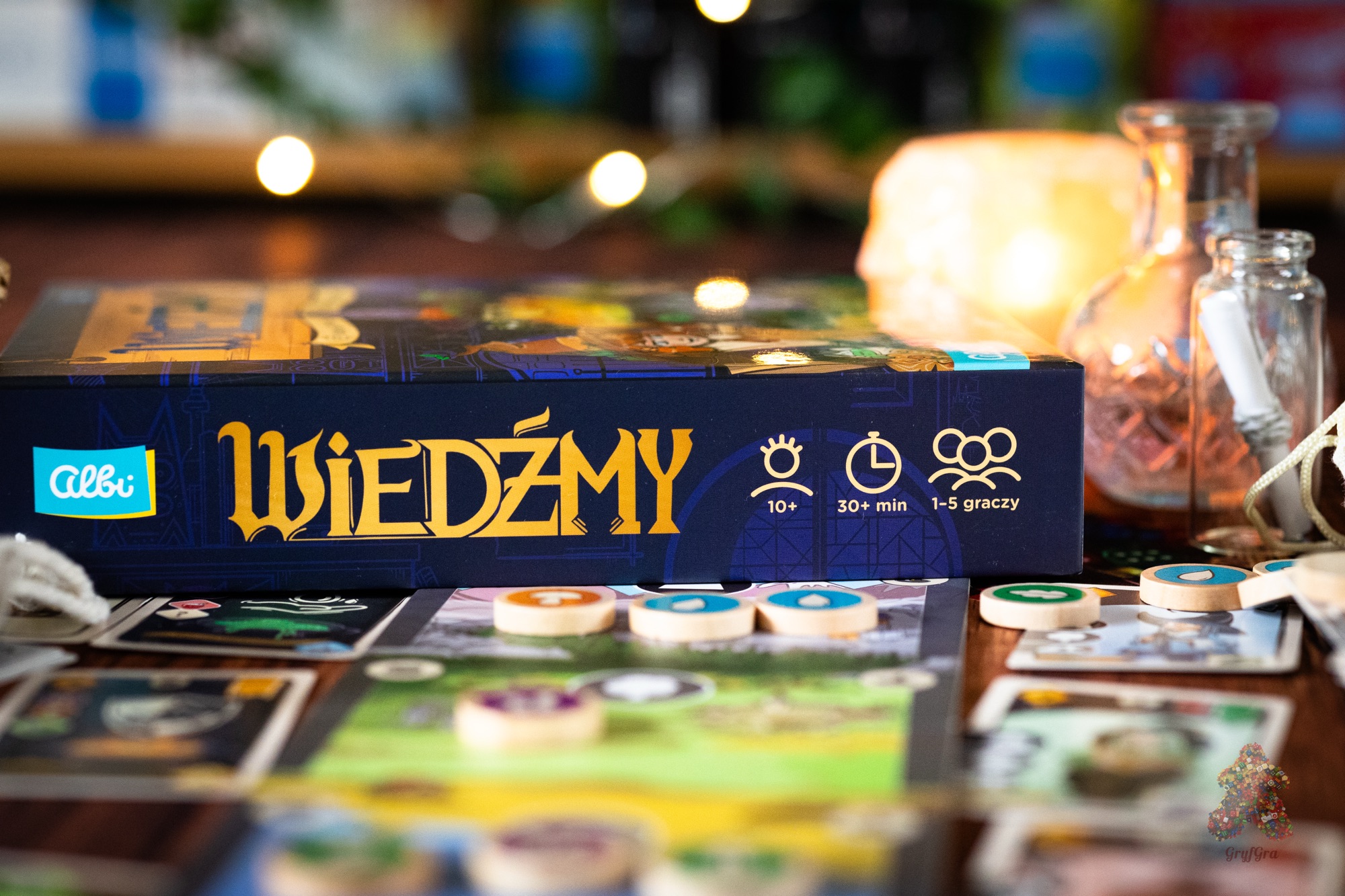
The thirty-minute playtime on the box proved fairly optimistic, as our games generally lasted closer to 45 minutes. That is still well suited to the game’s weight. The rules are easy to explain, while the additional relationships reveal themselves without overwhelming new players. We did not test the solo mode, so we cannot assess how Ostara or the suggested difficulty levels perform.
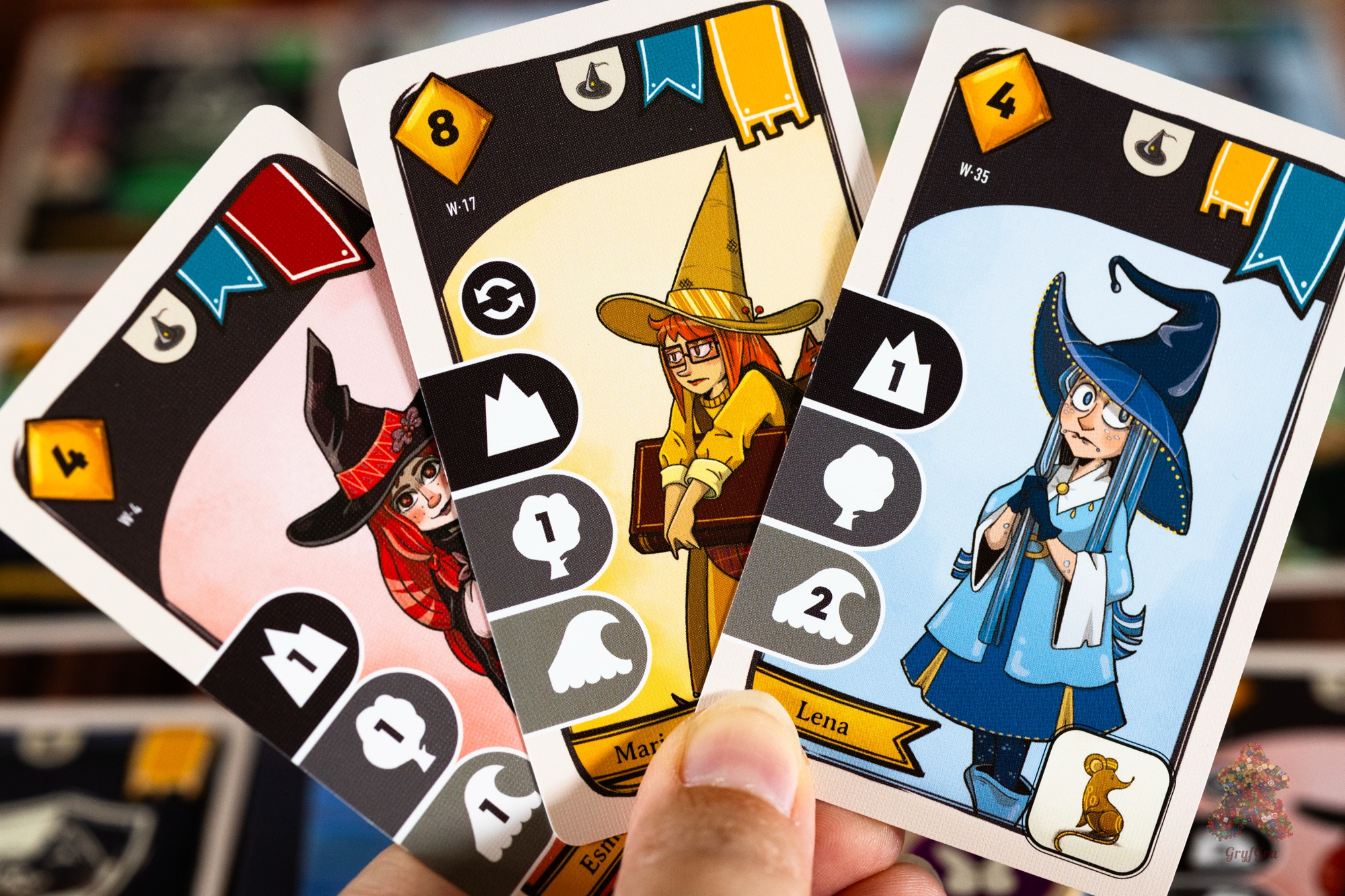
The artwork is colourful, cartoonish, and playfully tongue-in-cheek. It suits the family character of Witchdom well. The iconography is clear, and the information on the cards and small board is quick to read. The rulebook is equally successful: whenever we needed clarification during play, we had no trouble finding it. We would only have liked a greater variety of witch illustrations, as the repeated portraits become noticeable across such a large deck.
Mechanically, Witchdom remains fairly abstract, but the theme never feels forced. We gather ingredients, acquire magical tools, recruit apprentices, and assign witches to brewed potions. These actions form a coherent whole, even if most of our attention during play goes to symbols and scoring relationships.
Summary
Witchdom successfully combines simple rules with several clever dilemmas. Double-sided cards, witches leaving our hand after brewing potions, and equipment that provides lasting benefits allow this small game to offer an enjoyable amount of thought.
It is a good choice for both less experienced players and people who already know plenty of board games but want something quicker and lighter. They only need to accept the considerable randomness of the display and the limited interaction.
This is neither a heavy strategy game nor a particularly confrontational card game. As a smooth and accessible family game lasting around 45 minutes, however, it works very well, while the animal variant gives us a reason not to return it to the shelf immediately after the first few plays.