

“The Elements” is a light card game designed by Filip Barcik and published by Elementorum Studio. Fire, water, earth, and air compete for dominance, while players develop their own card stacks in a race to become the first to create two Elementals.
However, this is not a peaceful exercise in building your own tableau. The cards are also used to destroy your opponents’ elements, and without this part of the gameplay it clearly loses its character.
Gameplay
The box contains 108 cards divided among four elements and four development levels. We shuffle all the cards to create the main deck, then reveal five of them to form the shared Element Field. Each player starts with four cards in hand.
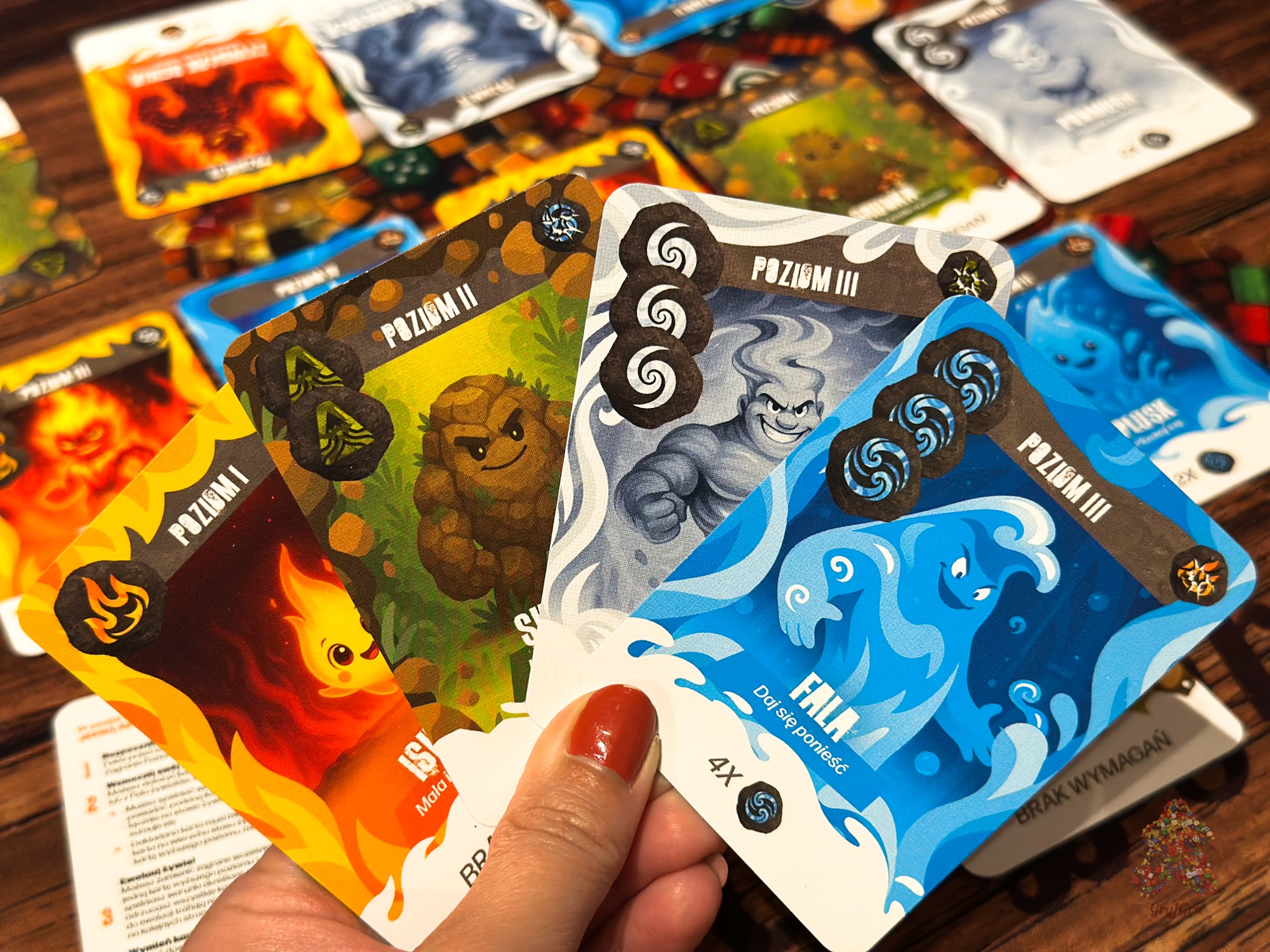
The goal is to create two Elementals by playing level-four cards belonging to two different elements. The game ends immediately when a player fulfills this condition.
On our turn, we choose one of five actions:
- Start building an element by playing a level-one card.
- Strengthen an existing element by adding a card of the same type.
- Evolve an element by replacing weaker cards with a single higher-level card.
- Exchange any number of cards from our hand.
- Destroy the top card of an opponent’s element.
We develop each of the four elements separately. A card we add must meet the strength requirements printed on it, and its level cannot be higher than that of the card on top of the stack. Playing a stronger card requires an evolution. We then discard every lower-level card, while cards of the same or a higher level remain in place.
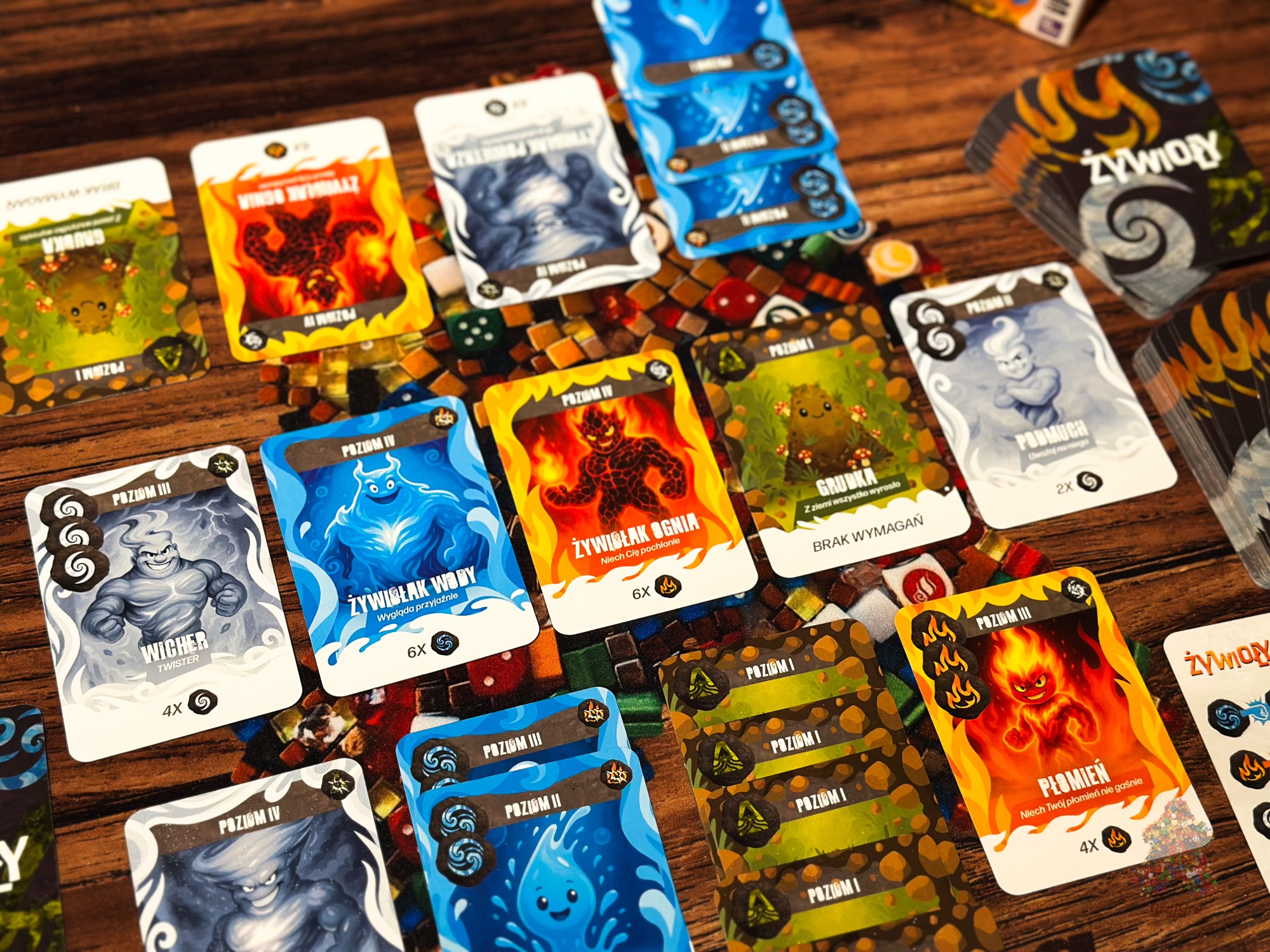
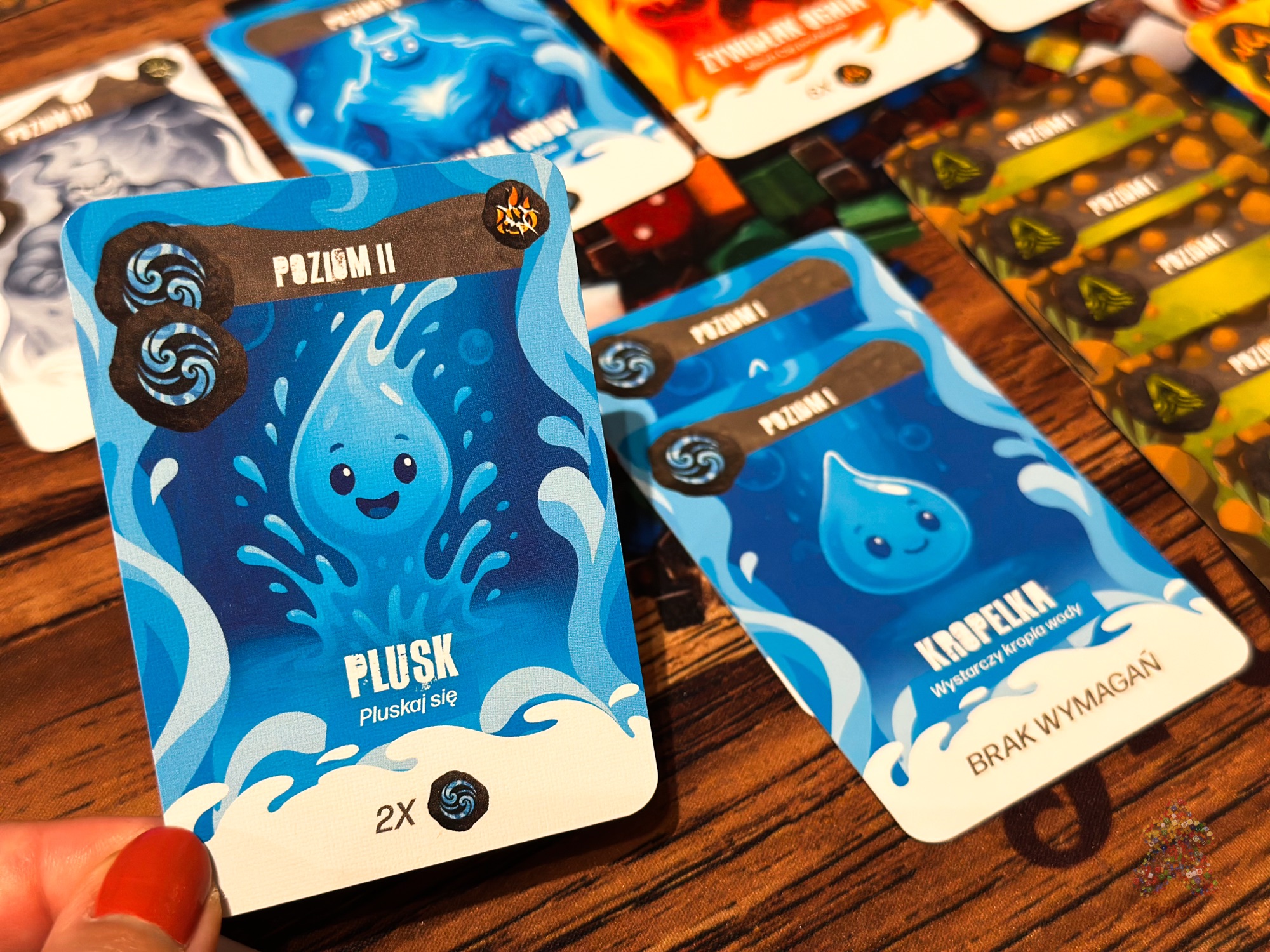
We can play cards from our hand or from the shared Element Field. The exception is attacking opponents, for which we may use only cards held in our hand.
Destroying cards is subject to several restrictions. An opponent’s stack must contain at least two cards, and only its top card can be destroyed. The card used for the attack must be at least one level higher and belong to the appropriate element. Water extinguishes fire, fire burns air, air blows earth away, and earth absorbs water. Both cards are discarded after the attack.
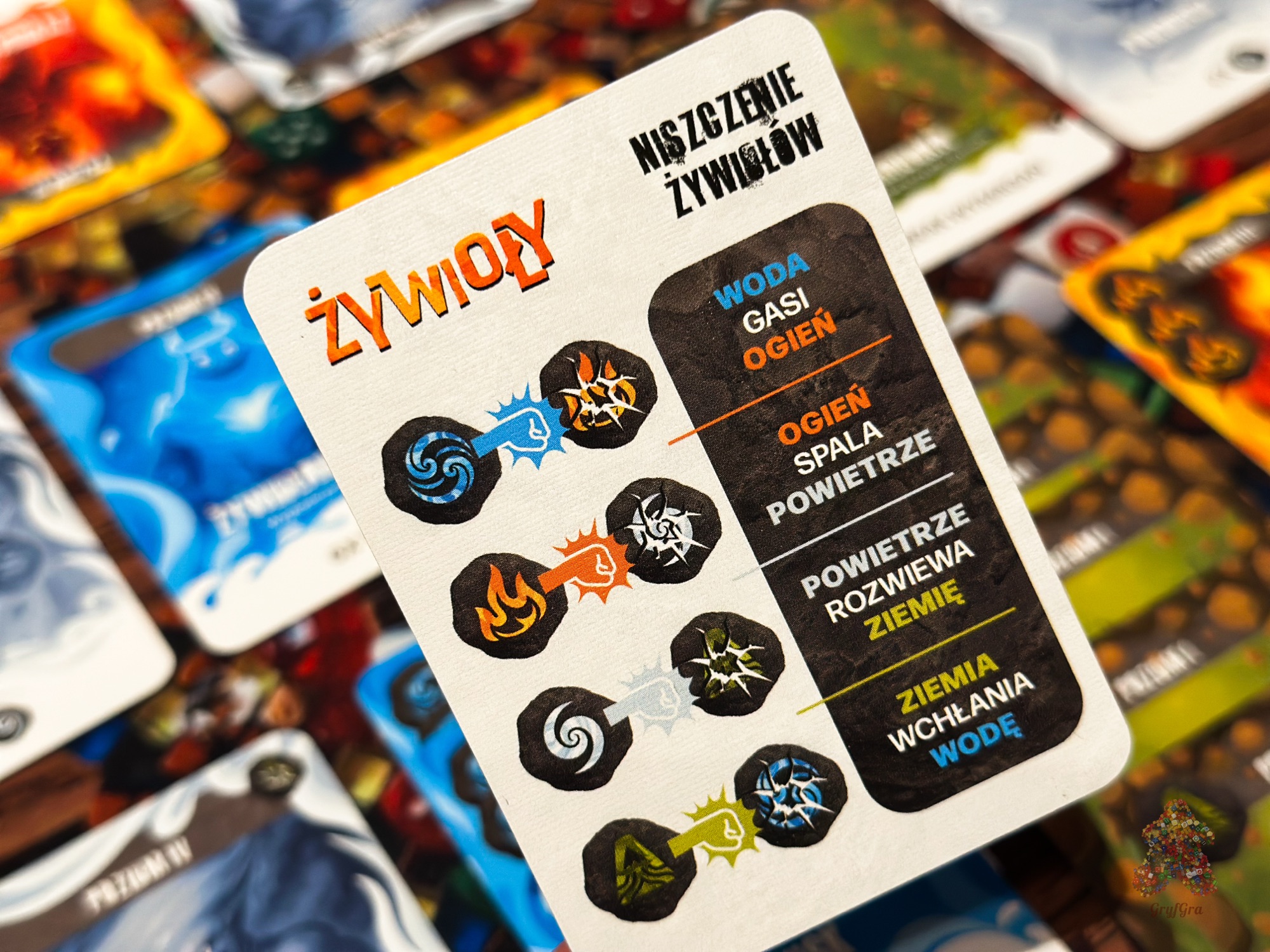
We can attack only the players sitting next to us. At the end of the turn, we refill our hand to four cards, drawing no more than one from the Element Field and taking the rest from the main deck.
Review
“The Elements” is a light card game based mainly on hand management, reacting to the available cards, and negative player interaction. The rules are easy to explain. There are only five possible actions, three of which cover different ways of playing cards to our own stacks. Teaching the whole game takes just a few minutes, so we can start playing quickly.
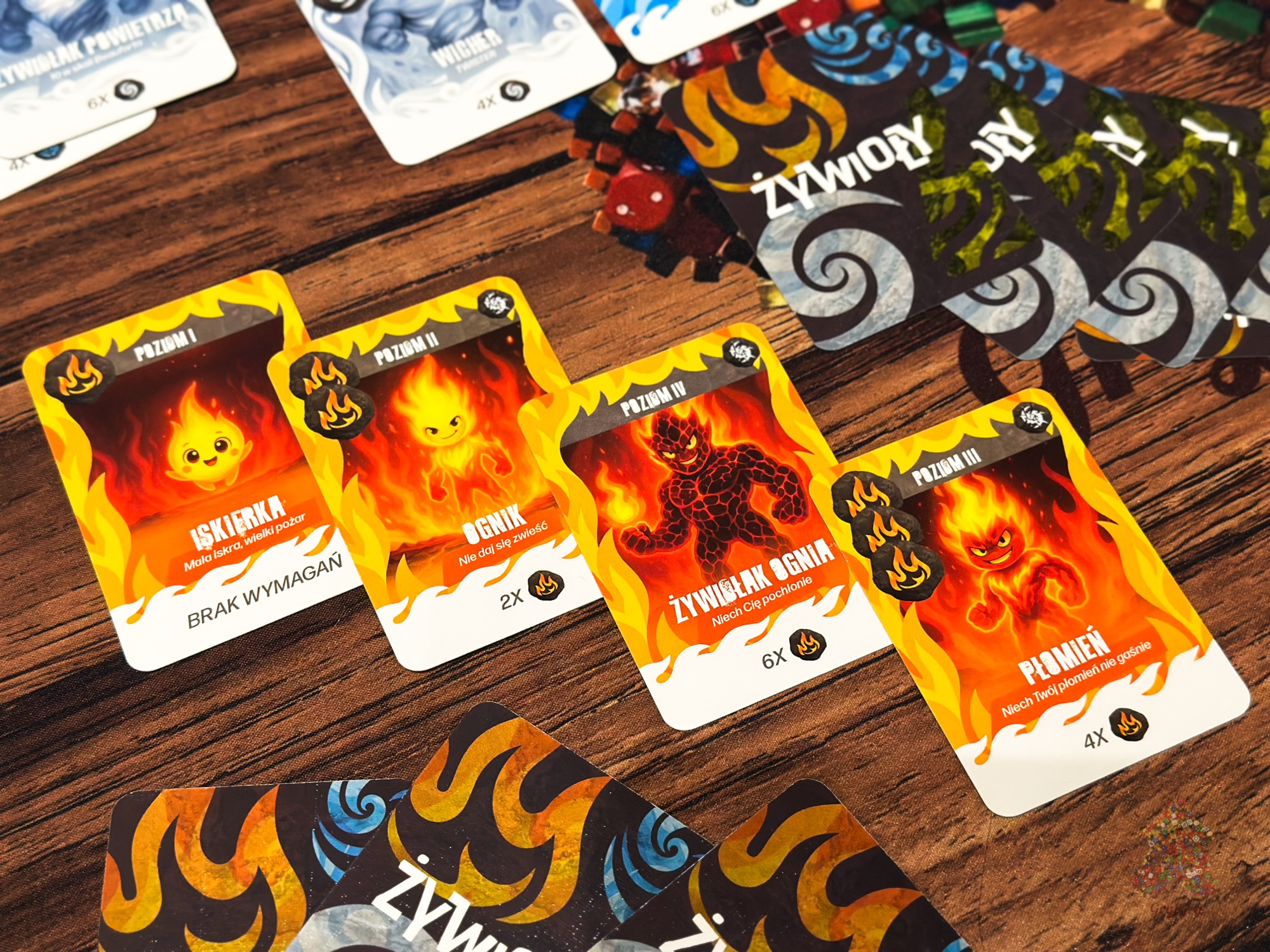
There is not much strategic depth here. Instead of preparing a long-term plan, we usually adapt to the cards in our hand, the current contents of the Element Field, and our opponents’ moves. Randomness has a major impact on how the game unfolds. Sometimes the cards we need appear one after another, while at other times we wait a long time for a chance to take the next step.
The shared Element Field and the option to exchange cards partly mitigate this problem. Exchanging is not merely an emergency solution—we used it regularly during our games. Even so, this is not a luck-free battle of wits. We have to accept that the card draw may make developing our chosen elements easier or slow it down considerably.
At the same time, this randomness keeps successive plays from immediately becoming repetitive. The changing cards force us to follow different development paths and make use of whatever is currently at hand. “The Elements” is therefore more tactical than strategic.
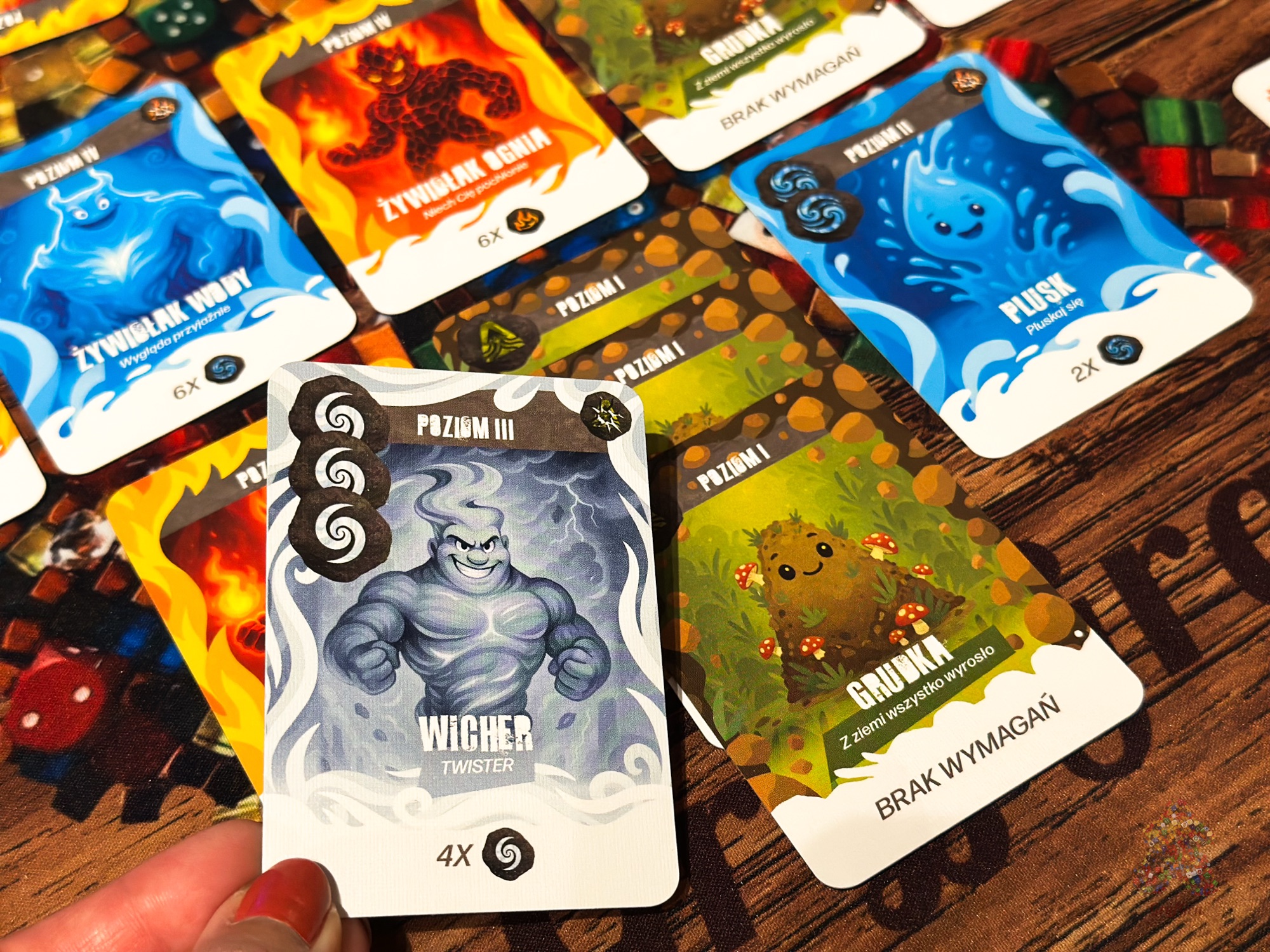
Destroying opponents’ cards is the key part of the game. Without it, the game becomes a fairly random race in which everyone develops their own stacks and hopes to draw the right cards. We played one game this way, and it ended so quickly that we decided to continue until someone had created four Elementals. However, this variant felt more like playing solitaire side by side than genuine competition.
Attacking gives us a use for cards we do not need, lets us hold back the leader, and adds further decisions to the game. It also affects how we build our stacks. Level-two cards are easy to add, but they are equally easy to destroy. Sometimes it is therefore better to invest in a less useful level-three card because opponents will find it much harder to remove.
Mechanically, this works well, but we have to enjoy this kind of interaction. Destroying something another player has spent several turns building can be frustrating. For us, this is the game’s biggest drawback, even though we also realize that without it, “The Elements” would lose most of its tactical possibilities.
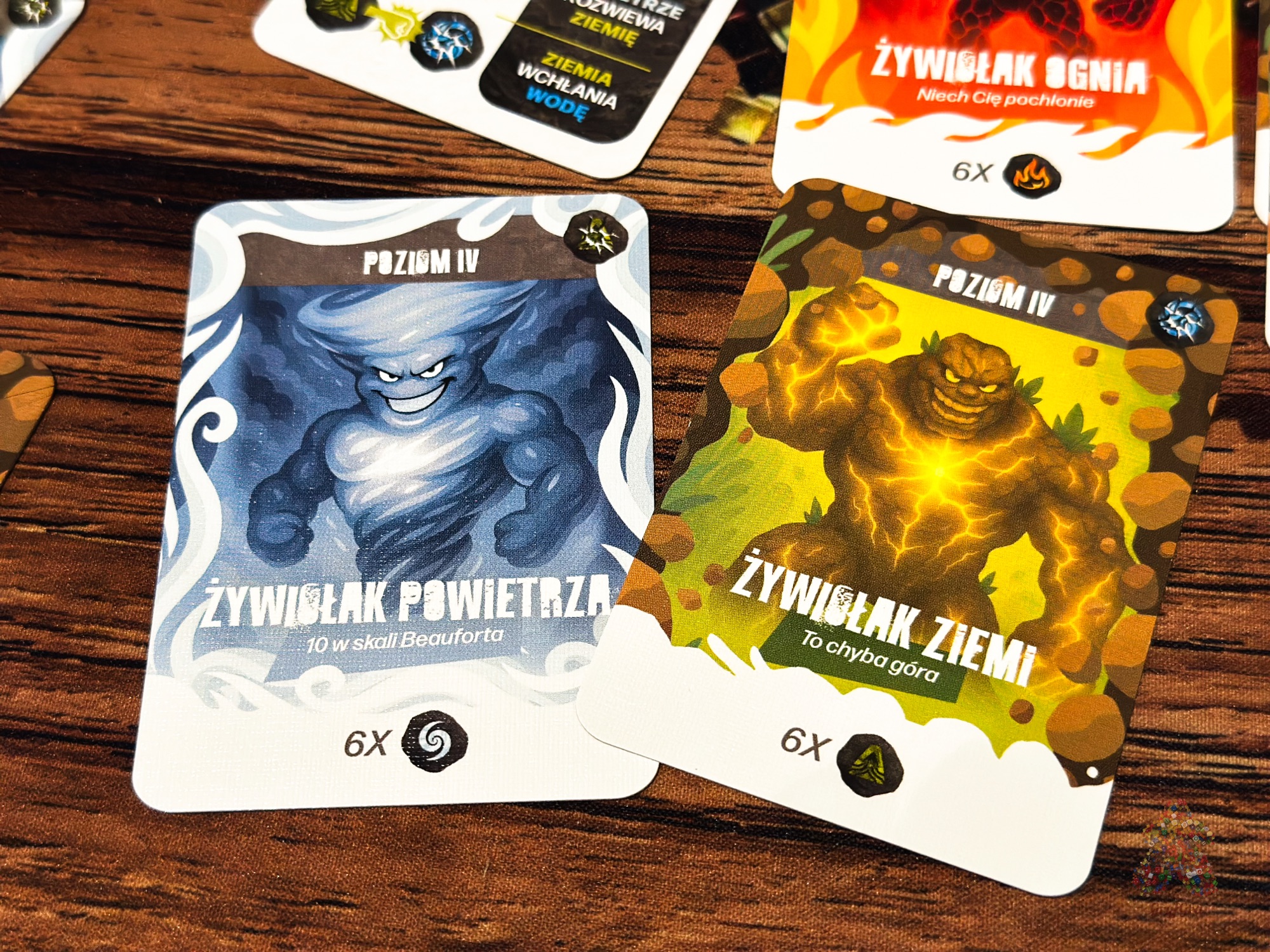
Restricting attacks to adjacent players becomes particularly noticeable with a larger group. Only the two players sitting next to the leader can hold them back, and they do not always have the right cards. Whenever an opportunity to attack the leader does arise, however, players are usually happy to take it.
We had the most fun with three or four players. With this many people, there is enough interaction around the table. Playtime depends heavily on the card draw and ranged from around 30 minutes to as much as an hour in our games.
Ending the game after two Elementals have been created did not feel too abrupt. Our opponents’ progress is clearly visible, so we usually know who is close to winning and when we need to try to stop them.
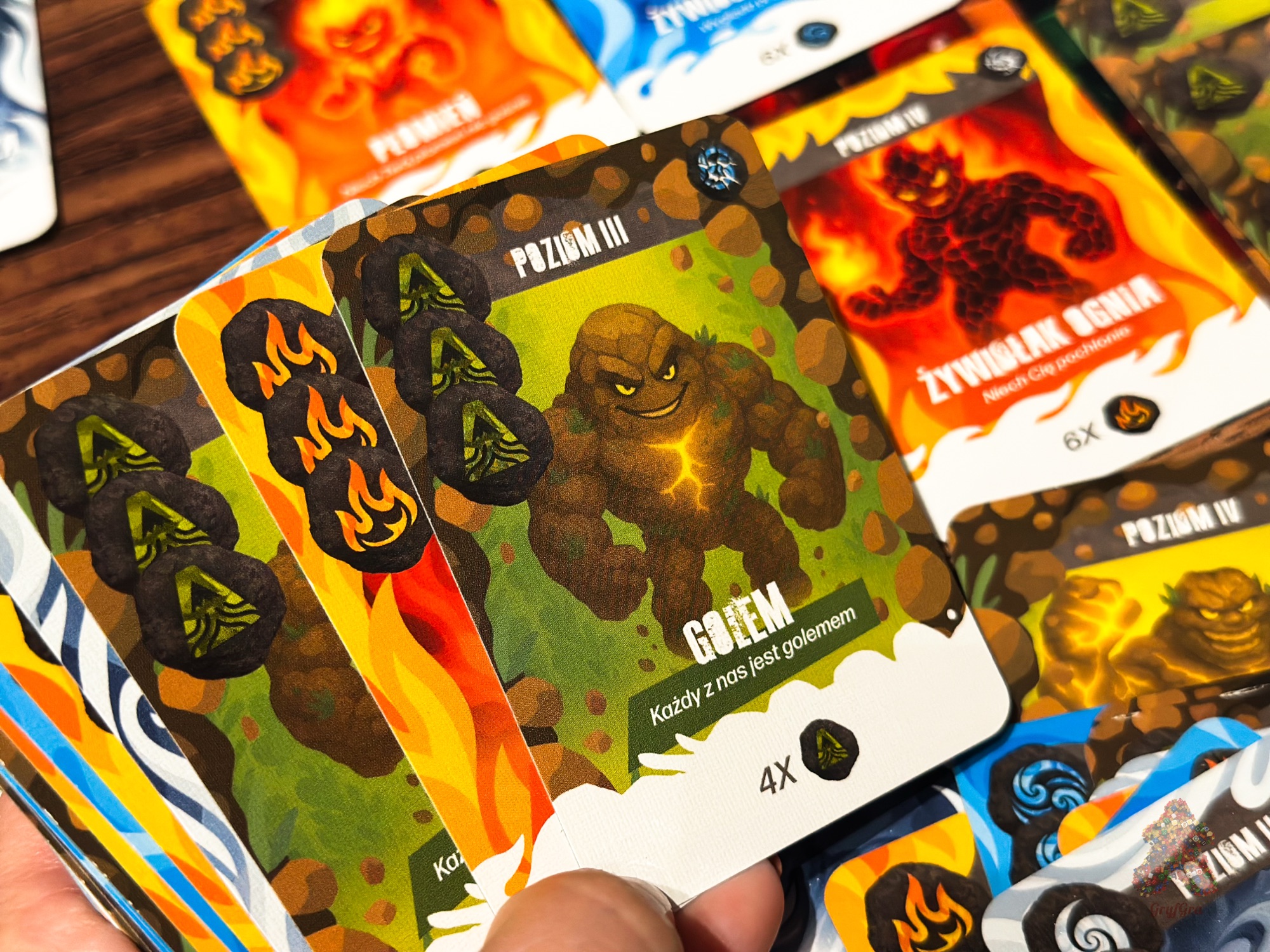
The illustrations have a pleasant, slightly cartoonish style, and the iconography remains clear. We were less keen on the text printed on some cards to indicate that they have no requirements. In our opinion, leaving this space blank would look better.
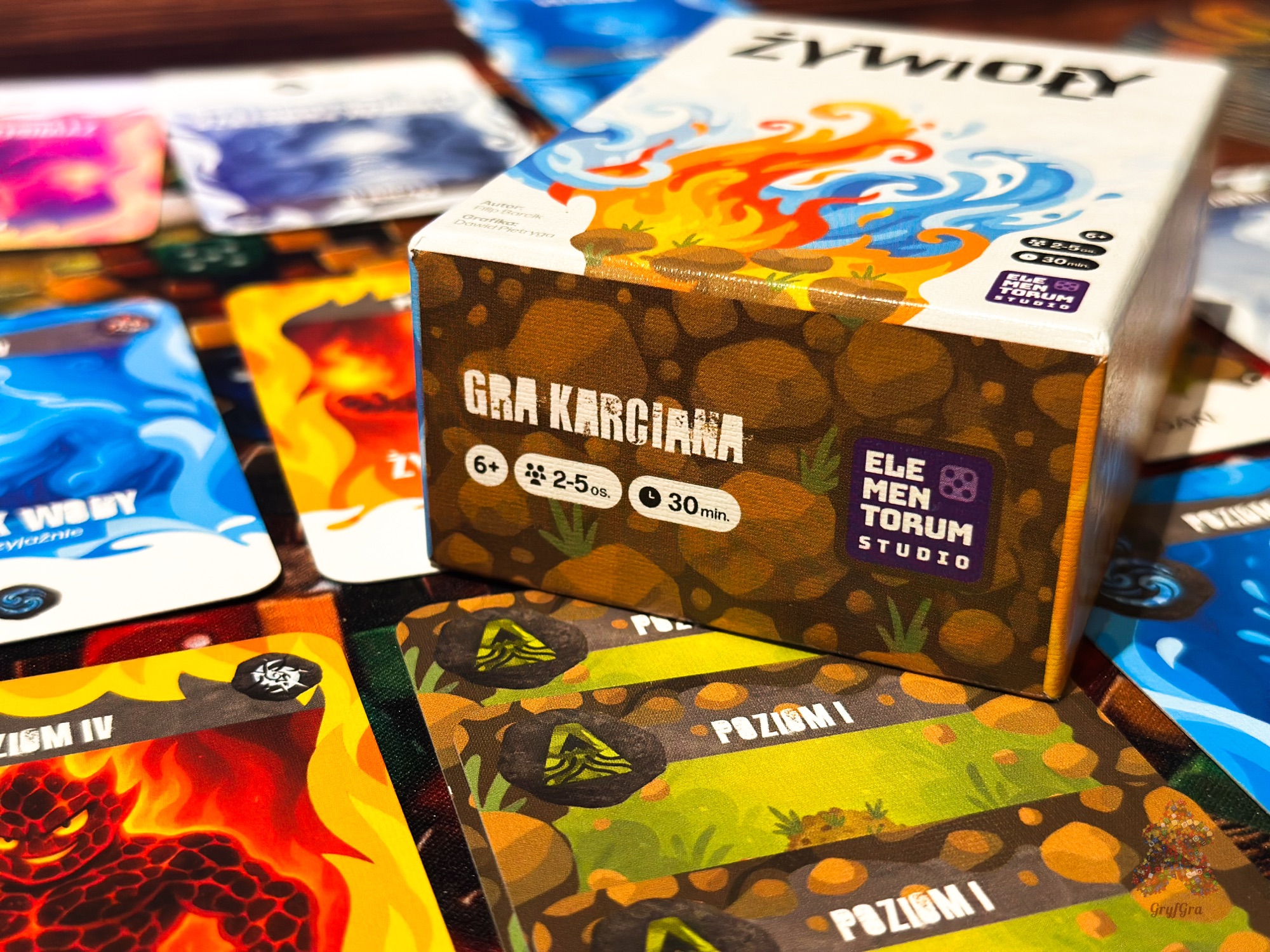
The game is labeled for children aged six and up. We would not be certain that every six-year-old could manage it independently, but an eight-year-old should not have much trouble. There are few rules, and they do not form a complicated network of dependencies.
Summary
“The Elements” is a simple, light card game that combines developing our own stacks with directly destroying our opponents’ progress. It does not offer a great deal of control or elaborate planning. Instead, it requires us to adapt to the cards, seize opportunities as they appear, and decide when to develop our own elements and when to slow down an opponent.
The game’s greatest strengths are its easy rules, smooth gameplay, and low barrier to entry. Its main limitation is the large role played by luck, together with the negative interaction without which the entire system does not work nearly as well.
It is best recommended to players looking for a relaxed game in good company, especially with three or four people. However, they need to enjoy games in which destroying someone else’s progress is not an optional extra but one of the main ways to play.
We would like to thank Elementorum Studio for providing us with a review copy of the game.