

A forest supplies timber, but keeping it productive for years to come also requires replanting and care. This relationship is at the heart of “Forestry”, designed by Michal Peichl and published in Polish by Galakta, originally by Pink Troubadour. We manage a harvester and a sawmill manager, dividing a limited number of actions between gathering timber, fulfilling contracts and developing our forestry operation.
Gameplay
The shared board features a forest divided into three regions, surrounded by sawmill buildings. We set out the logging, clearing, river and forester tokens, among other components, and place available contracts beside the sawmills. Each player receives a personal board, a harvester and manager, starting resources and a contract. Depending on the chosen variant, we use a simplified technology table, separate technology tiles, or add character abilities as well.
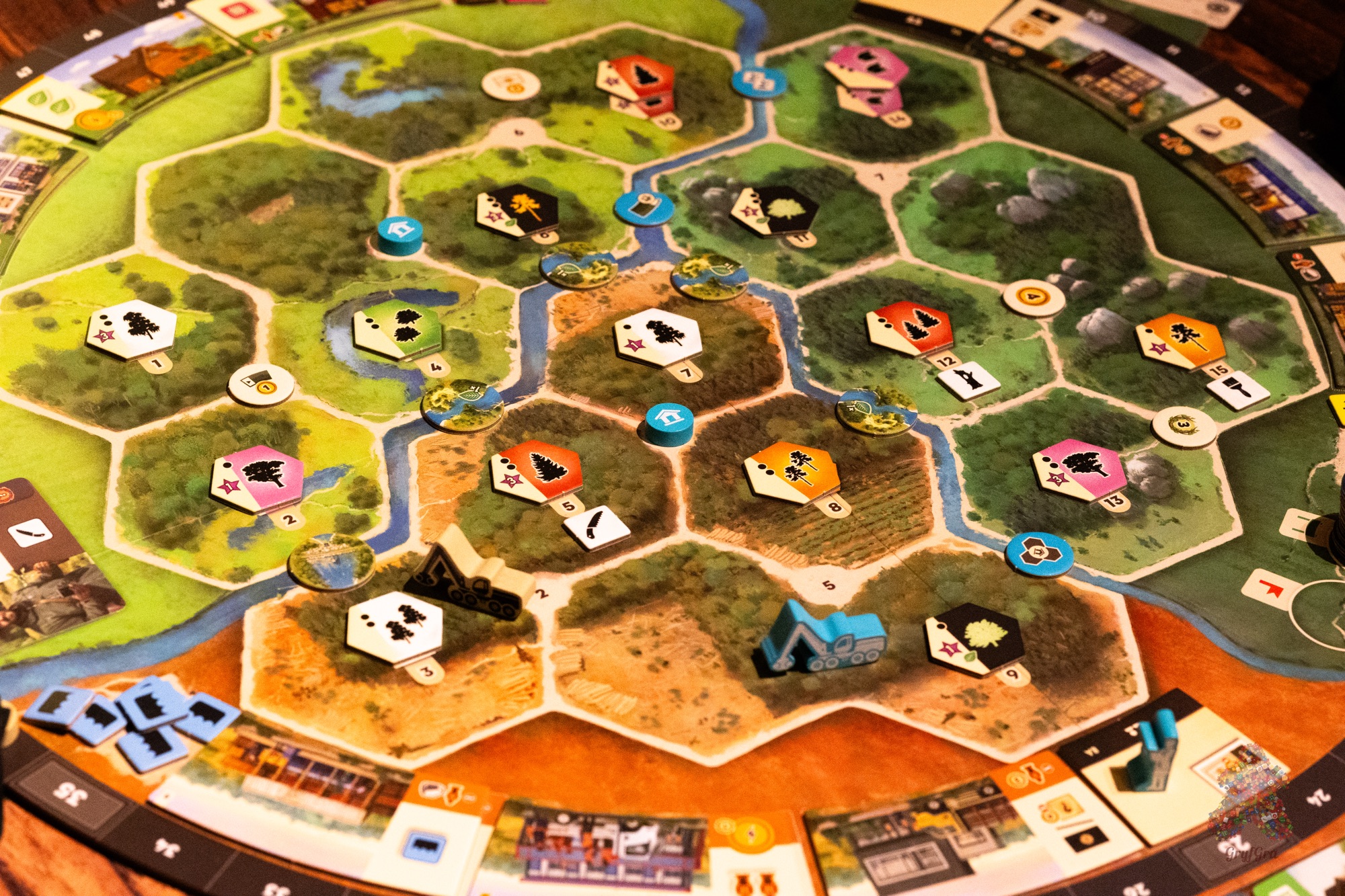
A standard game lasts ten rounds, while the advanced game lasts nine. At the beginning of each round, we reveal a round token and resolve its effect. Players then take their turns, initially spending three action points each. We decide how many to use in the forest and how many to allocate to the sawmill manager. We can also buy up to two additional action points per turn for four coins apiece.
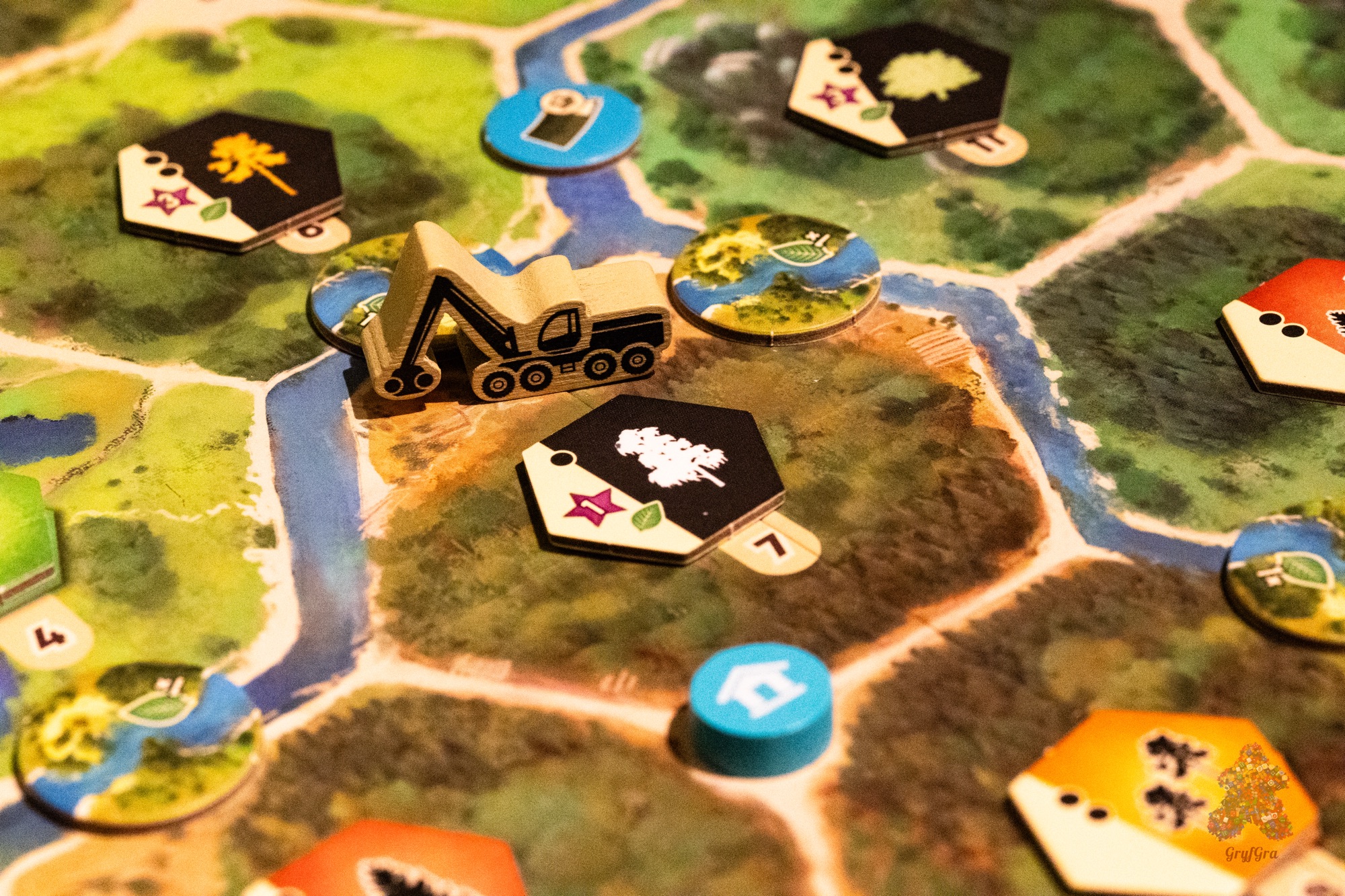
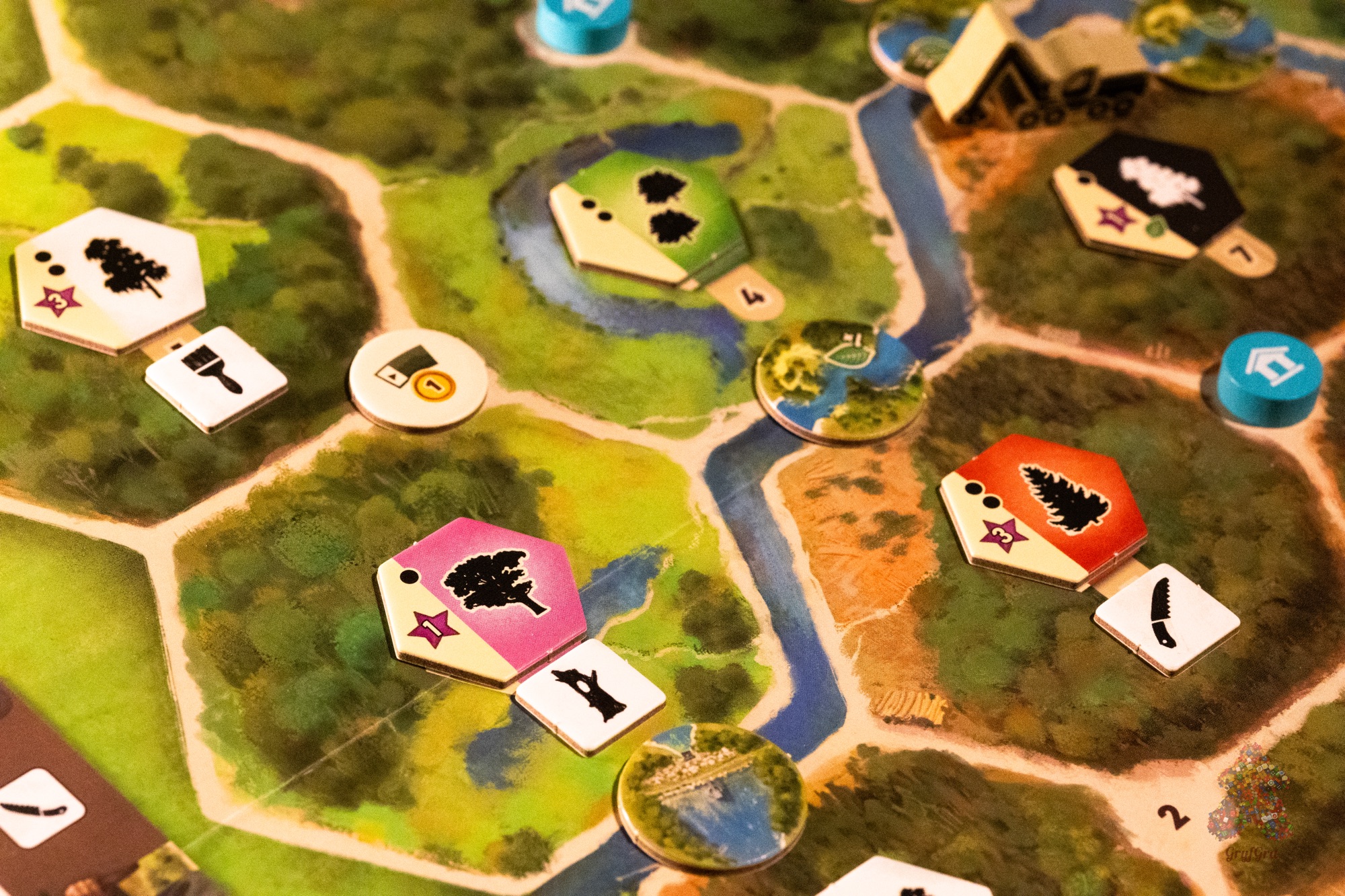
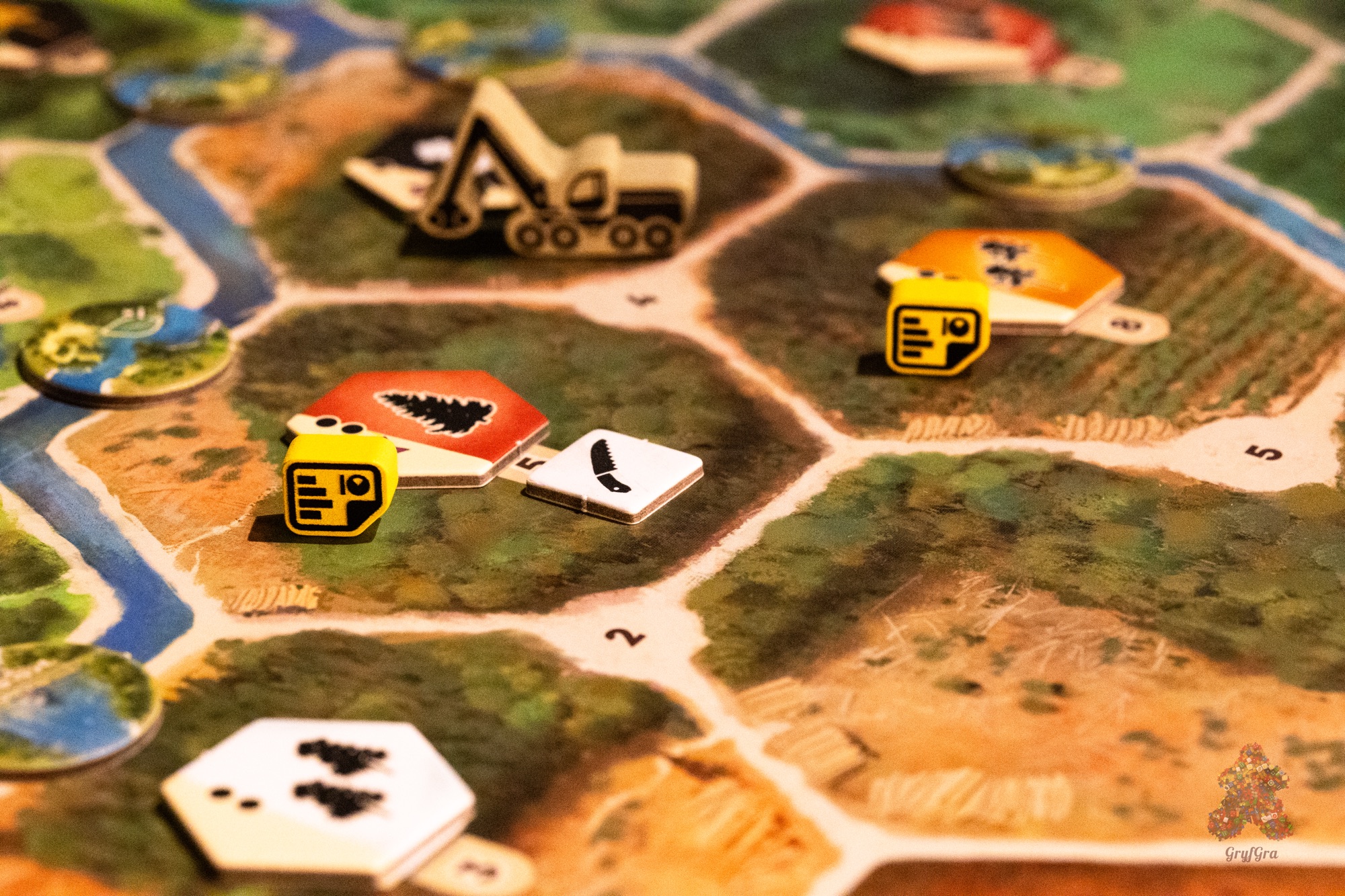
The harvester travels through the forest to collect timber, replant cleared areas, tend the forest and construct buildings and water infrastructure. After logging, we flip the corresponding token to its dark side. Before anyone can harvest timber there again, the location must be replanted using seedlings. Forest care involves collecting forester tokens and placing them on our personal board to receive bonuses.
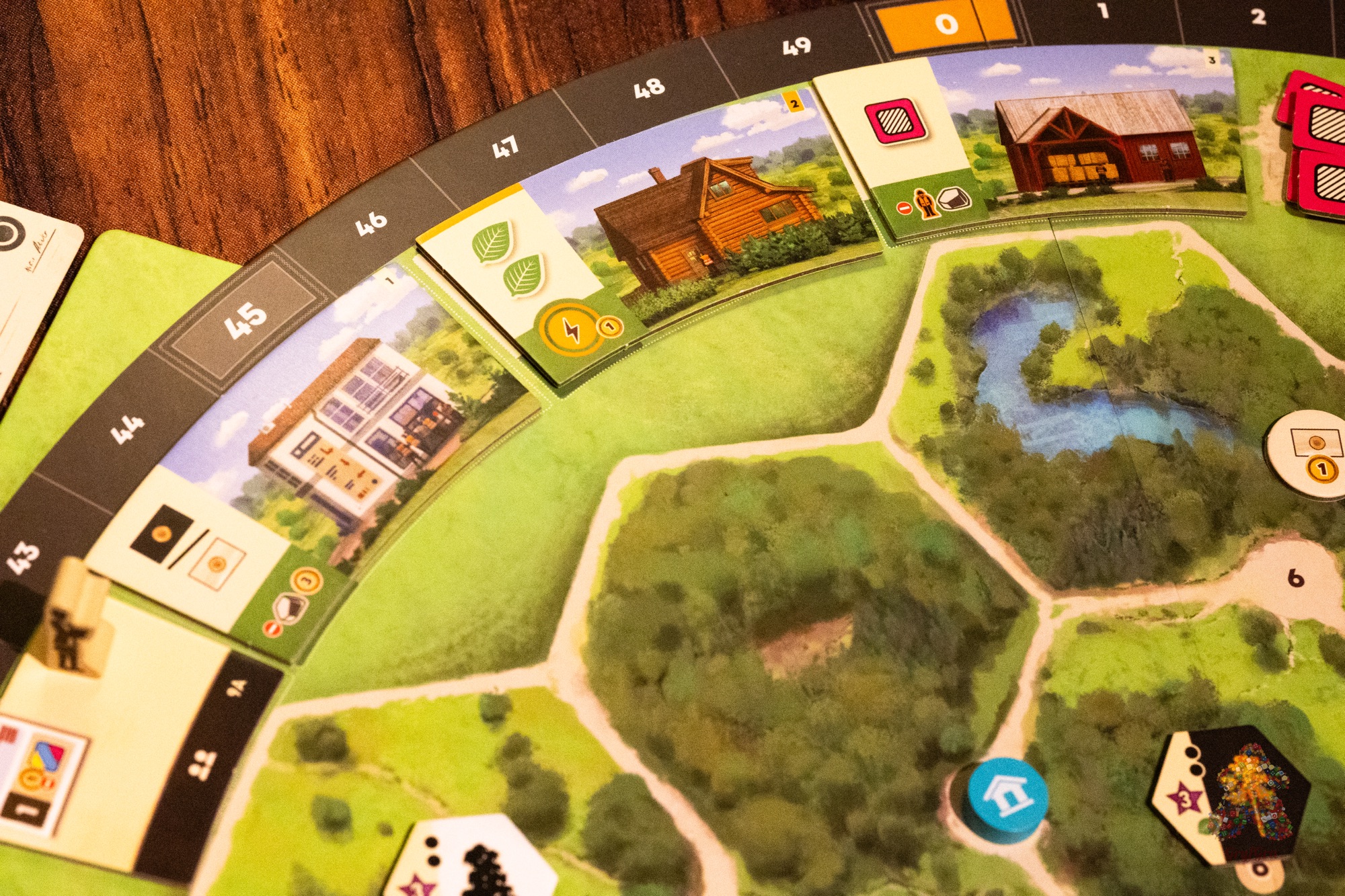
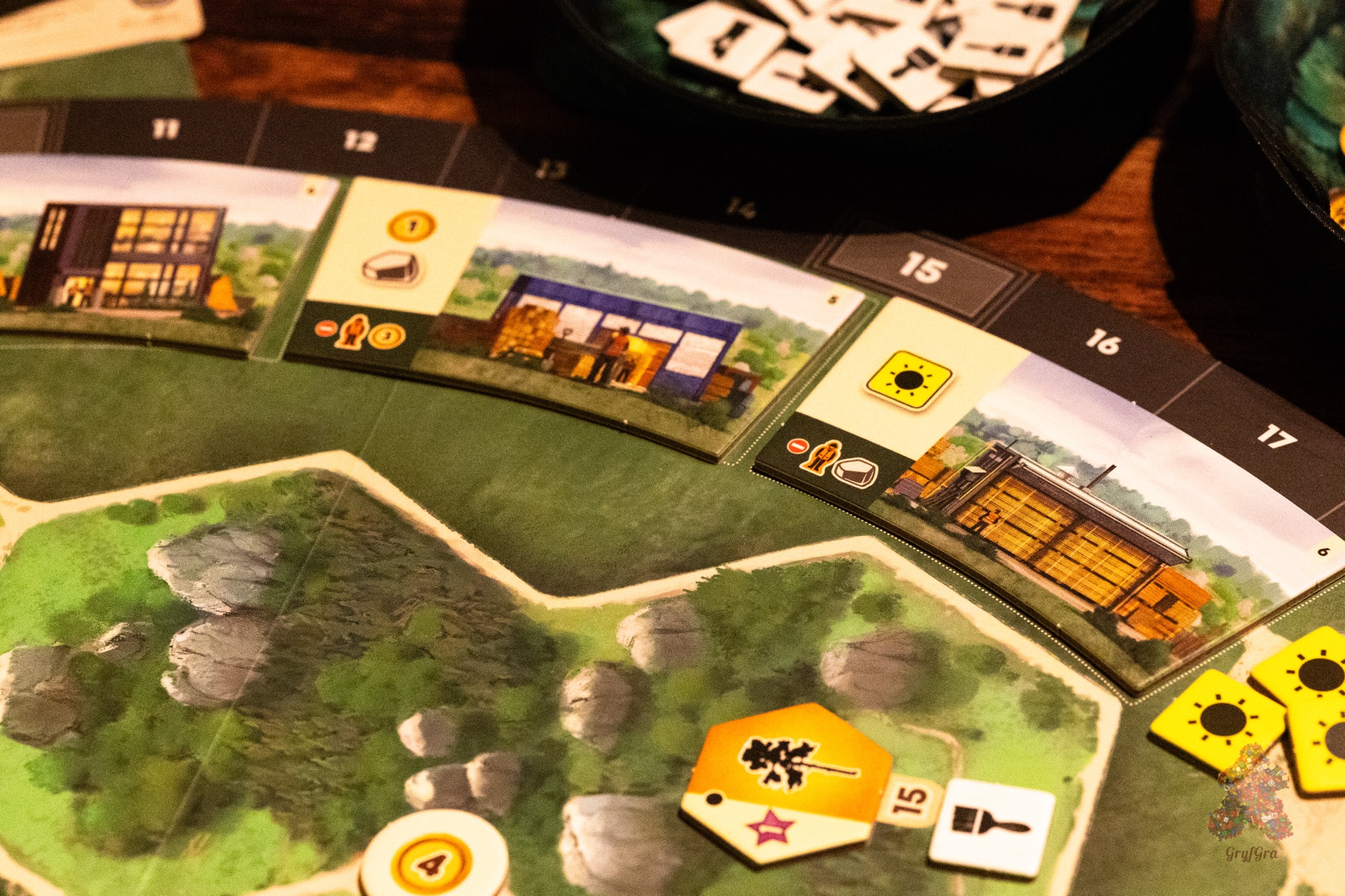
The manager uses three sawmill areas. Their buildings provide resources, new contracts and wood processing: leaching, seasoning and planing. We keep timber in a warehouse that initially holds just two tokens, placing processing tokens underneath them. Once we have the materials required by a contract, we spend an action, return the appropriate timber and claim the rewards. Double contracts can be completed in full, or we can fulfil just their upper section.
Many activities award stars, which move us around a circular reward track. Completing laps allows us, among other things, to develop technologies and increase our available actions. Task cards provide further options: we can keep them for endgame points or discard one per turn for its immediate effect. We can also expand the warehouse and upgrade sawmill buildings, whose stronger effects then become available to everyone.
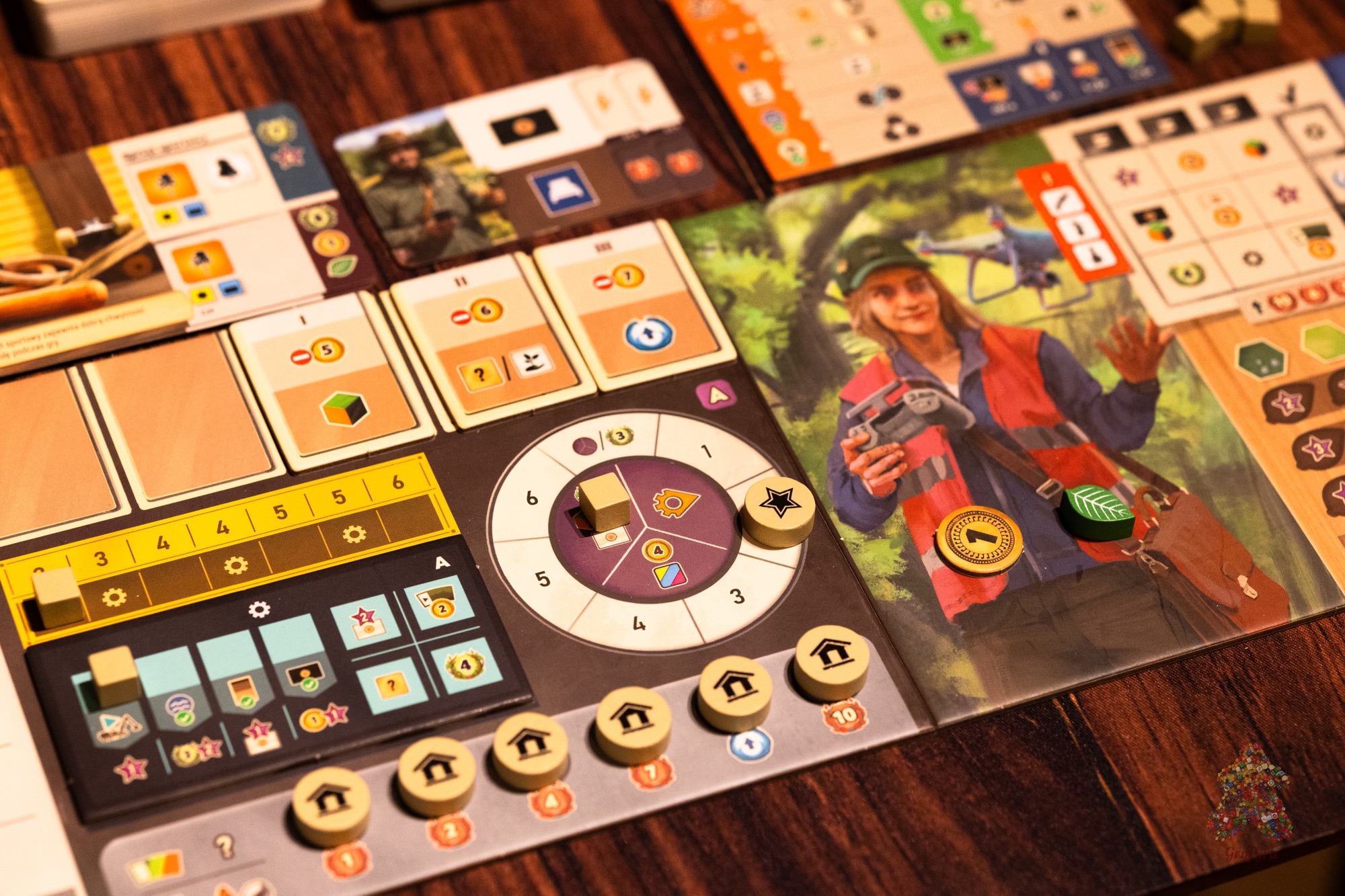
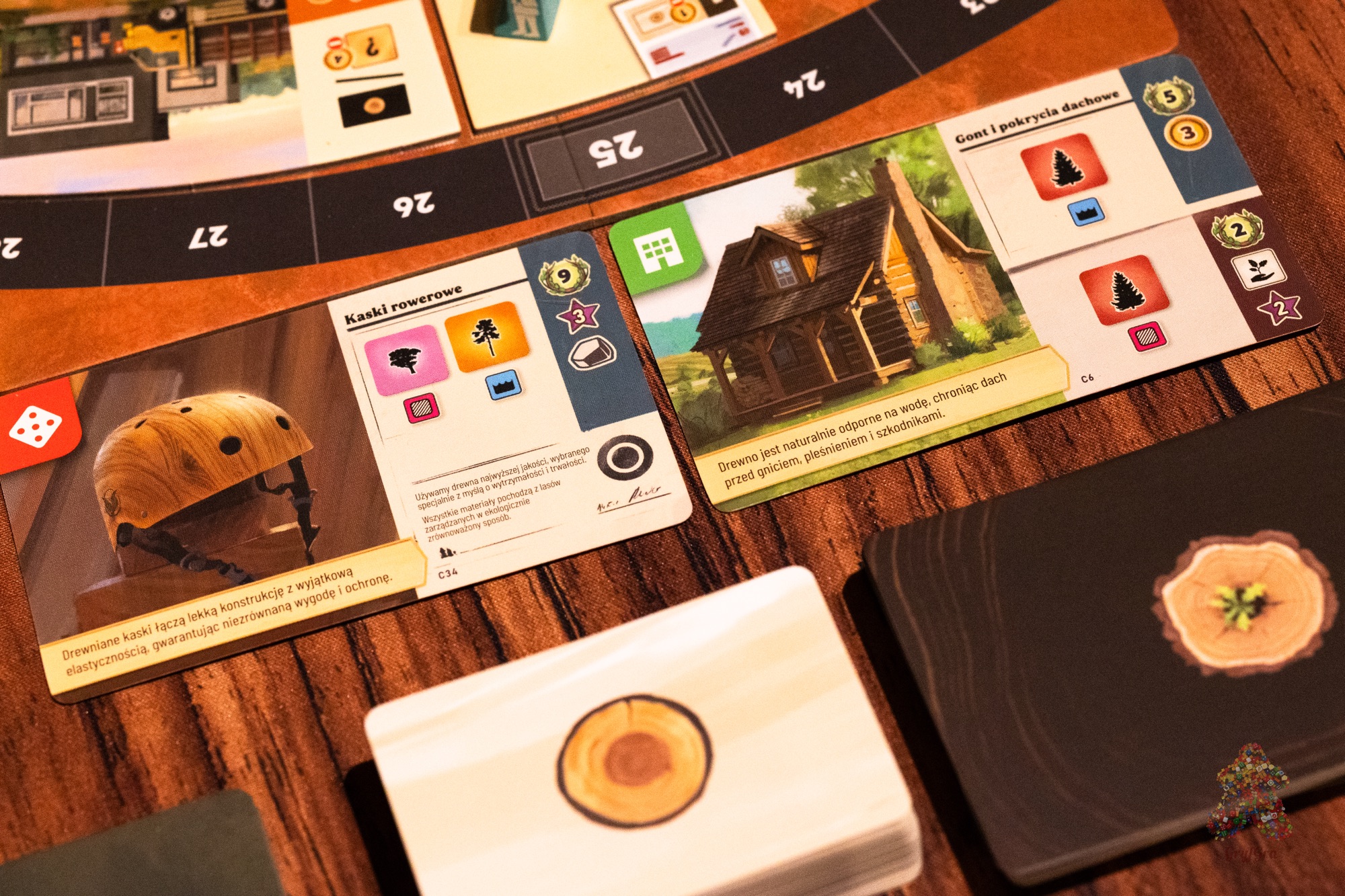
After the final round, we add points for buildings, water infrastructure, completed tasks and our standing in the competition to collect forester tokens, among other sources. Leftover resources and timber also contribute. The player with the most points wins.
Review
“Forestry” is a strategy game in which numerous small connections create considerable freedom to plan. Choosing a contract and gathering its timber is only part of the job. We also need time for movement, processing, obtaining resources and completing the order itself. Meanwhile, almost every plan has an opportunity for an extra reward somewhere along the way. Finding ways for a single activity to help with several things was what we enjoyed most.
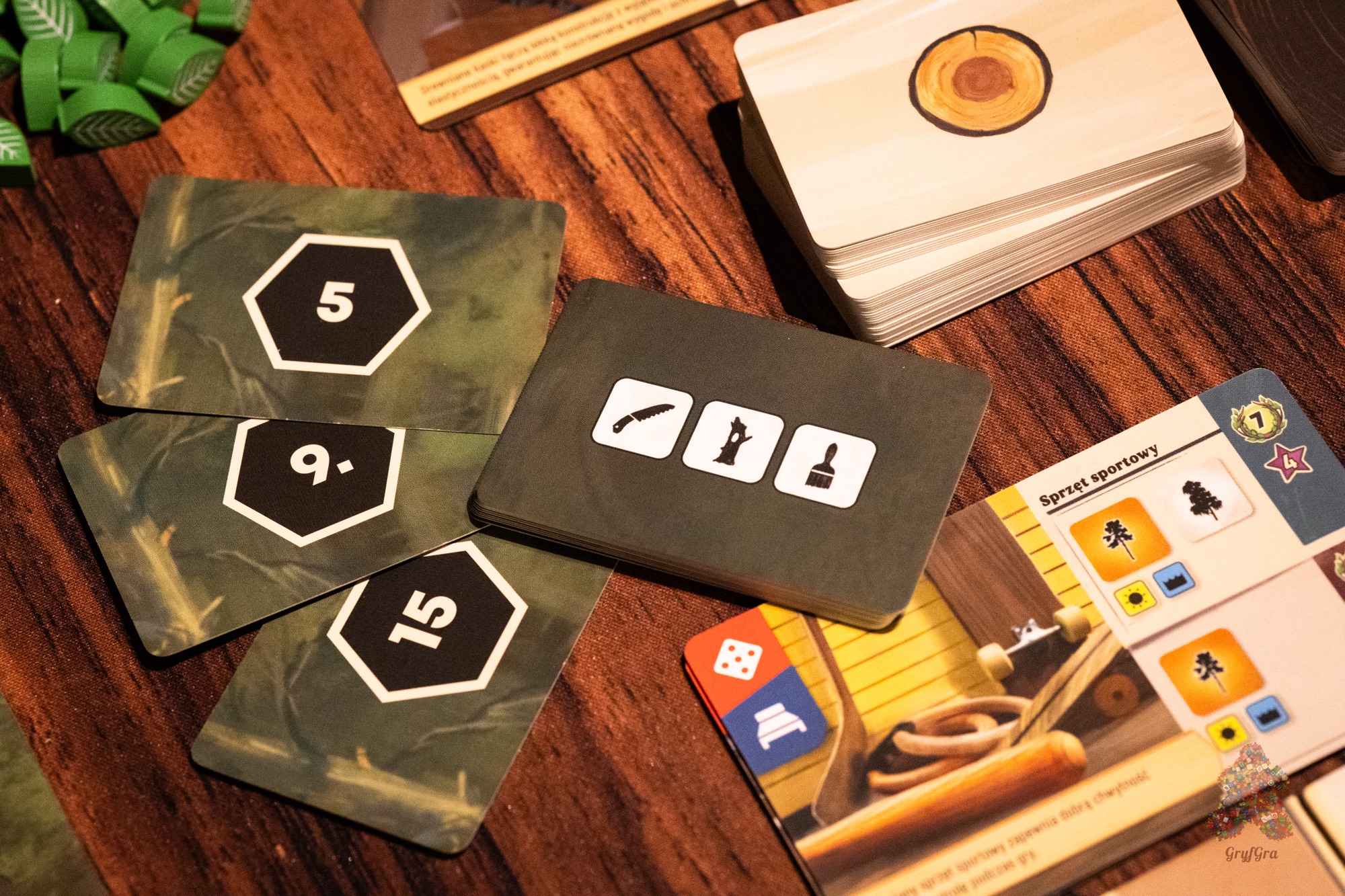
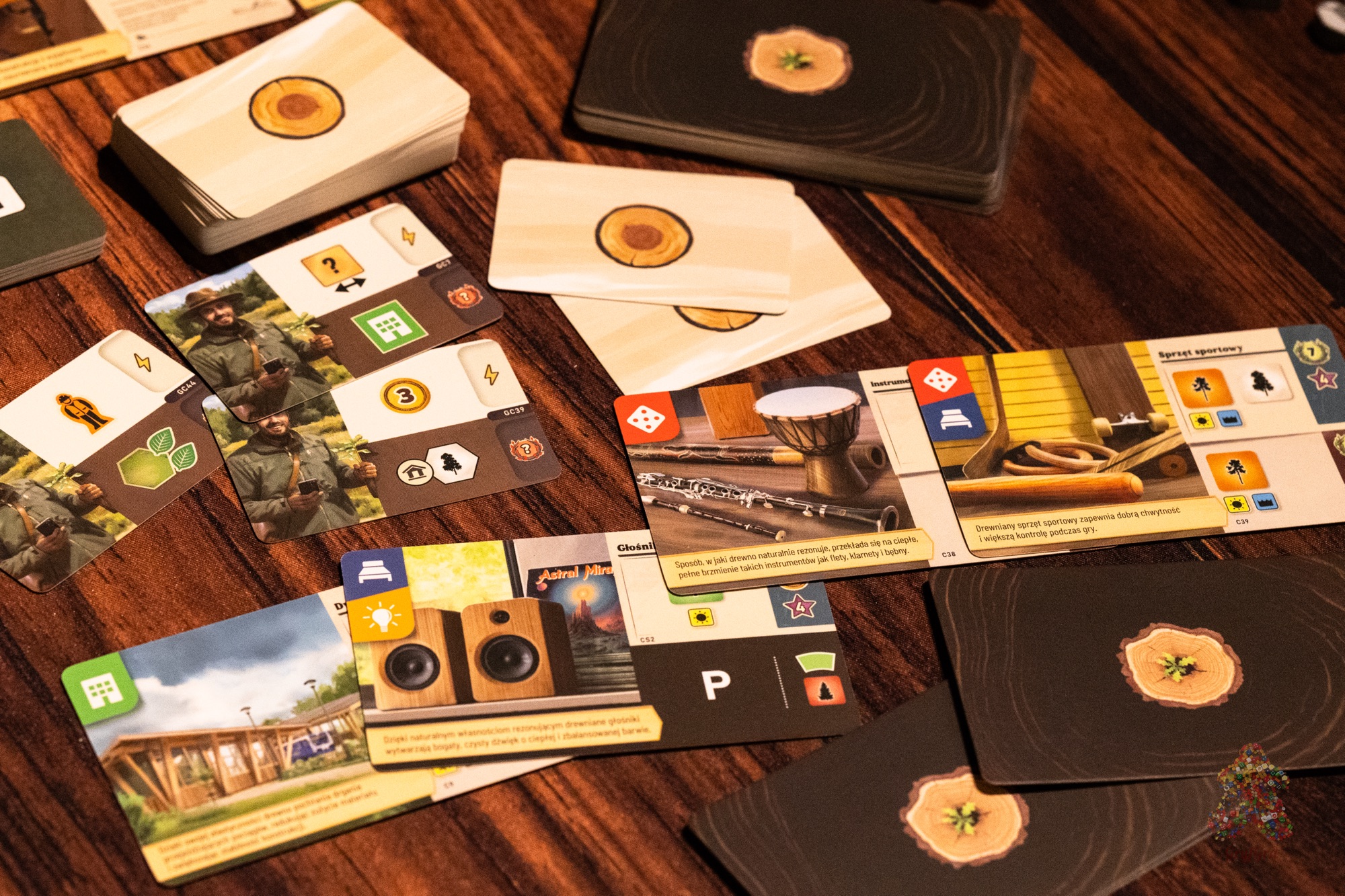
We played several games with two players. We skipped the introductory variant, trying the standard game before moving on to advanced play with character abilities and side B of the technology tiles. Our first session, including unboxing and setup, took a good three hours. The rulebook breaks down the shared setup into fourteen steps and each player’s preparation into eighteen. Identifying the components, finding their places and understanding their purposes takes time. Once everything is familiar, the process becomes considerably quicker, but the first session deserves an unhurried evening.
Fortunately, the game itself made sense after just a few rounds. The tiles listing available actions are particularly helpful: they remind us of our options without sending us back through the entire rulebook. During our first game, we checked details such as which contracts could be taken outside a normal sawmill action, what happened to spent processing tokens and how to resolve both sections of a contract. Those questions largely disappeared in later sessions. Choosing the right action became more demanding than understanding how to perform it.
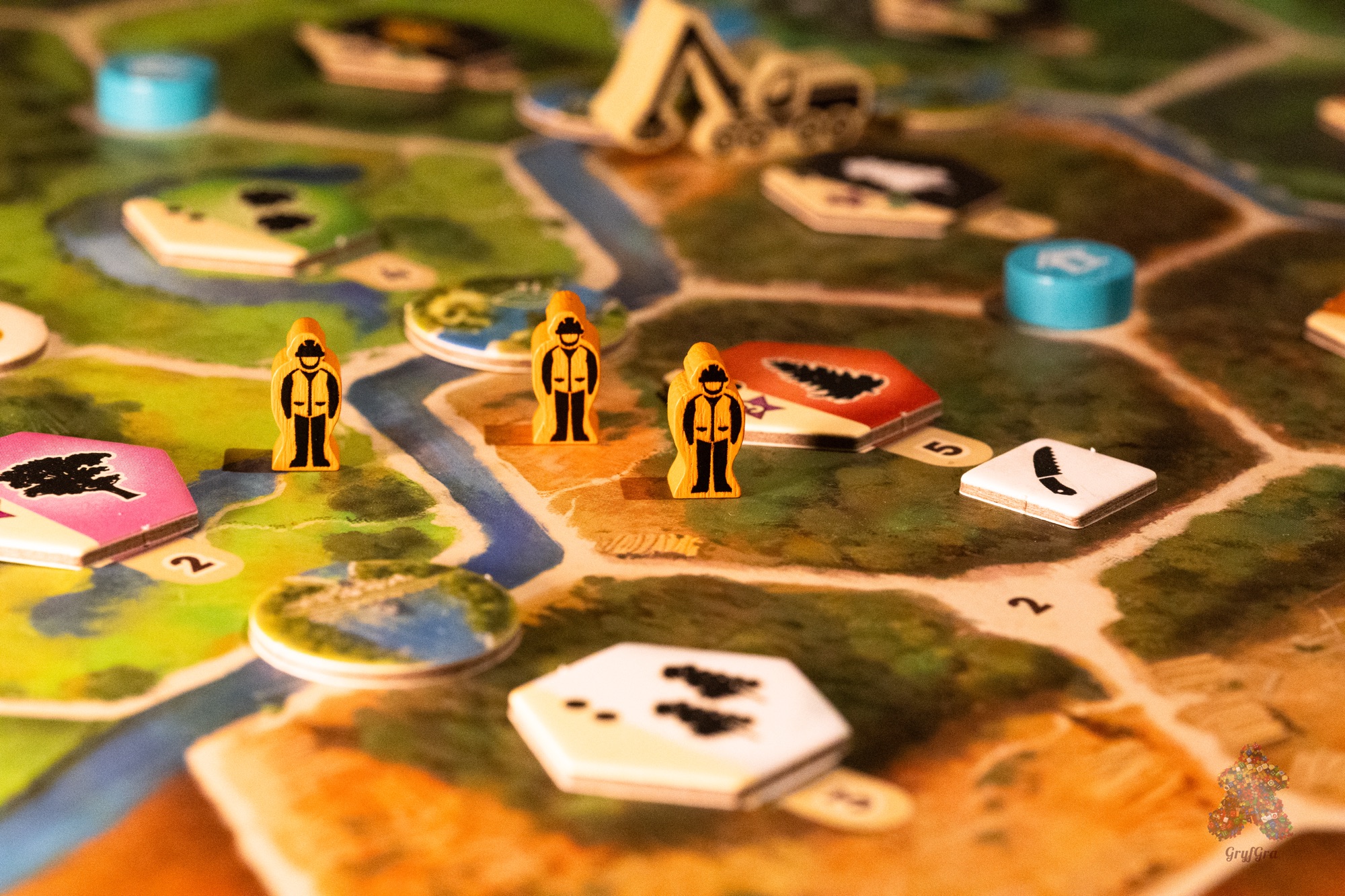
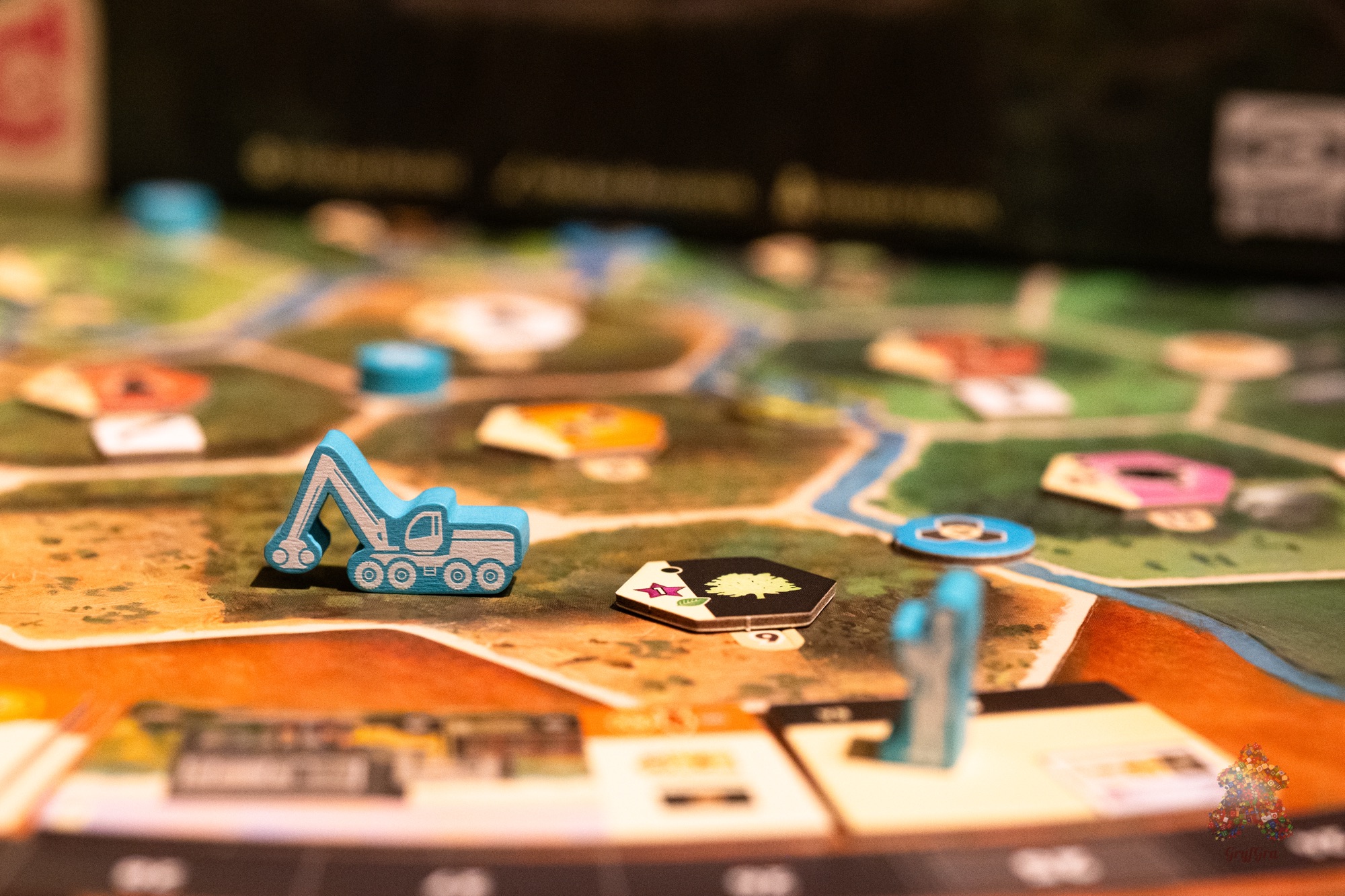
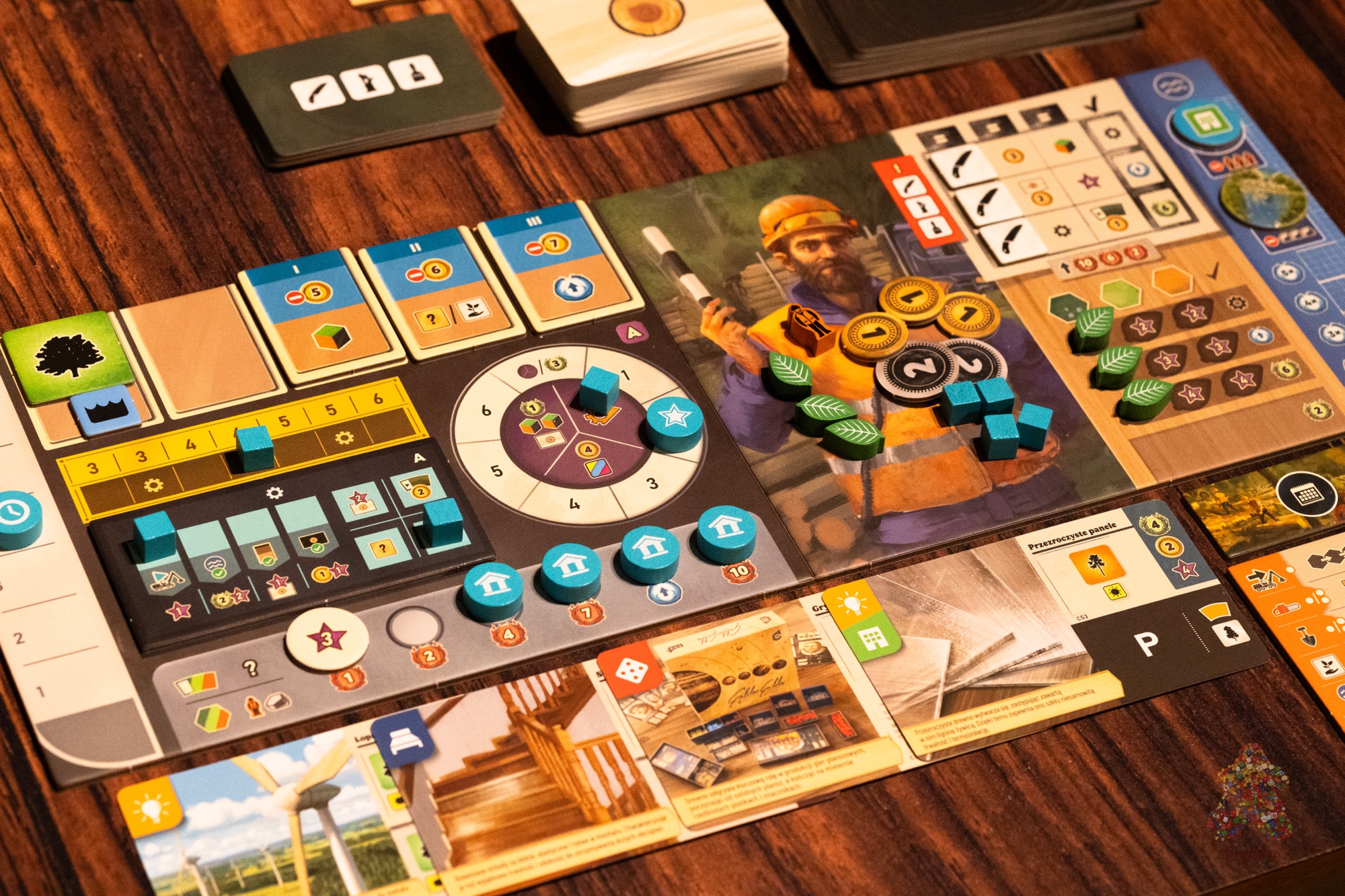
The shared action pool for the harvester and manager works very well. We can adjust their workload to the current situation instead of following a fixed rhythm. That freedom has a clear limit, though: three actions disappear quickly. Collecting stars and developing our capabilities therefore became an important part of our plans. Extra actions are not easy to unlock, especially when the activities needed to get there must fit into the modest starting allowance.
That made technologies valuable. Side A provides additional benefits for particular activities, while side B also offers ways to improve the actions themselves. In practice, development helps the steps needed for our main objective produce something extra. A star, coin, task card or piece of timber can make the next move easier. Bonuses from the tables on our personal boards serve a similar purpose. Sometimes a resource arrives as part of another activity, saving a separate action at the sawmill.
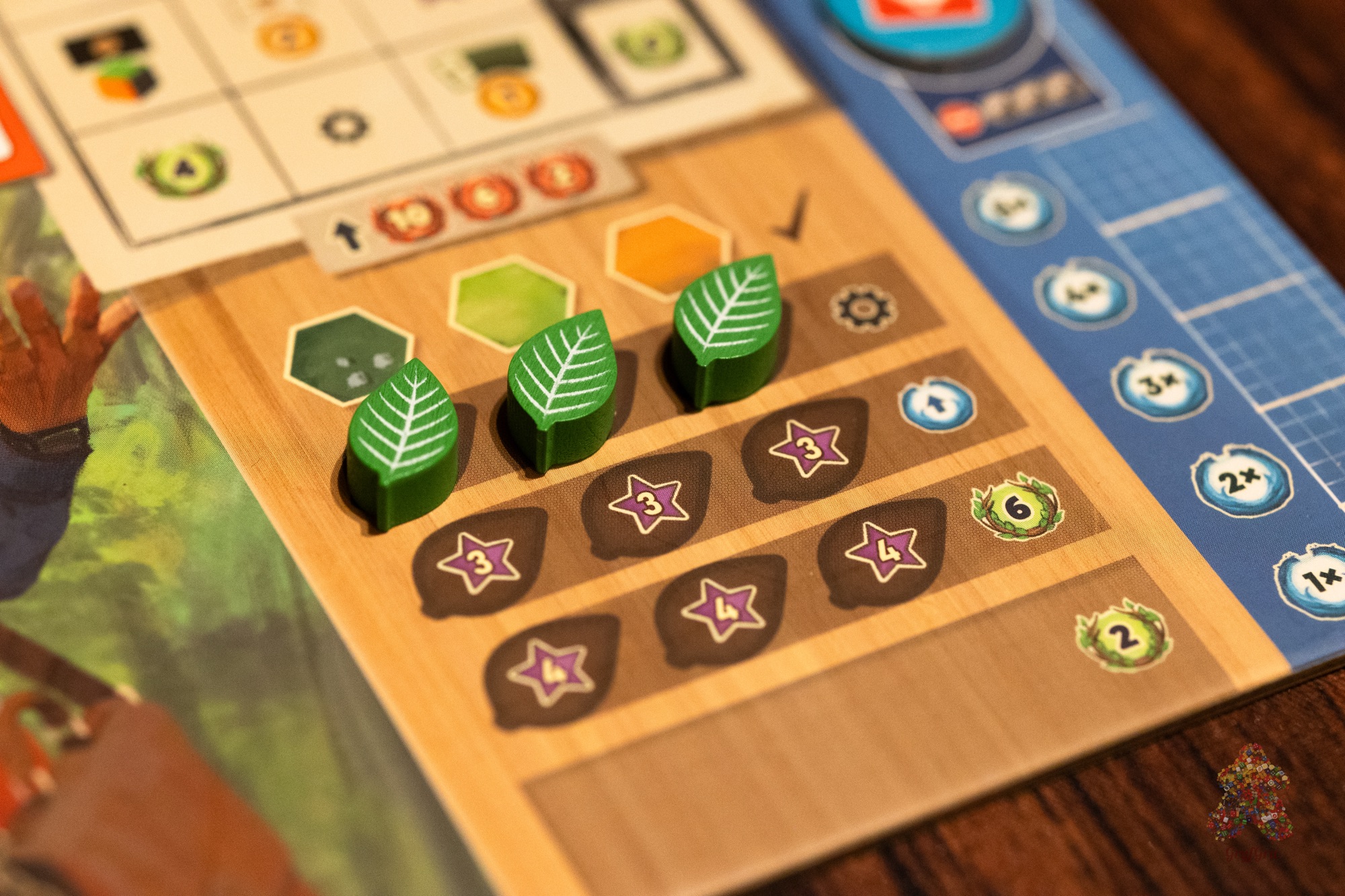
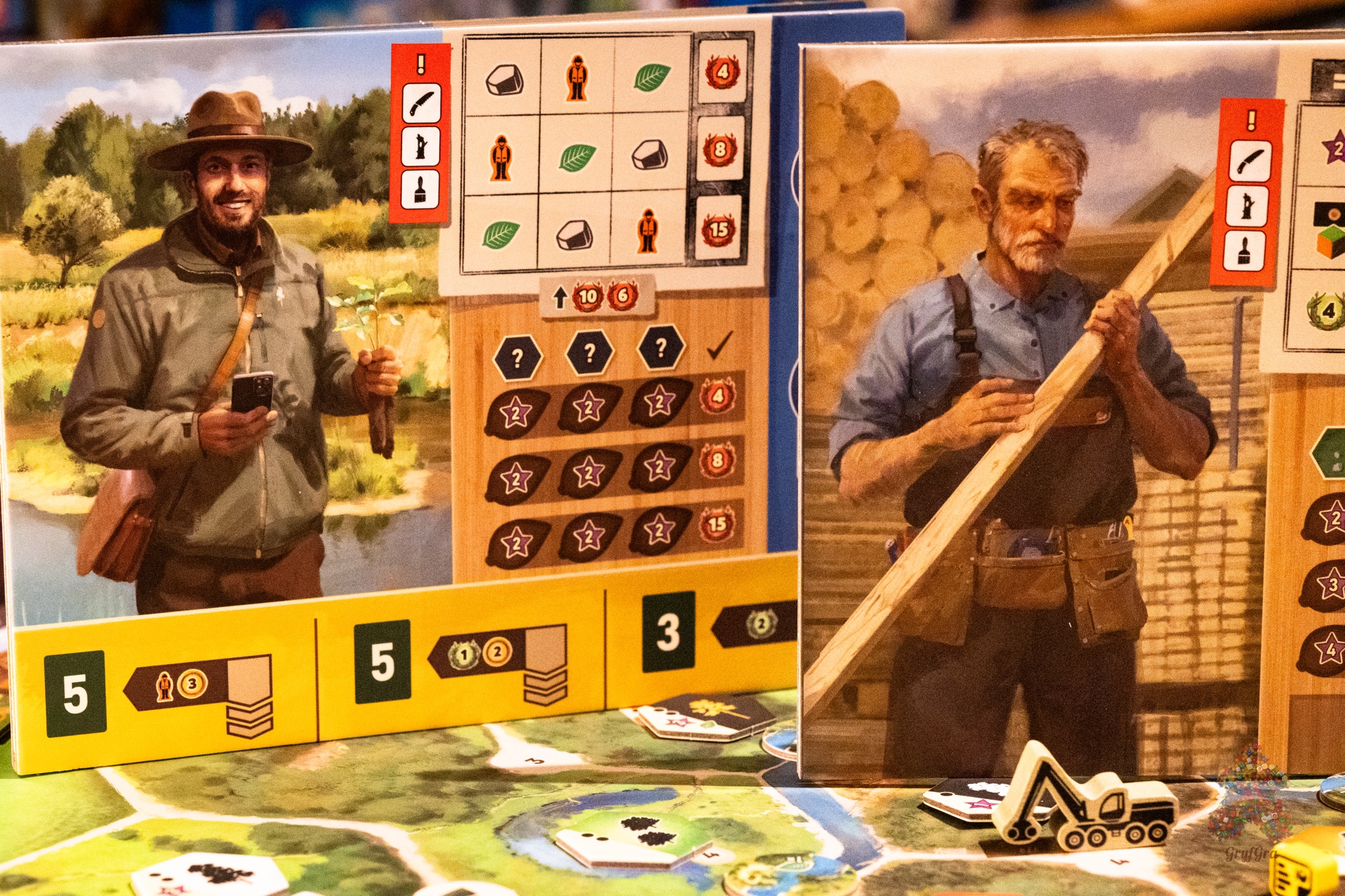
Temporary workers, construction materials and seedlings were the resources most likely to hold up our plans. Obtaining them takes time we would happily spend elsewhere. Coins, meanwhile, went mainly towards extra actions and warehouse expansion. After our first game, we started paying more attention to buying action points. Four coins can determine whether a carefully prepared move comes together this turn.
We usually chose contracts to minimise travel for both the harvester and manager. If we already had timber in storage, we looked for an order that could use it. Fulfilling a contract thus became the result of planning the whole process, from selecting a logging location to processing the wood. Handing over the finished materials and collecting the rewards was particularly satisfying. Each stage also makes sense within the game’s theme.
The warehouse’s initial two spaces did not feel restrictive to us. They were sufficient for early orders, with expansion becoming necessary for more demanding contracts. Double contracts requiring four timber tokens were the most difficult to complete. We either saved them for later or fulfilled only their upper section. Warehouse expansion also awards a bonus, so we sometimes bought another space partly to obtain a resource we needed immediately.
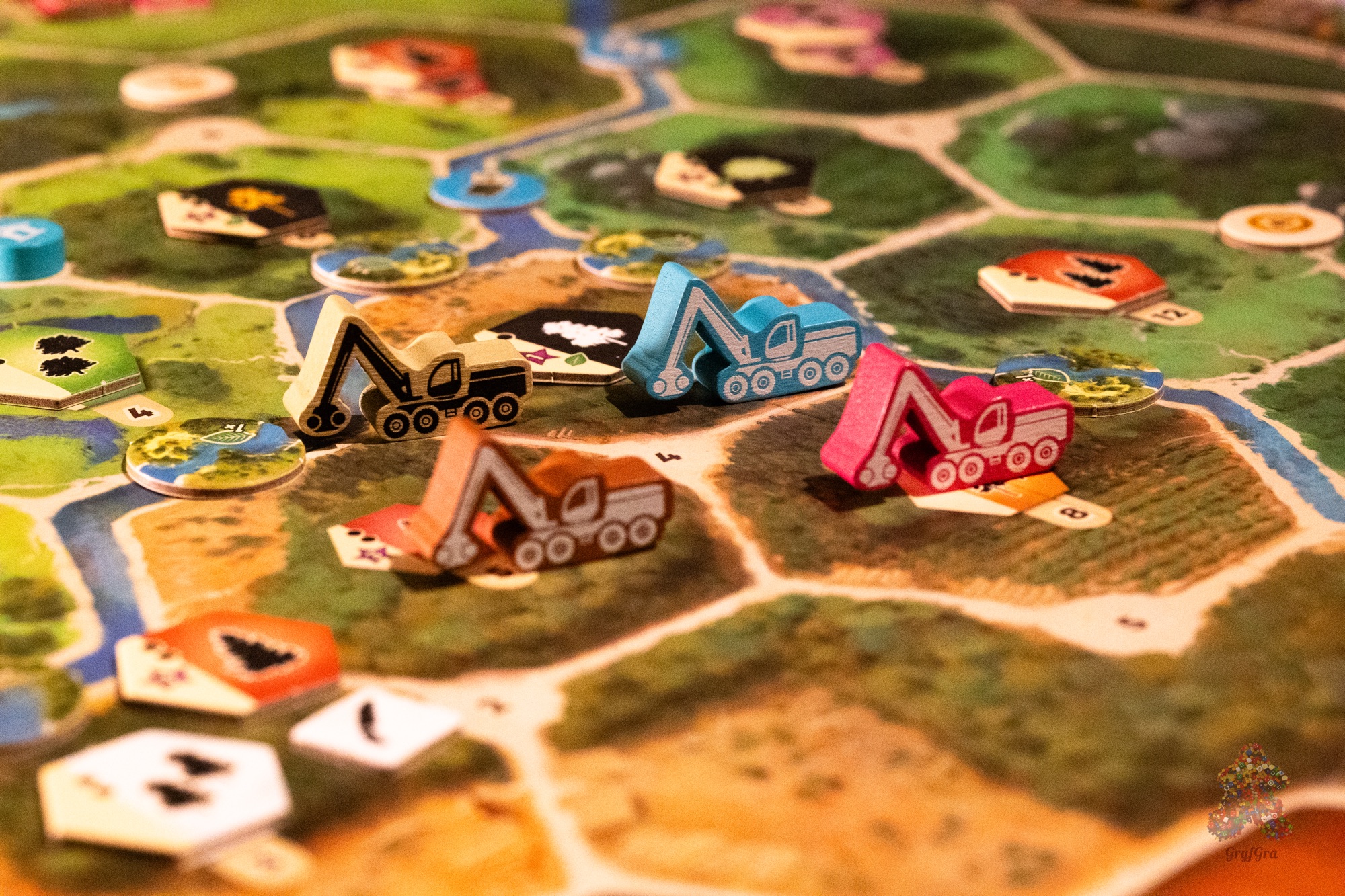
Interaction in our games was mostly indirect and fairly gentle. We noticed it most on the headquarters tiles, where the other manager’s presence could deny us an arrival bonus. There is also competition for clearings, river tokens and other available components, but the two-player board gave us plenty of room, and timber was rarely in short supply. We did not test larger player counts, so our experience is specifically of this relatively open two-player game.
We saw randomness primarily as a source of variety. The available contracts and other changing elements did not leave us feeling that players were being treated unevenly. We rarely paid to refresh the contracts. Task cards usually stayed in our hands for points, although their alternative use occasionally helped. If fulfilling a condition would require too much effort, or we needed a resource immediately, sacrificing the card for its effect became more appealing.
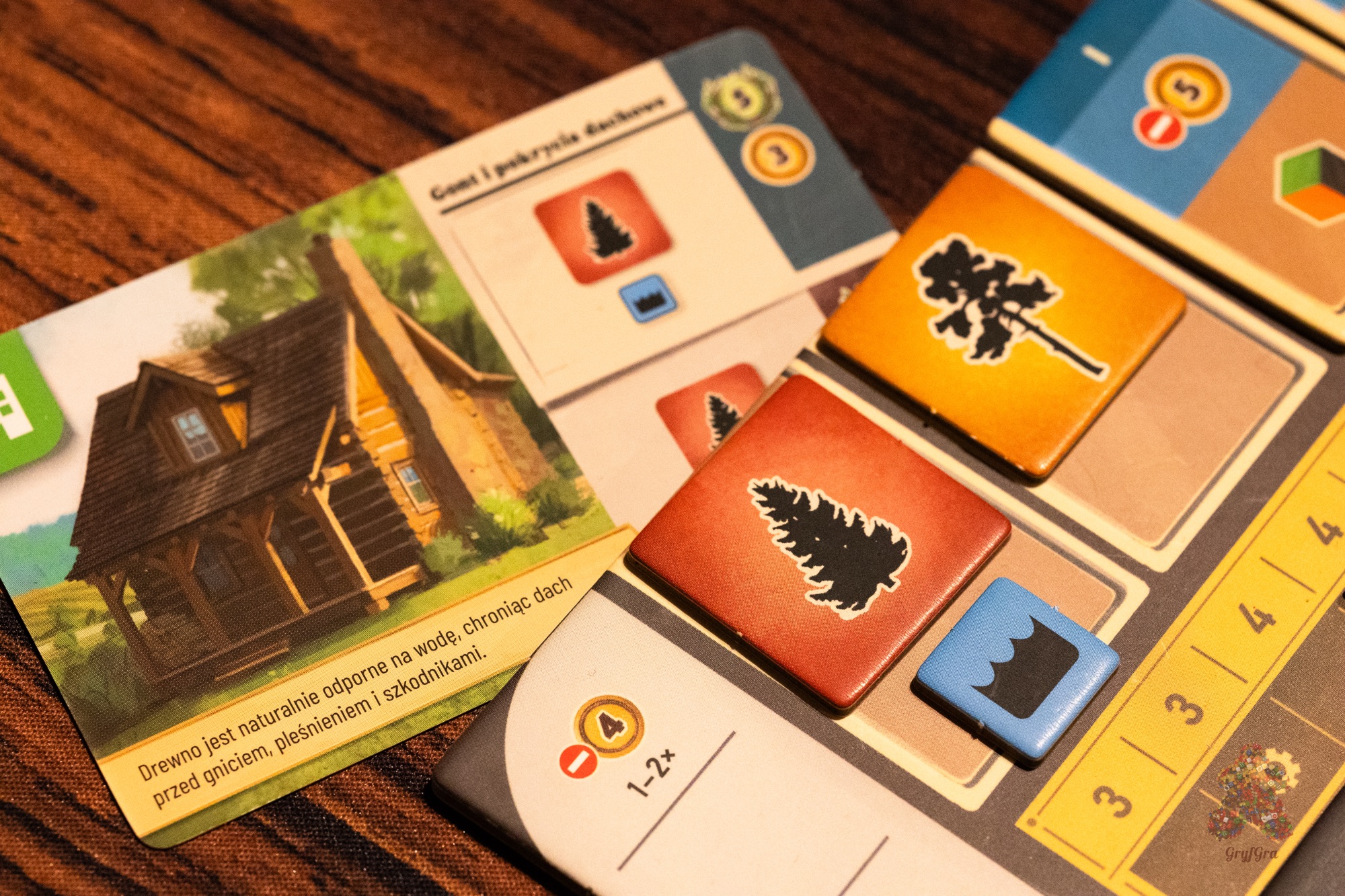
The theme was a particular success for us. The rulebook already devotes considerable space to facts about trees and forest management, and those ideas remain visible during play. Harvesting the same location again requires replanting it first. We collect particular types of timber, process them and use them for specific products. Water infrastructure stayed somewhat on the sidelines in our games, while our attention focused on replanting, forest care, woodland buildings and sawmills. Even so, the overall design never felt as though the theme had been added at the end.
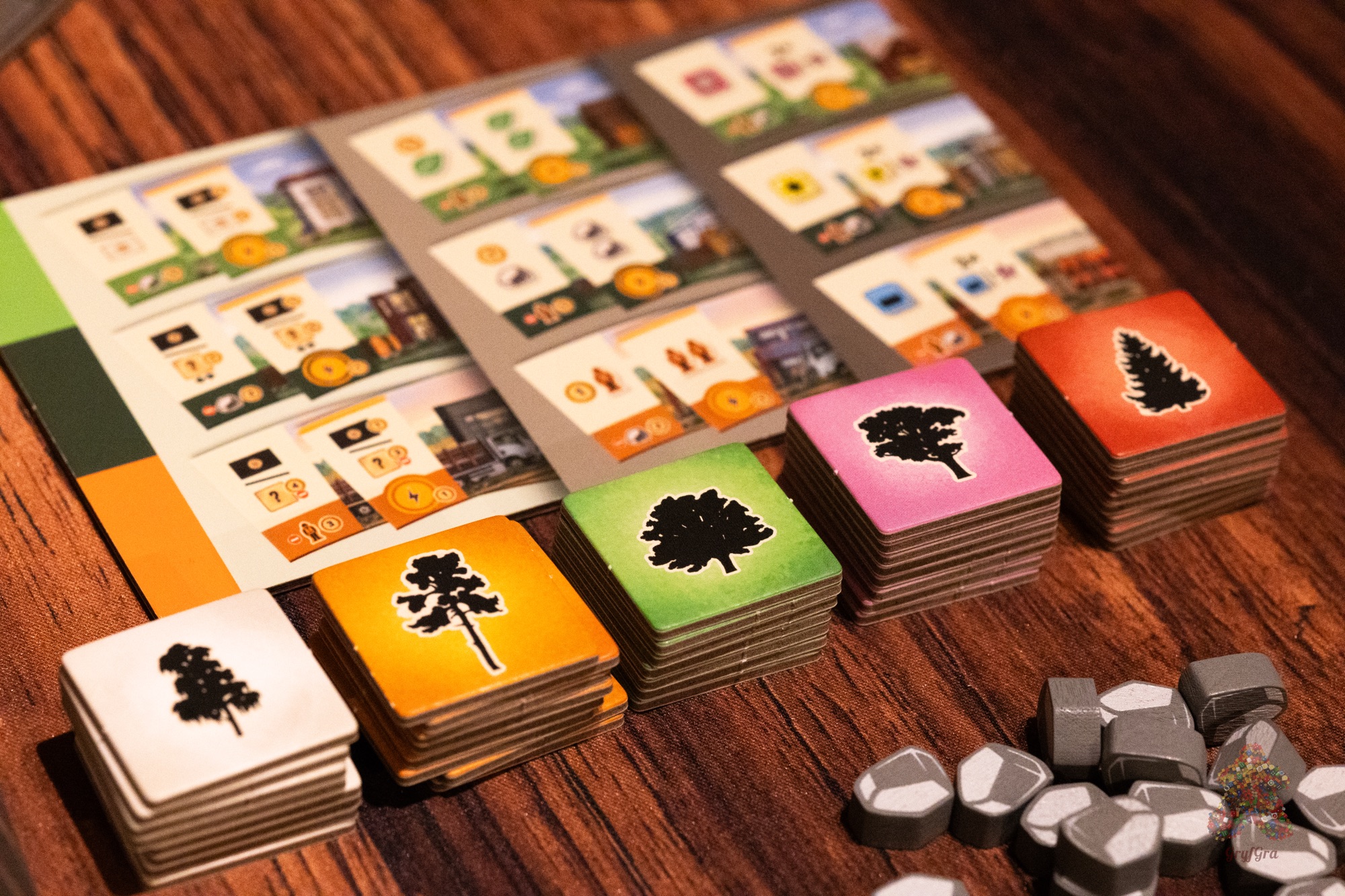
Production quality also impressed us. The illustrations and components met our expectations, and placing processing tokens underneath the timber was convenient. Our least favourite visual detail was the background colours on the timber tokens. They did not all appeal to us aesthetically, though they help distinguish the different species during play. It is a small reservation about a presentation that otherwise supports the game well.
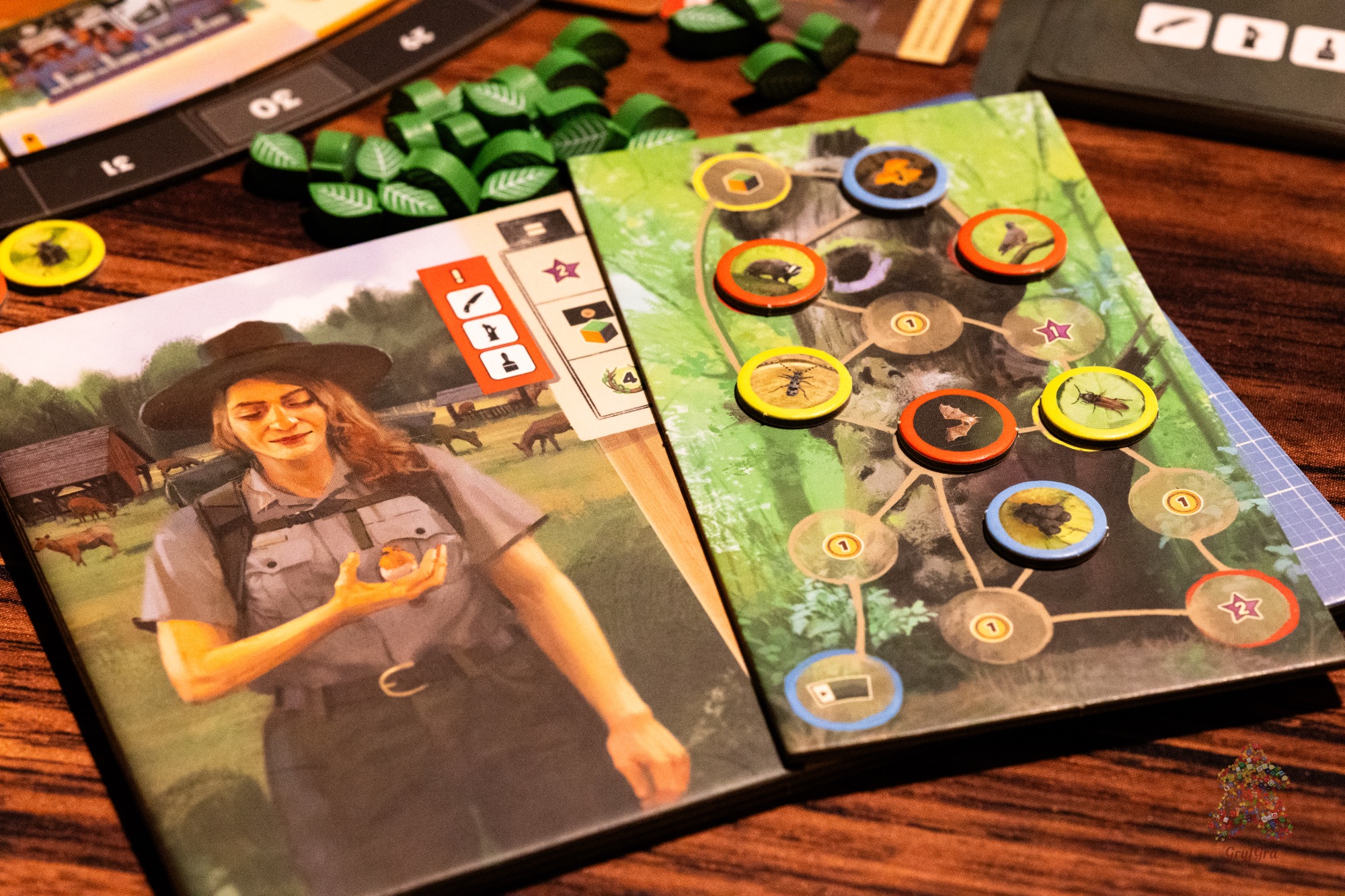
Variation between our games came mainly from the contracts we chose to pursue. Character abilities also influence decisions by offering extra benefits for activities that fit their profiles. We felt they nudged our strategies while leaving plenty of freedom. Choosing a character did not seem to prescribe one correct way to play the entire game.
Summary
“Forestry” won us over with its freedom to plan, different routes to points and opportunities to obtain useful things while pursuing other goals. Managing the shared action pool creates meaningful choices, and preparing timber for an order is satisfying. The theme also remains present in both the rules and the way the game unfolds.
This is primarily a game for players with some experience of strategy games. The first setup takes time, and the number of available actions and scoring opportunities may overwhelm less experienced participants. For those who enjoy planning several steps ahead and finding extra value in a limited action allowance, however, “Forestry” has plenty to offer. At two players, we also appreciated the room to pursue our own strategies alongside fairly gentle interaction.
We would like to thank Galakta for providing the Polish edition of the game for review.
