The queen has left no descendants, and there is a long line of would-be successors. In “Knives Out” from Magic Box, we support two contenders, each shared with a neighbouring player. We have common interests, but either potential ally can just as easily strike a deal with someone else. In this small card game by Eloi Pujadas, the struggle for succession involves peeking at characters, swapping their positions and stabbing them — sometimes even our own candidates.
Gameplay
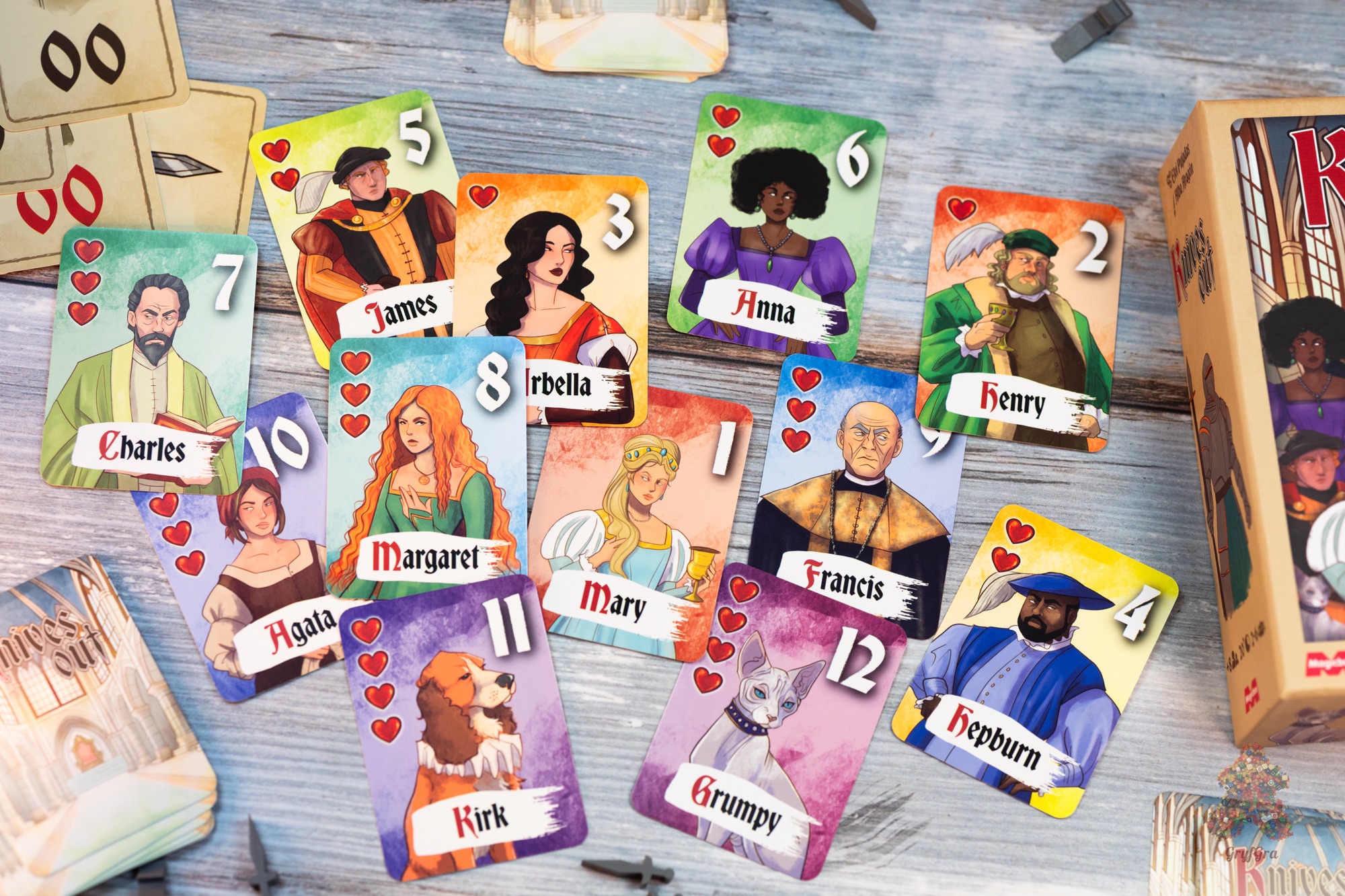
We place one face-down character card between each pair of players, with two additional cards in the centre of the table. Our candidates are the characters immediately to our left and right. According to the English rulebook, we may look at both before play begins. Each character has a number indicating their place in the line of succession and a number of hearts showing how much damage they can withstand.
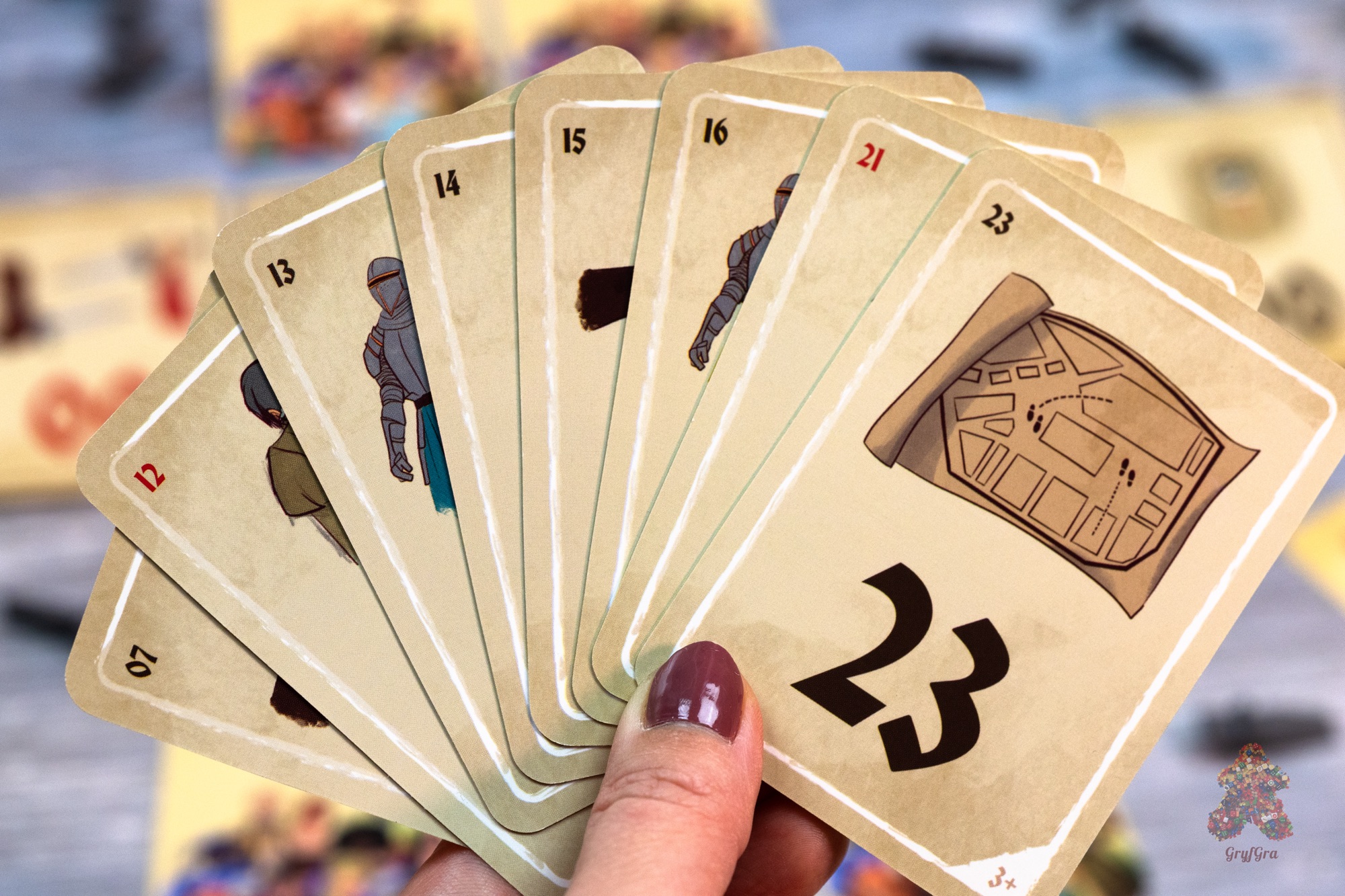
Each player receives eight plot cards. We also set up a row of starting action cards in the centre of the table, with one card per player. The game lasts seven rounds, so we will leave one card in our hand unused.
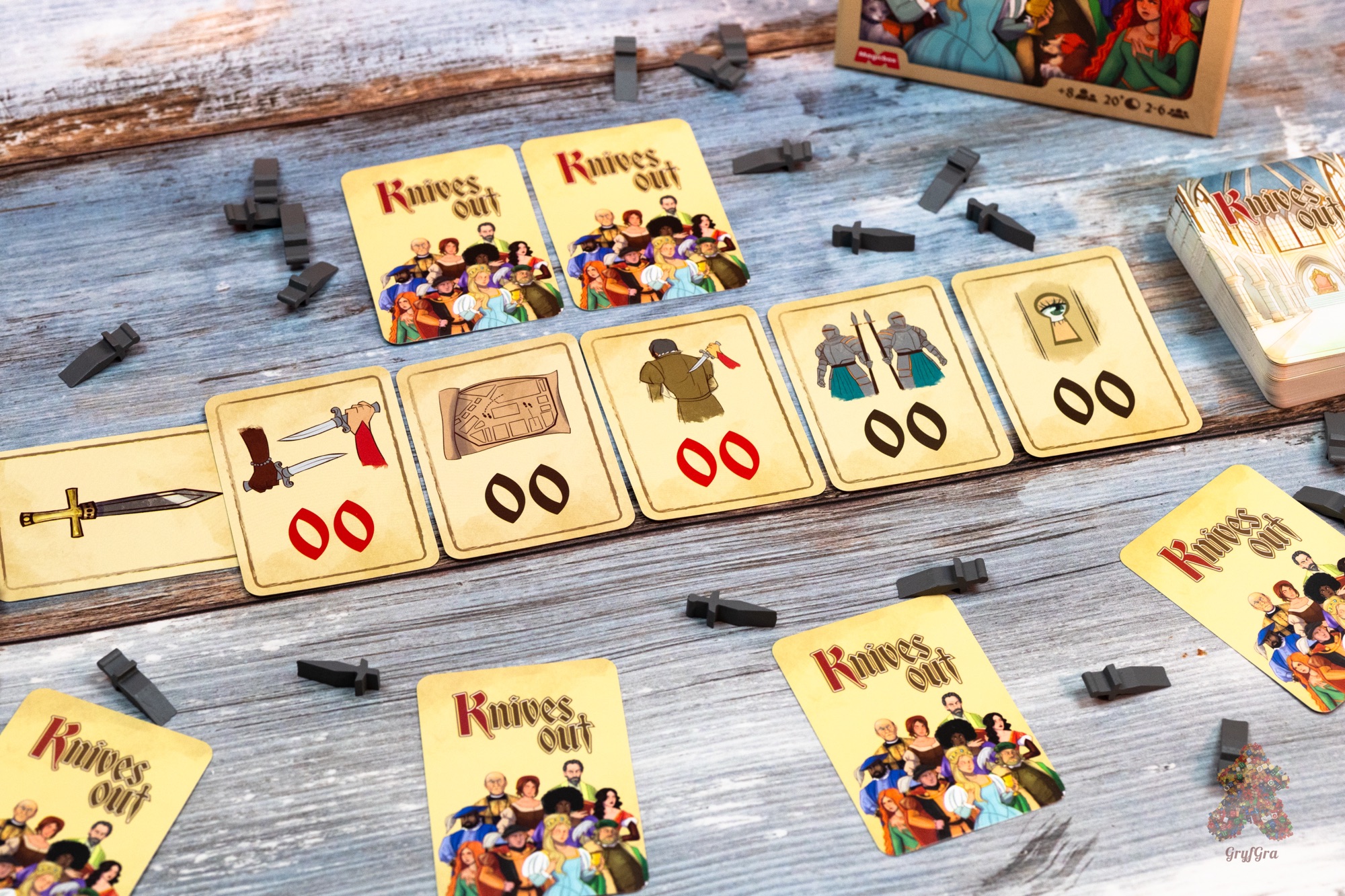
At the start of each round, we all choose a card simultaneously, then reveal our choices. The numbers determine turn order, with the lowest value going first. There is an important detail, though: we perform the action on the first available card in the row on the table. We partially cover it with the card we played, hiding its number. Once everyone has taken their turn, we reveal the played cards, which determine the actions available in the next round.
We can add daggers, move them between characters, peek at candidates, turn their cards face up or face down, and swap their positions. This last option also includes the characters in the centre of the table. Both the information available to us and the candidates we support can therefore change during play.
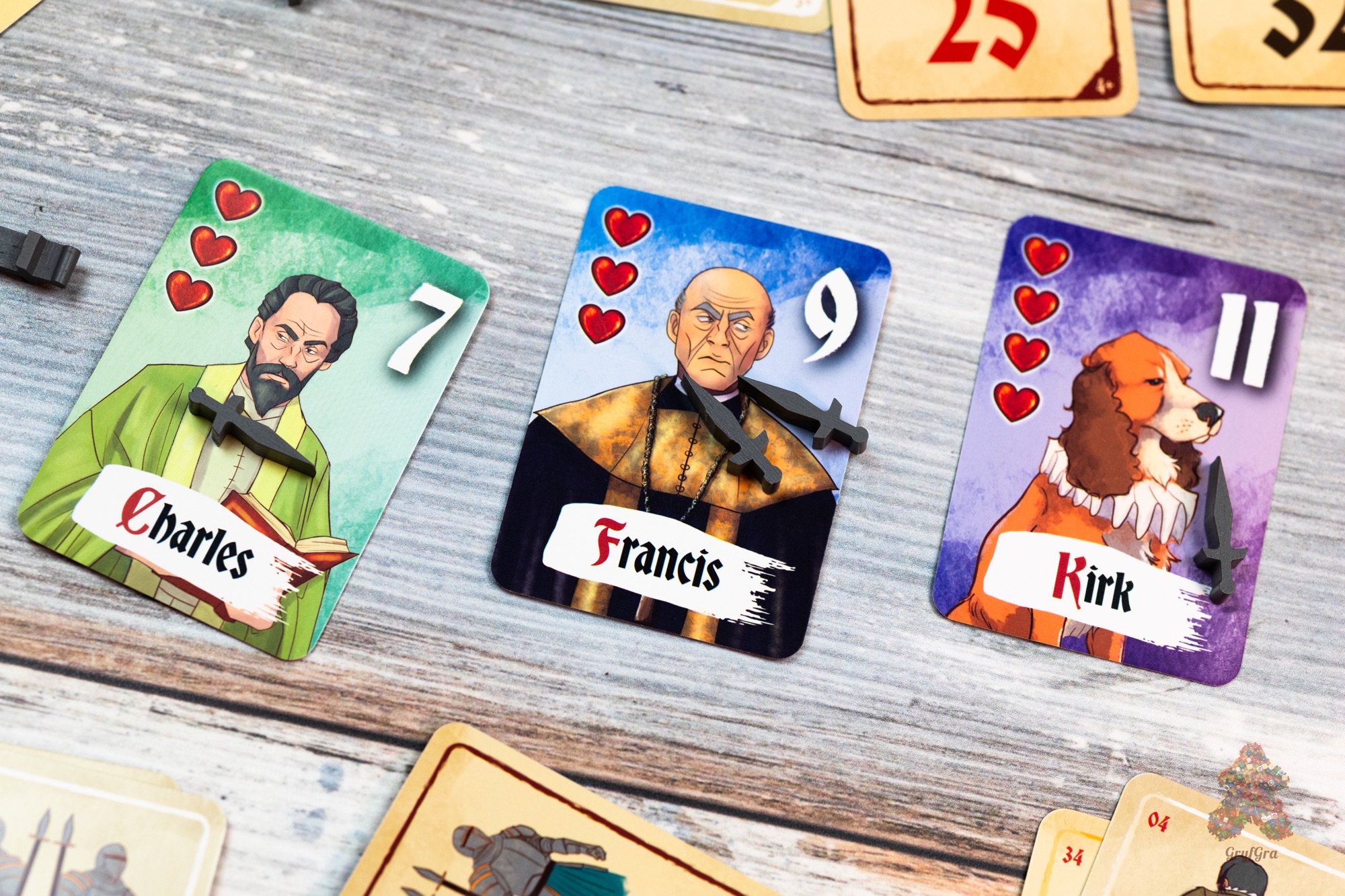
Characters remain in play until the very end, regardless of how many daggers they have accumulated. The succession is resolved only after the seventh round. First, each face-down character loses one dagger and is revealed. Candidates with at least as many daggers as hearts are then eliminated. The surviving character with the lowest number takes the throne, and the two players sitting beside that card both win. If the crown goes to a character in the centre of the table, none of the players wins.
Review
“Knives Out” reminds us of “Love Letter”: court intrigue, hidden characters and plenty of interaction packed into a small card game. What interested us most here, however, was the idea of sharing candidates. Everyone has two potential allies, but neither relationship guarantees that we will keep working together until the end.
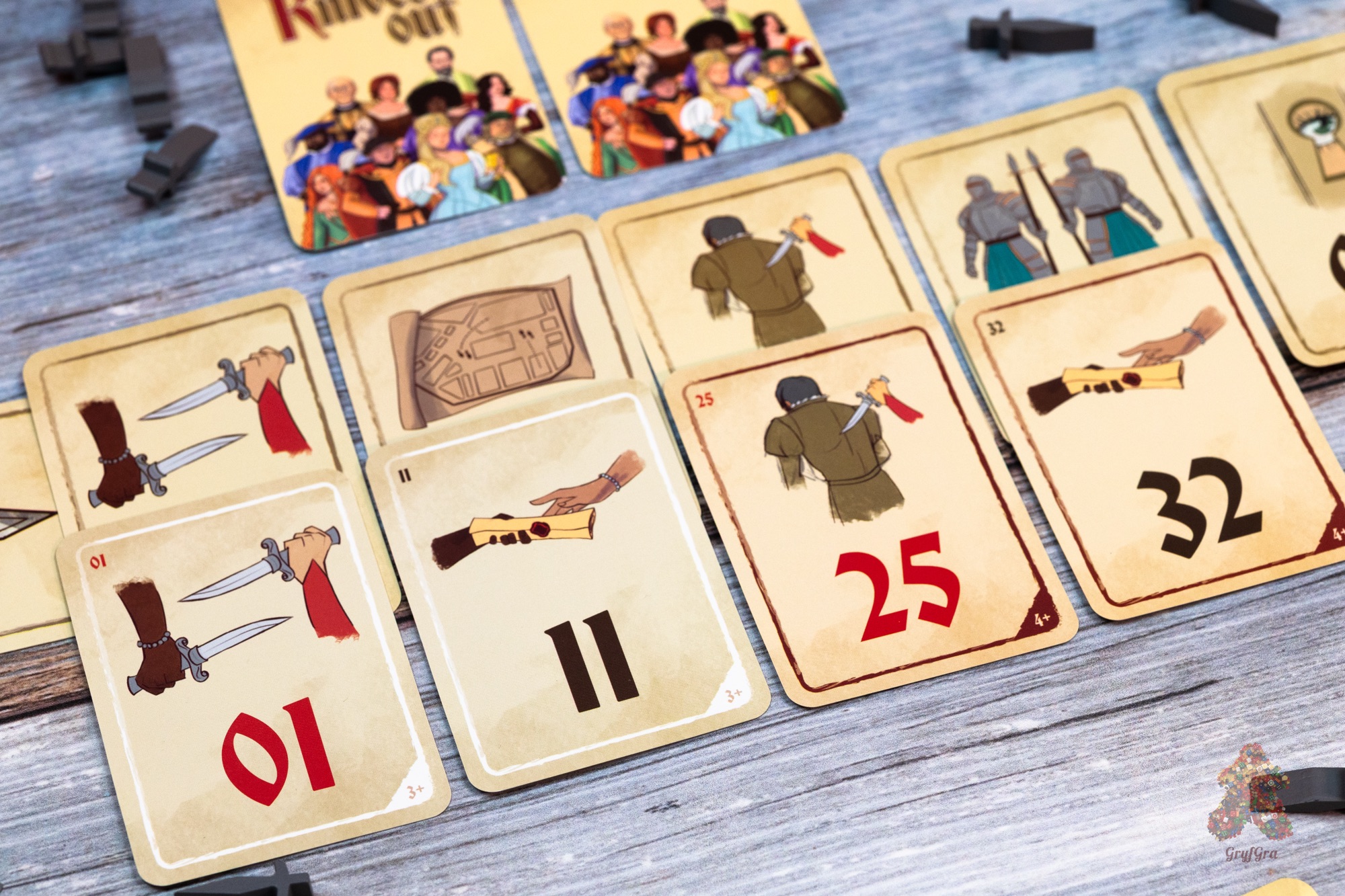
We might protect one character together with the neighbour on our left, but that player also shares a candidate with someone else. If they see a better chance of winning there, our agreement can quickly lose its value. This creates an interesting web of interests: helping another player may benefit us both, but that does not necessarily mean returning the favour will be worthwhile for them. These uncertain alliances are the game’s greatest strength for us.
The way we choose actions is another interesting element. Having a card with the symbol we want in our hand is not enough. We need to try to secure the right place in turn order to use the corresponding action on the table. When choosing a number, we therefore consider what the other players might be planning. At the same time, the card we play will affect the options available in the next round.
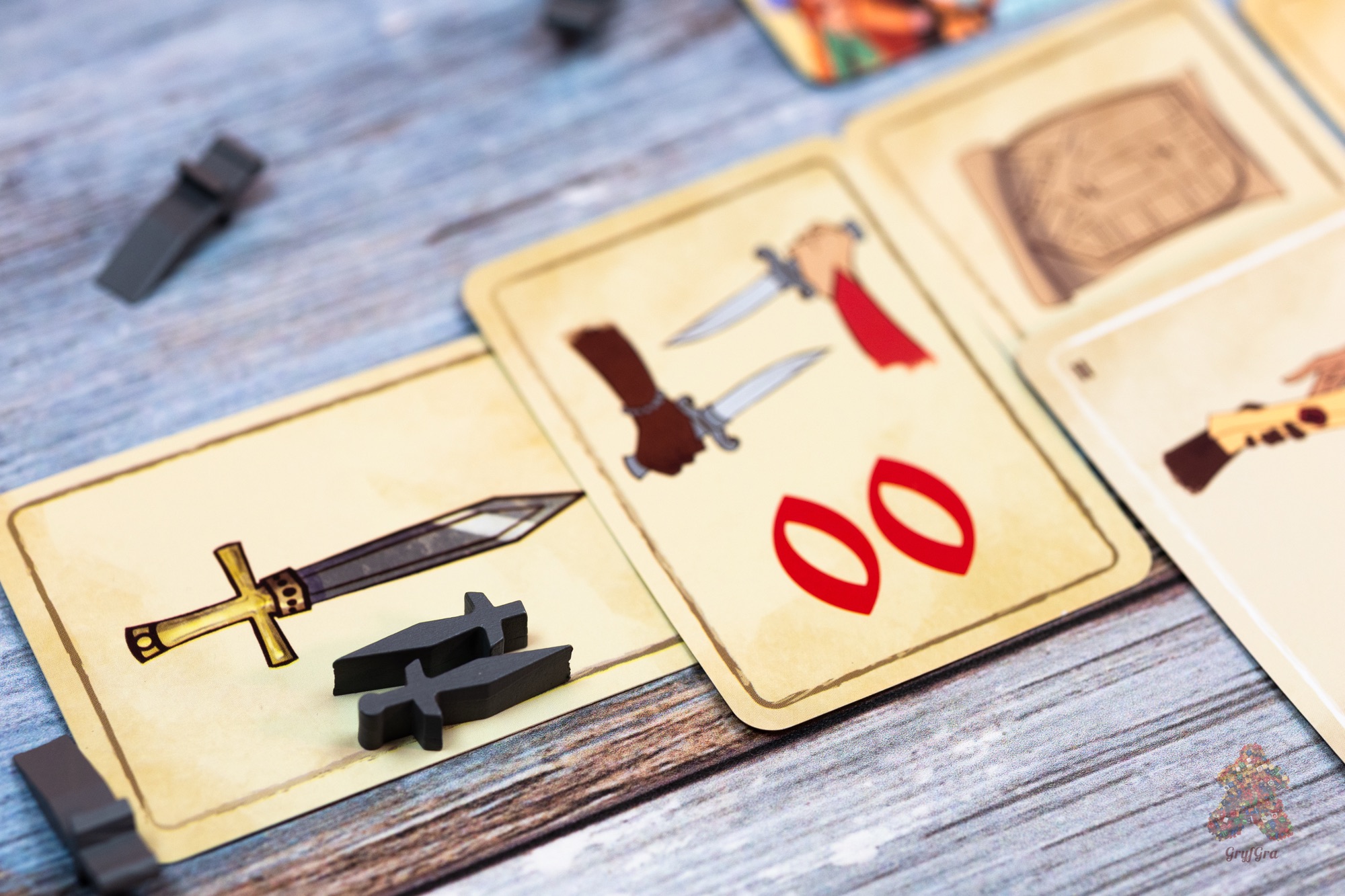
We do not have complete control. Everyone else is also trying to claim actions that suit their plans, and all choices are revealed simultaneously. There is room for anticipation, but we also need to adapt to the situation once the cards are revealed. It is an interesting mechanism, particularly when combined with the players’ shifting interests.
In our games, every type of action proved useful. Their value depended on what we wanted to achieve and how much we knew about the characters. Conspiracy, which allows two candidates to swap positions, caused the most upheaval. Since dagger tokens travel with the card, a swap transfers both a chance at the crown and the problems attached to it. It can also change the alliances, as we suddenly find ourselves supporting a different character.
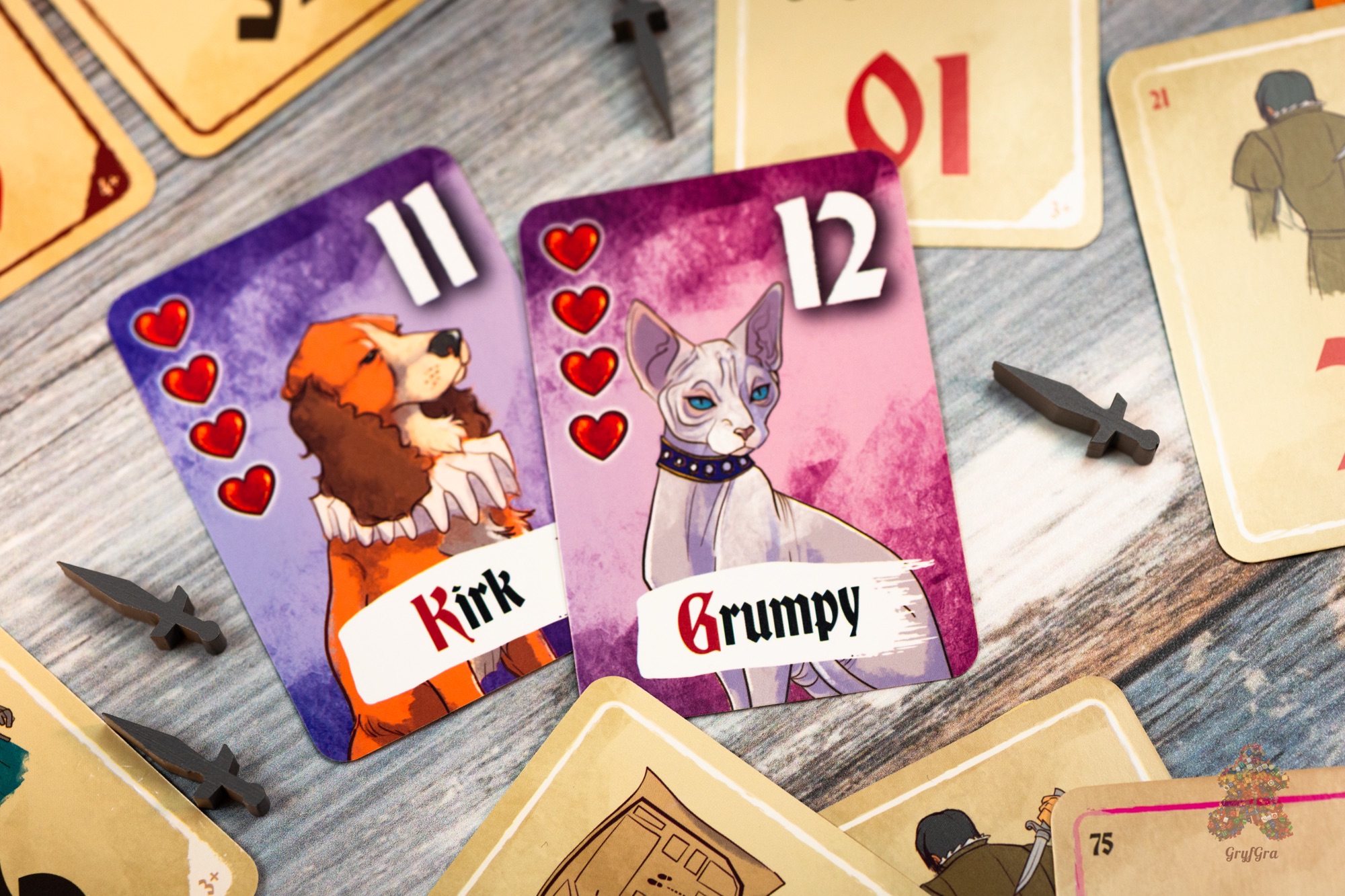
Complete information about the table is not easy to obtain. Some candidates remain face down, and seven rounds pass quickly. Gathering information therefore competes with taking actions that would let us put it to use. This is why we consider the initial look at the neighbouring cards such an important rule. It gives us a starting point for our first decisions and tells us whose survival we are actually fighting for.
Unfortunately, this instruction is missing from the Polish rulebook. We played using the English rules and noticed the difference when we reached for the Polish version during a game to check the actions. We therefore did not compare games played both ways, but not knowing our own candidates at the start would clearly change the information available for our decisions. In such a short game, this is a significant omission.
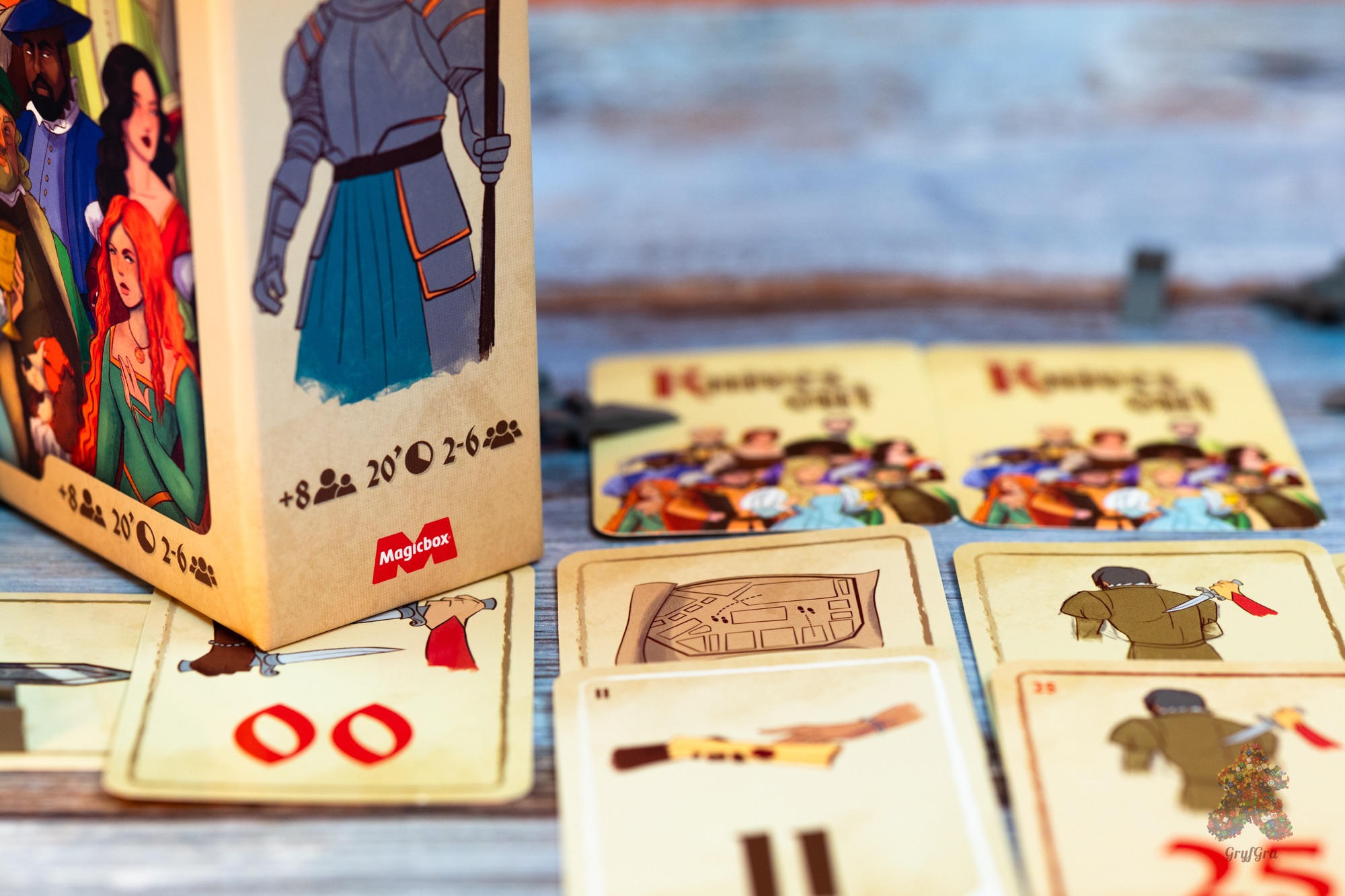
It is not the only inconsistency in the edition we received. Our box states a range of two to six players, while the markings on the cards indicate three to ten. The rules also do not explain how to play with two people. Someone buying the game for two players could therefore be misled. The English rulebook, meanwhile, has a typesetting problem: blank spaces appear where ligatures should be. The editorial work needs a more thorough check.
Apart from these issues, we found the rules clear. It helps to leave the rulebook open to the action reference so everyone can quickly check the symbols. It is also worth following the procedure for partially covering cards while taking turns. We initially tried to simplify this, but soon returned to the method described in the rules because we started getting the actions mixed up.
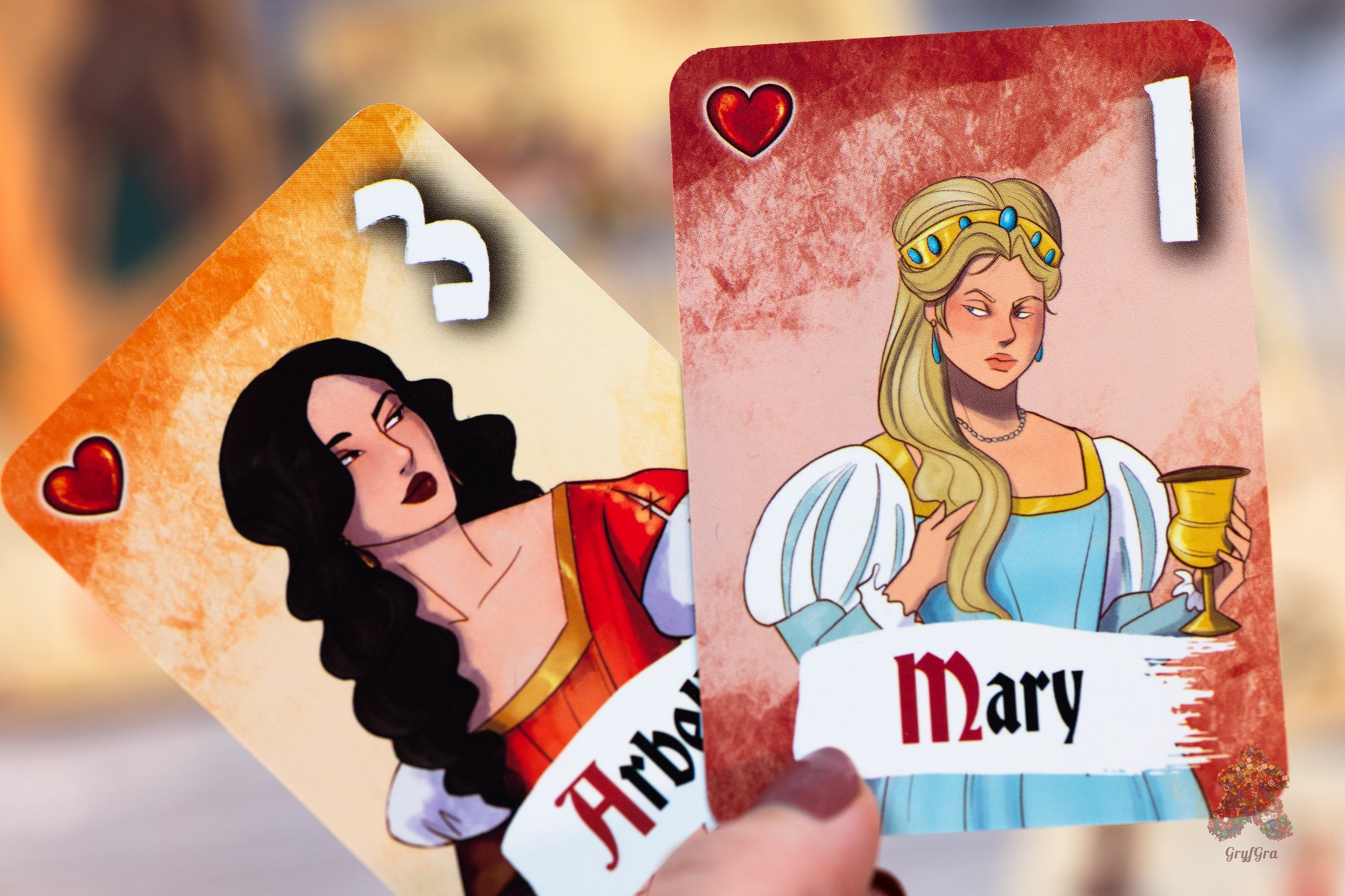
We played several games with three players. They were quick, finishing comfortably within half an hour. With this player count, everyone shares a candidate with each of the other players, making the relationships close and easy to follow. We do see potential for play with a larger group: a wider circle of neighbours should create more room for shifting agreements, while predicting turn order should become harder. That is an expectation based on how the game works — we have not yet tried a larger group.
The endings themselves were interesting, as only then did we uncover all the secrets and see the final outcome of our scheming. The biggest laughs came when a character in the centre of the table took the throne. After all our manoeuvring and interference, it turned out that the crown had slipped away from everyone.
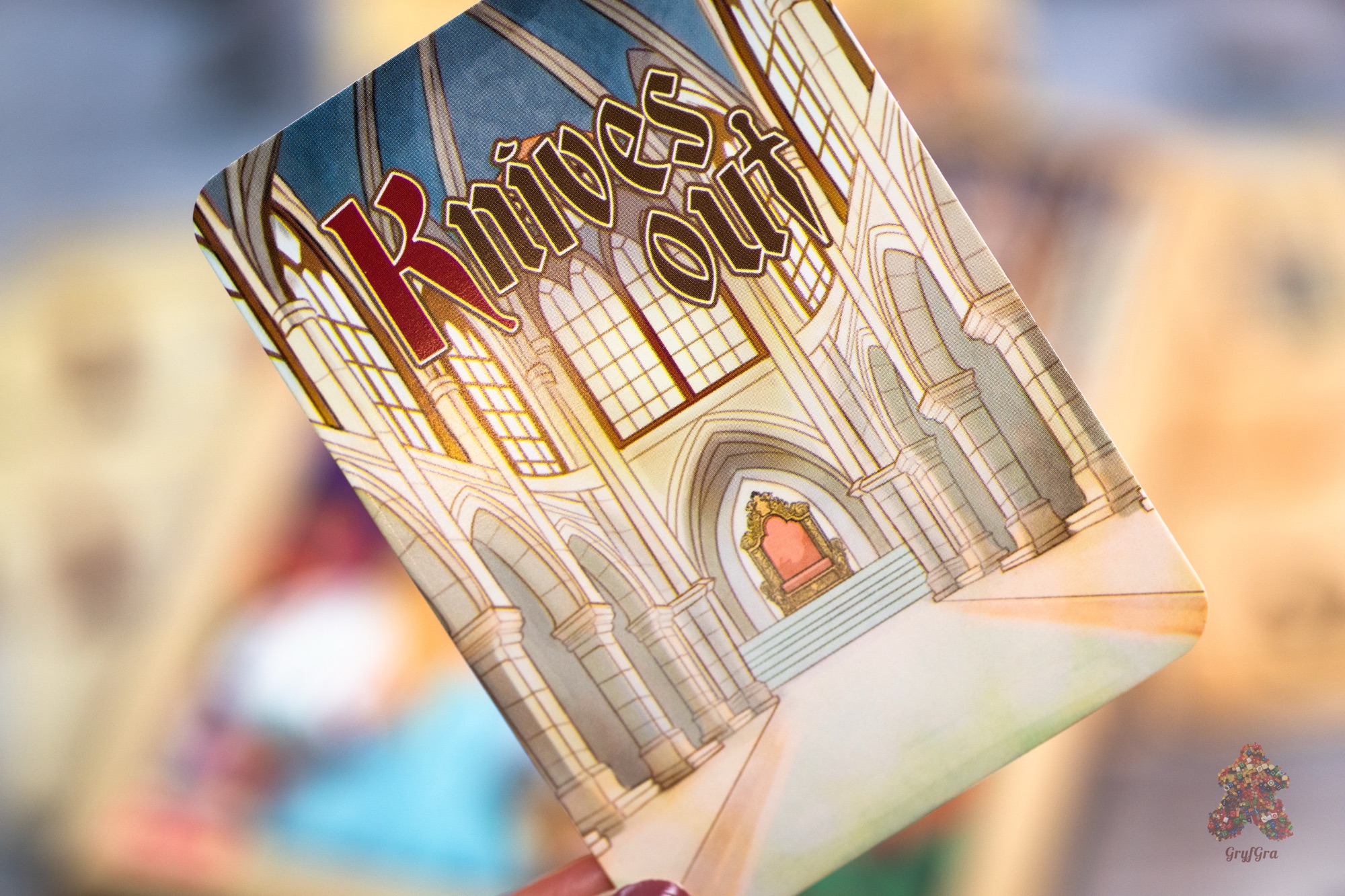
Summary
The strongest part of “Knives Out” is its combination of shared candidates, uncertain alliances and an unusual way of choosing actions. The short games leave room for peeking, interfering and changing the balance of power. It should appeal particularly to people who enjoy direct interaction and situations where an agreement with a neighbour may stop being useful at any moment.
Our three-player games revealed an interesting idea for a light game of court intrigue. We would gladly try it with a larger group, where we see potential for an enjoyable party game. The production of this edition does raise concerns, though: the conflicting player counts and the missing setup rule deserve correcting, especially as they may get in the way of learning the game properly.
Thank you to Magic Box for providing a copy of the game for review.